
(7% discount is applied at checkout)
Cart is empty
Your go-to destination for cutting-edge server products
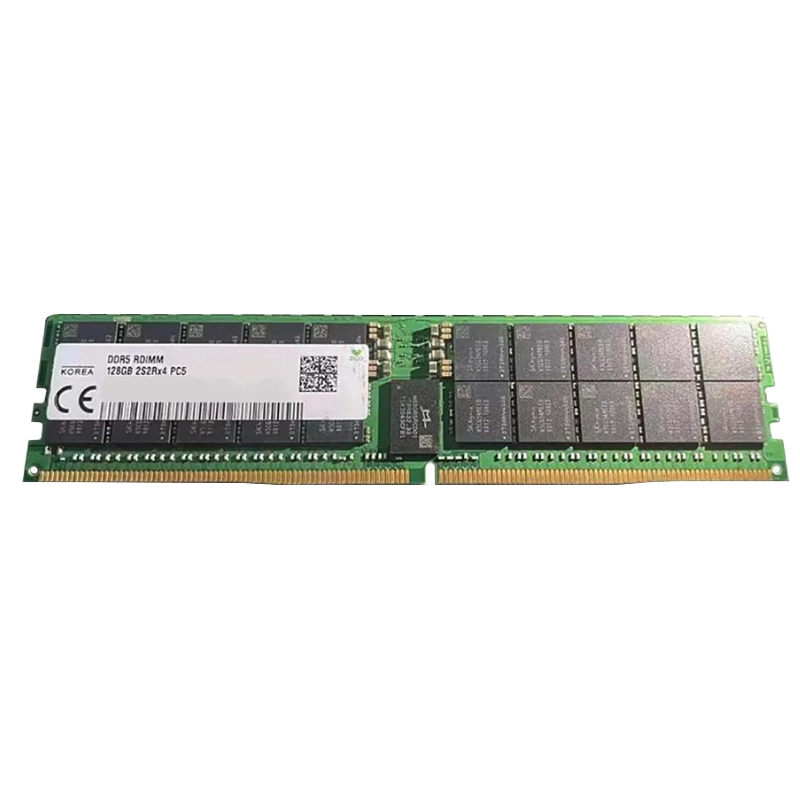
Hynix HMCT04MEERA129N 128GB Memory PC5-38400 DDR5 4800mhz SDRAM ECC Registered 288-pin. New (System) Pull with 1 year replacement warranty
| SKU/MPN | Warranty | Price | Condition | You save |
|---|---|---|---|---|
| HMCT04MEERA129N | 1 Year Warranty | $3,744.00 | New (System) Pull | You save: $1,310.40 (26%) |
| HMCT04MEERA129N | 1 Year Warranty | $5,088.00 | New Sealed in Box (NIB) | You save: $1,780.80 (26%) |
Designed for modern data-intensive environments, this high-capacity DDR5 memory module delivers exceptional reliability, bandwidth efficiency, and power optimization. It is purpose-built for servers and professional systems that demand stable performance under continuous workloads.
The HMCT04MEERA129N Hynix 128GB DDR5 PC5-38400 ECC Registered 288-pin memory module belongs to a high-capacity, enterprise-class server memory category designed to meet the demands of modern data centers, virtualization platforms, cloud infrastructure, and mission-critical computing environments. This category represents a significant evolution from previous DDR4-based solutions, delivering substantial improvements in bandwidth, efficiency, scalability, and reliability. DDR5 ECC Registered memory modules are purpose-built for systems that require uninterrupted performance, enhanced error protection, and the ability to manage extremely large memory footprints without compromising stability.
Memory modules in this category are engineered for compatibility with contemporary server architectures and workstation platforms that support DDR5 RDIMM specifications. With higher transfer rates, improved power management, and advanced error correction capabilities, this category addresses the increasing computational intensity of workloads such as artificial intelligence, machine learning, high-performance computing, real-time analytics, and large-scale database processing.
DDR5 memory represents a foundational shift in memory architecture, and this category encapsulates those advancements in a form optimized for enterprise deployment. Compared to earlier generations, DDR5 introduces higher base frequencies, increased memory density, and a more efficient channel architecture. The HMCT04MEERA129N module, operating at PC5-38400 speeds, exemplifies the performance gains achievable within this category.
One of the defining features of DDR5 is the division of each memory module into two independent 32-bit subchannels. This design reduces latency and increases effective bandwidth by allowing more simultaneous memory access operations. In enterprise environments where multiple CPU cores and threads compete for memory access, this architectural improvement translates directly into higher throughput and improved application responsiveness.
DDR5 memory also integrates on-module voltage regulation, shifting power management responsibilities from the motherboard to the memory module itself. This enhances power delivery precision and reduces electrical noise, contributing to greater stability under sustained workloads. The category as a whole benefits from improved power efficiency, enabling data centers to scale memory capacity while maintaining energy consumption targets.
The PC5-38400 specification indicates a theoretical peak bandwidth of 38.4 GB/s per module. Memory products in this category are designed to support high-speed data transfer requirements common in enterprise computing scenarios. Applications such as in-memory databases, real-time transaction processing, and large-scale virtualization benefit from the increased bandwidth, which minimizes bottlenecks between processors and memory.
Higher bandwidth also supports advanced processor architectures with large core counts. As CPUs continue to scale horizontally, the memory subsystem must keep pace to avoid performance degradation. DDR5 ECC Registered memory modules address this challenge by providing the throughput necessary to sustain parallel workloads efficiently.
Error Correction Code Registered memory is a defining characteristic of this category. ECC functionality provides automatic detection and correction of single-bit memory errors, significantly reducing the risk of data corruption. In environments where data accuracy and system uptime are critical, ECC memory is not optional but essential.
Registered memory, also known as buffered memory, incorporates a register between the memory controller and the DRAM modules. This register reduces the electrical load on the memory controller, allowing systems to support larger memory capacities and more populated DIMM configurations. The HMCT04MEERA129N module exemplifies the benefits of this design by enabling stable operation in high-density server configurations.
Memory errors, even infrequent ones, can have severe consequences in enterprise environments. Financial transactions, healthcare systems, scientific simulations, and enterprise resource planning platforms rely on consistent data integrity. ECC Registered memory modules in this category provide a foundational layer of reliability that protects against silent data corruption and unexpected system failures.
This reliability is particularly important for long-running workloads that operate continuously for extended periods. Servers equipped with DDR5 ECC RDIMM memory can maintain operational stability under sustained load, making this category suitable for 24/7 data center operations.
The inclusion of 128GB module capacity places the HMCT04MEERA129N firmly within the high-capacity memory category. These large-capacity modules enable servers and workstations to achieve extremely high total memory configurations with fewer DIMMs. This is especially beneficial in systems with limited DIMM slots or where maximizing memory per socket is a priority.
High-capacity DDR5 modules support workloads that require extensive in-memory datasets. Big data analytics, large-scale virtualization, container orchestration platforms, and memory-resident databases all benefit from increased memory availability. This category allows organizations to scale memory resources in line with application demands without redesigning system architectures.
DDR5 ECC Registered memory modules are designed to integrate seamlessly with modern server chipsets and processor platforms that support DDR5 RDIMM standards. This category is typically compatible with enterprise-grade CPUs that feature advanced memory controllers capable of leveraging DDR5’s architectural enhancements.
System integrators and IT professionals value this category for its predictable compatibility and adherence to industry standards. Memory modules are manufactured to strict specifications, ensuring reliable interoperability across a wide range of supported platforms.
The 288-pin DIMM form factor is standard for DDR5 memory modules. While physically similar to DDR4 DIMMs, DDR5 modules feature a different keying notch to prevent incorrect installation. Memory products in this category are engineered for secure seating and reliable electrical contact within server and workstation memory slots.
Thermal considerations are also addressed in the mechanical design. High-density DDR5 modules are constructed to dissipate heat effectively, supporting sustained operation under heavy workloads without thermal throttling.
This memory category is optimized for environments where data movement and processing speed directly impact application performance. High-frequency DDR5 operation combined with ECC and registered buffering creates a balanced solution that prioritizes both speed and stability.
Workloads such as artificial intelligence training, machine learning inference, scientific modeling, and real-time analytics demand consistent access to large datasets. Memory latency and bandwidth play a crucial role in overall system performance. DDR5 ECC Registered memory modules help minimize delays and ensure that processors remain fed with data.
Modern processors feature increasing numbers of cores and threads, each generating memory access requests. The dual subchannel architecture of DDR5 memory improves concurrency, allowing multiple memory operations to proceed in parallel. This enhances performance in multicore environments where memory contention can otherwise become a limiting factor.
Servers equipped with high-capacity DDR5 ECC RDIMM modules can fully exploit the computational capabilities of modern CPUs, ensuring that memory does not become a bottleneck in high-performance scenarios.
Energy efficiency is a critical consideration in enterprise computing, where power consumption and thermal output directly impact operational costs. DDR5 memory introduces several improvements that contribute to reduced energy usage compared to previous generations.
On-module voltage regulation allows for more precise control of power delivery, reducing waste and improving overall efficiency. Memory modules in this category typically operate at lower voltages while delivering higher performance, resulting in improved performance-per-watt metrics.
For data centers operating at scale, even modest improvements in energy efficiency can translate into significant cost savings. High-capacity DDR5 ECC Registered memory modules reduce the number of physical servers required to meet workload demands, further lowering power and cooling requirements.
This category supports sustainability initiatives by enabling more efficient use of computing resources. Organizations can achieve higher performance levels without proportionally increasing energy consumption.
Memory modules in this category are produced under stringent quality control processes. Enterprise-grade memory undergoes extensive testing and validation to ensure reliability, compatibility, and longevity. This includes stress testing under high temperatures, voltage variations, and continuous operation scenarios.
The HMCT04MEERA129N Hynix module reflects the standards expected of enterprise memory, with consistent performance characteristics and adherence to JEDEC specifications. This level of quality assurance is essential for deployment in critical systems where downtime is unacceptable.
Enterprise memory categories prioritize long-term availability and lifecycle stability. This allows organizations to maintain consistent hardware configurations over extended periods, simplifying maintenance and capacity planning. Memory modules are designed to operate reliably for years, supporting long-term infrastructure investments.
This stability is particularly important for regulated industries and environments with strict validation requirements, where hardware changes must be carefully managed and documented.
The DDR5 ECC Registered memory category serves a wide range of industries and applications. Financial services rely on large memory capacities for risk modeling and transaction processing. Healthcare organizations use high-memory servers for medical imaging, genomics, and patient data management.
Research institutions and engineering firms leverage this category for simulations, modeling, and data analysis that require both high performance and data integrity. Media and entertainment companies use large memory configurations for rendering, content creation, and real-time processing.
As organizations modernize their IT infrastructure, upgrading to DDR5 ECC Registered memory is a key step in supporting next-generation workloads. This category enables higher consolidation ratios, improved performance, and enhanced reliability, making it a cornerstone of modern enterprise computing strategies.
The ability to deploy high-capacity, high-performance memory modules simplifies infrastructure design and prepares organizations for future growth. DDR5 ECC Registered memory represents a forward-looking investment in scalable, reliable computing resources.


 Contact Us
 Information
 Catalog
 Solid State Drives (SSD)
 Network Switches
 Hard Disk Drives
 HBA & Controllers
 PC & Servers
 PC & Server Memory
 CPU & Processors
 Network Routers
 Power Supplies
 Tape Drives & Libraries
 Network Devices
 Computer & Network Cables