(7% discount is applied at checkout)
Cart is empty
Your go-to destination for cutting-edge server products
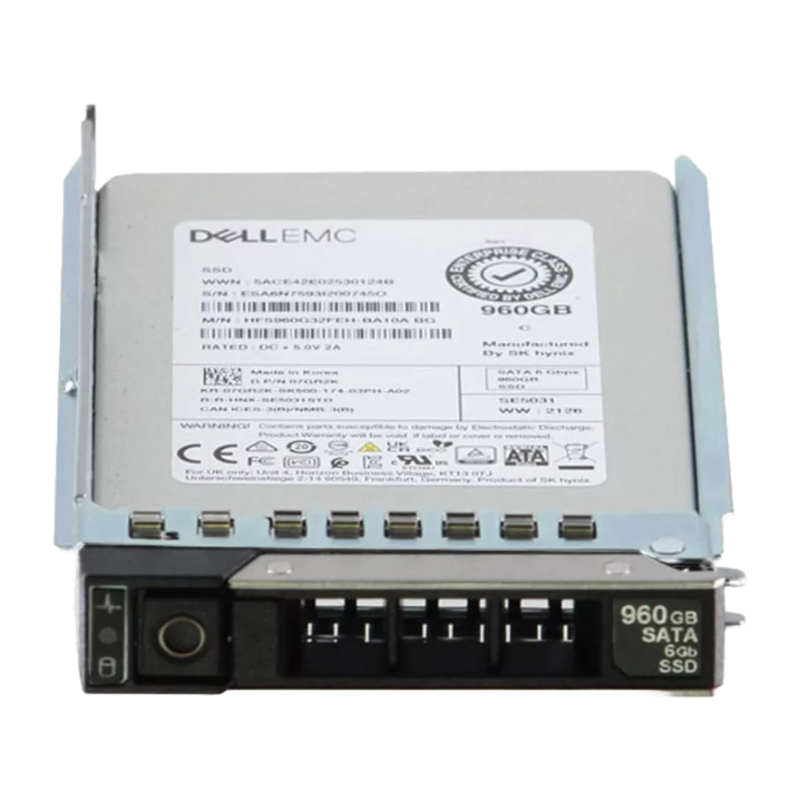


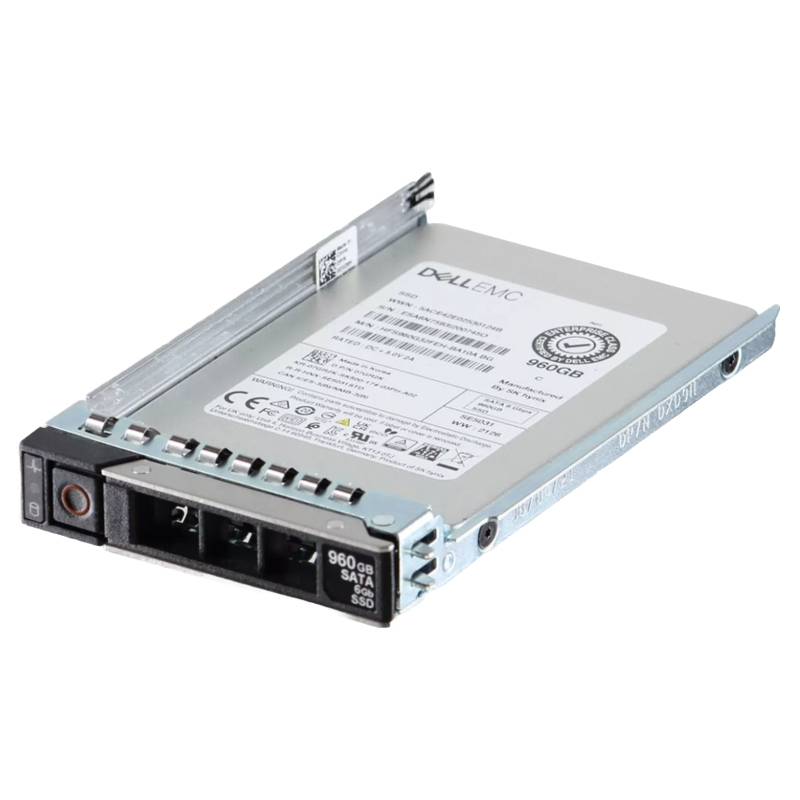
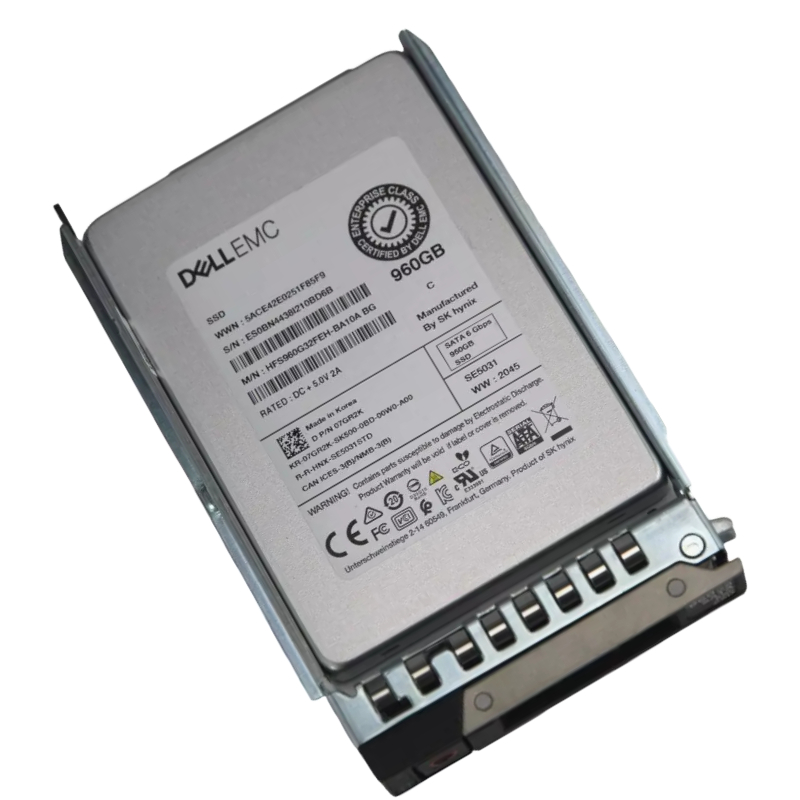
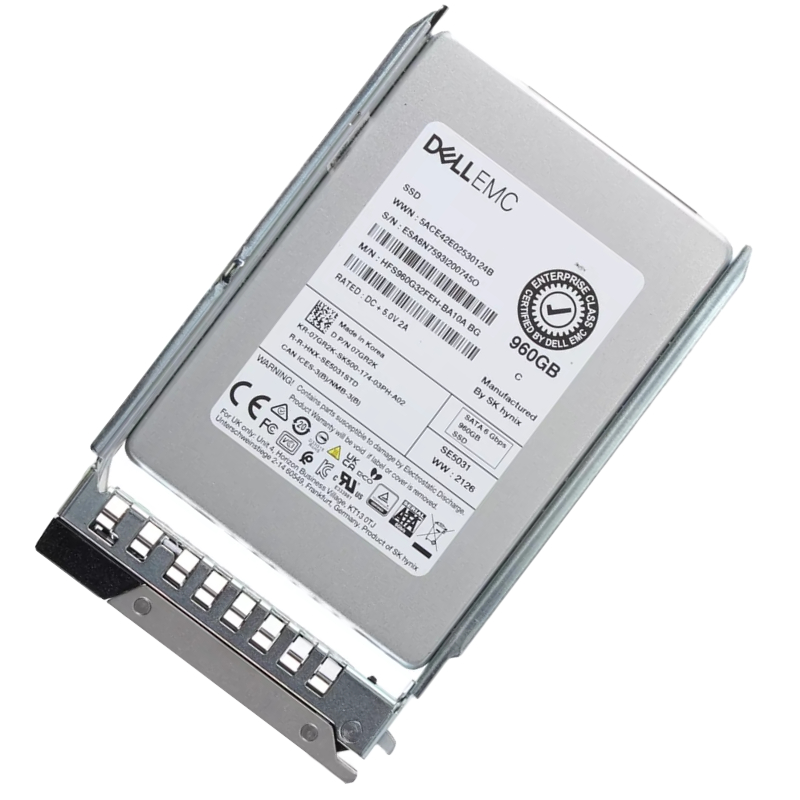
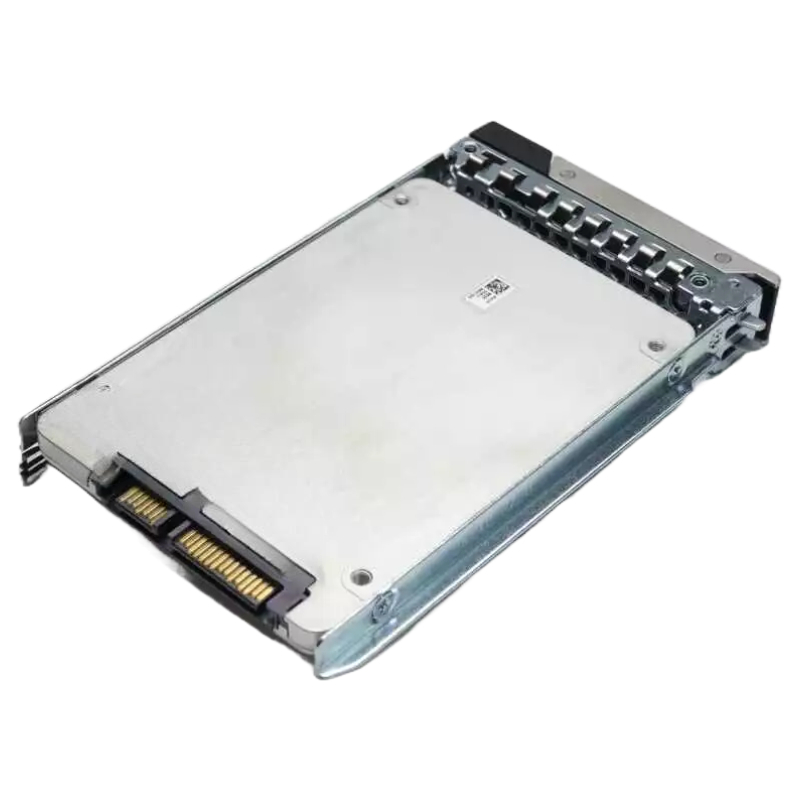
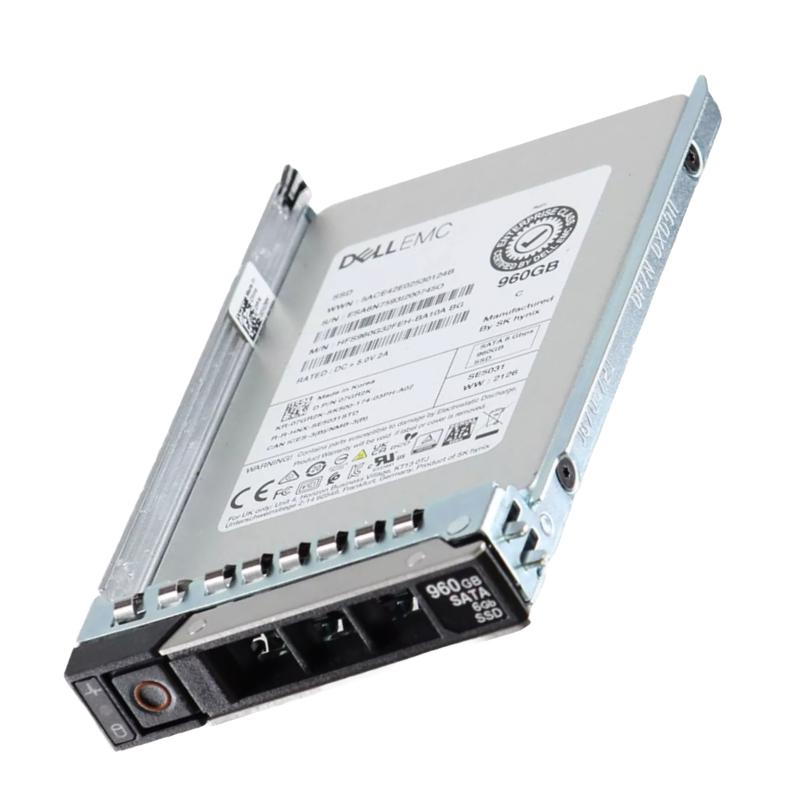
Dell CDC61 960GB SATA-6GBPS Read-Intensive 1dwpd TLC SFF Hot-Plug Certified with tray for Server Solid State Drive. Excellent Refurbished with 1 year replacement warranty
| SKU/MPN | Warranty | Price | Condition | You save |
|---|---|---|---|---|
| CDC61 | 1 Year Warranty | $522.00 | Excellent Refurbished | You save: $182.70 (26%) |
| CDC61 | 1 Year Warranty | $899.00 | New Sealed in Box (NIB) | You save: $314.65 (26%) |
This SSD includes a certified tray for seamless hot-plug deployment, ensuring minimal downtime and simplified maintenance in enterprise environments.
The Dell CDC61 960GB SATA-6GBPS Read-Intensive 1dwpd TLC SFF Hot-Plug Certified with tray represents a focused category of enterprise-grade solid state drives engineered for read-dominant server workloads. Within this category, buyers will find drives that balance cost, capacity, and reliability for use in web serving, content delivery, cold tier caching, large-capacity read caching, database read replicas, and virtualization read-heavy deployments. The CDC61 model pairs a 960GB capacity with a 2.5-inch small form factor (SFF) and a SATA-6Gbps interface, aligning with legacy and modern server backplanes while offering hot-plug capabilities via a certified tray. This category description explores the technical attributes, deployment patterns, endurance expectations, compatibility considerations, performance characteristics, lifecycle management, and procurement considerations for organizations evaluating CDC61-series drives for their server arrays and infrastructure refresh projects.
The CDC61 960GB is built around triple-level cell (TLC) NAND flash optimized for read-intensive profiles and rated at 1 drive write per day (1dwpd). The choice of TLC NAND enables higher bits per cell and greater capacity density compared to SLC and MLC alternatives, while firmware and controller tuning adapt the media for server-class read-centric tasks. The SATA-6Gbps interface ensures broad compatibility with many server platforms and legacy SATA backplanes commonly found in enterprise racks. Physically, the SFF 2.5-inch form factor conforms to server bays and trays designed for 7mm to 15mm drives, and the drive is typically supplied with a hot-plug certified tray that integrates mechanical alignment, backplane connectors, and serviceability markers for quick swap operations during live maintenance windows.
At the heart of any CDC61 variant lies a controller paired with firmware specifically tuned to manage TLC behavior under read-intensive workloads. Firmware algorithms handle wear leveling, error correction, bad block management, and background garbage collection in ways that minimize write amplification and preserve read performance. The controller implements dynamic over-provisioning and intelligent caching to keep frequently accessed data in faster regions of the NAND, while less accessed blocks are managed for longevity. This category’s firmware often includes enterprise-friendly features such as power-loss protection (where available at the drive level or through system-level mitigation), advanced SMART reporting for pre-failure detection, and compatibility layers to ensure smooth firmware updates through vendor-supplied tools.
Performance for the CDC61 960GB SATA-6GBPS drive is characterized by consistent read throughput and predictable IOPS under sequential and random read patterns. Typical sustained sequential read rates approach the limits of the SATA-6Gbps interface while random read IOPS in mixed production scenarios remain strong for a TLC-based read-optimized device. Latency is tuned for server access patterns; read response is prioritized while write operations are scheduled to minimize disruption to foreground reads. For environments that require faster write performance or higher write endurance, mixed-use or write-intensive families would be more appropriate, but for the targeted read-heavy applications this CDC61 category strikes an effective balance between throughput and cost per gigabyte.
In caching layers, content delivery networks, and read replicas of databases, CDC61 drives deliver low single-digit millisecond average read latencies under standard loads. Sequential read operations saturate SATA bandwidth in ideal conditions, while random 4K read workloads sustain competitive IOPS due to controller optimizations. When multiple drives are used in RAID or software-defined storage pools, aggregate read throughput scales nearly linearly, enabling high-bandwidth content delivery from dense server arrays. It is important to account for the SATA bus limitations and backplane architecture when planning workloads to avoid bottlenecks external to the drive itself.
The endurance rating of 1dwpd (one drive write per day) indicates the drive is intended for workloads where writes are a minority of the I/O profile. This rating translates into a predictable write budget over the warranty period and is common among read-optimized SSDs which trade off write endurance for capacity-efficiency and lower unit cost. Enterprise-grade wear-leveling and error correction mechanisms extend the usable life of the device, and SMART monitoring provides administrators with actionable metrics for proactive replacement. Reliability is further reinforced by the certified hot-plug tray, which ensures mechanical robustness and ease of serviceability in rack-mount server environments.
CDC61 960GB SATA-6GBPS read-intensive drives are most effective in roles where reads far outnumber writes. Typical use cases include web hosting nodes serving large static assets, content caching layers for streaming and CDN edge servers, database read replicas used for query scaling, virtualization hosts where many VMs perform mostly reads, analytics platforms performing large-scale read scans, and archival indexes where capacity and read responsiveness are prioritized over write throughput. In hybrid arrays, CDC61 drives can form the read-optimized tier while faster NVMe or mixed-use SSDs handle write-heavy and latency-sensitive workloads. Their value proposition is defined by cost-effective capacity, serviceability, and sustained read performance in enterprise racks.
When integrated into tiered storage or caching architectures, CDC61 drives function as the middle to lower tiers depending on performance requirements. Policies can be configured so that hot data resides on NVMe or enterprise mixed-use SSDs, while warm and cold read datasets reside on CDC61 drives. Software-defined storage solutions and caching layers benefit from the 960GB capacity by reducing the number of drives required to hold working sets, which simplifies management and reduces power and rack space. Reads from the CDC61 tier benefit from the drive’s optimization for sequential and random read patterns, improving effective throughput for end users.
Incorporating CDC61 drives into RAID arrays requires careful consideration of rebuild times, rebuild impact, and parity strategies. Because the drives are TLC-based and read-optimized, rebuilds after a drive failure can be read-heavy and require sustained throughput across the array; administrators should size RAID groups and choose parity levels that balance capacity efficiency with rebuild performance. RAID-1 or RAID-10 configurations offer fast rebuild characteristics but lower usable capacity than parity-based arrays. When using RAID-5 or RAID-6, the rebuild process may stress the surviving drives and the RAID controller, so monitoring and throttling strategies should be in place to maintain application responsiveness during rebuild operations.
Snapshot strategies layered on top of CDC61 storage often rely on read-optimized behavior: snapshots are read-heavy operations for restore and verification, and incremental snapshot mechanisms limit writes to changed blocks. Backup workflows should be designed to avoid creating excessive write cycles on CDC61 drives. For example, deduplicating backup targets or writing backups to a separate write-optimized tier minimizes write amplification on the CDC61 tier while preserving the benefit of quick restores due to the drive’s read responsiveness.
Enterprises adopting hybrid cloud strategies can use CDC61 drives within on-premises nodes to host read-heavy caches or replication targets that mirror cloud storage. This approach reduces egress charges and improves local read latency for frequently accessed data. Cloud-adjacent storage architectures benefit from the drive’s capacity and read performance to act as a local acceleration layer, enabling smoother burst behavior and faster local analytics when datasets are staged on-premises for processing.
Within Dell’s broader SSD portfolio, the CDC61 category sits among other SATA and NVMe options differentiated by endurance, interface speed, and form factor. Alternatives include mixed-use or write-intensive SSDs that trade capacity density for write endurance, and NVMe drives that offer higher throughput and lower latency for latency-sensitive applications. Choosing between CDC61 and alternatives involves evaluating workload patterns, expected write volume, interface constraints, and cost constraints. For large-scale read-focused arrays where SATA compatibility is desirable, CDC61 provides an economical and serviceable solution.


 Contact Us
 Information
 Catalog
 Solid State Drives (SSD)
 Network Switches
 Hard Disk Drives
 HBA & Controllers
 PC & Servers
 PC & Server Memory
 CPU & Processors
 Network Routers
 Power Supplies
 Tape Drives & Libraries
 Network Devices
 Computer & Network Cables