(7% discount is applied at checkout)
Cart is empty
Your go-to destination for cutting-edge server products
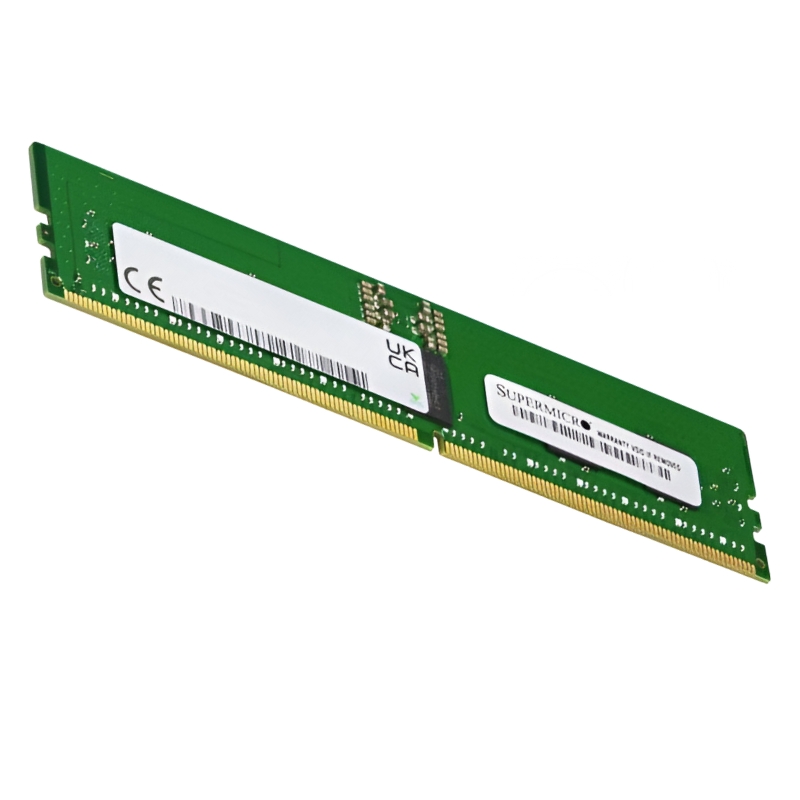


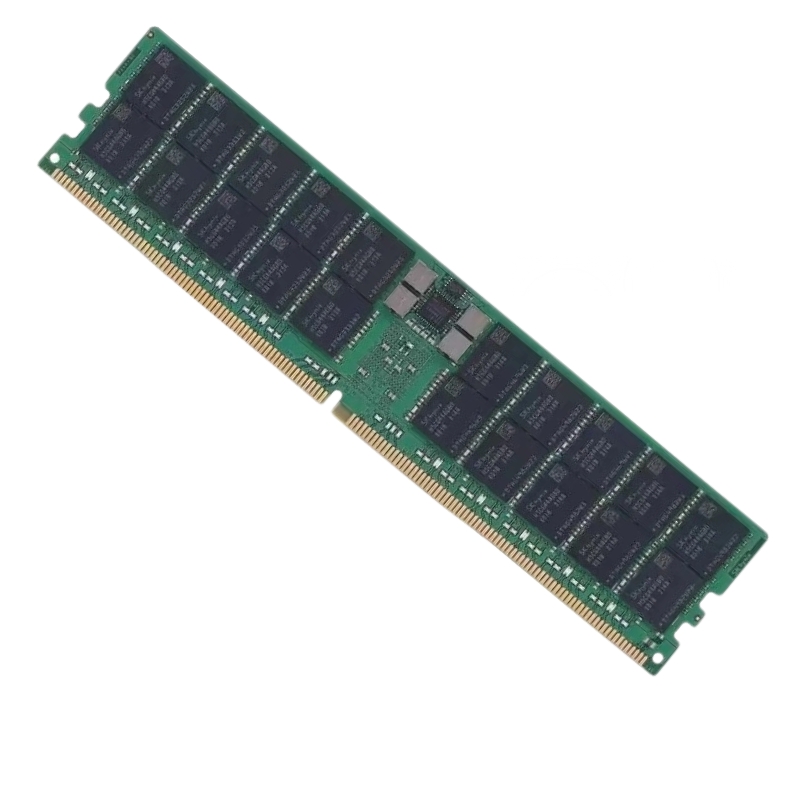
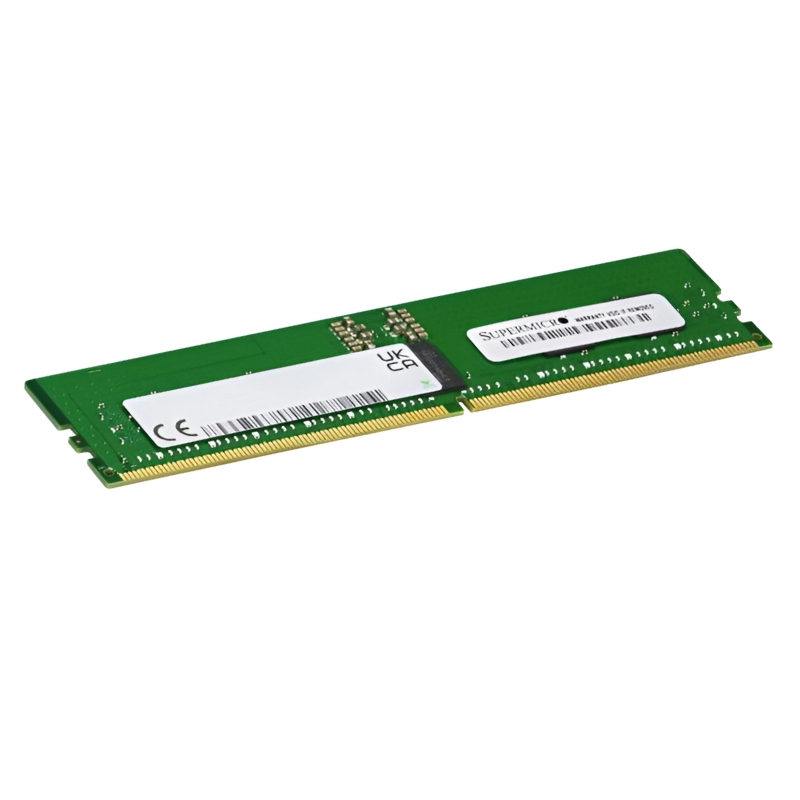
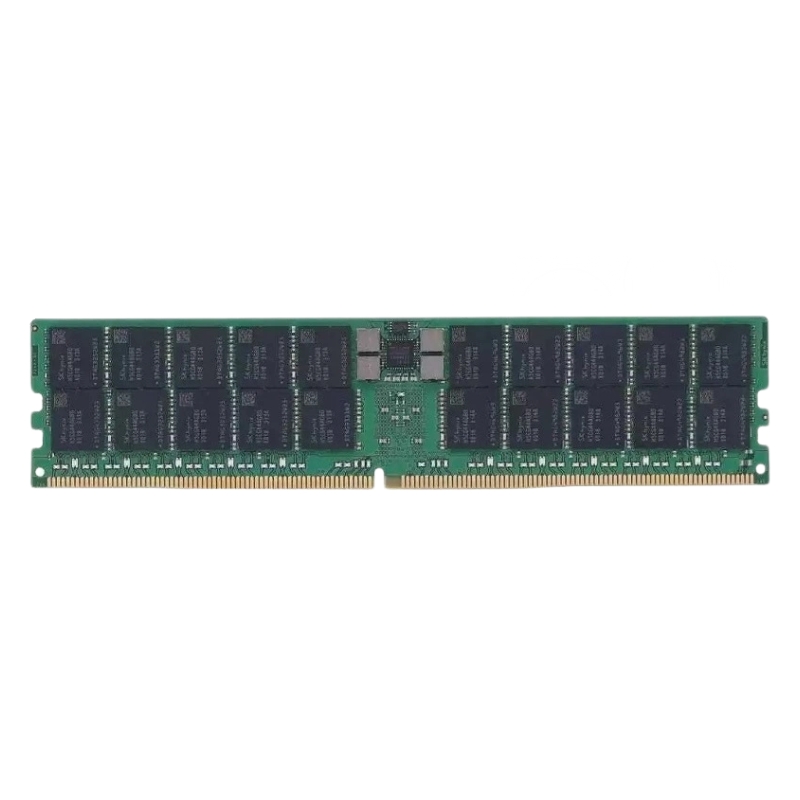
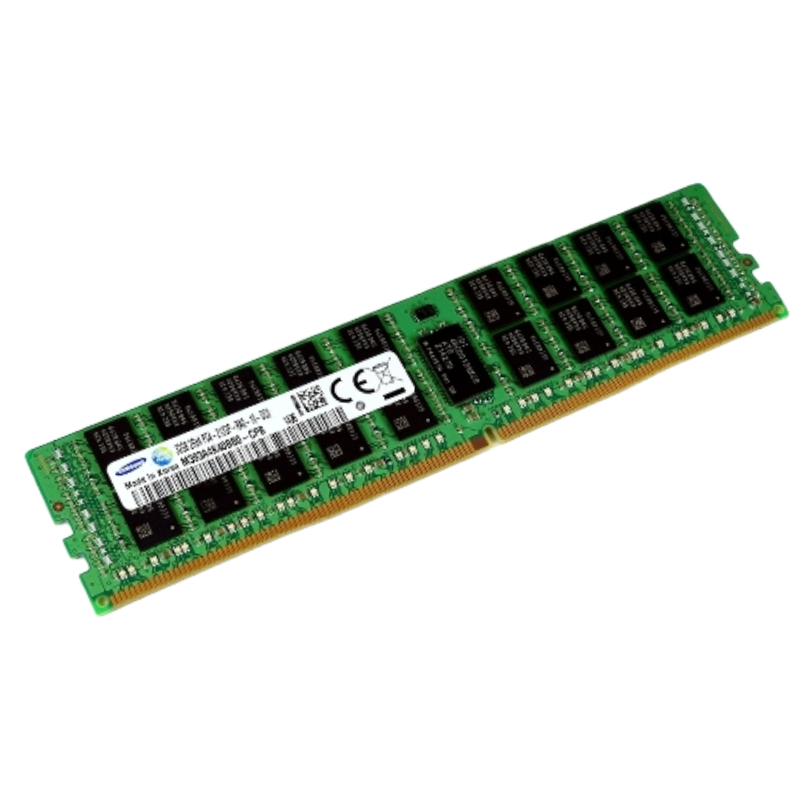
Samsung M321R2GA3PB0-CWMXJ 16GB DDR5 RDIMM PC5-44800 Memory Module. New Sealed in Box (NIB) with 3 Years Warranty
Upgrade your data centre or enterprise server with the Samsung 16GB DDR5 SDRAM RDIMM. This server-grade memory module delivers high-throughput performance, robust error correction, and industry-standard reliability for mission-critical systems.
The transition from DDR4 to DDR5 memory technology marks a significant leap, not just in raw speed but in architectural philosophy. For servers, this evolution brings forth foundational improvements that directly impact computational throughput and power efficiency.
DDR5 introduces several core changes that benefit server environments profoundly. The most notable is the move to a dual 32-bit sub-channel architecture per module (from a single 64-bit channel in DDR4). This allows for more efficient data handling and reduced latency for smaller, more frequent access patterns common in server workloads. Furthermore, the power management infrastructure is integrated onto the module itself with the Power Management IC (PMIC), enabling more stable voltage regulation and improved signal integrity—a critical factor for densely populated server racks.
The "5600Mbps" and "PC5-44800" labels are intrinsically linked. The data rate of 5600 Megatransfers per second (MT/s) refers to the number of operations the module can perform each second. The PC5-44800 (often called the "PC5 rating") denotes the theoretical peak bandwidth in megabytes per second (MB/s) for the module. Calculated as 5600 MT/s * 8 bytes (width of a DDR channel) / 8 bits per byte, it yields 44800 MB/s. This substantial bandwidth is essential for feeding data-hungry processors in modern servers handling virtualization, large databases, and high-performance computing tasks.
Every segment of the part number and description conveys critical information about the module's compatibility and capabilities.
The "16GB (1x16GB)" indicates a single module with a total capacity of 16 Gigabytes. The "1Rx8" configuration is vital for understanding the module's physical memory chip organization. "1R" means Single Rank—the module presents one set of memory chips to the memory controller at a time. "x8" refers to the physical bit-width of each DRAM chip on the module. A 1Rx8 configuration using x8 chips is a common and optimized design for servers, offering a good balance of capacity, signal loading, and performance. It allows systems to populate more modules per channel while maintaining stability, which is crucial for achieving maximum total system memory capacity.
These two features are non-negotiable for mission-critical server memory.
ECC is a paramount feature for data integrity. It goes beyond simple parity checking. ECC memory includes extra bits (e.g., 8 bits for a 64-bit word) that allow the memory controller to detect and, most importantly, *correct* single-bit errors on the fly. It can also detect (but not correct) multi-bit errors. This hardware-level correction prevents silent data corruption, software crashes, and system instability caused by cosmic rays, electrical noise, or cell wear-out—risks that are unacceptable in financial, scientific, or cloud infrastructure.
The "Registered" or "Buffered" aspect is what defines an RDIMM. A Register (or buffer) is placed between the memory controller and the DRAM chips on the module. This register buffers the command and address signals, reducing the electrical load on the controller. This allows a server motherboard to support a significantly higher number of memory modules—often scaling to multiple terabytes of RAM—without overloading the memory controller's electrical driving capability. The trade-off is an additional clock cycle of latency, which is a minor and acceptable cost for the immense gains in capacity and system stability.
The "1.1v" operating voltage highlights DDR5's improved power efficiency over DDR4 (typically 1.2v). Lower voltage reduces overall power consumption and heat generation across a server farm, directly impacting operational costs. The "CL46" refers to the CAS Latency, a primary timing parameter (46 clock cycles at the 5600 MT/s speed). While higher in number than DDR4 timings due to the increased speed, the actual time in nanoseconds is comparable or better. The "288-pin" designation specifies the physical interface, which is mechanically different from DDR4's 288-pin layout, preventing incorrect installation.
Samsung DDR5 ECC RDIMMs like the M321R2GA3PB0-CWMXJ are not designed for gaming PCs or general-purpose desktops. They are purpose-built for specific enterprise-grade hardware and workloads.
This memory module is designed for servers powered by modern platforms such as Intel's Xeon Scalable Processors (Sapphire Rapids, Emerald Rapids, and beyond) and AMD's EPYC 7004 "Genoa" and 8005 "Siena" series processors. These platforms require DDR5 memory and are optimized to leverage the increased bandwidth and advanced features. It is imperative to always consult the server manufacturer's (Dell, HPE, Lenovo, Supermicro, etc.) Qualified Vendor List (QVL) to ensure specific model compatibility, as BIOS and firmware are tuned for validated modules.
The combination of high bandwidth (5600 MT/s), error correction, and high-capacity support makes this memory category ideal for:
Virtualization Hosts (vSphere, Hyper-V): Running dozens of virtual machines requires large pools of reliable, fast memory to handle diverse workloads simultaneously.In-Memory Databases (SAP HANA, Redis): These applications store entire datasets in RAM for ultra-low latency access, demanding both high capacity and unwavering data integrity via ECC.
High-Performance Computing (HPC) & AI/ML: Scientific simulations, financial modeling, and machine learning training involve massive datasets and parallel processing, where memory bandwidth is often the critical bottleneck.
Cloud Infrastructure & Web Tiering: Front-end web servers and application servers benefit from fast memory to reduce response times, while backend cloud infrastructure relies on ECC for uptime and data protection.
Enterprise Resource Planning (ERP) and CRM Systems: Large-scale transactional systems like Oracle Database or Microsoft SQL Server running on servers require stable, high-performance memory to process transactions efficiently.
Samsung is not merely a vendor but a foundational semiconductor manufacturer. This vertical integration provides significant advantages for enterprise customers.
Samsung designs and fabricates its own DRAM chips, controls the module assembly process, and conducts rigorous testing. This end-to-end control ensures consistent quality, reliable supply, and optimal compatibility between the DRAM silicon and the module's PCB design. For IT managers, this translates to predictable performance and lower long-term failure rates.
Beyond the standard JEDEC specifications, Samsung often incorporates advanced features into its server modules. These may include enhanced thermal sensors for better cooling management, specialized coatings for improved signal integrity in challenging environments, and strict binning processes to ensure the chips meet the demanding 5600 MT/s speed grade at low voltage (1.1v) with stability.


 Contact Us
 Information
 Catalog
 Solid State Drives (SSD)
 Network Switches
 Hard Disk Drives
 HBA & Controllers
 PC & Servers
 PC & Server Memory
 CPU & Processors
 Network Routers
 Power Supplies
 Tape Drives & Libraries
 Network Devices
 Computer & Network Cables