
(7% discount is applied at checkout)
Cart is empty
Your go-to destination for cutting-edge server products
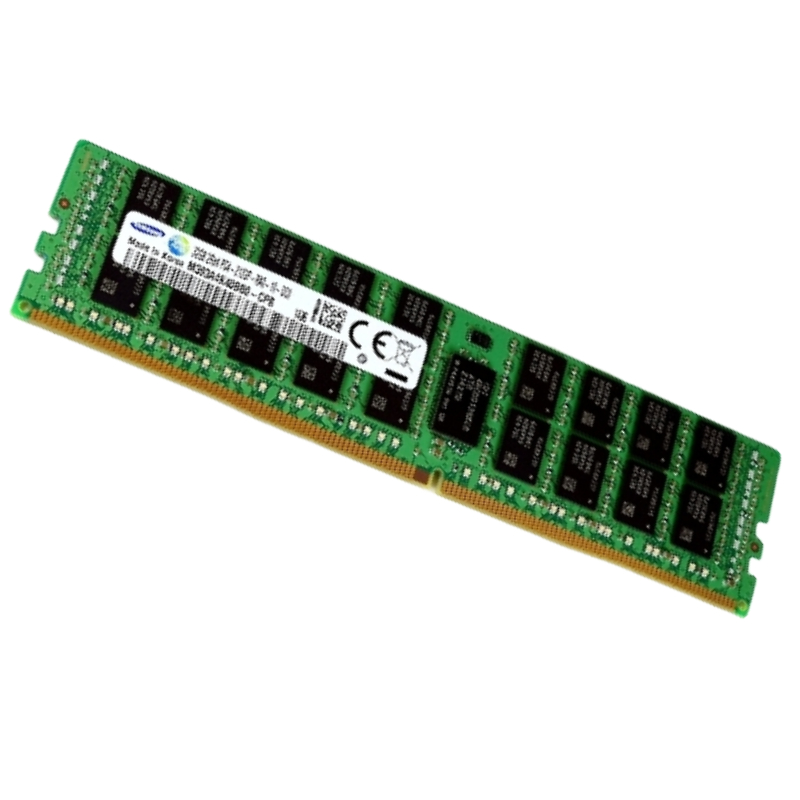
Samsung M321R4GA3PB0-CWMCH 32GB PC5-44800 SDRAM 288-Pin RDIMM Memory Module. New Sealed in Box (NIB) with 3 Years Warranty
The Samsung M321R4GA3PB0-CWMCH 32GB PC5-44800 RDIMM is a high-performance DDR5 memory module engineered for enterprise workloads, virtualization layers, and data-intensive applications. Built to deliver remarkable reliability with ECC, registered signal buffering, and optimized bandwidth, this module provides a robust foundation for modern servers seeking consistent stability and exceptional throughput.
The category of enterprise-grade DDR5 registered dual in-line memory modules (RDIMMs) represents a foundational component of modern server and workstation architectures. Products within this category, including the Samsung 32GB PC5-44800 SDRAM 288-Pin RDIMM Memory Module identified by part number M321R4GA3PB0-CWMCH, are designed to meet the stringent performance, reliability, scalability, and compatibility requirements of data centers, cloud infrastructure, high-performance computing environments, and mission-critical business systems. This category focuses on memory solutions engineered to support the increasing demands of multi-core processors, high-bandwidth workloads, virtualization platforms, and data-intensive applications.
DDR5 RDIMM memory modules introduce a generational leap over DDR4, providing significantly higher data transfer rates, improved power efficiency, and advanced error correction capabilities. The PC5-44800 classification reflects an effective data rate of up to 5600 MT/s, positioning this category at the forefront of memory performance for enterprise platforms. By incorporating registered buffering, these modules ensure signal integrity and electrical stability, allowing systems to scale to higher memory capacities without compromising reliability.
The DDR5 SDRAM architecture underlying this memory category introduces several key enhancements that directly benefit server and workstation deployments. Compared to previous generations, DDR5 doubles the bank count and increases burst lengths, enabling higher levels of parallelism and improved efficiency in handling concurrent memory requests. This architectural evolution is critical for modern CPUs with high core counts and advanced memory controllers that rely on sustained bandwidth and low latency.
Each module within this category, including the 32GB capacity configuration, utilizes on-die error correction code (ODECC) to improve data integrity at the silicon level. While traditional ECC operates at the module level, ODECC adds an extra layer of protection by correcting bit errors before data leaves the memory chip. This design significantly enhances reliability, making DDR5 RDIMMs well-suited for enterprise workloads where uptime and data accuracy are paramount.
With a PC5-44800 rating, this category delivers a theoretical maximum bandwidth of 44.8 GB/s per module. This increase in throughput supports data-intensive operations such as large-scale databases, real-time analytics, artificial intelligence training, and scientific simulations. High bandwidth memory reduces bottlenecks between the CPU and memory subsystem, enabling faster execution of complex workloads and improved overall system responsiveness.
The higher data rates are achieved through refined signaling techniques and improved channel efficiency. DDR5 splits each DIMM into two independent 32-bit subchannels, allowing more efficient utilization of the memory bus and reducing access latency. This design is particularly advantageous in multi-socket server environments where memory access patterns can be highly parallelized.
RDIMM technology is a defining characteristic of this memory category. By incorporating a register (or buffer) between the memory controller and the DRAM chips, RDIMMs reduce the electrical load on the controller. This buffering allows systems to support more memory modules per channel, enabling higher total memory capacities without sacrificing stability or performance.
For enterprise servers and professional workstations, RDIMMs are essential for scalability. Systems designed for virtualization, in-memory databases, and enterprise resource planning often require hundreds of gigabytes or even terabytes of system memory. RDIMMs facilitate these configurations by ensuring signal integrity across densely populated memory channels.
As memory speeds increase, maintaining clean and stable signals becomes more challenging. The register on an RDIMM re-drives command and address signals, mitigating issues such as signal degradation and timing skew. This results in improved system stability, especially in environments with long runtimes and continuous high utilization.
This category is particularly relevant for systems operating under constant load, such as database servers, virtualization hosts, and cloud infrastructure nodes. The ability to maintain consistent performance over extended periods is a critical requirement in these environments, and RDIMM-based DDR5 memory modules are engineered to meet that demand.
Error correction code (ECC) functionality is a core attribute of this category. ECC memory detects and corrects single-bit memory errors and detects multi-bit errors, preventing data corruption and system crashes. In enterprise environments where data integrity is non-negotiable, ECC is a mandatory requirement rather than an optional feature.
The Samsung 32GB DDR5 RDIMM memory modules in this category leverage advanced ECC mechanisms in conjunction with on-die error correction. This dual-layer approach enhances overall reliability and reduces the risk of silent data corruption. Such protection is vital for financial systems, healthcare applications, scientific research, and any workload where accuracy and consistency are critical.
Systems running mission-critical workloads often operate continuously for months or years without downtime. Memory-related errors can have severe consequences, ranging from data loss to service outages. This category addresses these challenges by offering memory solutions that are rigorously tested and validated for enterprise use, ensuring dependable operation under demanding conditions.
ECC RDIMM memory is also essential for compliance with industry standards and certifications. Many enterprise software platforms and operating systems explicitly require ECC memory for support and warranty coverage. As a result, this category aligns with the requirements of professional IT environments and system integrators.
The 32GB module capacity represented within this category strikes a balance between density and flexibility. By deploying multiple 32GB RDIMMs, system architects can scale memory configurations incrementally, optimizing cost and performance based on workload requirements. This modular approach allows for efficient upgrades and expansions as organizational needs evolve.
In multi-channel memory architectures, populating channels with identical capacity modules ensures balanced performance and optimal bandwidth utilization. The availability of 32GB DDR5 RDIMMs enables configurations ranging from modest memory footprints to large-scale deployments exceeding several hundred gigabytes per server.
Modern server platforms from leading CPU manufacturers are designed to support DDR5 RDIMM memory across multiple channels and slots per socket. This category is engineered to be compatible with such platforms, allowing IT professionals to design systems that maximize memory capacity without compromising performance.
High-density memory configurations are particularly beneficial for virtualization hosts, where multiple virtual machines share system resources. Adequate memory capacity reduces contention, improves isolation, and enhances the performance of individual workloads. This category provides the building blocks necessary to achieve these goals.
DDR5 memory introduces significant improvements in power efficiency compared to earlier generations. By operating at lower voltages and integrating a power management integrated circuit (PMIC) directly on the module, DDR5 RDIMMs reduce overall power consumption and improve voltage regulation. This category benefits data centers seeking to optimize energy efficiency and reduce operational costs.
The integrated PMIC enables more precise control over power delivery to the DRAM chips, resulting in improved stability and reduced electrical noise. This design also shifts some power management responsibilities from the motherboard to the memory module, simplifying system design and enhancing scalability.
As memory speeds and densities increase, effective thermal management becomes increasingly important. This category is designed to operate within defined thermal envelopes, ensuring reliable performance even under sustained workloads. Proper airflow and cooling solutions are essential to maintaining optimal operating temperatures in densely populated server chassis.
Enterprise DDR5 RDIMM memory modules are typically validated for use in environments with controlled airflow and temperature management. This ensures compatibility with rack-mounted servers, blade systems, and high-performance workstations commonly found in professional IT settings.
Compatibility is a critical factor in enterprise memory deployment. This category emphasizes modules that are designed and tested to meet the specifications of major server and workstation platforms. Platform validation ensures that memory modules function correctly with specific chipsets, CPUs, and BIOS configurations.
Samsung DDR5 RDIMM modules are widely recognized for their adherence to industry standards and rigorous quality control processes. This makes them a trusted choice for system integrators, OEMs, and IT professionals seeking dependable memory solutions.
Compliance with JEDEC standards ensures interoperability across a wide range of hardware platforms. This category adheres to these standards, providing assurance that modules will operate as intended in supported systems. Standards compliance also simplifies procurement and deployment by reducing the risk of compatibility issues.
Interoperability is especially important in heterogeneous environments where systems from multiple vendors coexist. By selecting memory modules from this category, organizations can maintain consistency and reliability across their infrastructure.
The enterprise DDR5 RDIMM memory category serves a diverse range of use cases. From cloud service providers to on-premises data centers, these modules are integral to systems that require high performance, scalability, and reliability. Common deployment scenarios include virtualization clusters, database servers, application servers, and high-performance computing nodes.
In virtualization environments, ample and reliable memory is essential for running multiple guest operating systems efficiently. DDR5 RDIMMs provide the bandwidth and capacity needed to support dense virtual machine deployments without compromising performance.
Workloads such as big data analytics, machine learning, and scientific simulations place significant demands on the memory subsystem. This category is designed to meet those demands by offering high throughput, low latency, and robust error correction. These attributes enable faster data processing and improved computational efficiency.
Enterprise applications such as in-memory databases and real-time analytics platforms benefit greatly from the increased bandwidth and capacity provided by DDR5 RDIMM memory. By reducing memory access bottlenecks, these systems can deliver faster insights and improved user experiences.
The enterprise memory category represented by Samsung DDR5 RDIMMs is characterized by stringent quality assurance processes and advanced manufacturing techniques. Each module undergoes extensive testing to ensure compliance with performance, reliability, and compatibility standards. This commitment to quality reduces the likelihood of early failures and enhances long-term system stability.
Samsung’s expertise in semiconductor manufacturing plays a significant role in the reliability of this category. By controlling the entire production process, from DRAM fabrication to module assembly, Samsung ensures consistent quality and performance across its memory products.
Enterprise environments require components with predictable lifecycles and long-term availability. This category is designed to support extended product lifecycles, enabling organizations to maintain consistent configurations over time. Long-term availability simplifies maintenance, upgrades, and spare part management.
Confidence in memory reliability allows IT teams to focus on optimizing applications and services rather than troubleshooting hardware issues. By selecting DDR5 RDIMM memory from this category, organizations invest in a foundation that supports growth, performance, and operational resilience.


 Contact Us
 Information
 Catalog
 Solid State Drives (SSD)
 Network Switches
 Hard Disk Drives
 HBA & Controllers
 PC & Servers
 PC & Server Memory
 CPU & Processors
 Network Routers
 Power Supplies
 Tape Drives & Libraries
 Network Devices
 Computer & Network Cables