
(7% discount is applied at checkout)
Cart is empty
Your go-to destination for cutting-edge server products
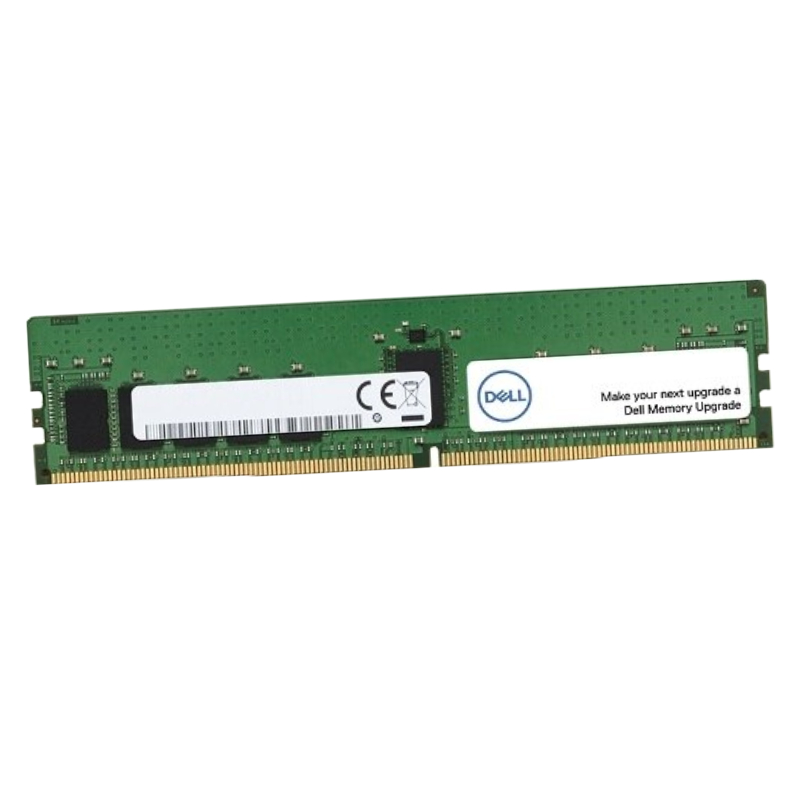
Dell AA498716 16GB DDR4 3200MHz PC4-25600 UDIMM Memory Module. New Sealed in Box (NIB) with 1 Year Replacement Warranty - Samsung Version
This high-performance 16GB DDR4 SDRAM Memory Module is designed to enhance your system's capabilities with improved speed and reliability. Ideal for both casual and advanced users, this module offers excellent performance with a bus speed of 3200MHz, ensuring smooth multitasking and quick access to data.
The Dell AA498716 16GB 3200MHz PC4-25600 CL22 Non-ECC Unbuffered Dual Rank X8 1.2v DDR4 SDRAM 288-Pin UDIMM Memory Module represents a specific, high-value category of desktop RAM built to deliver reliable mainstream performance across a wide range of computing tasks. This category page is focused on modules matching that exact specification: 16GB capacity, DDR4 technology running at 3200MHz, PC4-25600 bandwidth, CAS latency 22, non-ECC unbuffered design, dual-rank X8 architecture, standard 1.2 volt operation, and the ubiquitous 288-pin UDIMM form factor. These modules are aimed primarily at system builders, workstation users, content creators, and professionals who require stable single-module capacity or matched pairs for dual-channel systems. On category pages and product listings, emphasizing the full product name helps search engines and buyers immediately recognize the compatibility, performance profile, and vendor association.
Sixteen gigabytes per module offers a balanced blend of multitasking headroom and cost efficiency for modern desktop environments. For general productivity, web browsing with many tabs, office applications, light photo editing, and virtualized development environments, a 16GB module serves as a solid base. When two identical 16GB modules are installed in dual-channel configurations, the effective memory available for the operating system and applications increases while bandwidth utilization is improved, which benefits memory-bound workloads. This capacity is also a good foundation for content creation workflows such as photo libraries, moderate video editing timelines, and running local virtual machines or containers without constant page file thrashing.
CAS latency 22 (CL22) describes the number of clock cycles the memory takes to respond to read commands. While lower latency is generally desirable, the overall performance impact depends on both the CAS number and the operating frequency. At 3200MHz, CL22 represents a latency profile optimized for stability and compatibility across a range of consumer platforms.
This product line is non-ECC and unbuffered, which is the standard for desktop PCs and workstations where error correction is not mandated. Non-ECC memory does not provide single-bit error correction, which reduces latency and cost compared to ECC variants. Buffered or registered modules are typically used in servers and high-end enterprise hardware for handling large amounts of memory reliably. For small business desktops, creative workstations, and gaming machines, non-ECC unbuffered modules like these are the default choice. Category descriptions should clarify that non-ECC suits the majority of consumer use cases while directing server buyers to ECC/registered alternatives.
Dual rank X8 indicates the internal organization of the memory chips where each rank contains chips with an 8-bit data width. Dual-rank modules can provide density and performance benefits over single-rank modules because the memory controller can interleave accesses between ranks, improving throughput in certain scenarios. However, some motherboards may have limitations on the number of ranks per channel when fully populated, so system builders should consult motherboard memory population guidelines. Presenting this technical detail on the category page helps advanced buyers determine how modules will behave in multi-module configurations and assists in planning upgrades or high-density memory builds.
The 288-pin UDIMM form factor is the physical standard for desktop DDR4 memory. This ensures plug-and-play compatibility with supported consumer and workstation motherboards. The key to smooth upgrades is confirming the motherboard supports DDR4 UDIMM modules at the required frequency and voltage. Descriptions should highlight the mechanical fit and pin count to reduce returns and to guide buyers toward checking motherboard manuals or product Q&A sections for compatibility verification.
A nominal voltage of 1.2 volts is the standard for DDR4 modules and helps deliver improved power efficiency compared to previous generations. Lower voltage reduces thermal output and can marginally extend component longevity under typical operating conditions. For energy-conscious users and compact PC builders, 1.2v operation reduces cooling requirements. However, enthusiasts who plan to overclock should note that increasing DRAM voltage is a common method to stabilize higher frequencies; doing so moves the module outside of its stock specifications and should be handled cautiously.
Ensuring compatibility begins with the motherboard. Buyers must check the supported memory types, maximum single-module capacity, and the official memory support list if available. Many modern consumer motherboards support DDR4-3200 either natively or via enabling XMP/DOCP profiles in the BIOS. Users should be guided on enabling the correct memory profile to run at the specified 3200MHz frequency, as default BIOS settings sometimes default to JEDEC timings at lower frequencies. The category description should include reminders to update BIOS firmware where appropriate, since motherboard manufacturers release updates that improve memory compatibility and stability with specific modules and rank combinations.
This category includes both single-module sales and matched kits. A single Dell AA498716 16GB module is ideal for incremental upgrades, whereas purchasing matched pairs ensures manufacturers have tested the modules together for dual-channel operation and optimized timings. When expanding an existing configuration, mixing modules of different capacities, speeds, or ranks can lead to the system running at the lowest common denominator. Buyers are advised to match capacity, speed, and rank where possible, and to use the motherboard manual for channel population order when installing a single module or a pair.
In gaming, memory size and bandwidth both matter. A 16GB module in a dual-channel setup is often recommended for modern titles paired with a capable CPU and discrete GPU. The 3200MHz frequency helps reduce stutters when loading textures and decreases frame time variance in some CPU-bound scenarios. While the difference between DDR4-3200 and slightly faster modules is modest for most games, the stability and compatibility of a well-built Dell-branded module are attractive for users who prioritize reliability over marginal benchmark gains. Emphasizing practical performance expectations on the category page helps reduce unrealistic expectations and encourages buyers to pair the memory with balanced system components.
Mixing different memory modules can work but introduces variables that may degrade performance or stability. The system typically defaults to the slowest timings and lowest frequency across installed modules. To maintain peak performance, using matched modules of identical spec — capacity, speed, latency, rank, and voltage — is recommended. On category pages, explaining why matched configurations are preferable helps users make informed purchasing decisions, increases confidence in buying single modules for expansion, and steers customers toward bundled options if they lack compatible existing memory.
Buyers often compare timing and frequency trade-offs. Explaining that CL22 at 3200MHz is optimized for wide compatibility helps contextualize price-to-performance decisions. Similarly, faster frequencies like 3600MHz or 4000MHz can offer benefits in specific benchmarked scenarios but may require motherboard and CPU support and potential BIOS tuning. Presenting these trade-offs without prescriptive language empowers customers to choose based on workload, budget, and compatibility priorities.


 Contact Us
 Information
 Catalog
 Solid State Drives (SSD)
 Network Switches
 Hard Disk Drives
 HBA & Controllers
 PC & Servers
 PC & Server Memory
 CPU & Processors
 Network Routers
 Power Supplies
 Tape Drives & Libraries
 Network Devices
 Computer & Network Cables