
(7% discount is applied at checkout)
Cart is empty
Your go-to destination for cutting-edge server products
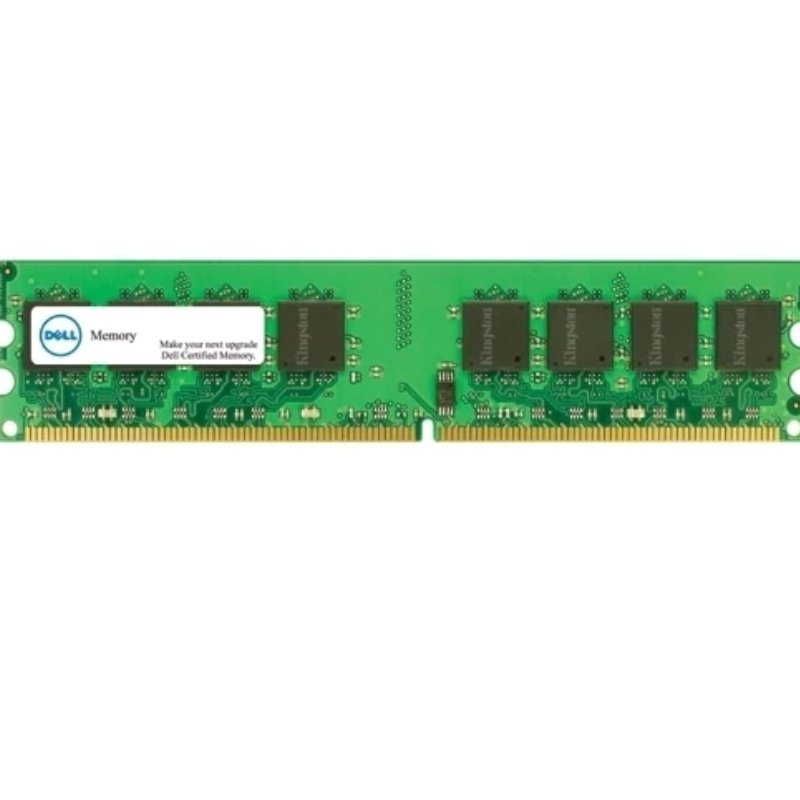
Dell AB675793 16GB DDR4-3200MHz ECC Unbuffered Memory Module. New Sealed in Box (NIB)
The Dell AB675793 16GB DDR4 3200MHz ECC Unbuffered UDIMM is engineered to deliver dependable speed, improved multitasking, and stable system behavior for professional workstations and enterprise-grade servers. Designed with Single Rank x8 architecture and advanced error‑correcting capabilities, this module ensures smooth data handling even under demanding workloads.
This Dell memory module integrates flawlessly with a wide range of Dell PowerEdge servers and Precision workstations, ensuring optimal performance and long‑term reliability.
The Dell AB675793 16GB 3200MHz PC4-25600 Single Rank x8 CL22 ECC Unbuffered DDR4 SDRAM 288-Pin UDIMM Memory Module belongs to a specialized category of enterprise-grade system memory designed to bridge the gap between workstation reliability and server-class data integrity. This category focuses on ECC unbuffered DDR4 modules optimized for modern Intel and AMD platforms that require error correction without the added latency or electrical buffering associated with registered DIMMs. Memory modules in this class are commonly deployed in professional workstations, entry-level servers, and business-critical desktop systems where accuracy, stability, and predictable performance are essential. ECC UDIMM memory represents a refined segment of the DDR4 market, combining the simplicity of unbuffered architectures with the protection of single-bit error correction. Within this category, the Dell AB675793 stands out as a vendor-qualified solution built to Dell’s strict compatibility and validation standards. Category pages covering this class of memory emphasize reliability, chipset compatibility, electrical specifications, and operational longevity rather than consumer-oriented aesthetics or overclocking features.
DDR4 SDRAM memory operating at 3200MHz, also known as PC4-25600, defines a performance tier that delivers high bandwidth suitable for data-intensive workloads, virtualization environments, and professional content creation. Modules in this category utilize the DDR4 memory standard’s improvements over DDR3, including higher transfer rates, reduced operating voltage, and improved bank group architecture. At 3200MT/s, memory bandwidth is sufficient to support multi-core processors without becoming a bottleneck during sustained computational tasks. The Dell AB675793 module fits squarely within this performance class, offering a balance between speed and stability that aligns with enterprise deployment requirements. Category-level descriptions for DDR4-3200 ECC UDIMM memory often highlight the ability to support modern CPUs that are designed to scale with higher memory frequencies while maintaining signal integrity across all DIMM slots. This performance class is particularly relevant for systems running databases, engineering simulations, and virtualization hosts where consistent throughput is required.
PC4-25600 denotes a theoretical peak bandwidth of 25.6GB/s per module, which is a defining characteristic of this category. Memory modules operating at this bandwidth enable faster data movement between the CPU and system memory, improving responsiveness in memory-sensitive applications. In ECC UDIMM configurations, this bandwidth is delivered without sacrificing data integrity, making the category suitable for workloads that cannot tolerate silent data corruption. Category-level considerations include how PC4-25600 memory interacts with dual-channel and quad-channel memory architectures. When deployed in matched configurations, modules like the Dell AB675793 can scale aggregate bandwidth significantly, providing a strong foundation for professional-grade systems that rely on parallel memory access patterns.
ECC unbuffered DDR4 memory is a defining subcategory within the broader DDR4 ecosystem, prioritizing error detection and correction at the hardware level. ECC functionality allows the memory controller to identify and correct single-bit errors and detect multi-bit errors, reducing the risk of data corruption that could compromise applications or operating systems. The Dell AB675793 module embodies this focus, making it appropriate for environments where system stability is non-negotiable. Unlike registered or buffered DIMMs, ECC UDIMMs do not include a register between the memory controller and the DRAM chips. This unbuffered design results in lower latency and simpler signaling requirements, which are advantageous in workstations and entry-level servers. Category descriptions for ECC UDIMM memory often emphasize this balance between performance and reliability, positioning it as an ideal solution for systems that need ECC protection without the complexity of RDIMM or LRDIMM architectures.
Systems that utilize ECC UDIMM memory are frequently tasked with running applications where even minor data errors can lead to significant consequences. Examples include scientific computation, CAD workloads, and server-based business applications. Memory modules in this category are validated to operate continuously under load, ensuring that ECC mechanisms function reliably over extended periods. The Dell AB675793 module, as part of this category, is designed to integrate seamlessly with ECC-capable CPUs and chipsets. Category-level content often highlights the importance of pairing ECC UDIMMs with compatible processors, as ECC functionality depends on support from both the memory module and the memory controller.
Single rank x8 memory modules represent a specific architectural choice within the DDR4 ECC UDIMM category. A single rank design means that all memory chips are accessed as one group, which can offer advantages in terms of compatibility and power efficiency. The x8 chip organization indicates that each DRAM chip provides an 8-bit data width, which is standard for ECC memory configurations. The Dell AB675793 16GB module utilizes a single rank x8 layout that aligns with many workstation and server motherboard designs. Category descriptions often note that single rank modules can place less electrical load on the memory controller, potentially allowing for higher supported frequencies or improved stability when multiple DIMMs are installed.
Single rank ECC UDIMMs are widely compatible with a range of Intel Xeon and AMD workstation-class processors. This broad compatibility makes the category appealing to system integrators and IT professionals who need predictable behavior across different hardware configurations. The Dell AB675793 module is representative of this compatibility-driven design philosophy. Category-level explanations typically address how single rank modules can simplify memory population rules on motherboards, reducing the risk of configuration errors. This is particularly relevant in enterprise environments where systems are deployed at scale and consistency is critical.
CAS latency, expressed as CL22 for the Dell AB675793, is a key timing parameter that influences memory access latency. In the context of DDR4-3200 ECC UDIMM memory, CL22 represents a balanced timing profile that prioritizes stability and compatibility over aggressive low-latency tuning. Category descriptions often explain that enterprise memory favors conservative timings to ensure reliable operation across a wide range of conditions. While consumer-focused memory categories may emphasize lower CAS latency for marginal performance gains, the ECC UDIMM category values predictable timing behavior. The CL22 specification aligns with JEDEC standards for DDR4-3200 ECC memory, ensuring interoperability and adherence to industry norms.
The 288-pin UDIMM form factor defines the physical interface for DDR4 unbuffered memory modules. This form factor is widely supported across modern workstation and server motherboards, making it a foundational aspect of the ECC UDIMM category. The Dell AB675793 module conforms to this standard, ensuring straightforward installation and secure electrical connectivity. Category descriptions often detail how the 288-pin layout supports higher data rates and improved signal integrity compared to earlier DDR standards.
DDR4 memory operates at a nominal voltage of 1.2V, representing a significant improvement in power efficiency over previous generations. This reduced voltage is a defining characteristic of the DDR4 ECC UDIMM category, contributing to lower overall system power consumption and heat output. The Dell AB675793 module adheres to this voltage specification, aligning with energy-efficient system design goals. Category descriptions often emphasize how lower voltage operation benefits dense memory configurations and long-running workloads.


 Contact Us
 Information
 Catalog
 Solid State Drives (SSD)
 Network Switches
 Hard Disk Drives
 HBA & Controllers
 PC & Servers
 PC & Server Memory
 CPU & Processors
 Network Routers
 Power Supplies
 Tape Drives & Libraries
 Network Devices
 Computer & Network Cables