(7% discount is applied at checkout)
Cart is empty
Your go-to destination for cutting-edge server products
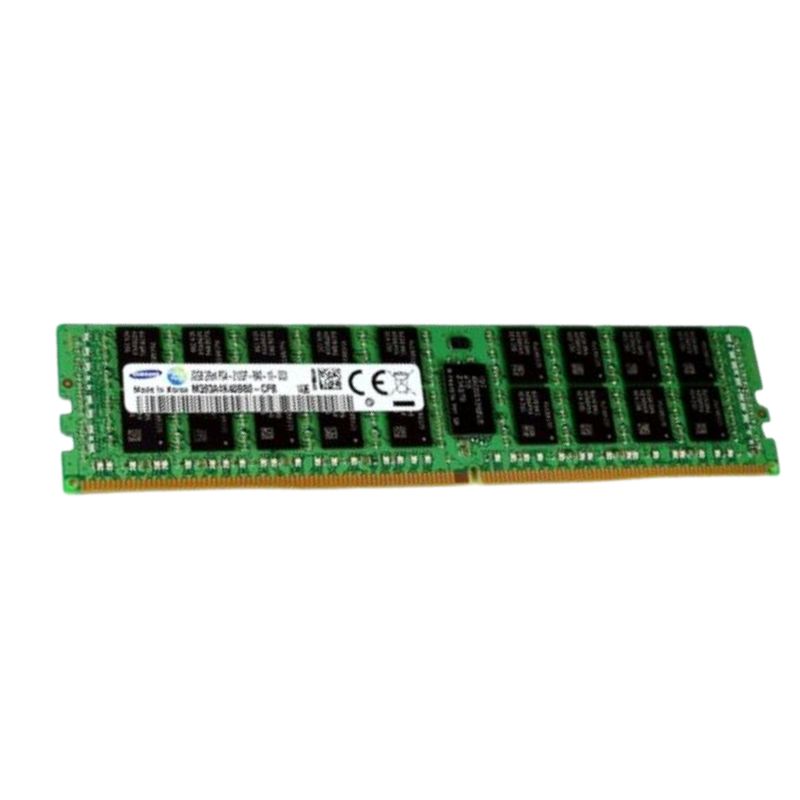


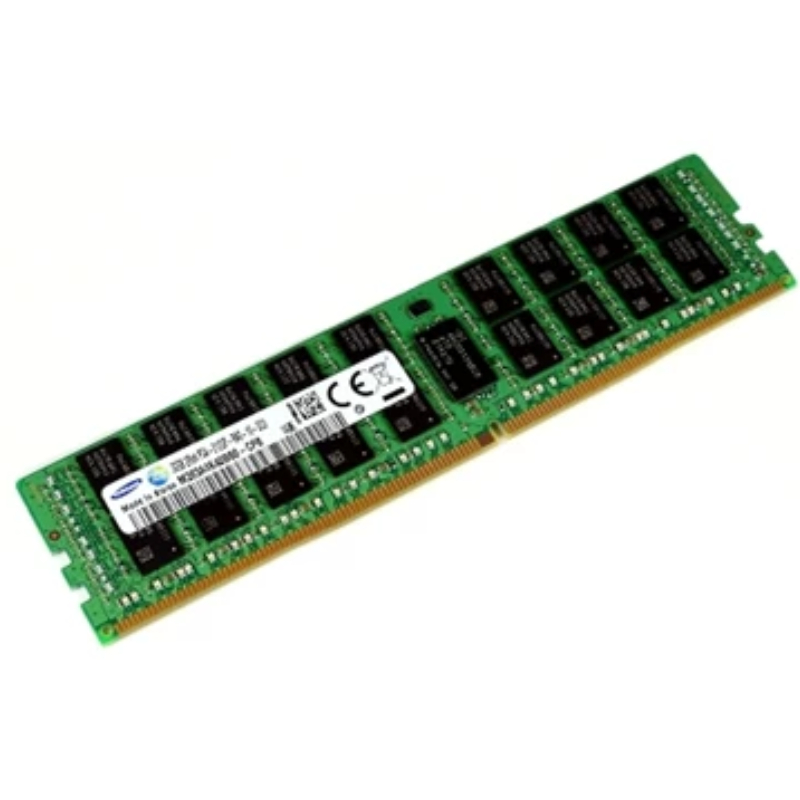
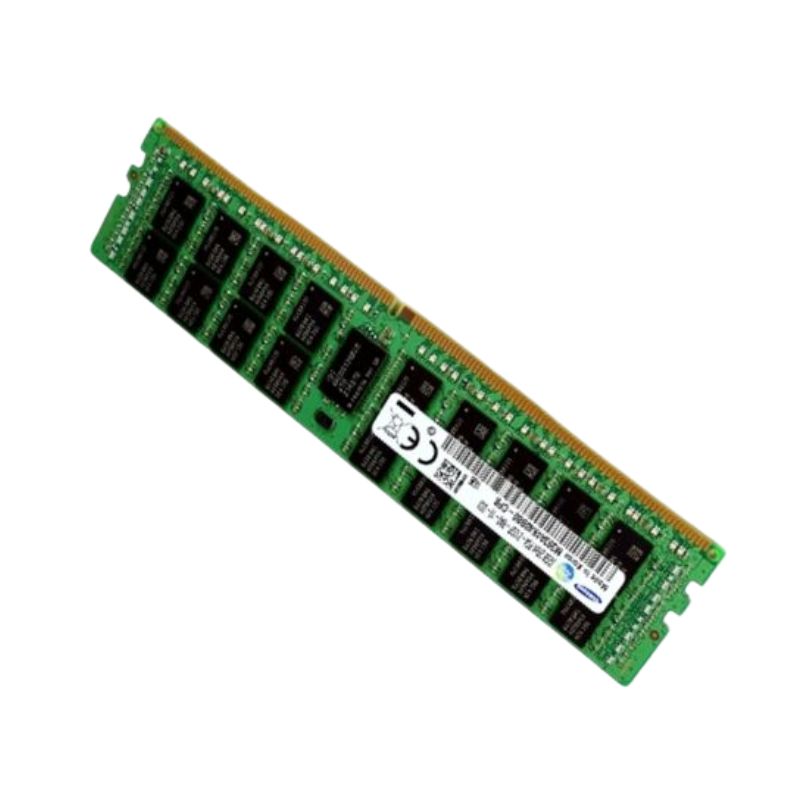
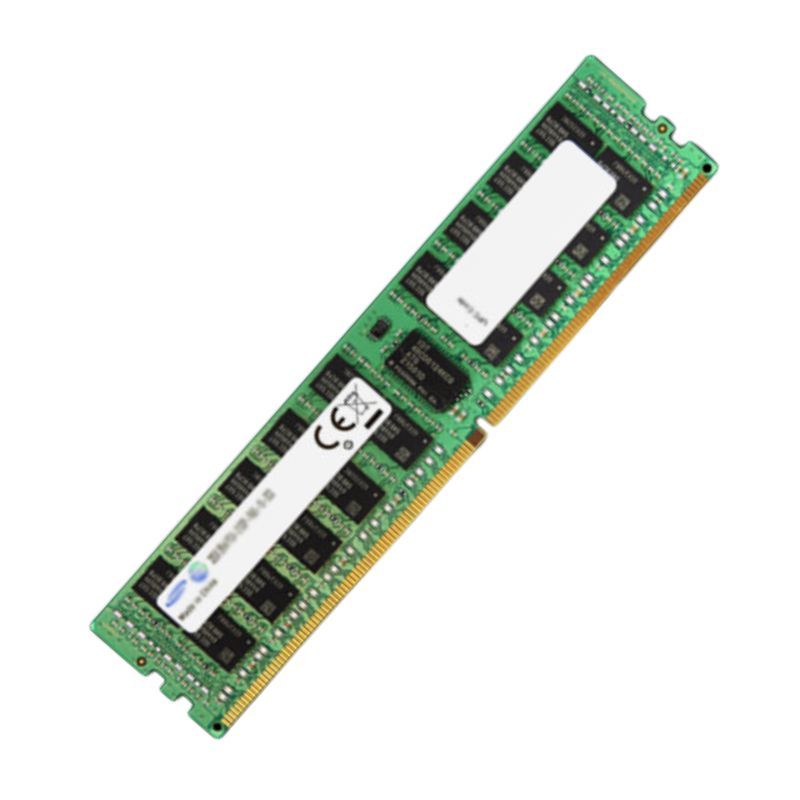
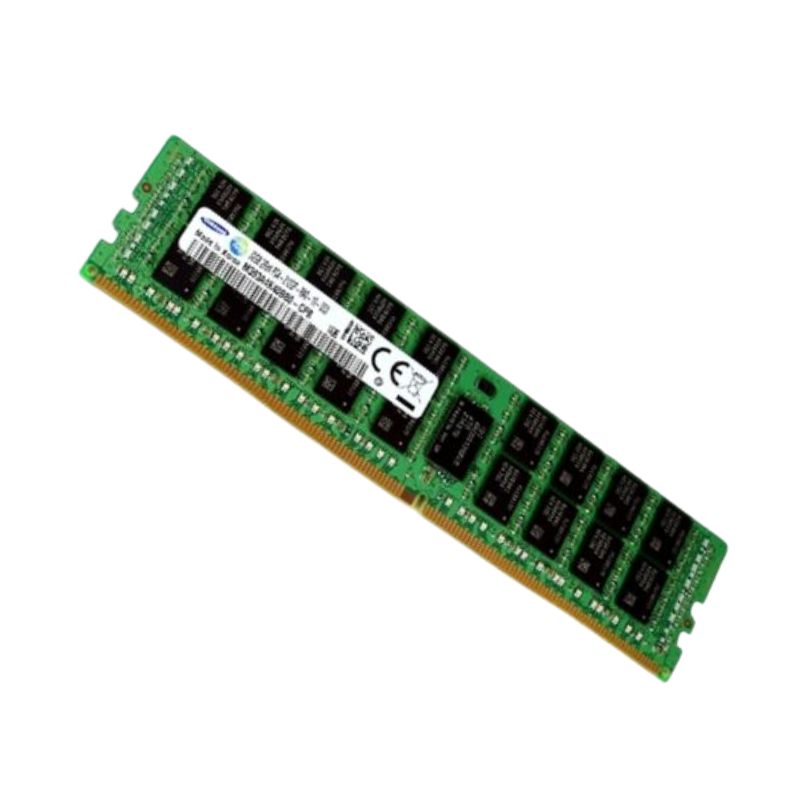
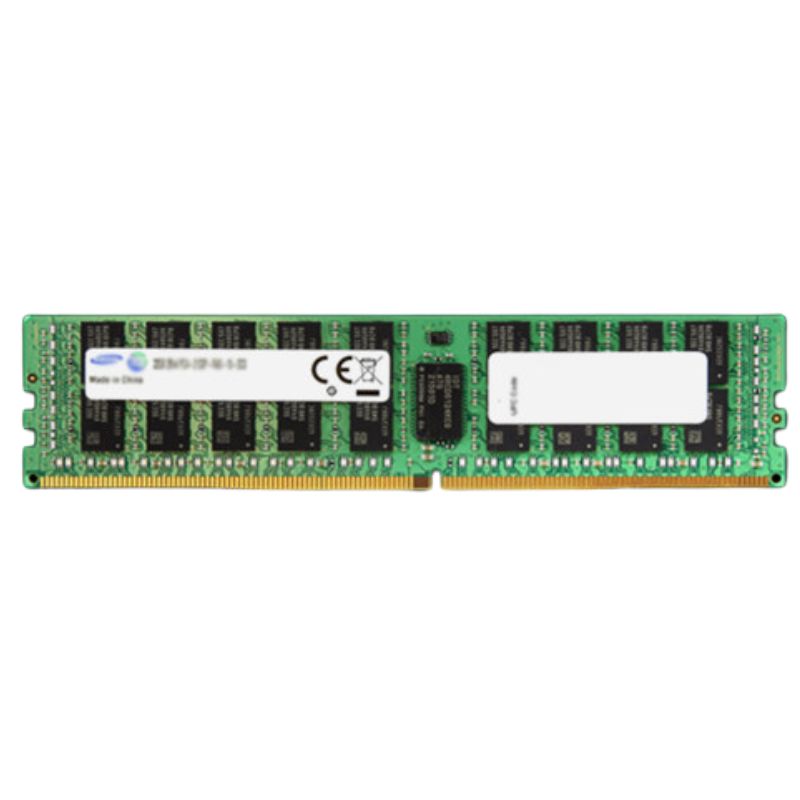
Samsung M321R4GA0PB0-CWMJH 32GB DDR5 SDRAM Memory Module. New Sealed in Box (NIB) with 3 Years Warranty
The Samsung M321R4GA0PB0-CWMJH represents a significant advancement in server and high-performance workstation memory technology. As a 32GB DDR5 Registered ECC RDIMM module, it is engineered for systems demanding unwavering stability, high bandwidth, and robust data integrity.
In the realm of high-performance computing, where data integrity and system stability are non-negotiable, a specific class of memory modules is essential. The Samsung M321R4GA0PB0-CWMJH represents the pinnacle of this category: DDR5 ECC Registered RDIMMs (Registered Dual In-line Memory Modules). Designed exclusively for servers, high-end workstations, and data center environments, these modules go beyond standard desktop memory to provide the robustness required for mission-critical applications. Unlike common unbuffered DIMMs (UDIMMs), RDIMMs incorporate a register (or buffer) between the memory controller and the DRAM chips. This crucial component reduces the electrical load on the controller, enabling higher capacities and more modules per channel while maintaining signal integrity and system stability. When combined with Error-Correcting Code (ECC), this architecture forms the bedrock of reliable enterprise computing, capable of automatically detecting and correcting the most common types of data corruption.
Every alphanumeric character in the part number signifies a key attribute. Breaking down "M321R4GA0PB0-CWMJH" reveals the module's DNA. This section details the core specifications that define its performance and compatibility.
This is a single 32-gigabyte module. The "1Rx4" notation is crucial, indicating its internal organization. It stands for Single Rank, by 4. This means the module's memory chips are organized into one single "rank" or block that the memory controller can access, and the data width per chip is 4 bits. This configuration impacts the total electrical load on the memory controller and is a key factor in system design, especially when populating multiple DIMMs per channel. A 1R design typically allows for higher speeds or denser configurations compared to multi-rank (2R, 4R) modules at the same density.
DDR5's 5600 MT/s is a raw data rate. The architecture introduces a new feature: the splitting of the 64-bit data channel into two independent 32-bit sub-channels. This allows for more efficient data handling and can lead to higher effective throughput compared to previous memory generations, even at similar megatransfer rates, by reducing command/address overhead.
The CAS Latency (CL) of 46 clock cycles is a critical timing parameter. It measures the delay between the memory controller requesting data and the moment the data is available on the module's output pins. While this number is higher than typical consumer DDR5 modules, it is a standard and optimized latency for server-grade Registered (RDIMM) memory operating at this high speed (5600 MT/s). Server platforms prioritize stability, capacity, and bandwidth over ultra-tight latencies, and the CL46 timing is engineered for reliable operation in thermally variable and electrically demanding multi-DIMM configurations.
The module operates at a data rate of 5600 Megatransfers per second (MT/s), often referred to as 5600Mbps. This translates to a staggering peak transfer rate of 44,800 MB/s per module, which is the meaning behind the "PC5-44800" designation (PC5 for DDR5, 44800 for MB/s). This bandwidth is a substantial leap over previous DDR4 generations, enabling faster data processing for CPU-intensive workloads, large datasets, and virtualization.
Operating at a standard DDR5 voltage of 1.1 volts, this module delivers higher performance at a lower voltage than DDR4 (typically 1.2V). This reduction directly translates to lower power consumption and reduced heat output at the module level, a critical factor when scaling to hundreds or thousands of modules in a data center, impacting overall electricity costs and cooling requirements.
Beyond basic capacity and speed, this Samsung module integrates features essential for mission-critical computing environments.
This is an ECC (Error-Correcting Code) Registered DIMM. ECC is a non-optional feature for servers and workstations. It detects and corrects single-bit memory errors on-the-fly and can detect (but not correct) multi-bit errors. This hardware-level data integrity protection prevents silent data corruption, system crashes, and computational errors that could be catastrophic in financial, scientific, or database applications. The Registered (buffered) design, as mentioned, supports higher memory capacities by stabilizing the electrical signals across many modules.
DDR5 architecture introduces an additional layer of error correction: On-Die ECC. Inside each DRAM chip, a small portion of the memory cells are used to correct errors within the chip itself before data is sent to the module's main ECC logic. This improves reliability at the silicon level, reducing the error rate seen by the system's main ECC and enhancing the overall robustness of the memory subsystem.
The "ECC" and "Registered" components of this memory module are what primarily distinguish it from consumer-grade memory. These features are non-negotiable for mission-critical systems.
ECC is a hardware-level technology that detects and corrects the most common types of internal data corruption. Single-bit errors are corrected on-the-fly, and multi-bit errors are detected. This prevents silent data corruption, system crashes, and computational errors that could lead to corrupted databases, financial miscalculations, or scientific inaccuracies. For any server or workstation handling valuable or irreplaceable data, ECC is essential.
This is a Registered DIMM (RDIMM). It incorporates a register (or buffer) on the module itself, located between the memory controller and the DRAM chips. This register handles electrical load, relieving the memory controller of the burden of driving all the memory chips directly. This allows a system to support a significantly greater number of memory modules—often the maximum capacity a server motherboard can handle—with greater signal integrity and stability at high speeds. The trade-off is an added clock cycle of latency, which is a worthwhile compromise for the scalability and reliability it provides in multi-DIMM configurations.
A key innovation in DDR5 is the relocation of the Power Management Integrated Circuit (PMIC) from the motherboard to the memory module itself. This on-module PMIC provides more stable and cleaner power delivery to the DRAM chips. It allows for better voltage regulation, reduces electrical noise, and improves signal integrity, which is essential for achieving and maintaining high speeds like 5600 MT/s reliably across all installed modules.
This module uses the standard 288-pin layout defined for DDR5 RDIMMs. It is physically different from a DDR4 288-pin DIMM due to a changed key notch position to prevent accidental insertion into an incompatible motherboard. The "RDIMM" suffix confirms it is the Registered variant. It is absolutely critical to verify motherboard and CPU compatibility, as platforms are designed specifically for RDIMMs, UDIMMs (unbuffered), or LRDIMMs (Load Reduced).
This memory module is designed for specific platforms and workloads. It is not compatible with consumer desktop PCs or laptops.
This memory excels in environments demanding high throughput, large capacity, and supreme data integrity. Primary use cases include:
Virtualization Hosts: Running multiple virtual machines requires large, fast memory pools. Relational Databases (SQL, Oracle): Performance is heavily dependent on memory bandwidth and capacity for caching. In-Memory Databases (SAP HANA, Redis): These workloads reside entirely in RAM, making capacity and reliability paramount. Scientific and High-Performance Computing (HPC): Simulations and modeling are often memory-bound. Cloud Infrastructure and Storage Servers: For controller caching and metadata operations.


 Contact Us
 Information
 Catalog
 Solid State Drives (SSD)
 Network Switches
 Hard Disk Drives
 HBA & Controllers
 PC & Servers
 PC & Server Memory
 CPU & Processors
 Network Routers
 Power Supplies
 Tape Drives & Libraries
 Network Devices
 Computer & Network Cables