(7% discount is applied at checkout)
Cart is empty
Your go-to destination for cutting-edge server products
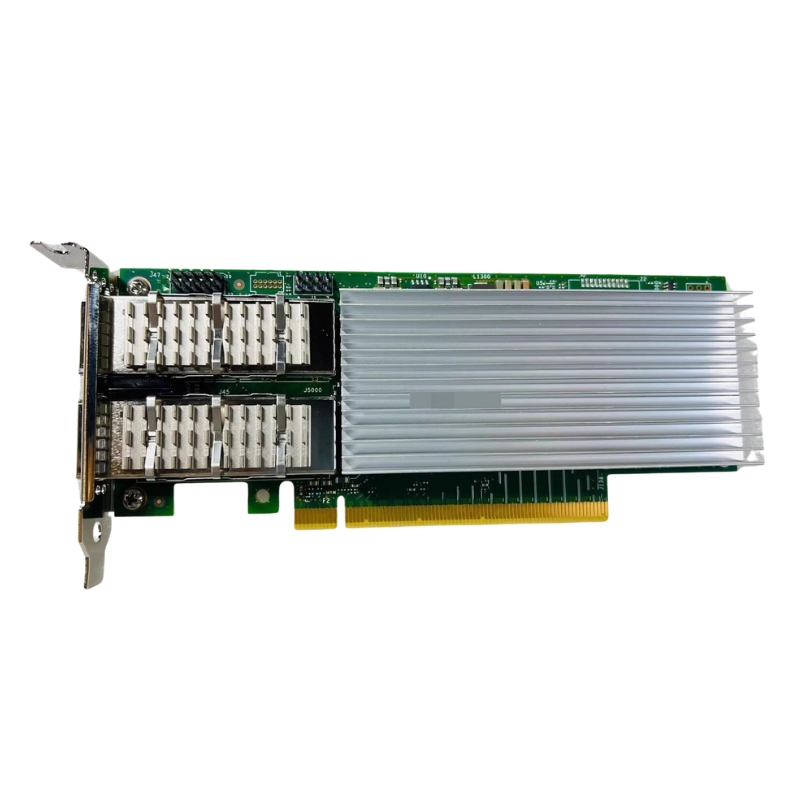


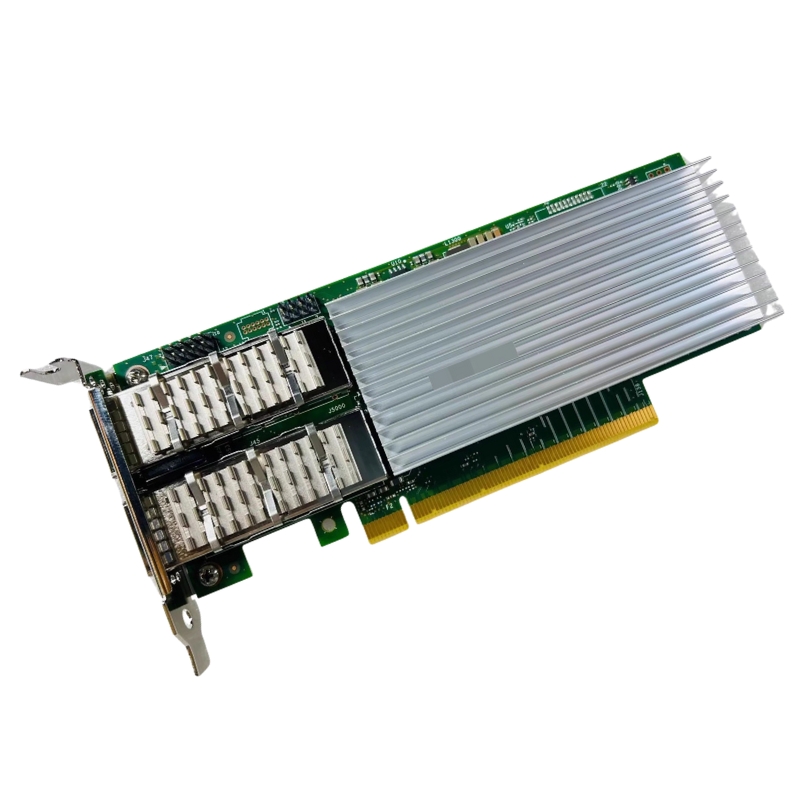
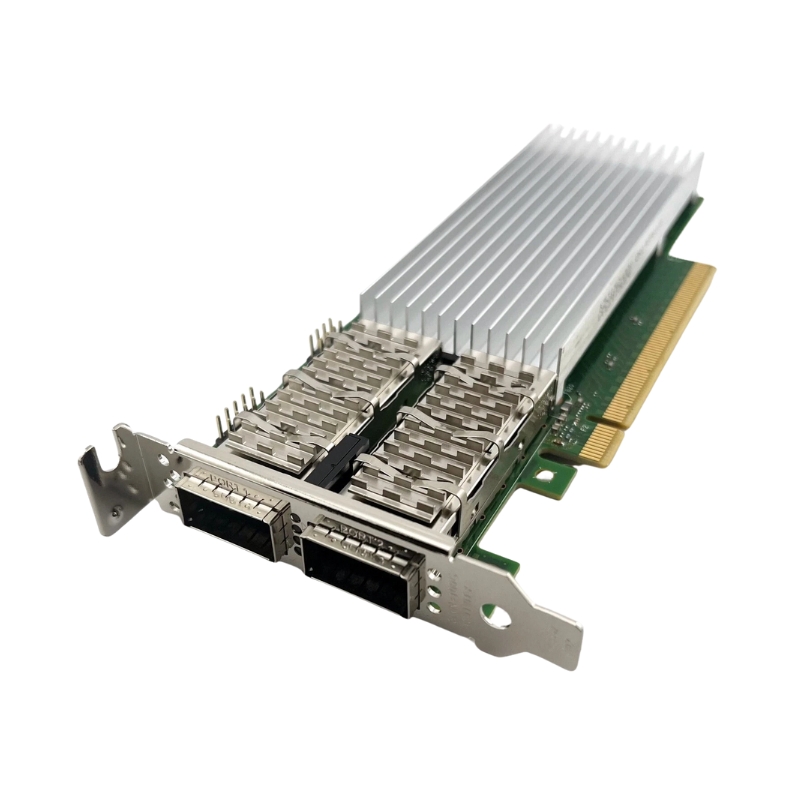
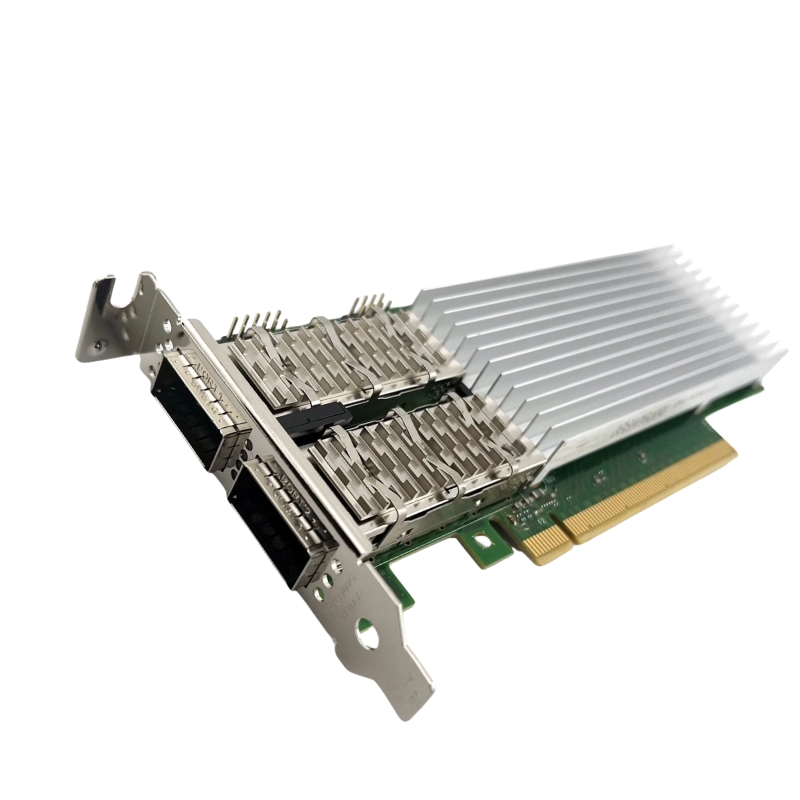
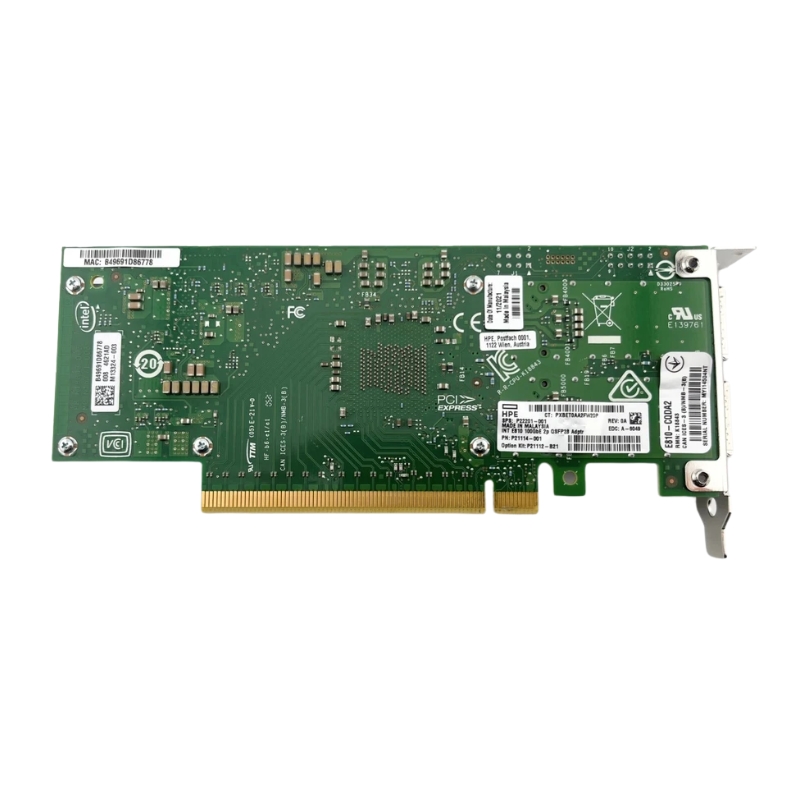
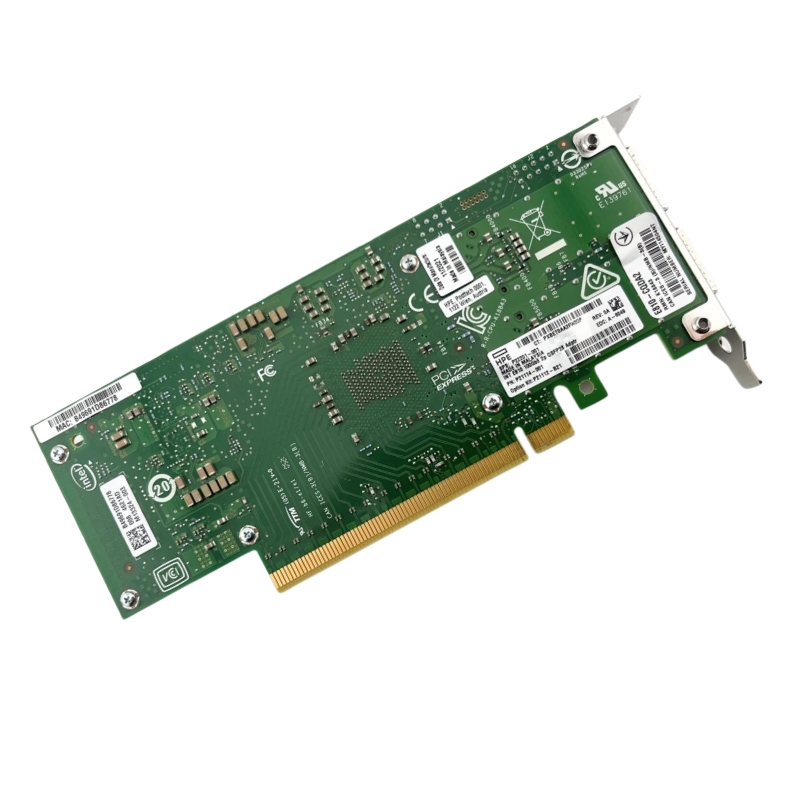
HPE P21112-B21 2 Ports PCI-Express Adapter. Excellent Refurbished with 1 year replacement warranty
| SKU/MPN | Warranty | Price | Condition | You save |
|---|---|---|---|---|
| P21112-B21 | 1 Year Warranty | $1,515.00 | Factory-Sealed New in Original Box (FSB) | You save: $530.25 (26%) |
| P21112-B21 | 1 Year Warranty | $710.00 | Excellent Refurbished | You save: $248.50 (26%) |
The HPE P21112-B21 2 Ports PCI-Express Adapter is a high-performance network interface solution designed to deliver advanced Ethernet connectivity, enhanced server networking capabilities, and efficient data transfer performance for modern enterprise environments. Built with the Intel Ethernet Controller E810-CAM2 ASIC, this HPE network adapter provides reliable 10/25Gb Ethernet connectivity while supporting advanced virtualization, cloud networking, storage acceleration, and data center workloads.
Designed as a stand-up PCI Express adapter, the HPE P21112-B21 integrates seamlessly with various HPE ProLiant and Edgeline server platforms. With PCIe 4.0 x16 interface technology, dual-port networking capability, and comprehensive protocol support, this adapter helps organizations improve network efficiency, reduce latency, and optimize server performance.
Power Specifications
The HPE P21112-B21 2 Ports PCI-Express Adapter is a high-performance server expansion solution designed to enhance connectivity, scalability, and data communication capabilities within modern enterprise computing environments. This adapter belongs to the category of professional server networking and expansion hardware, providing organizations with a reliable method to extend system functionality through PCI-Express interface technology. Built for demanding workloads, this type of adapter helps improve server flexibility by adding additional communication ports while supporting efficient data transfer between connected infrastructure components.
Enterprise servers require dependable expansion components to maintain consistent performance across applications such as virtualization, cloud computing, database management, storage environments, and high-volume network operations. The HPE P21112-B21 2 Ports PCI-Express Adapter is engineered to meet these requirements by providing additional connectivity options for HPE ProLiant server platforms and compatible systems. Its PCI-Express architecture enables high-speed communication between the adapter and the server motherboard, helping reduce bottlenecks and improving overall system efficiency.
PCI-Express adapters have become an essential component in modern data centers because they provide a standardized method for expanding server capabilities. Unlike older expansion technologies, PCI-Express delivers improved bandwidth, lower latency, and better scalability, making it suitable for high-performance computing environments. The HPE P21112-B21 adapter utilizes PCI-Express connectivity to deliver dependable performance while maintaining compatibility with enterprise server architectures.
The two-port design provides additional flexibility for administrators who need multiple connections from a single server system. This allows organizations to optimize hardware resources, simplify infrastructure planning, and support advanced networking requirements without replacing existing server platforms. By integrating additional ports through a PCI-Express expansion slot, businesses can achieve greater operational efficiency and improved connectivity management.
HPE ProLiant servers are widely used across enterprise environments due to their reliability, performance, and management capabilities. Expansion adapters such as the HPE P21112-B21 are designed to complement these server platforms by providing additional hardware functionality. Whether used in data centers, corporate IT environments, or specialized computing applications, this adapter supports organizations seeking dependable server upgrades.
Server administrators often require expansion components that can integrate seamlessly with existing infrastructure. The HPE P21112-B21 2 Ports PCI-Express Adapter offers a practical upgrade path by allowing additional connectivity without requiring a complete system replacement. This makes it a valuable choice for businesses looking to extend the useful lifespan of their server investments while improving infrastructure performance.
Modern businesses depend on uninterrupted access to applications, services, and data resources. Network performance and server connectivity directly influence productivity, user experience, and operational reliability. The HPE P21112-B21 adapter provides a dependable hardware foundation for improving server communication capabilities in environments where consistent performance is essential.
Applications such as enterprise databases, virtualization platforms, high-performance storage solutions, and distributed computing systems benefit from efficient server expansion technology. By adding additional connectivity resources, organizations can create more adaptable infrastructures capable of handling increasing workloads and evolving technology requirements.
The HPE P21112-B21 2 Ports PCI-Express Adapter combines enterprise-grade engineering with flexible expansion capabilities. It is designed to deliver stable operation, efficient communication, and long-term reliability for professional server environments. The adapter provides important advantages for organizations that require enhanced connectivity and scalable hardware solutions.
One of the primary advantages of the HPE P21112-B21 adapter is its two-port configuration. Multiple ports allow administrators to connect additional network or communication interfaces depending on infrastructure requirements. This design supports improved resource allocation and provides greater flexibility when configuring server environments.
Dual-port adapters are especially useful in enterprise settings where servers must communicate with multiple systems, networks, or storage environments. By offering more than one connection point, the adapter helps simplify hardware deployment while providing additional options for network architecture planning.
The PCI-Express interface provides the foundation for fast and reliable communication between the adapter and server hardware. This technology is widely adopted in enterprise computing because of its ability to support high bandwidth requirements while maintaining efficient power usage and system stability.
With PCI-Express connectivity, the HPE P21112-B21 adapter can deliver improved data flow compared with traditional expansion technologies. This makes it suitable for organizations managing demanding workloads where fast communication between server components is critical.
HPE designs server accessories and expansion products with enterprise reliability in mind. The P21112-B21 adapter is developed to support professional computing environments where hardware stability and compatibility are essential. Properly matched server components help reduce configuration issues and improve overall infrastructure dependability.
Organizations can benefit from using manufacturer-designed expansion solutions because they are developed with specific server requirements in consideration. This approach helps maintain consistent performance and supports easier hardware management throughout the equipment lifecycle.
The HPE P21112-B21 2 Ports PCI-Express Adapter is suitable for a wide range of enterprise applications where additional server connectivity is required. From small business environments to large-scale data centers, expansion adapters provide valuable functionality by allowing systems to adapt to changing infrastructure demands.
Data centers rely on efficient server communication to support thousands of connected devices, applications, and services. Expansion adapters play an important role in maintaining flexible and scalable architectures. The HPE P21112-B21 adapter can contribute to improved server connectivity by providing additional interface options for complex network environments.
Large organizations frequently upgrade server capabilities rather than replacing complete systems. Adding PCI-Express adapters is a cost-effective method of increasing functionality while maintaining existing hardware investments. This approach helps reduce downtime and supports gradual infrastructure improvements.
Virtualized environments require powerful server resources and efficient communication channels. Hypervisors, virtual machines, and cloud applications depend on reliable hardware components to deliver consistent performance. Expansion adapters help provide the connectivity required for these advanced computing environments.
The HPE P21112-B21 adapter can support organizations building flexible virtualization infrastructures by expanding available server interfaces. Improved connectivity allows administrators to better distribute workloads and optimize server resources according to operational requirements.
Storage-intensive applications require dependable communication between servers and connected systems. Enterprise databases, analytics platforms, and business applications generate significant data traffic that requires efficient hardware support. PCI-Express adapters provide additional connectivity options that help servers manage increasing information demands.
By integrating reliable expansion hardware, organizations can improve infrastructure scalability while maintaining consistent application performance. The HPE P21112-B21 adapter represents a practical solution for businesses requiring additional server connectivity without major architectural changes.
Selecting the right server expansion hardware is important for maintaining reliable IT operations. The HPE P21112-B21 adapter provides several benefits for organizations that require improved connectivity, flexible deployment options, and dependable enterprise performance.
As businesses grow, their technology requirements continue to increase. Server systems must be capable of adapting to higher workloads, additional users, and expanding applications. Expansion adapters provide an effective way to increase system capabilities without replacing existing hardware.
The HPE P21112-B21 enables organizations to enhance server functionality through a simple hardware upgrade. This scalability makes it valuable for companies planning long-term infrastructure growth.
Upgrading existing servers with compatible expansion components can be more economical than purchasing completely new systems. The HPE P21112-B21 adapter allows businesses to maximize the value of their current server investments while gaining additional connectivity features.
This approach supports budget-conscious IT planning by extending equipment usability and reducing unnecessary hardware replacement cycles.
Enterprise technology environments require components that deliver dependable performance under continuous operation. The HPE P21112-B21 2 Ports PCI-Express Adapter is designed for organizations seeking professional-grade server expansion capabilities. Its combination of PCI-Express technology, multi-port connectivity, and enterprise compatibility makes it a valuable addition to modern server infrastructures.
From improving network flexibility to supporting evolving application requirements, this adapter category provides organizations with the ability to create more efficient, scalable, and reliable computing environments. As businesses continue to depend on advanced digital services, high-quality server expansion solutions remain an important part of successful IT infrastructure management.


 Contact Us
 Information
 Catalog
 Solid State Drives (SSD)
 Network Switches
 Hard Disk Drives
 HBA & Controllers
 PC & Servers
 PC & Server Memory
 CPU & Processors
 Network Routers
 Power Supplies
 Tape Drives & Libraries
 Network Devices
 Computer & Network Cables