(7% discount is applied at checkout)
Cart is empty
Your go-to destination for cutting-edge server products
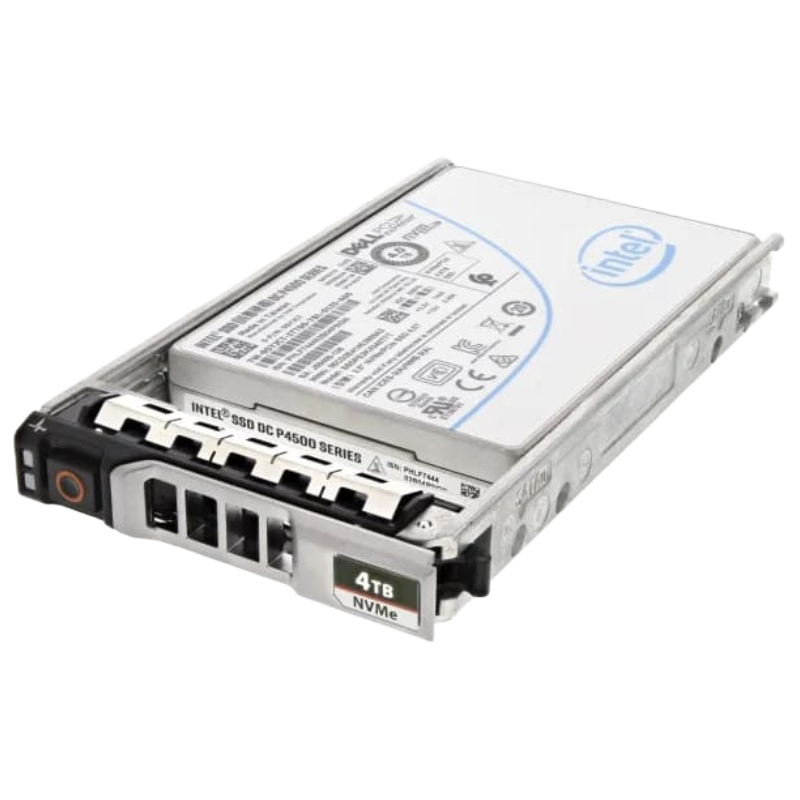


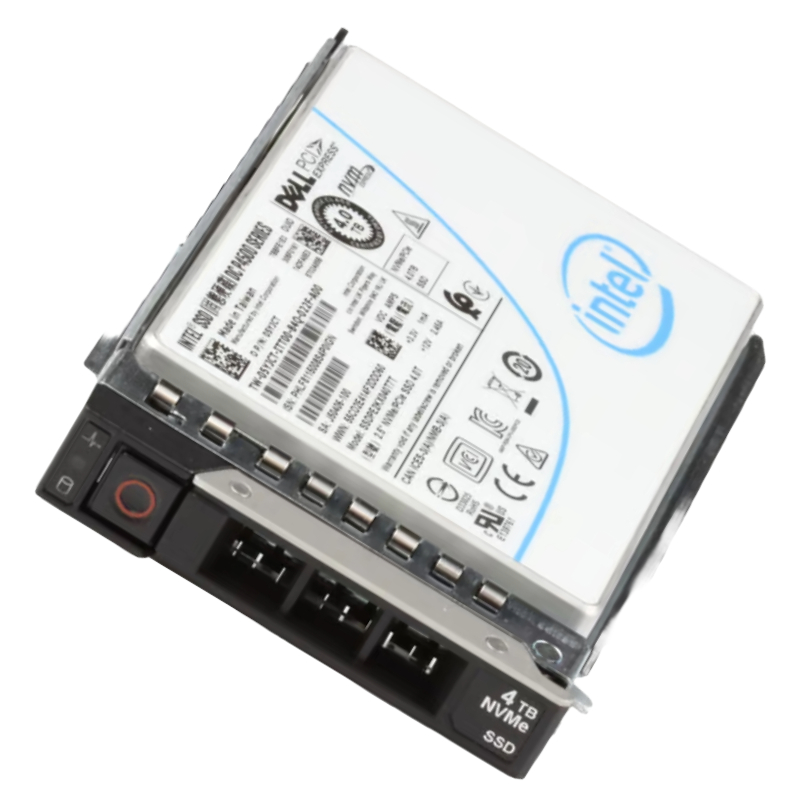
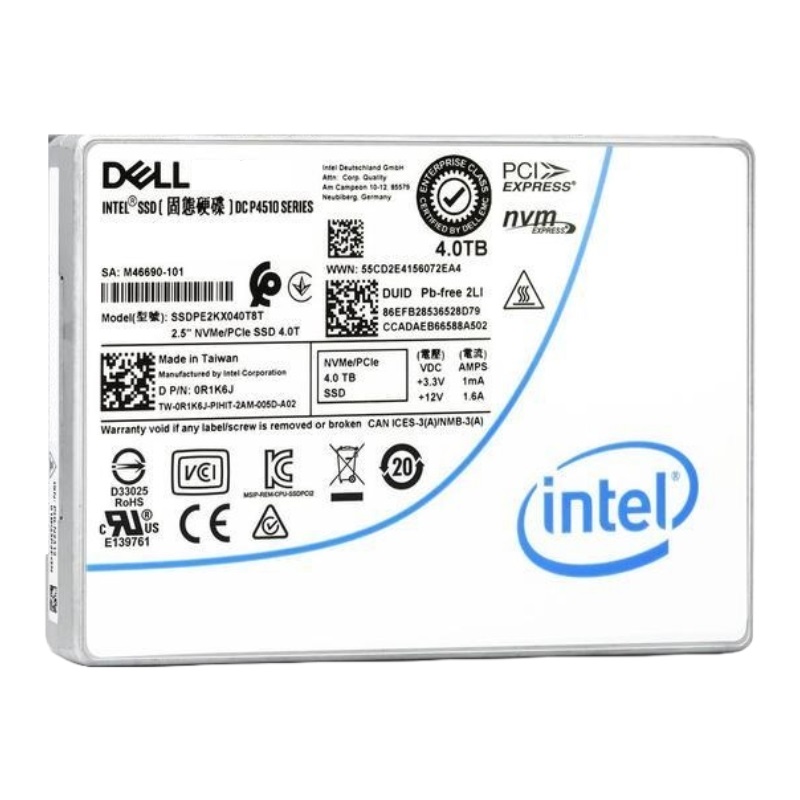
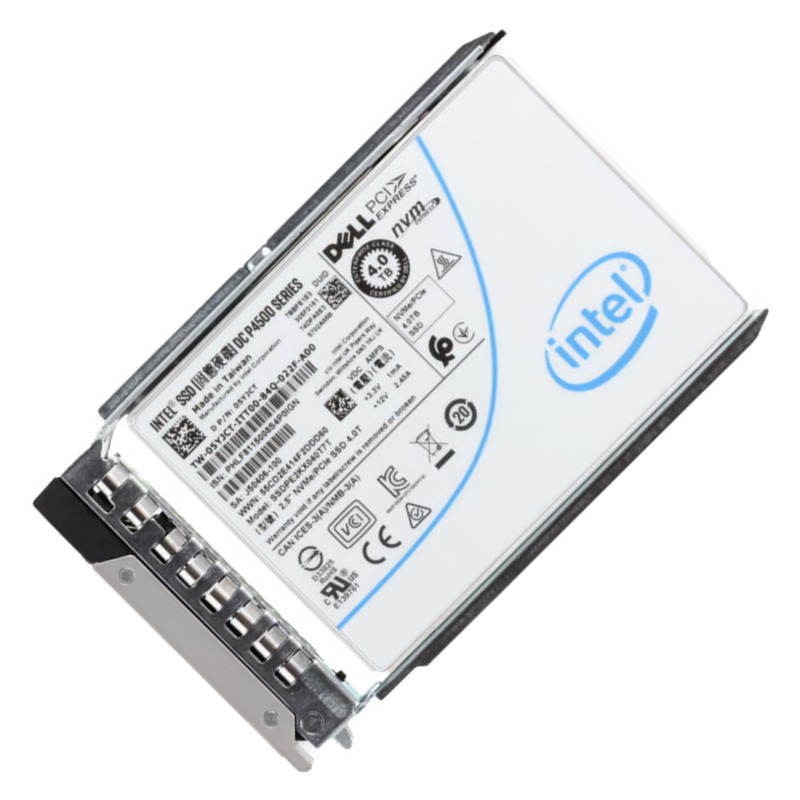
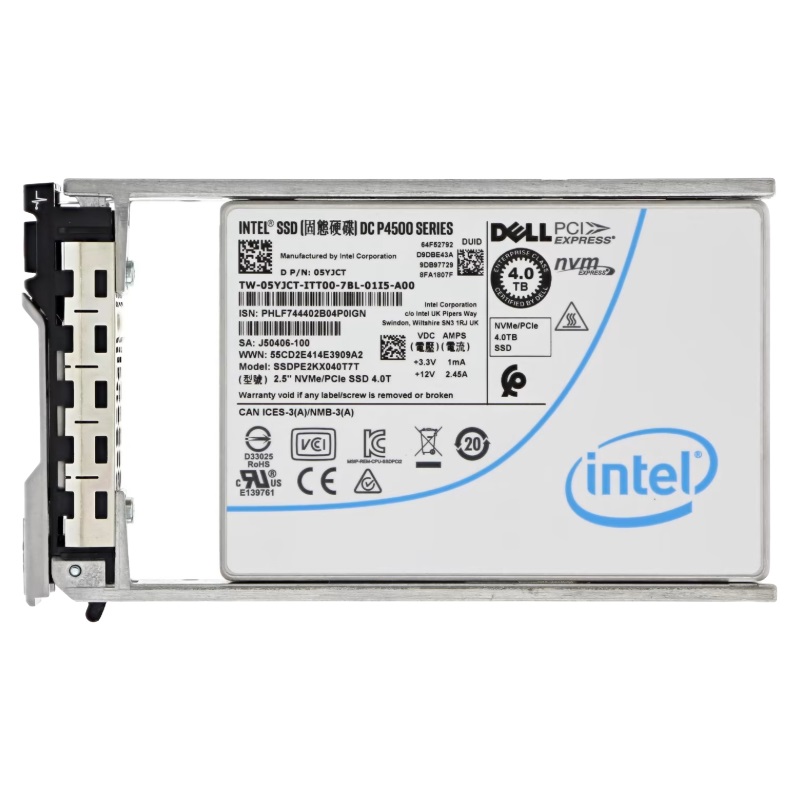
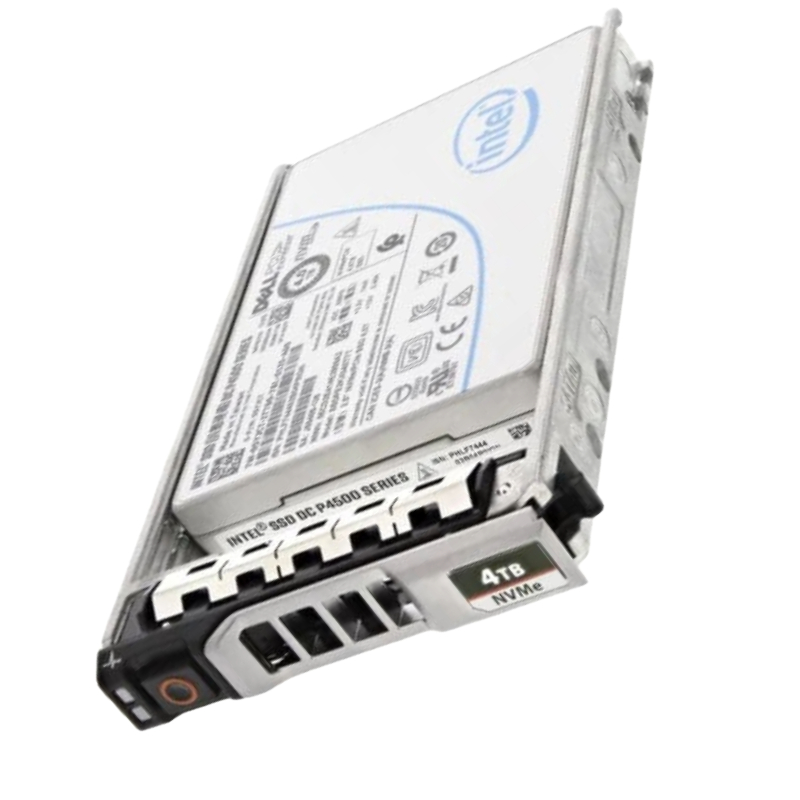
Dell 5YJCT Poweredge Server Solid State Drive with 4TB NVMe Read Intensive Technology. Excellent Refurbished with 1 year replacement warranty
The Dell 5YJCT 4TB Read-Intensive NVMe solid state drive represents a focused category within enterprise storage: high-capacity, read-optimized NVMe media engineered for modern PowerEdge server environments. This category centers on the intersection of capacity, low-latency NVMe performance, and the particular duty cycle expectations of read-heavy workloads. The 4TB capacity addresses large dataset footprints while the PCI-Express NVMe 3.1 x4 interface delivers sustained throughput and random I/O performance that conventional SATA drives cannot match. The 2.5-inch 15mm form factor and use of 3D1 TLC NAND place this drive where many data center architects expect to find a balance of density, cost-effectiveness, and solid-state reliability. For site search optimization and category discoverability, this description emphasizes keyword-rich phrases customers use when evaluating server-class NVMe SSDs for Dell PowerEdge platforms: read-intensive NVMe SSD, 4TB enterprise NVMe, Dell 5YJCT SSD, PCIe 3.1 x4 NVMe, 3D TLC NAND, 2.5-inch 15mm server drive, and PowerEdge compatible storage.
Within the broader enterprise SSD market, read-intensive NVMe drives are designed for workloads where reads vastly outnumber writes and where predictable, low-latency responses are critical. The Dell 5YJCT 4TB product sits in that strategic niche. Typical deployments include web serving, content distribution, boot and OS volumes for virtualized hosts, large-scale analytics that predominantly scan and read rows, object storage front-ends, and caching layers that act as performance accelerators in front of slower media. Because these drives are optimized for read-heavy duty cycles, they offer excellent cost per gigabyte relative to mixed-use or write-intensive SSDs while still delivering NVMe class responsiveness when the server needs to satisfy many concurrent read requests.
Read-optimized NVMe drives like this are tuned so that random read IOPS, sequential read throughput, and read latency remain consistently high under multi-tenant or high-concurrency conditions. The PCI-Express NVMe 3.1 x4 connection provides four PCIe lanes of communication to the host, enabling the drive to saturate multiple gigabytes per second of sequential transfer when paired with a capable controller and server host. Where spinning media must wait for physical heads and seek times, NVMe media responds in microseconds, reducing application response times and improving perceived performance for end users. For caching or read-ahead layers, the 4TB capacity lets IT teams allocate substantial cache or hot-data storage while keeping costs lower than higher-endurance mixed-use enterprise SSDs.
The 2.5-inch 15mm profile for this Dell 5YJCT SSD fits into many PowerEdge chassis that support thick-profile 2.5-inch NVMe devices. IT professionals should verify drive trays and backplane compatibility on their specific PowerEdge models; however, Dell’s ecosystem commonly supports U.2 and other 2.5-inch NVMe carriers that accept the 15mm height. The thicker 15mm dimension accommodates larger NAND assemblies and thermal buffering, which can be beneficial in sustaining performance under load. Physically, the drive’s mounting points, connector alignment, and keyed interface are designed to align with server hot-swap trays and NVMe drive bays that Dell certifies, enabling straightforward replacement or expansion in rack-scale deployments.
This category leverages 3D TLC NAND, often denoted as 3D1 TLC in product SKU strings, which stacks memory cells vertically to increase density and lower unit cost while maintaining acceptable endurance for read-dominant workloads. TLC (triple-level cell) stores three bits per cell, enabling higher capacities like 4TB in a 2.5-inch package without dramatically increasing cost. Manufacturers tailor firmware algorithms—wear leveling, garbage collection, and read disturb mitigation—to favor read-optimized endurance curves. For enterprise buyers, the critical interpretation is that these drives provide an attractive ratio of terabytes stored to purchase price while offering sufficient write endurance for read-heavy server roles. Buyers aiming to deploy in mixed or write-intensive roles should compare this category to mixed-use and write-intensive SSD families to ensure endurance specifications align with expected write amplification and cumulative writes.
To extract consistent NVMe performance from this category, system architects should consider controller and BIOS settings that influence NVMe queuing, interrupt moderation, and PCIe power states. Host software stacks, including NVMe driver versions and IO schedulers, play a major role in latency and throughput behavior. For example, enabling NVMe namespaces and aligning file system block sizes with application IO patterns helps reduce fragmentation and improves sustained throughput. In virtualized environments, assigning direct NVMe pass-through or paravirtualized drivers to guest VMs can preserve low-latency characteristics. Additionally, balancing queue depth and concurrency across CPU cores prevents bottlenecks that might otherwise mask the drive’s raw performance capabilities.
Although NVMe SSDs deliver exceptional single-device performance, many data center designs combine multiple NVMe drives behind software-defined storage layers or NVMe-aware RAID controllers to provide capacity scaling, redundancy, and increased aggregate throughput. In read-intensive categories, RAID configurations optimized for read speed and fast rebuilds are common. Software-defined storage solutions that understand NVMe characteristics can distribute hot data across nodes and use the 4TB per-drive capacity to reduce metadata overhead. When using RAID, administrators must also account for rebuild times and thermal stress during rebuild operations, as these periods can drive sustained activity across many devices simultaneously.
Compatibility is a central buying consideration for organizations that standardize on Dell PowerEdge servers. Drives in this category are marketed and validated for PowerEdge systems, ensuring that firmware, drive carriers, and backplane interfaces interplay smoothly with server management ecosystems such as iDRAC and OpenManage. Integration delivers benefits: automated health reporting, drive firmware update orchestration, and simplified warranty support through the existing relationship with Dell. For procurement teams, the assurance that a 4TB NVMe drive like the Dell 5YJCT will operate predictably within a PowerEdge chassis reduces deployment risk and shortens integration timelines for new or upgraded servers.
It is important to match the endurance class to the workload. Read-intensive drives are optimized for scenarios where write amplification is low and read requests dominate. For workloads that involve heavy writes—such as intensive transactional databases, high-frequency logging, or persistent caching with frequent evictions—mixed-use or write-intensive SSDs may be more appropriate despite higher cost per gigabyte. The Dell 5YJCT 4TB read-intensive NVMe category is compelling where read latency and capacity are the main priorities, but IT teams should model write workloads and expected data lifecycle patterns to ensure the chosen endurance class aligns with long-term reliability and maintenance plans.
Architecturally, these drives are often used in multi-tier storage topologies where the NVMe layer serves as the fast access tier. In such topologies, cold data may reside on high-density HDD arrays while read-hot data and frequently accessed indexes are kept on NVMe to accelerate query response. In hyperconverged or scale-out file systems, these NVMe drives can serve as the primary performance tier for metadata and small-block read operations, dramatically improving cluster responsiveness. In content delivery and streaming, the drives act as front-line stores for frequently requested assets, enabling high concurrency and reduced buffering. The flexibility of a 4TB capacity allows administrators to size the hot tier to cover significant portions of working sets without immediate need for more expensive, write-optimized media.


 Contact Us
 Information
 Catalog
 Solid State Drives (SSD)
 Network Switches
 Hard Disk Drives
 HBA & Controllers
 PC & Servers
 PC & Server Memory
 CPU & Processors
 Network Routers
 Power Supplies
 Tape Drives & Libraries
 Network Devices
 Computer & Network Cables