(7% discount is applied at checkout)
Cart is empty
Your go-to destination for cutting-edge server products
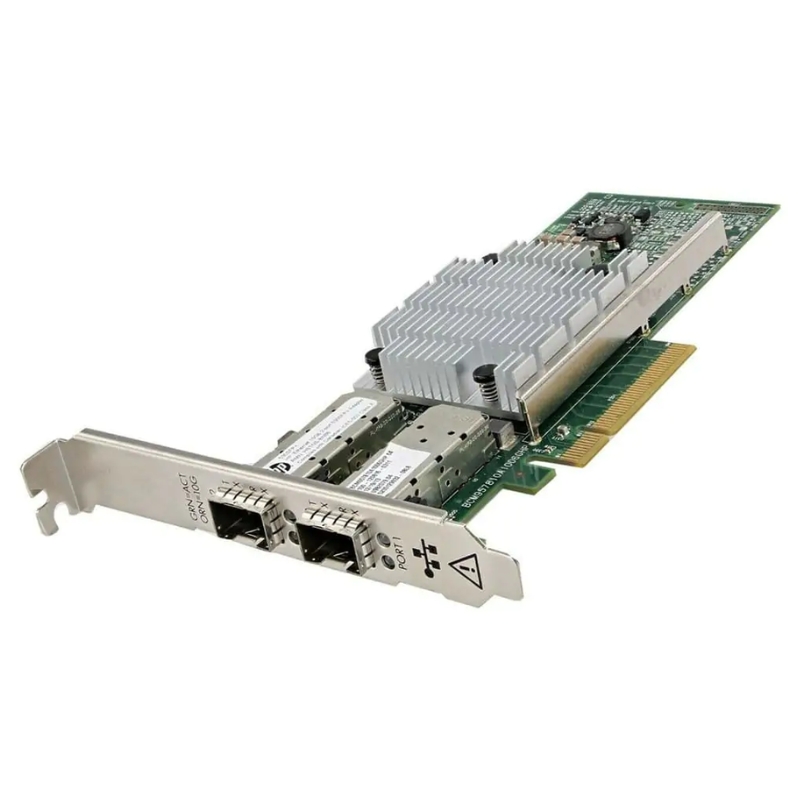


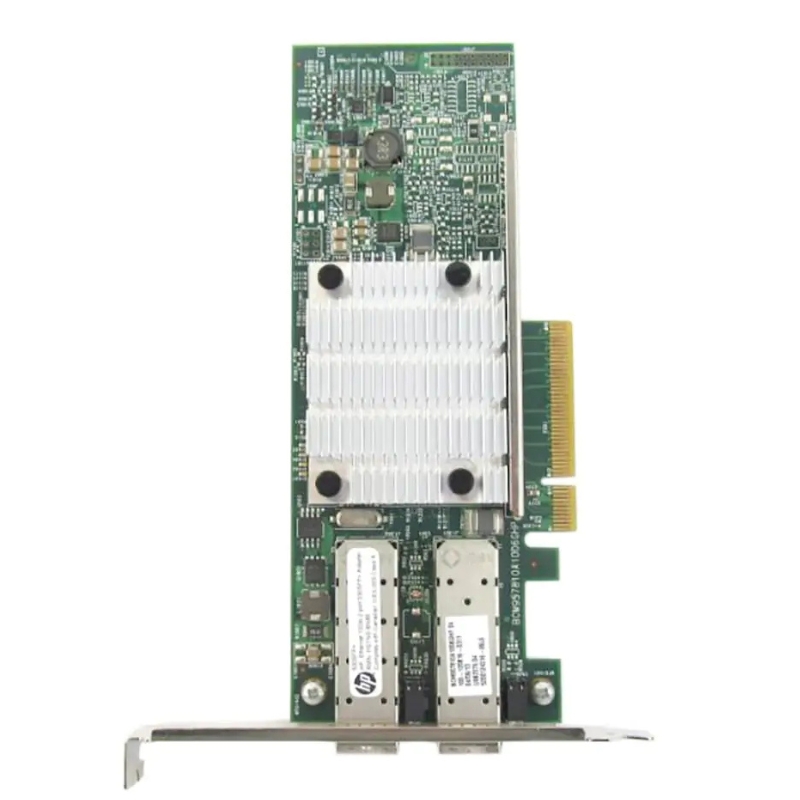
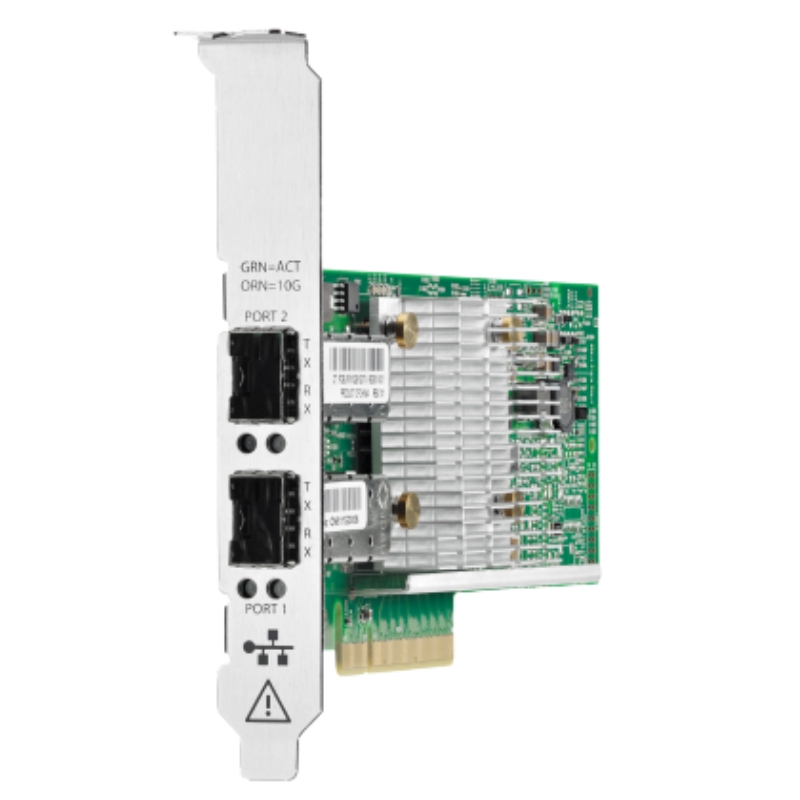
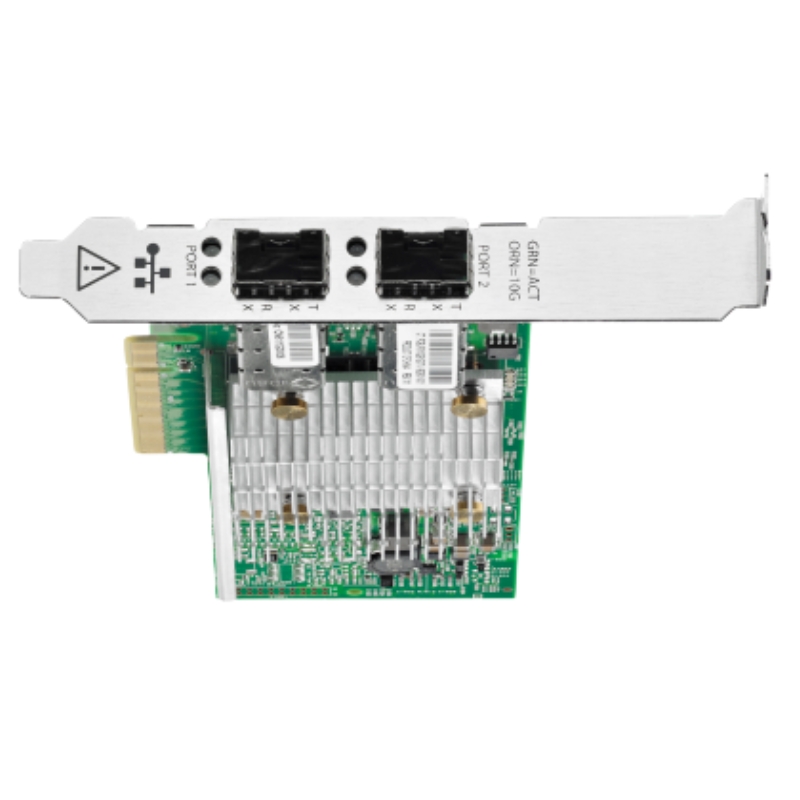
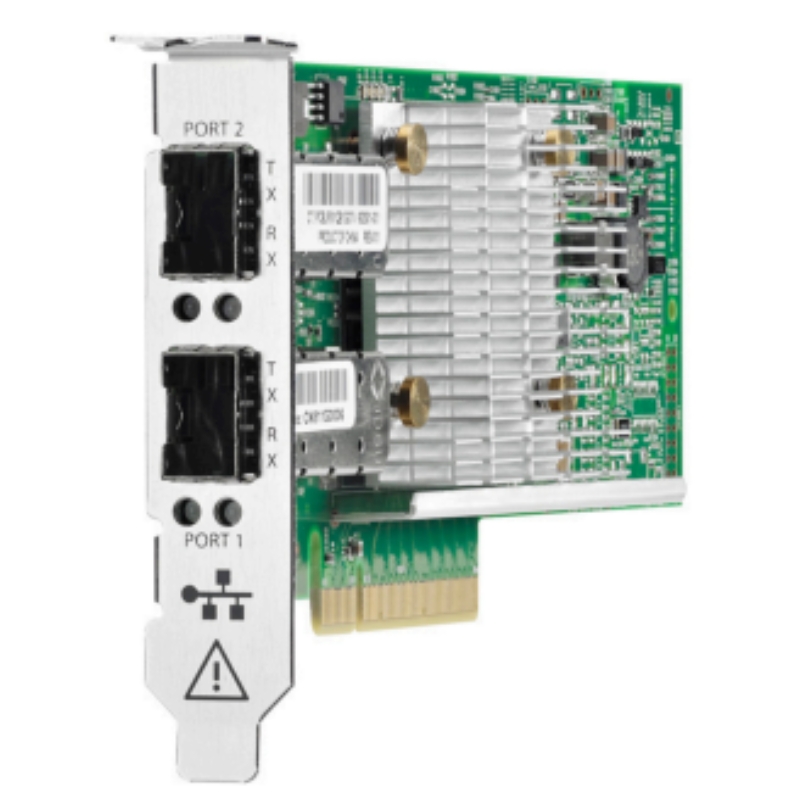
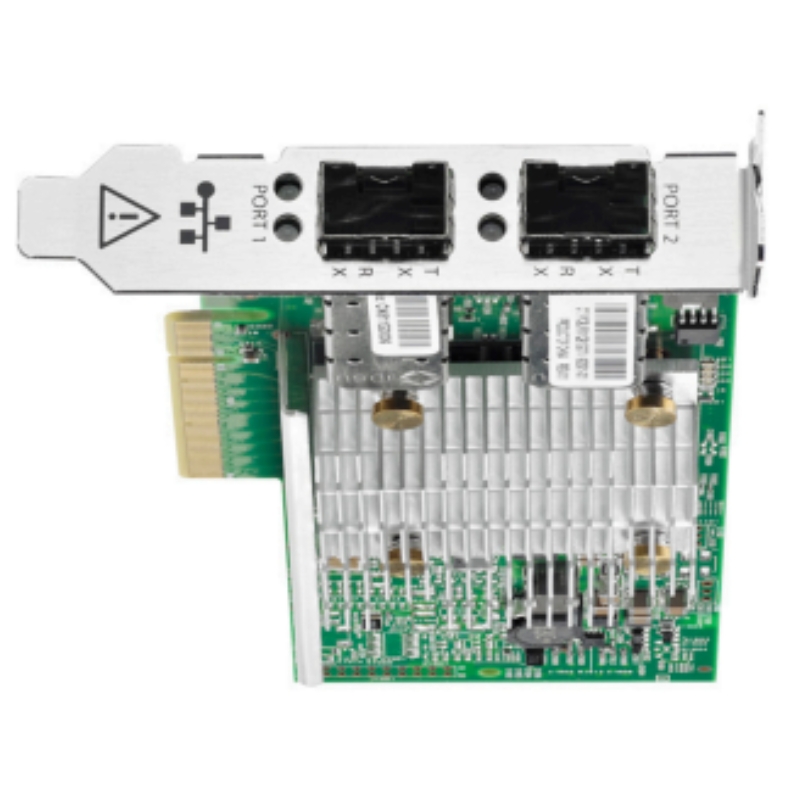
HPE Q2P92A Ethernet 10gb 2-port 530sfp+ Pcie Adapter With Extended Bracket. Excellent Refurbished with 1 year replacement warranty
Overview of HPE Q2P92A 10GB 2-Port Ethernet PCIe Adapter
The HPE Q2P92A Ethernet 10Gb 2-Port 530SFP+ PCIe Adapter is an enterprise-grade network interface card (NIC) designed to deliver exceptional speed, low latency, and reliable optical connectivity for modern data centers, virtualization platforms, and HPE StoreEasy storage systems. Featuring dual 10Gb SFP+ ports, a PCI Express 3.0 x8 interface, and advanced hardware acceleration technologies, this adapter enhances network efficiency while supporting demanding business-critical workloads.
Expansion and Connectivity
The HPE Q2P92A Ethernet 10GB 2-Port 530SFP+ PCIe Adapter With Extended Bracket is designed to provide enterprise-class networking performance for organizations that require dependable, high-speed Ethernet connectivity across servers, storage systems, virtualization platforms, and cloud computing environments. As businesses continue to adopt bandwidth-intensive applications, software-defined infrastructure, and centralized storage architectures, network adapters capable of delivering consistent throughput have become essential components within modern IT environments.
Modern enterprise networks process enormous volumes of information every second. Business applications, customer databases, collaboration platforms, virtualization hosts, analytics engines, and cloud services all rely on stable network communication to maintain operational efficiency. The HPE Q2P92A has been engineered to support these demanding environments by delivering high-bandwidth Ethernet connectivity capable of handling continuous workloads while maintaining reliable performance.
Ten Gigabit Ethernet continues to be one of the most widely adopted networking technologies for enterprise servers because it delivers substantially greater bandwidth than traditional Gigabit Ethernet. Increased throughput enables organizations to reduce transfer times for business data while improving communication between servers, storage systems, virtualization hosts, and application platforms. The HPE Q2P92A supports workloads involving database transactions, enterprise resource planning systems, customer relationship management platforms, software development environments, multimedia production.
Enterprise networking equipment must maintain dependable performance even during sustained periods of heavy utilization. The HPE Q2P92A is designed to support continuous high-speed communication while minimizing network bottlenecks that could affect application availability. Reliable throughput contributes to improved productivity, efficient resource utilization, and consistent access to business-critical information throughout the organization.
The inclusion of two independent 10 Gigabit Ethernet ports provides organizations with greater flexibility when designing enterprise networking infrastructure. Dual-port adapters can support separate production networks, storage communication, virtualization traffic, management interfaces, or network redundancy strategies depending on operational requirements. Businesses implementing high-availability architectures frequently configure both Ethernet ports to improve resilience and maximize network availability. The additional interface also provides opportunities for increased bandwidth through link aggregation technologies where supported by compatible networking equipment.
Network availability remains a critical consideration for organizations operating around the clock. The HPE Q2P92A contributes to business continuity by enabling redundant connectivity between servers and network switches. If one communication path becomes unavailable, properly configured environments can continue operating through the remaining network connection, reducing the potential impact of hardware or cable failures.
The SFP+ interface allows the HPE Q2P92A to support high-performance optical networking through compatible transceiver modules. SFP+ technology has become an industry standard because it provides flexibility, scalability, and support for multiple networking environments. Organizations can select appropriate optical modules based on deployment requirements while maintaining compatibility with enterprise switching infrastructure.
Organizations expanding enterprise data centers frequently deploy fiber optic cabling to support increasing bandwidth requirements. The HPE Q2P92A integrates effectively into these environments by supporting compatible SFP+ optical transceivers, allowing businesses to scale networking infrastructure while maintaining reliable high-speed communication between interconnected systems.
The PCI Express interface provides the internal bandwidth necessary for modern enterprise networking applications. The HPE Q2P92A communicates efficiently with compatible HPE servers through PCIe architecture, enabling high-speed movement of data between system memory, processors, storage controllers, and network interfaces. This internal performance helps ensure that network throughput is not unnecessarily constrained by expansion bus limitations.
Optimized Hardware Compatibility
The adapter is designed for integration with enterprise-class server platforms where dependable hardware compatibility contributes to simplified deployment, efficient management, and predictable long-term operation. Standard PCI Express installation procedures allow administrators to incorporate the adapter into compatible server configurations while maintaining organized infrastructure planning.
The extended bracket included with the HPE Q2P92A simplifies installation within enterprise rack servers utilizing full-height expansion slots. Proper bracket dimensions contribute to secure installation while ensuring that network connections remain properly aligned with server chassis openings. Reliable mechanical installation supports long-term operational stability while reducing the likelihood of connector movement during maintenance activities.
Rack-mounted server environments demand networking hardware that integrates cleanly within high-density infrastructure. The HPE Q2P92A occupies minimal internal space while providing two high-speed network interfaces, allowing organizations to maximize networking capability without increasing server footprint or requiring additional hardware complexity.
Virtualization technologies rely heavily on dependable network communication because virtual machines continuously exchange information with storage arrays, backup systems, application servers, management platforms, and security appliances. The HPE Q2P92A supports these environments by providing stable 10 Gigabit Ethernet connectivity capable of handling simultaneous traffic generated by multiple virtual workloads.
Private cloud and hybrid cloud architectures require fast communication between compute resources, software-defined networking components, orchestration platforms, storage systems, and monitoring services. The HPE Q2P92A contributes to cloud infrastructure efficiency by delivering dependable Ethernet connectivity that supports continuous east-west traffic throughout enterprise data centers while maintaining predictable application performance.
Enterprise storage platforms generate substantial network traffic during backup operations, disaster recovery replication, file sharing, database synchronization, and centralized storage access. The HPE Q2P92A enables efficient communication between servers and storage infrastructure by providing reliable 10 Gigabit Ethernet connectivity suitable for demanding business environments. Organizations implementing centralized storage strategies benefit from increased bandwidth because larger files, virtual machine images, databases, multimedia assets, and backup datasets can move across the network more efficiently.


 Contact Us
 Information
 Catalog
 Solid State Drives (SSD)
 Network Switches
 Hard Disk Drives
 HBA & Controllers
 PC & Servers
 PC & Server Memory
 CPU & Processors
 Network Routers
 Power Supplies
 Tape Drives & Libraries
 Network Devices
 Computer & Network Cables