(7% discount is applied at checkout)
Cart is empty
Your go-to destination for cutting-edge server products
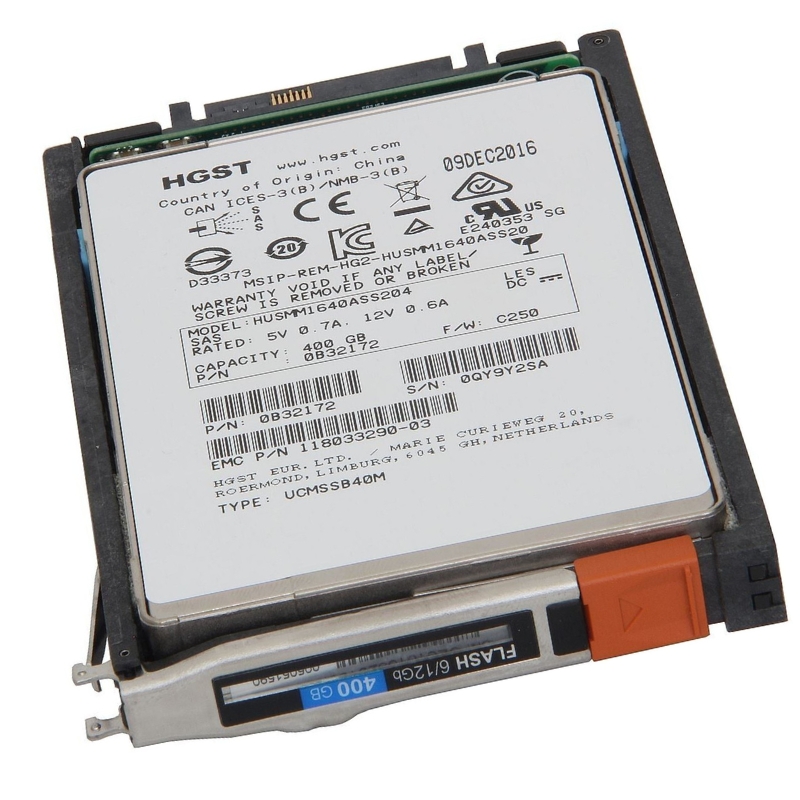


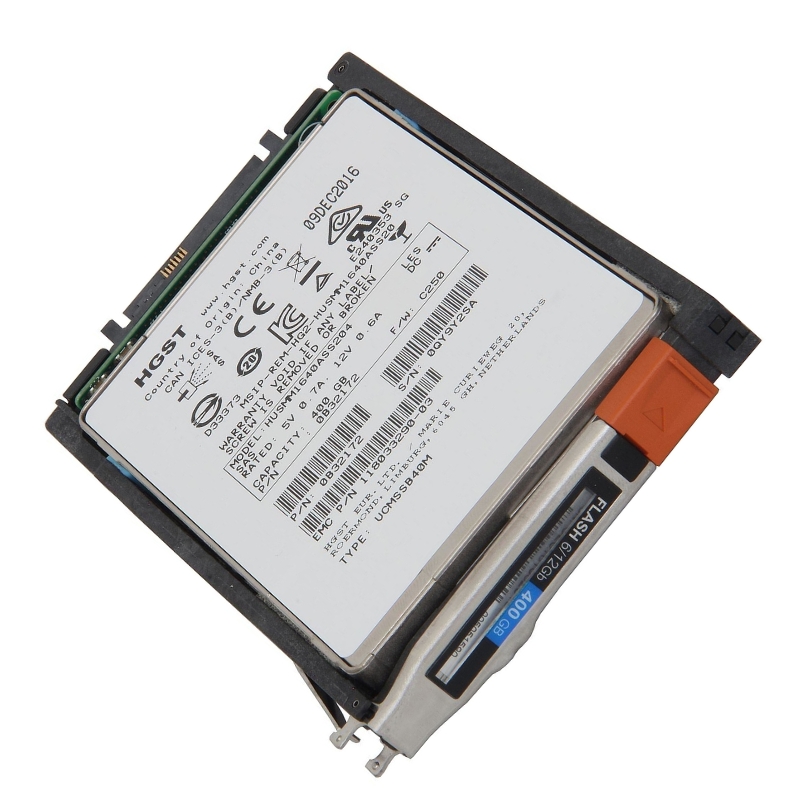
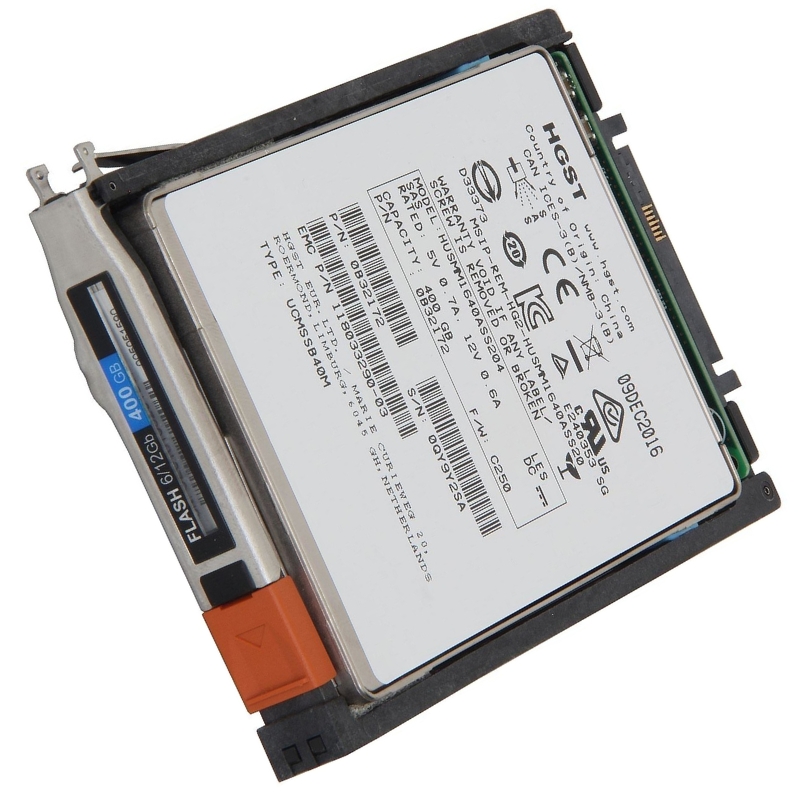
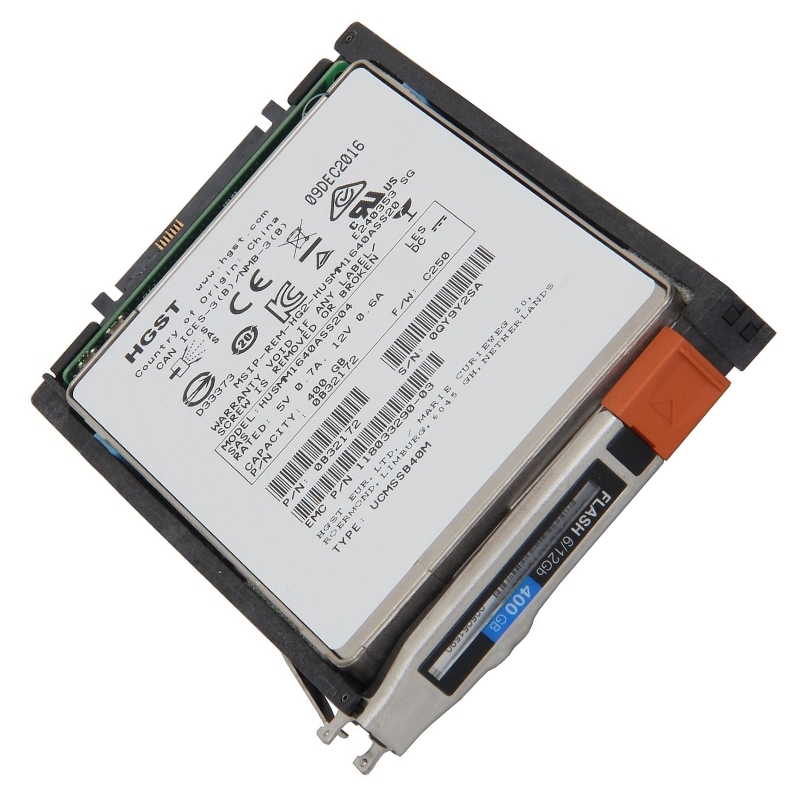
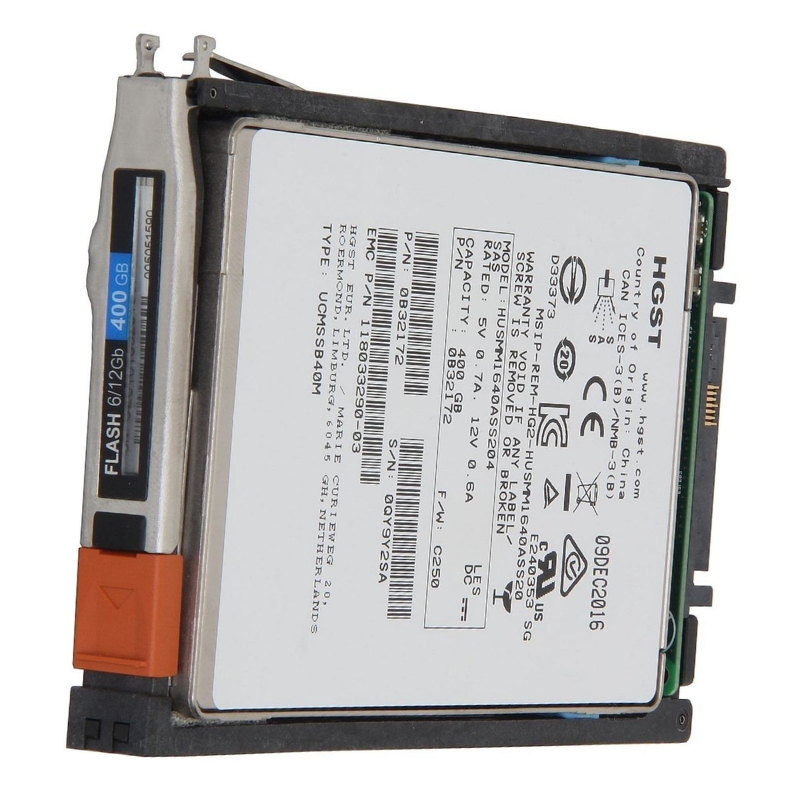
EMC 005053262 400GB SAS-12GBPS 2.5inch Enterprise SSD. Excellent Refurbished with 1 year replacement warranty
The EMC 005053262 400GB enterprise solid-state drive is a high-performance, rack-ready storage module engineered for data center workloads that demand consistent low latency and high I/O throughput. Designed in a compact 2.5-inch form factor and using the proven SAS 12 Gb/s interface, this internal SSD delivers dependable capacity and enterprise-grade reliability for virtualization, databases, caching and high-traffic applications.
This EMC SSD is tuned for enterprise environments where predictable latency and sustained throughput matter. Typical benefits include:
The EMC 005053262 is especially useful where performance and stability are more important than raw capacity. Typical deployments include:
Before purchasing or installing, verify the following compatibility pointers:
Proper lifecycle management helps extract maximum value from enterprise SSDs:
Enterprise SAS (Serial Attached SCSI) Solid State Drives represent the pinnacle of performance, reliability, and endurance in the data storage hierarchy. Designed specifically for the relentless demands of 24/7 mission-critical environments, these drives go far beyond the capabilities of consumer-grade SATA SSDs. The EMC 005053262 400GB SAS-12Gbps 2.5-inch SSD is a prime example of this category, engineered to deliver exceptional input/output operations per second (IOPS), consistent low latency, and unwavering data integrity in servers, storage arrays, and high-performance computing clusters. Unlike their consumer counterparts, enterprise SAS SSDs are built with advanced features like power-loss protection, enhanced error correction, and sophisticated wear-leveling algorithms to ensure data is always safe and accessible, even in the event of an unexpected power failure.
The dual-port nature of SAS SSDs like the EMC 400GB model is a cornerstone of enterprise storage design. Each drive has two independent physical ports that can be connected to two different storage controllers within an array or server. This setup enables active-active or active-passive controller configurations. In an active-active setup, both controllers can simultaneously process I/O requests to the drive, balancing the load and maximizing performance. In an active-passive scenario, one controller handles all requests while the other stands ready to instantly take over in case of a controller failure. This architecture is non-negotiable for applications requiring "five-nines" (99.999%) or greater uptime.
SAS operates in a full-duplex mode, meaning it can send and receive data simultaneously at 12Gbps in each direction. This is a significant advantage over half-duplex interfaces like SATA. Furthermore, SAS uses a point-to-point topology where each drive has a dedicated link to the controller (expanders can be used to create larger fabrics). This eliminates the contention and negotiation overhead found in shared bus architectures, resulting in predictably low latency and consistent performance, which is vital for transactional databases, virtualized environments, and real-time analytics platforms.
The 2.5-inch small form factor (SFF) has become the de facto standard in modern data centers for several compelling reasons. The primary advantage is density. 2.5-inch drives allow server and storage array manufacturers to pack significantly more storage capacity and performance into a single rack unit (RU) of space. A typical 2U server that might support 8-12 3.5-inch drives can often accommodate 24 or more 2.5-inch drive bays. This increased density translates directly to higher IOPS per RU and greater terabytes per RU, optimizing both capital and operational expenditures (CapEx and OpEx) by reducing the physical footprint, power consumption, and cooling requirements for a given level of performance.
Enterprise 2.5-inch drive carriers are designed for robust hot-swap functionality. This means a failed or failing drive can be identified (typically via an indicator light on the carrier), and replaced without powering down the entire server or storage array. This feature is critical for maintaining system availability and adhering to strict service level agreements (SLAs). The EMC 005053262 drive is intended to be used within compatible EMC (now Dell Technologies) storage systems or certified servers, where the carrier and backplane ensure proper alignment, connectivity, and cooling for optimal operation and easy maintenance.
Many enterprise vendors, including Dell EMC, utilize Universal Drive Carriers (UDCs) that are designed to fit a wide range of their systems. This simplifies spares inventory for IT departments managing multiple generations of hardware. The 2.5-inch form factor, combined with standardized mounting holes and connectors, ensures that a drive like the EMC 005053262 can be deployed across various platforms, from PowerEdge servers to PowerVault and Unity storage arrays, providing flexibility and investment protection.
Delving into the specific attributes of this drive reveals why it is suited for demanding enterprise applications. Each specification is a carefully chosen balance of capacity, performance, and endurance.
The 400GB capacity point indicates the use of multi-level cell (MLC) or possibly enterprise-grade triple-level cell (eTLC) NAND flash memory. Enterprise SSDs prioritize endurance and performance over sheer cost-per-gigabyte, which is why they often avoid the quad-level cell (QLC) NAND common in consumer drives. MLC and eTLC NAND offer a significantly higher number of program/erase (P/E) cycles, meaning each memory cell can be written to and erased many more times before it wears out. This is quantified by the drive's endurance rating, typically expressed in Total Bytes Written (TBW) or Drive Writes Per Day (DWPD) over the warranty period. A drive with a DWPD rating of 3, for example, can have its entire 400GB capacity written to three times every day for five years, demonstrating its robustness for write-intensive tasks.
The stated user capacity is 400GB, but the drive physically contains more NAND flash—a practice known as over-provisioning (OP). This extra, invisible capacity is not accessible to the user but is managed by the drive's controller. Over-provisioning plays several crucial roles: it acts as a spare area to replace worn-out memory blocks, provides workspace for the garbage collection process (which reclaims space from deleted data), and helps maintain high write performance, especially as the drive fills up, by reducing write amplification. A higher level of over-provisioning is a hallmark of enterprise SSDs compared to consumer models.
Enterprise workloads are measured in IOPS (Input/Output Operations Per Second) and latency (the delay before a data transfer begins). The EMC 005053262, with its SAS-12Gbps interface and enterprise-class controller, is designed to deliver high random read and write IOPS. Random performance is key because enterprise applications rarely read and write large, contiguous files; instead, they make countless small, random requests to the database or virtual machine disk files. This drive is capable of delivering tens of thousands, if not over a hundred thousand, random read IOPS, with write IOPS being similarly high. Latency values are typically in the sub-millisecond range, ensuring rapid response times for applications.
While burst speeds are impressive, the true test of an enterprise SSD is its sustained performance under a continuous, heavy load. Consumer SSDs often experience significant performance degradation once their fast cache memory is exhausted or during intensive write operations. Enterprise SSDs are engineered to avoid this, using advanced controllers, power-loss-protected DRAM caches, and high levels of over-provisioning to maintain consistent and predictable I/O response times. This consistency is what allows system administrators to confidently plan and scale their infrastructure without performance surprises.
Many real-world scenarios involve a mix of read and write operations. The ability of a drive to handle mixed workloads (e.g., 70% read / 30% write) efficiently is a critical metric. Enterprise SAS SSDs are tested and validated under these complex conditions to ensure they meet the demanding service levels required by applications like OLTP (Online Transaction Processing) databases, which are highly sensitive to both read and write latency.
The "brain" of the SSD is its controller, a specialized processor that manages all data flow between the host system and the NAND flash memory. Enterprise controllers are far more sophisticated than those in consumer drives. They implement advanced error correction codes (ECC) like LDPC (Low-Density Parity Check) to detect and correct bit errors, sophisticated wear-leveling algorithms to distribute writes evenly across all memory cells, and RAID-like data protection schemes within the drive itself. They are paired with a generous amount of DRAM cache, which acts as a fast lookup table for the drive's mapping of logical to physical addresses (the Flash Translation Layer or FTL), significantly speeding up operations.
Perhaps the most crucial differentiator for enterprise SSDs is comprehensive Power-Loss Protection (PLP). In the event of a sudden power failure, data residing in the volatile DRAM cache that has been acknowledged as "written" to the host must be committed to the non-volatile NAND flash. PLP circuits typically include large capacitors that store enough energy to power the drive for a brief period after a power loss, allowing the controller to complete any in-progress writes and safely flush the cache to flash. This prevents data corruption and is absolutely essential for maintaining data integrity in mission-critical systems. The EMC 005053262 incorporates such a robust PLP system.
A drive of this caliber is not intended for general-purpose use but is optimized for specific, high-stakes roles within the data center.
In modern storage area networks (SANs) and unified storage systems, data is often tiered based on performance requirements. The EMC 005053262 400GB SSD is ideally suited for the "Tier 0" or extreme performance tier. This tier is reserved for the most latency-sensitive data, such as database transaction logs, operating system files for critical virtual machines, or frequently accessed data blocks in a large database. By placing this "hot" data on high-performance SAS SSDs, overall application performance is dramatically improved.
Using a high-endurance, high-availability SAS SSD as a boot drive for servers hosting essential services like Microsoft SQL Server, Oracle Database, or VMware ESXi hypervisors ensures fast boot times and, more importantly, reliable operation. The dual-port capability allows the server's operating system to remain accessible even during a controller failure, which is not possible with a SATA SSD. This provides a level of resilience that is mandatory for core infrastructure servers.
Beyond primary storage, SSDs are frequently used as a cache. In this role, the 400GB capacity is ample. For example, a storage controller might use one or more of these drives as a read cache, storing frequently read data to serve subsequent requests at lightning speed. They can also be used as a write cache, absorbing bursty write operations quickly and then destaging the data to larger, slower hard disk drives (HDDs) in the background. This hybrid approach balances performance and capacity cost-effectively.
Enterprise components are part of a larger ecosystem, and compatibility is paramount.
The part number 005053262 indicates that this is a genuine EMC (now Dell Technologies) qualified drive. It is designed to be fully compatible with a range of EMC storage systems, such as VNX, VNXe, Unity, and potentially PowerVault models. Using a vendor-qualified drive ensures that it will be recognized by the system's management software (like Unisphere), that its firmware can be updated through the standard vendor tools, and that it will not trigger any compatibility alarms. Vendor firmware often includes customizations for optimal performance, power management, and reporting within their specific hardware environment.
SSD firmware is complex and is periodically updated by the manufacturer to address bugs, improve performance, enhance security, or even extend endurance. In an enterprise setting, firmware updates are managed carefully, often through the storage array's management interface, which can schedule rolling updates across multiple drives to avoid downtime. Using a drive that is supported within this management framework is a key operational advantage.
Like all modern drives, this SAS SSD supports S.M.A.R.T. (Self-Monitoring, Analysis, and Reporting Technology). However, enterprise drives provide a much richer set of attributes. These can include detailed metrics on media wear, read/write error rates, erase block counts, and temperature history. Advanced storage systems use this data for predictive failure analysis, alerting administrators to replace a drive *before* it fails catastrophically, thus preventing data loss and unplanned downtime. This proactive maintenance is a cornerstone of enterprise-grade reliability.


 Contact Us
 Information
 Catalog
 Solid State Drives (SSD)
 Network Switches
 Hard Disk Drives
 HBA & Controllers
 PC & Servers
 PC & Server Memory
 CPU & Processors
 Network Routers
 Power Supplies
 Tape Drives & Libraries
 Network Devices
 Computer & Network Cables