(7% discount is applied at checkout)
Cart is empty
Your go-to destination for cutting-edge server products
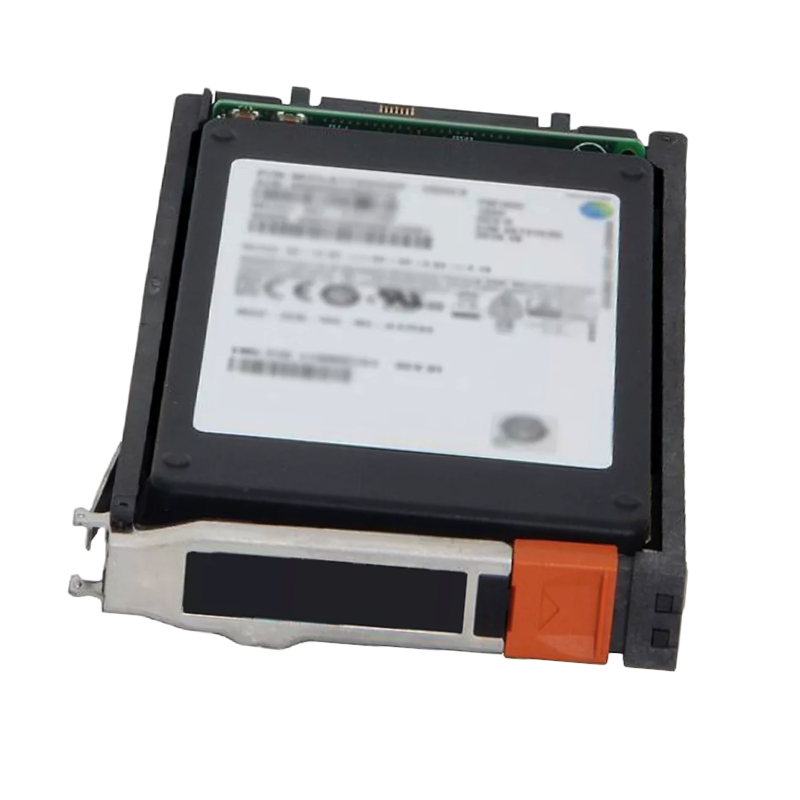


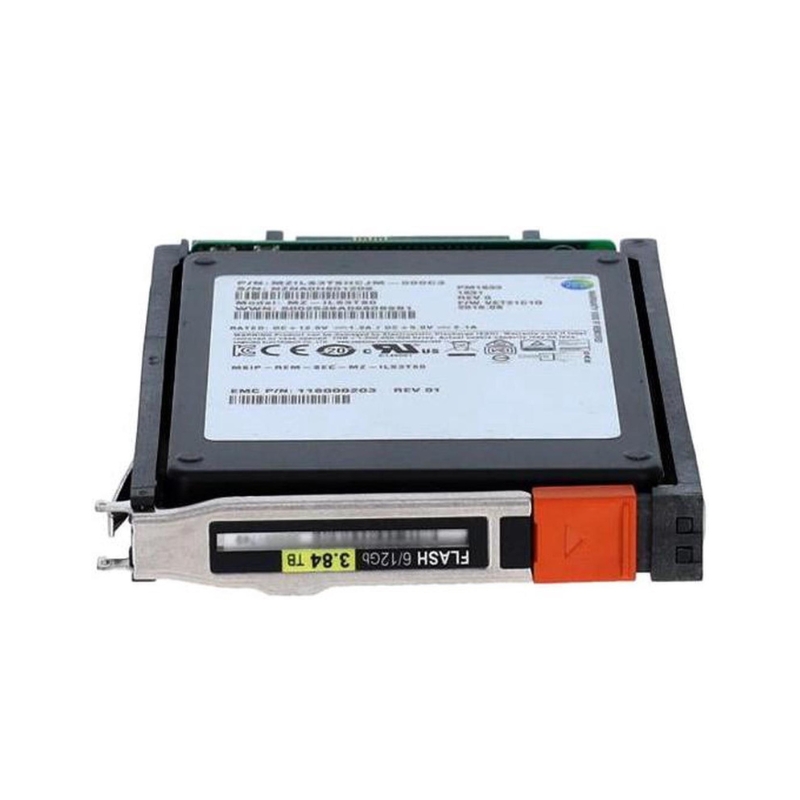
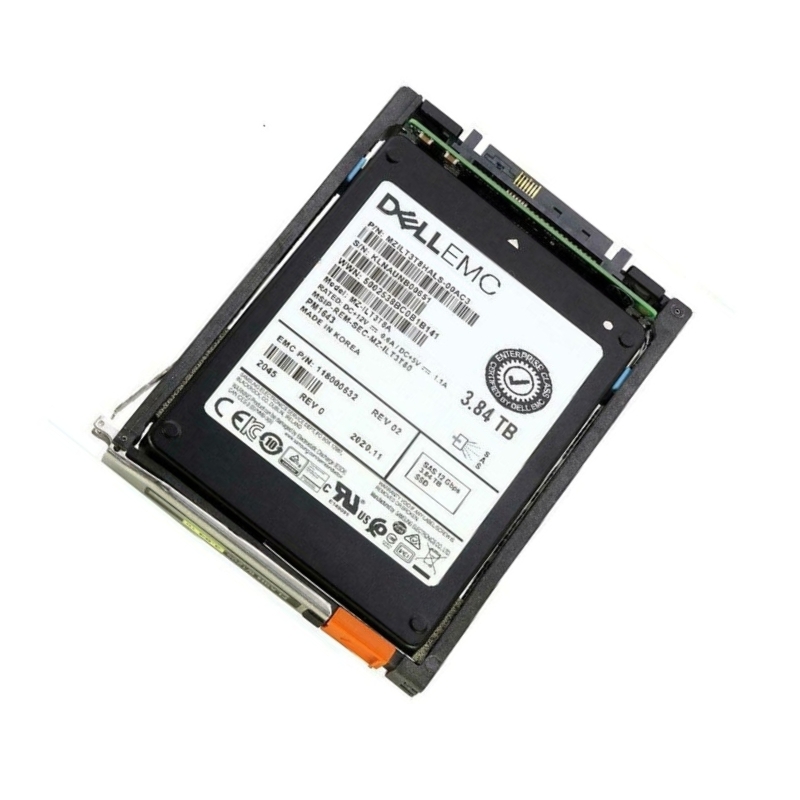
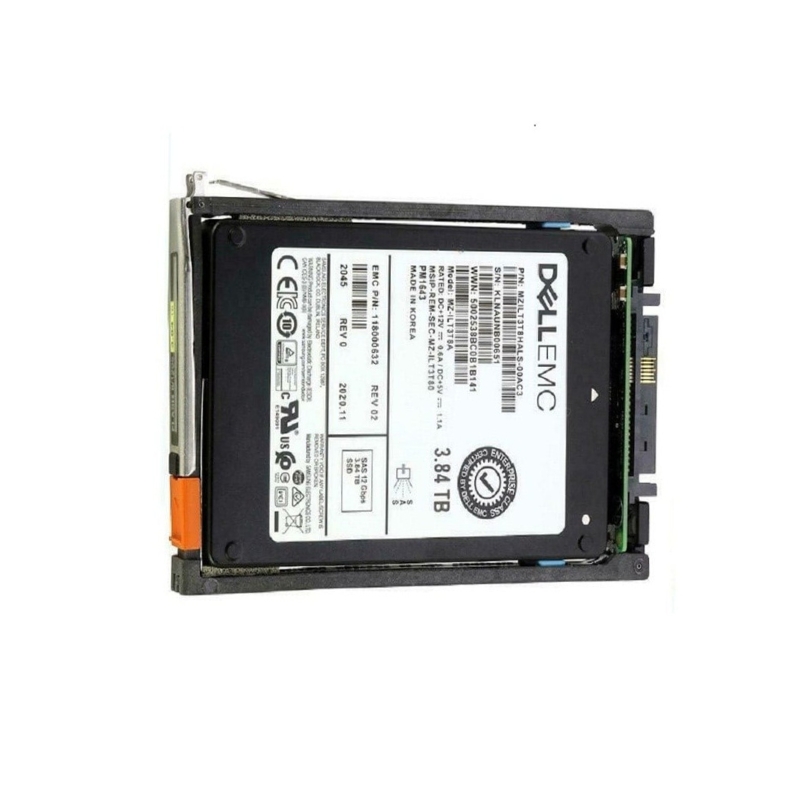
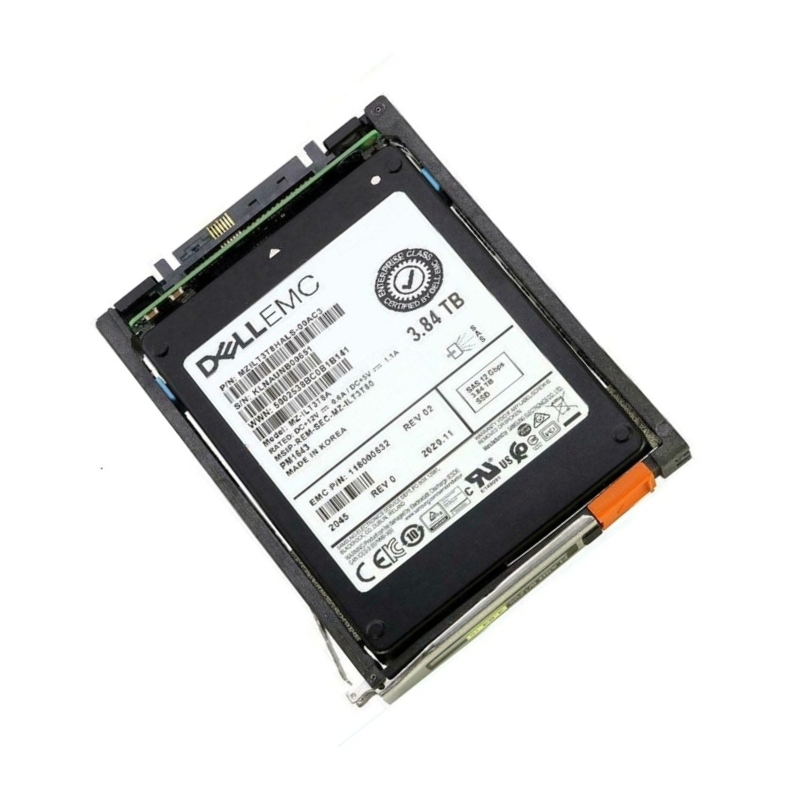
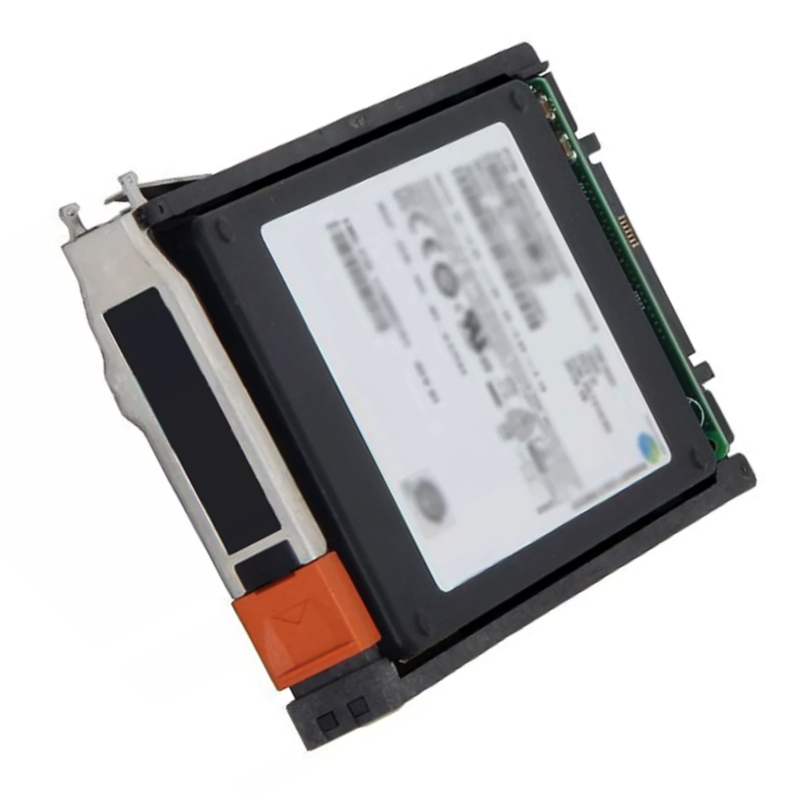
EMC 005053158 3.84TB SAS-12GBPS 2.5inch Enterprise SSD. Excellent Refurbished with 1 year replacement warranty
EMC 005053158 — 3.84TB SAS 12Gb/s 2.5" Enterprise Solid State Drive
The EMC 005053158 is a high-capacity enterprise-grade solid state drive (SSD) engineered for data centers, storage arrays and mission-critical servers. With a generous 3.84 TB capacity and a fast SAS 12 Gb/s interface in a compact 2.5-inch form factor, this drive delivers breakthrough throughput, durability and low-latency access for demanding workloads.
When comparing enterprise SSDs, look at endurance (DWPD/TBW), latency under mixed loads, and compatibility with your storage infrastructure. The EMC 005053158 stands out for its combination of large capacity and SAS 12 Gb/s performance—an excellent alternative to NVMe in environments standardized on SAS backplanes.
This category encompasses high-performance, high-capacity solid-state storage solutions designed explicitly for the relentless demands of modern data centers and enterprise applications. The EMC 005053158, a 3.84TB SAS-12Gbps 2.5-inch SSD, stands as a prime example of storage engineered for mission-critical environments where speed, reliability, and data integrity are non-negotiable. Drives in this class are the workhorses behind fast transaction processing, real-time analytics, high-performance computing (HPC), and large-scale virtualization, providing a significant performance leap over traditional hard disk drives (HDDs) and even many SATA-based SSDs.
The Serial Attached SCSI (SAS) interface, specifically the 12Gbps (SAS-12Gbps) generation, is the cornerstone of this storage category's performance and reliability. Unlike consumer-grade SATA interfaces, SAS is built from the ground up for enterprise use.
SAS offers several critical benefits that make it the preferred choice for serious storage infrastructure.
Unlike SATA, which operates in half-duplex mode (data can either be sent or received at any one time, but not both simultaneously), SAS is a full-duplex interface. This means the drive can read and write data at the same time, effectively doubling the potential bandwidth for mixed workloads, which are common in server environments.
This is a paramount feature for high-availability systems. SAS SSDs have two independent physical ports, allowing them to be connected to two different host controllers (HBAs) simultaneously. In a storage area network (SAN) or a server with a redundant controller configuration, if one path fails, the other immediately takes over without any service interruption, ensuring continuous operation.
SAS includes a more robust command set for error handling and recovery, leading to greater data integrity. This helps in identifying and isolating potential media errors or path failures more effectively than SATA, which is crucial for maintaining system uptime and data consistency.
SAS supports longer cable lengths and allows for the use of expanders, enabling the connection of a vast number of drives to a single host controller. This scalability is essential for building large-scale storage arrays and JBOD (Just a Bunch Of Disks) enclosures.
The 2.5-inch small form factor (SFF) has become the standard for modern server and storage array design. Its compact size allows for significantly higher storage density within a fixed rack unit (e.g., 2U, 4U) of space.
A typical 2U server chassis that might only accommodate 8-12 3.5-inch drives can often house 24 or even 32 2.5-inch drive bays. When populated with high-capacity drives like the 3.84TB EMC SSD, this translates to petabytes of high-performance flash storage in a single rack unit, optimizing data center floor space and power consumption.
The 2.5-inch form factor, often with a 15mm z-height (especially for higher capacity drives), is a widely adopted standard across major OEMs like Dell EMC, HPE, Cisco, and Lenovo. This ensures broad compatibility with existing server and storage hardware, simplifying integration and upgrades.
The 3.84TB capacity is a strategic point in the SSD market, balancing high density with performance and cost-effectiveness. It's important to understand that this capacity involves NAND flash over-provisioning.
It is a common misconception to equate enterprise SSDs like the EMC 005053158 with high-end consumer NVMe drives. The differences are profound and lie in the design philosophy.
Enterprise SSDs are rated for vastly higher endurance. This is measured in Terabytes Written (TBW) or Drive Writes Per Day (DWPD). A consumer SSD might have a TBW of 600-1,200TB for a 1TB drive. In contrast, an enterprise SAS SSD like the 3.84TB model is designed to handle the constant write-intensive workload of a server, potentially with a DWPD rating of 3-10 or more for 5 years. This means you could write the entire 3.84TB capacity 3 to 10 times every single day for the warranty period without failure.
This is a non-negotiable feature in enterprise storage. Enterprise SAS SSDs are equipped with robust Power-Loss Protection circuits, which include a bank of capacitors. In the event of a sudden power failure, these capacitors provide enough hold-up energy for the drive's controller to complete any pending writes in its volatile cache (DRAM) to the non-volatile NAND flash. This prevents data corruption and ensures data integrity, a risk that consumer SSDs without PLP inherently carry.
While a consumer SSD might show impressive burst speeds, its performance can drop significantly once its cache is saturated or during sustained writes. Enterprise SSDs are engineered to deliver consistent, predictable Input/Output Operations Per Second (IOPS) and latency figures even under 100% load 24/7. This predictability is vital for capacity planning and guaranteeing service level agreements (SLAs).
The part number "005053158" indicates this drive is an OEM product from Dell EMC, designed for seamless integration into their ecosystem.
This SSD is a certified component for various Dell EMC storage platforms, such as the PowerEdge server line and storage arrays like PowerVault, Unity, VNX, and potentially SC Series (Compellent). Using a drive with the correct firmware and part number ensures optimal performance, proper management through the array's software (e.g., Unisphere), and reliable support from Dell EMC.
OEM drives like this one come with specialized firmware that is tuned for the specific hardware and software of the target system. This firmware manages features like latency optimization, garbage collection algorithms, and telemetry reporting back to the array controller. Using a non-certified, "generic" SSD in an enterprise array can lead to subpar performance, compatibility issues, and a voided support contract.
While primarily intended for Dell EMC systems, these drives can often be used in other servers or JBODs with a standard SAS HBA. However, it's crucial to verify compatibility with the specific HBA and operating system. Some features, like advanced management functions, may be limited outside of their native ecosystem.
Understanding the key performance indicators is essential for evaluating this category of storage.
These figures (e.g., up to 1,800 MB/s read, 1,200 MB/s write) measure the speed of transferring large, contiguous blocks of data. This is important for tasks like video streaming, large file backups, and scientific computing. The SAS-12Gbps interface provides more than enough bandwidth to saturate these speeds.
IOPS (Input/Output Operations Per Second) is often a more relevant metric for enterprise workloads, which typically involve small, random data accesses (e.g., database transactions, email servers, web servers). A drive in this category might deliver hundreds of thousands of random read IOPS, drastically reducing application response times.
Latency is the delay between a request for data and the response. High-performance SAS SSDs offer extremely low latency, often well below 1 millisecond. This low latency is what makes applications feel "fast" and responsive.
Enterprise storage is defined by its RAS characteristics.
Drives in this category boast very high MTBF ratings, often exceeding 2 million hours. This is a statistical projection of reliability, indicating a robust design and high-quality components.
This measures the probability of a data error that the drive's internal error-correcting code (ECC) cannot fix. Enterprise SSDs have an exceptionally low UBER, typically 1 sector per 10^17 bits read, compared to 1 per 10^15 or 10^16 for consumer drives, ensuring superior data integrity.
Designed for systems requiring zero downtime, these 2.5-inch SAS SSDs are hot-swappable. A failed drive can be identified (typically via an indicator light), and safely removed and replaced without powering down the server or storage array, ensuring continuous service availability.
If the primary application is reading data, such as in a data warehouse or for business intelligence analytics, a read-optimized drive offers the best cost-effectiveness while still providing the necessary low-latency access.
In modern storage systems, high-performance SSDs like this are often used as a caching layer (e.g., read cache or write buffer) in front of a larger pool of slower HDDs. They can also be used in automated storage tiering, where frequently accessed "hot" data is automatically promoted to the SSD tier for fast access.


 Contact Us
 Information
 Catalog
 Solid State Drives (SSD)
 Network Switches
 Hard Disk Drives
 HBA & Controllers
 PC & Servers
 PC & Server Memory
 CPU & Processors
 Network Routers
 Power Supplies
 Tape Drives & Libraries
 Network Devices
 Computer & Network Cables