(7% discount is applied at checkout)
Cart is empty
Your go-to destination for cutting-edge server products
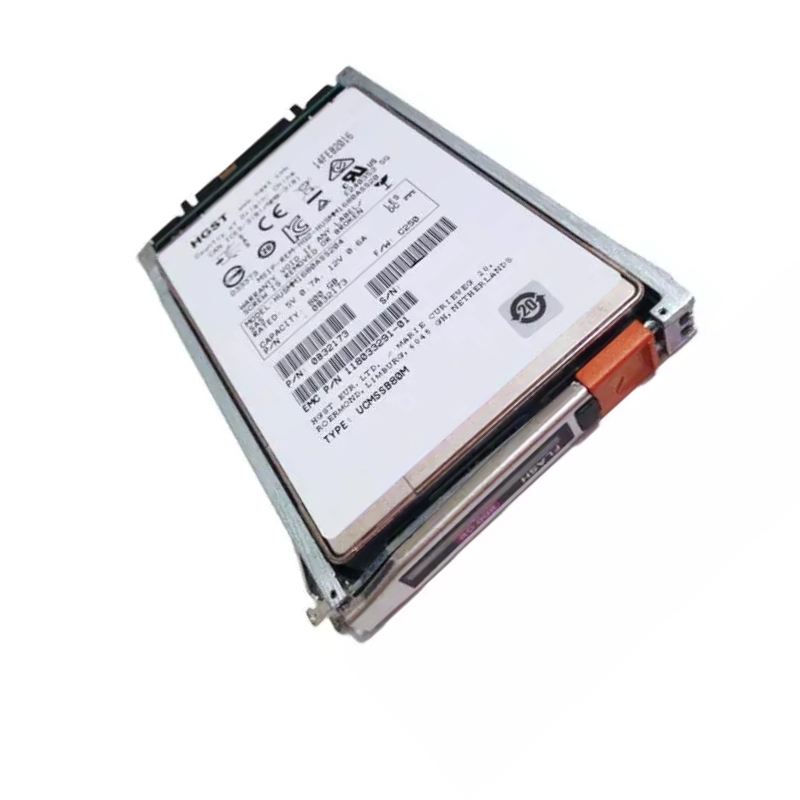


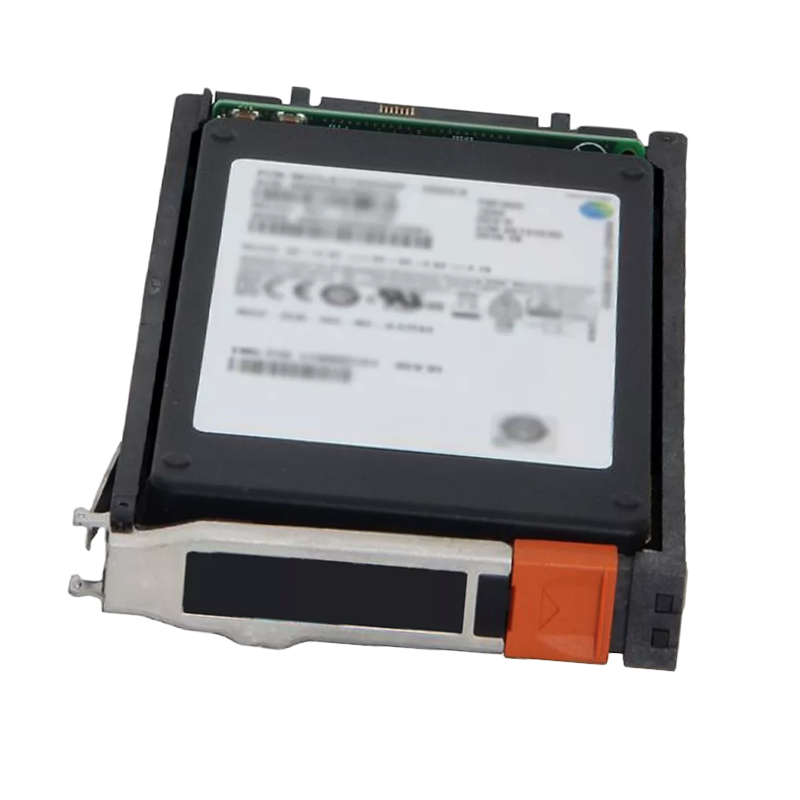
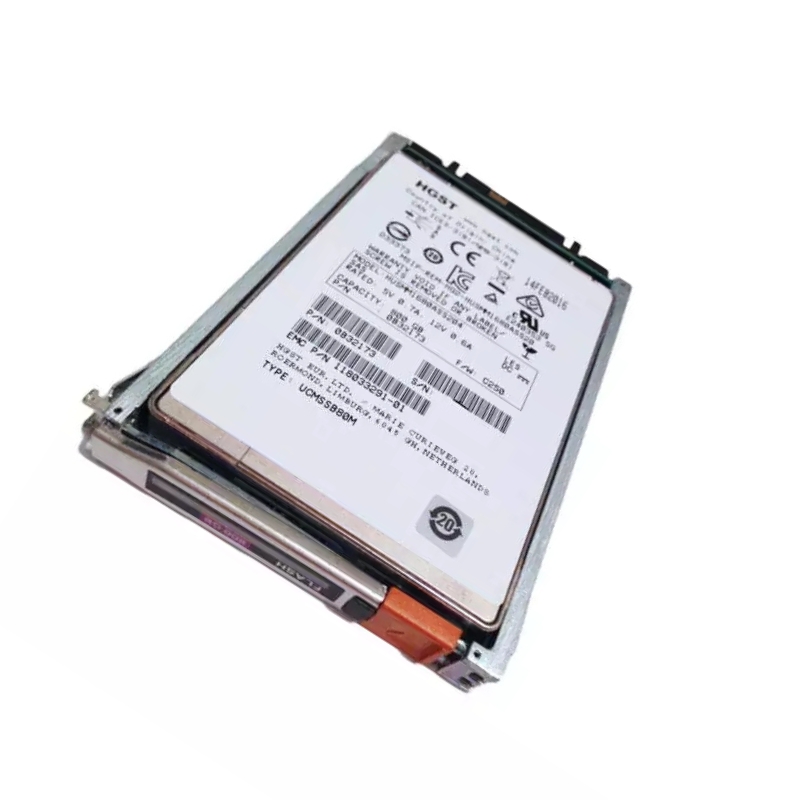
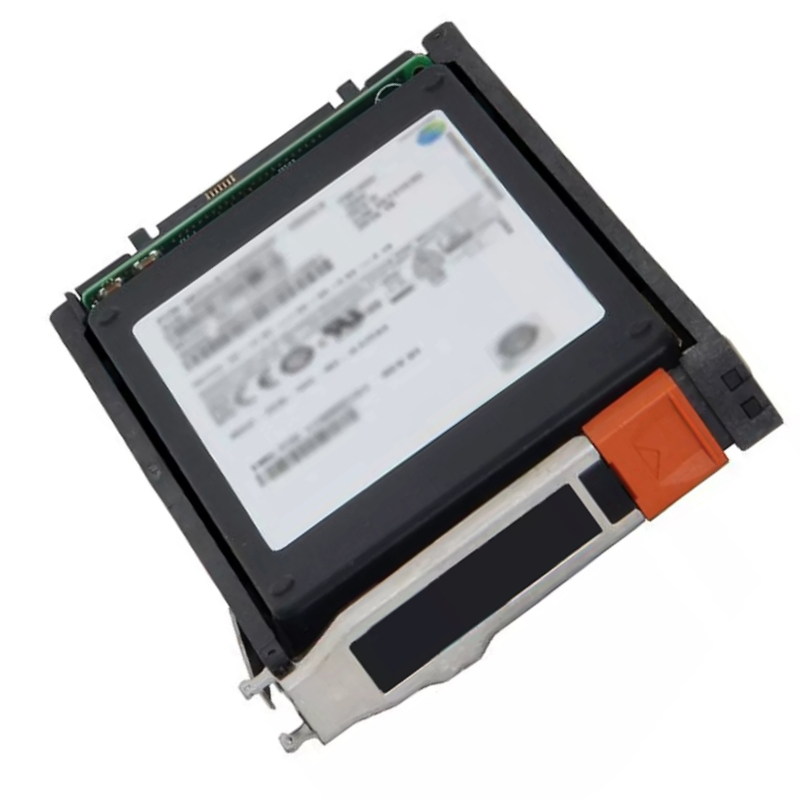
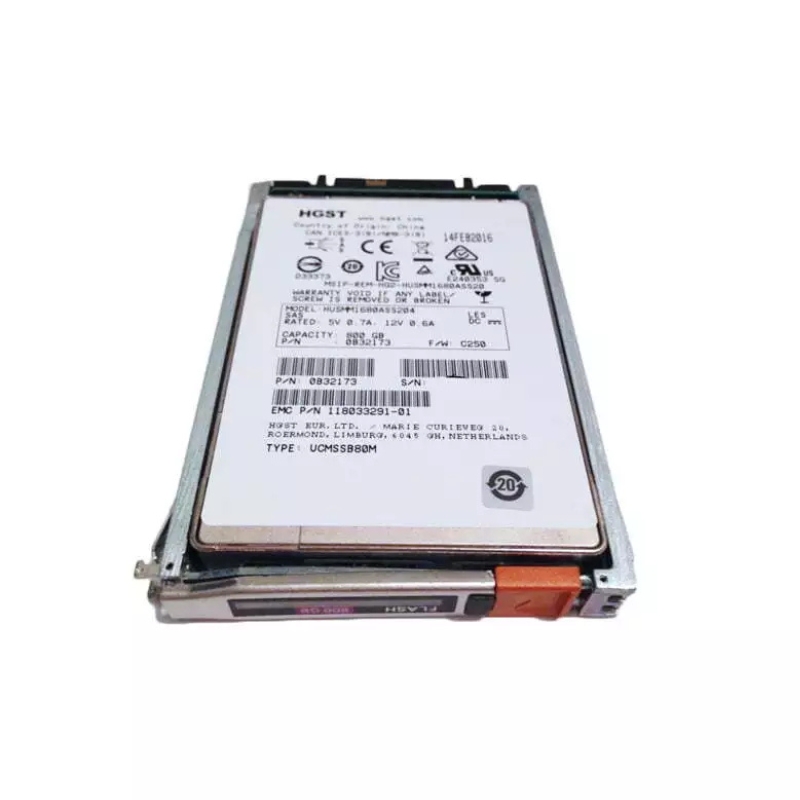
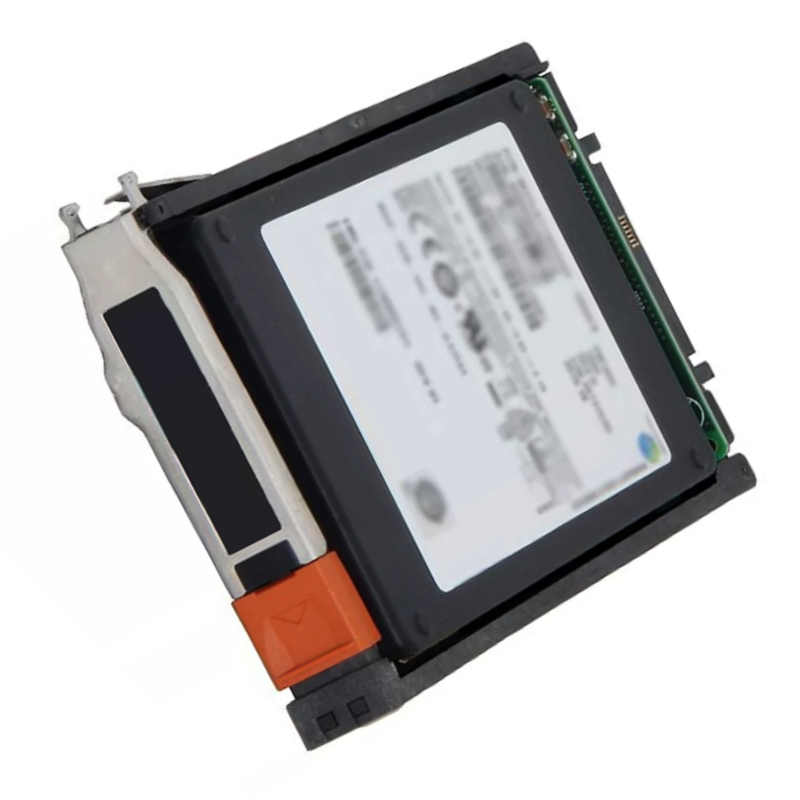
EMC 005051129 800GB SAS 6GBPS 2.5inch Enterprise Internal Solid State Drive. Excellent Refurbished with 1 year replacement warranty
EMC 005051129 800GB SAS 6Gbps 2.5-inch Enterprise Internal Solid State Drive represents a class of storage designed for demanding data center and enterprise server environments. This category of drives combines the robustness and manageability of the SAS interface with the performance advantages of flash NAND to deliver predictable low-latency I/O, strong sustained throughput, and enterprise-grade resiliency. Buyers looking at this category expect consistent performance under heavy transactional workloads, compatibility with enterprise storage arrays and servers, and extended lifecycle support—qualities that make these drives suitable for SAN, NAS front-end caching, database acceleration, virtualization hosts, and mission-critical application tiers.
Enterprise SAS SSDs in this category are engineered to deliver high random IOPS and excellent small-block performance, which is essential for database and virtualization workloads where IO operations are often random and latency-sensitive. The 6Gbps SAS interface provides a reliable data pipe for multi-threaded, high-concurrency environments, allowing drives to sustain high queue depths with minimal variance. Performance tuning in this category focuses on reducing tail latency and preserving throughput under mixed read/write patterns, so infrastructure architects can rely on predictable response times for user-facing and backend services.
Latency is a primary metric for enterprise workloads; the EMC 005051129 class of SSDs aims to minimize average and 99th-percentile latencies to keep application response times consistent. Throughput scales with the number of drives and controller architecture, and these 2.5-inch drives are commonly populated in dense server chassis or storage trays to increase aggregate bandwidth. Administrators often measure and validate both sequential bandwidth for bulk movement tasks and random IOPS for transactional systems to ensure the drives meet operational needs.
Endurance is a cornerstone requirement for enterprise solid-state drives. The EMC 005051129 800GB SAS drives are part of a family of products where endurance ratings, often expressed in drive writes per day (DWPD) or terabytes written (TBW), guide procurement decisions. Manufacturers of enterprise SSDs typically provide detailed endurance specifications and mean time between failures (MTBF) ratings, and these metrics help IT teams plan lifecycle replacement and capacity over-provisioning to maintain service levels.
Enterprise SSD firmware incorporates wear-leveling and bad block management to maximize usable lifespan. Over-provisioning reserves a portion of the NAND for sustained performance and wear distribution; administrators can sometimes adjust this to trade usable capacity for higher write endurance. Monitoring SMART attributes and vendor-specific telemetry enables proactive maintenance, while integration with storage management platforms allows alerting for degradation and predicted end-of-life notifications.
Hardware and firmware-level error correction, such as advanced ECC and internal parity mechanisms, are essential for maintaining data integrity in an enterprise SSD. These drives also often support features like power-loss protection to commit in-flight data during unexpected power events. Combining these protections with RAID, replication, and backup strategies produces a multi-layered defense against data loss and ensures compliance with operational recovery objectives.
The 2.5-inch form factor with a SAS 6Gbps interface is a standard configuration that fits a wide variety of servers, storage enclosures, and array controllers. Compatibility is a deciding factor when purchasing for existing infrastructures. The SAS protocol’s enterprise features—such as dual-port connectivity for some models, robust error handling, and multipath support—make SAS SSDs a dependable choice for high-availability systems. Administrators should verify firmware compatibility lists, vendor qualification matrices, and supported configurations with their server or storage array vendor to ensure plug-and-play operation and warranty preservation.
Enterprise internal drives in this category are typically hot-swappable when used in carriers or chassis designed for hot-plug operation. This enables non-disruptive maintenance and capacity expansion in live environments. Serviceability also extends to vendor support for firmware updates and replacement programs, providing peace of mind for teams operating at scale. Proper labeling, firmware version control, and documented change processes reduce the risk of performance regressions following updates.
Choosing SAS 6Gbps over SATA or NVMe involves trade-offs. SAS provides enterprise-grade manageability and protocol features that SATA lacks, while NVMe offers higher raw performance and lower protocol overhead at the cost of newer infrastructure requirements. The EMC 005051129 800GB SAS category is optimized for environments where a balanced mix of performance, compatibility, and enterprise feature set is required without a full redesign to NVMe. For organizations transitioning to NVMe, SAS SSDs remain useful for legacy arrays and as transitional cache layers.
Security features are increasingly important for enterprise storage components. Many SSDs in this class support hardware-based encryption and TCG Opal or enterprise-class crypto features to secure data at rest. Self-encrypting drive (SED) functionality simplifies compliance with data protection regulations and reduces the operational burden of managing encryption keys at the host layer. When deploying these drives in regulated industries, administrators should document encryption capabilities and key management processes to meet audit requirements.
Proper end-of-life handling requires secure erase capabilities to guarantee that data cannot be reconstructed after decommissioning. Enterprise SSDs often implement vendor-recommended secure erase commands or cryptographic erase methods that render stored data inaccessible by destroying encryption keys. IT teams should follow documented sanitization procedures and capture proof-of-erasure when retiring drives to comply with corporate governance and data privacy regulations.
The EMC 005051129 800GB SAS SSD category is versatile across a range of deployment models. In SAN deployments, these drives can serve as high-performance tiers or cache for spindle-backed arrays, dramatically improving read response times and reducing disk contention. In hyper-converged infrastructure (HCI) and virtualization hosts, their low-latency characteristics drive faster VM boot times and better consolidation ratios. Database systems—both OLTP and analytics—benefit from the consistent IOPS and short queue latency, while logging, caching, and metadata stores enjoy increased responsiveness and durability.
When used within enterprise arrays, these SAS SSDs can complement a tiered storage strategy, balancing cost-per-gigabyte with performance needs. Array-level features such as thin provisioning, snapshots, and inline deduplication interact with SSD behavior; therefore, storage architects must validate performance under realistic workloads. Controllers and firmware versions can significantly influence overall system performance, so certified drive lists and compatibility guides should be referenced during procurement and design phases.
Beyond centralized data centers, this class of SSDs is also suitable for edge compute nodes that require enterprise reliability in constrained physical spaces. Cloud providers and on-premises private cloud deployments use SAS SSDs when interoperability with existing SAN infrastructure is important. For hybrid cloud architectures, using standardized enterprise SAS drives simplifies migration and replication between sites.
Power consumption and thermal profiles matter in dense server environments. These 2.5-inch enterprise SSDs are typically more power-efficient than spinning media but can generate concentrated heat under sustained high write workloads. Rack-level power budgeting and chassis cooling design must account for drive thermal behavior to avoid throttling. Drive firmware often includes thermal throttling algorithms to protect NAND health when temperatures rise, and system-level monitoring helps operators detect hotspots before they impact performance.
Physical deployment choices—drive trays, sleds, and carrier interfaces—affect serviceability and density. The small 2.5-inch footprint allows higher drive counts per chassis, improving aggregate capacity and performance in blade and rack servers. Proper airflow management and attention to slot population patterns prevent thermal imbalances. For high-density storage arrays, administrators should reference vendor installation guides to maintain warranty coverage and optimal airflow.
Modern data centers rely on automation for scale. APIs and command-line utilities that expose drive health and capacity metrics are essential for integrating SSD monitoring into orchestration platforms. Automation scripts can trigger replacement workflows, adjust over-provisioning settings, or migrate workloads away from drives that show early signs of wear. Maintaining an auditable change management process ensures that automation does not inadvertently impact service availability.
Redundancy strategies must be chosen to balance performance, capacity efficiency, and fault tolerance. Traditional RAID levels interact differently with SSDs than with HDDs; rebuild times are typically faster for SSDs, but rebuild stress can still affect performance. Newer distributed storage systems may employ erasure coding to improve space efficiency at scale. These design choices should reflect recovery time objectives (RTO) and recovery point objectives (RPO) for critical applications.


 Contact Us
 Information
 Catalog
 Solid State Drives (SSD)
 Network Switches
 Hard Disk Drives
 HBA & Controllers
 PC & Servers
 PC & Server Memory
 CPU & Processors
 Network Routers
 Power Supplies
 Tape Drives & Libraries
 Network Devices
 Computer & Network Cables