(7% discount is applied at checkout)
Cart is empty
Your go-to destination for cutting-edge server products
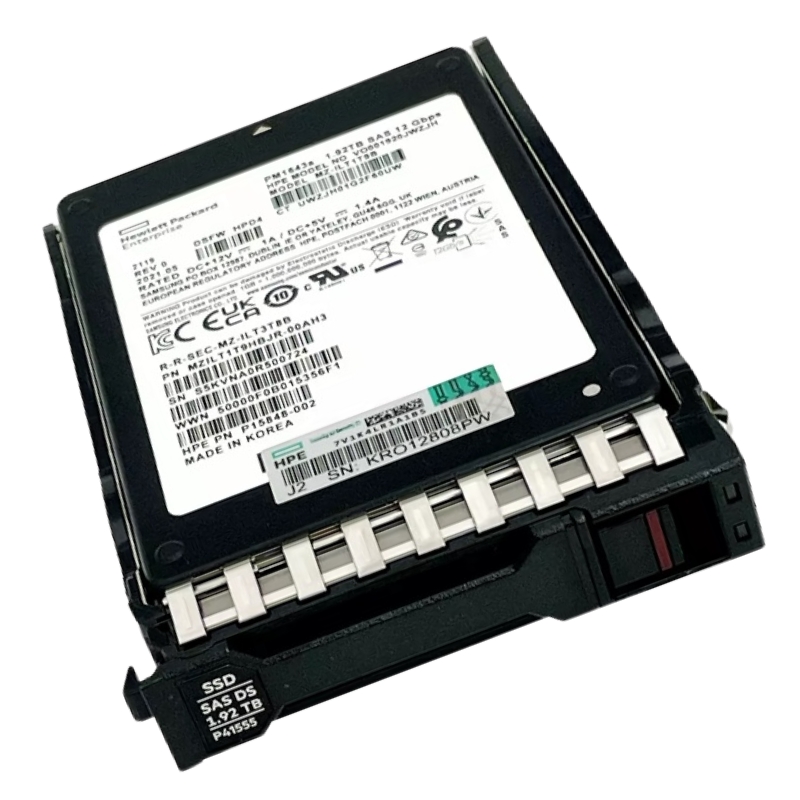


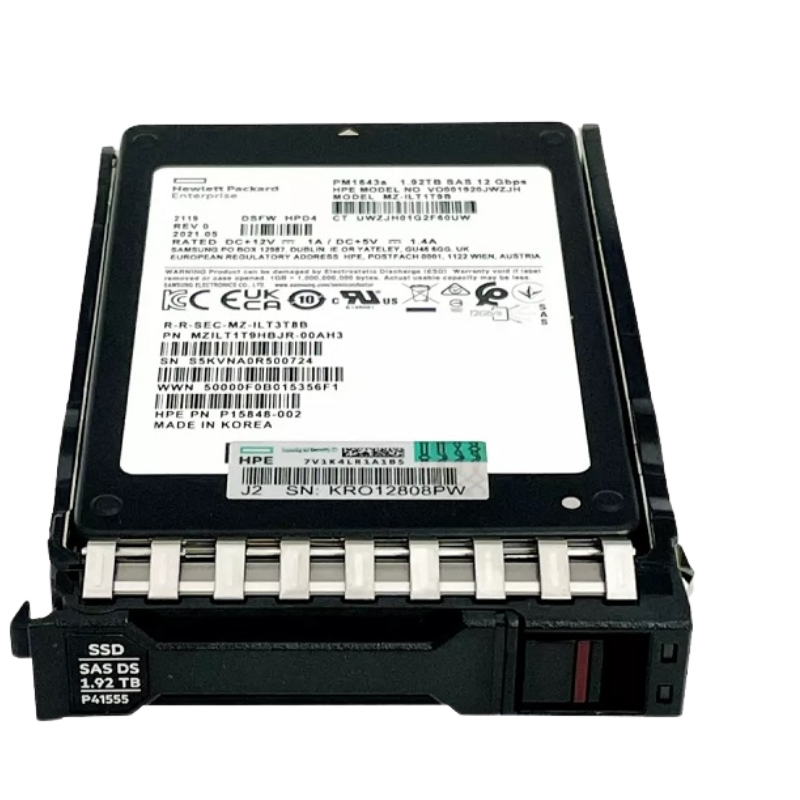
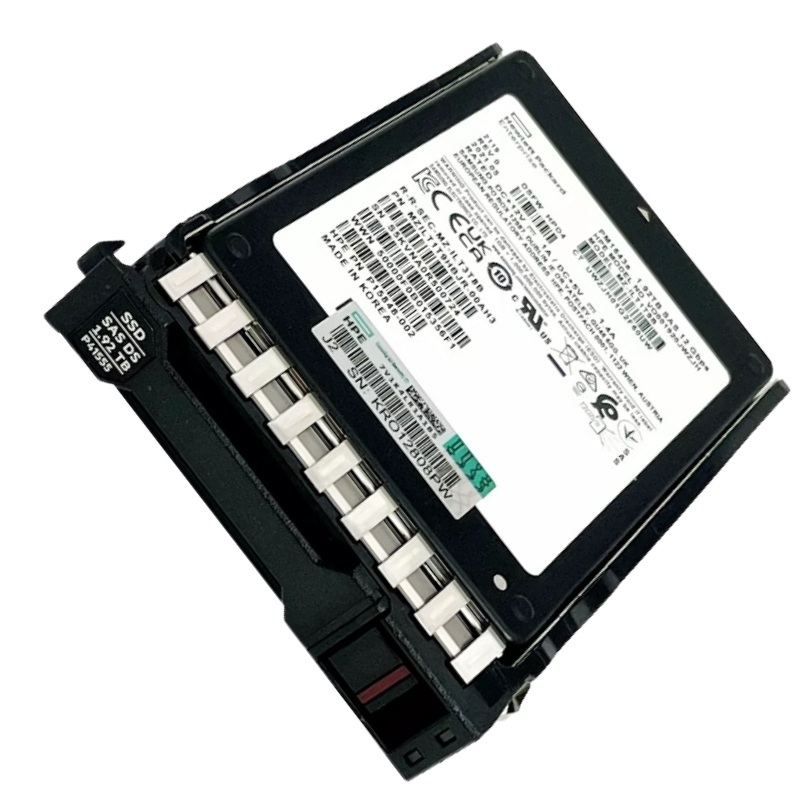
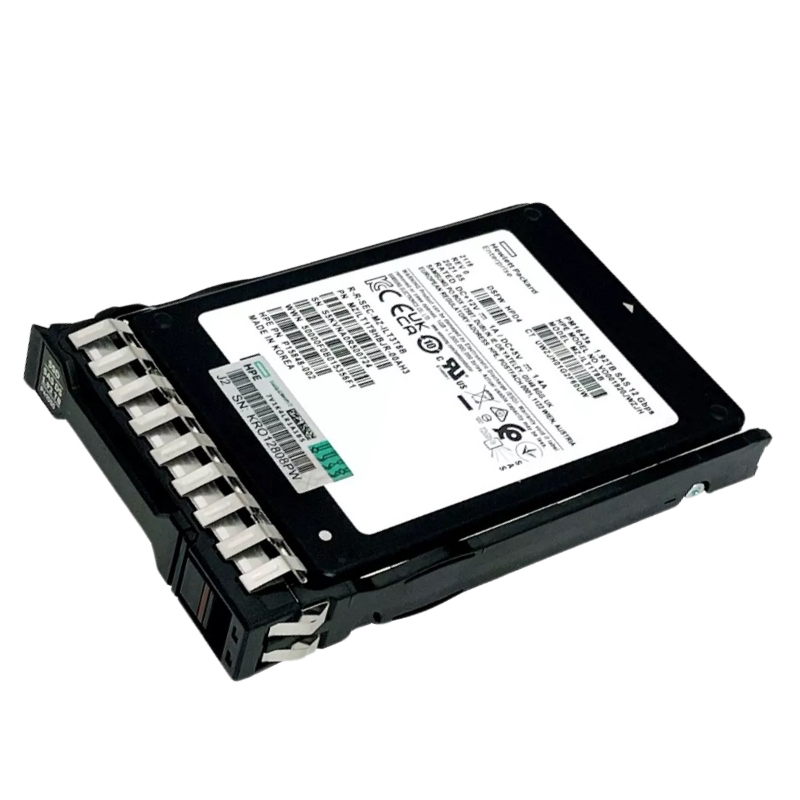
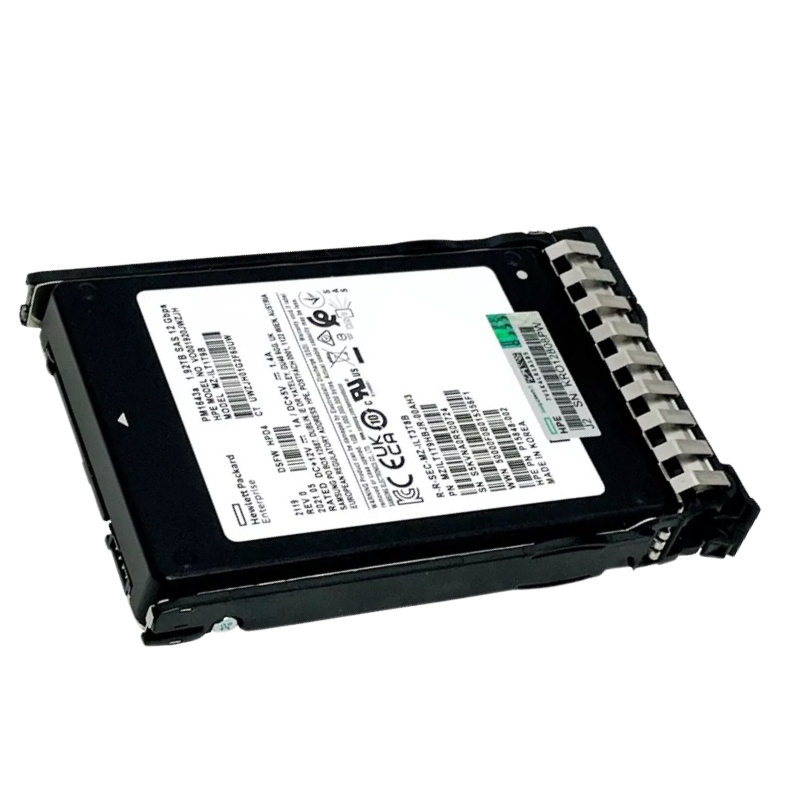
HPE P42692-002 1.92TB SAS 12GBPS Read Intensive SFF SC Multi Vendor Hot Swap SSD for Server. Excellent Refurbished with 1-Year Replacement Warranty
HPE P42692-002 1.92TB SAS 12GBPS Read Intensive SFF SC Multi Vendor Hot Swap SSD is engineered to meet demanding enterprise storage requirements where read-heavy workloads, predictable latency, and high reliability are essential. Designed for ProLiant Gen10 servers and compatible multi-vendor environments, this solid state drive balances capacity and performance while offering the manageability features that data center operators expect from Hewlett Packard Enterprise class components. The device uses the proven SAS 12Gb/s interface to deliver consistent throughput and is optimized for read-intensive applications such as VDI, content delivery, database read caches and analytics indexing.
Performance for read-intensive workloads is the anchor of this category. The HPE P42692-002 is tuned to prioritize sustained read IOPS and low, predictable latency while maintaining reasonable endurance for mixed read/write cycles typical of enterprise caching scenarios. Enterprise-grade controllers, firmware algorithms, and enterprise NAND types combine to deliver predictable behavior under heavy read concurrency. Latency characteristics are optimized to reduce tail-latency in multi-tenant or virtualization environments where hundreds or thousands of I/O streams are active concurrently, ensuring consistent application responsiveness.
Throughput on the SAS 12Gbps interface supports rapid sequential transfers as well as high random read IOPS. The architecture of the drive pairs high-throughput internal channels with wear-leveling and garbage collection strategies that are calibrated for read-dominant patterns. This means sustained sequential reads can saturate the backplane for backup or large dataset analytics while random read IOPS remain stable for online transaction processing and metadata-heavy use cases. These balanced characteristics make the category appropriate for storage tiers where predictable read performance is more important than extreme write endurance.
Low latency is critical for the workloads targeted by this SSD category. HPE implements firmware-level QoS mechanisms and prioritization that minimize variance in read response times. This category of SSD typically reports median and 99th percentile read latencies that remain low, even under sustained load, which is essential for user-facing services, search indices, and real-time analytics. The result is a storage tier that preserves application-level SLAs without resorting to over-provisioning or costly all-flash arrays for every tier.
Capacity offerings in this family, exemplified by the 1.92TB model, provide a middle ground between higher density archive drives and lower capacity ultra-high-performance enterprise flash. The SFF (Small Form Factor) 2.5-inch short chassis, sometimes referenced as SFF SC, enables dense server configurations that conserve rack space while still delivering enterprise-grade flash performance. The physical profile is designed for hot-swap bays within HPE ProLiant Gen10 servers and many multi-vendor enclosures, allowing straightforward upgrades, replacements, and field servicing without system downtime.
Using SFF form factor SSDs like the P42692-002 allows data center architects to populate blade and rack servers with more drives per chassis than with larger 3.5-inch form factors. This density advantage supports higher aggregate IOPS per U, which is valuable for high-density virtualization clusters and converged infrastructure nodes. Combining multiple drives in RAID configurations yields both higher capacity and redundancy while maintaining the thermal and power budgets expected in modern enterprise designs.
The SAS 12Gbps interface provides enterprise-grade signal integrity, dual-port capabilities in relevant models, and compatibility with a broad ecosystem of RAID controllers and backplanes. The P42692-002 is positioned as a multi-vendor compatible SKU, meaning it adheres to SAS standards and is validated for interoperability with HPE systems while remaining usable in mixed vendor storage arrays that conform to SAS protocols. This compatibility is central to data center flexibility and helps organizations maintain vendor-agnostic procurement strategies without sacrificing stability.
SAS delivers several architectural advantages over SATA in enterprise contexts. Error reporting, domain validation, and enterprise-class command sets are built into SAS, enabling advanced features in controllers and host software. The 12Gbps link doubles the bandwidth available over previous 6Gbps generations, reducing bottlenecks for sequential operations while preserving the robust command queuing and device management features required for mission-critical servers.
Hot-swap capability is a defining trait for enterprise SSDs in server environments. The HPE P42692-002 supports hot-plug operations that enable technicians to replace or upgrade drives without taking hosts offline. For production environments where availability is non-negotiable, this attribute reduces planned downtime for maintenance and simplifies emergency replacement during component failure. Tool-less caddies and LED indicators on HPE ProLiant platforms further streamline serviceability workflows and accelerate mean time to repair.
Reliability metrics such as MTBF, UBER (Unrecoverable Bit Error Rate), and endurance ratings are central to assessing suitability for enterprise workloads. The read-intensive SSD category balances endurance and capacity to suit workloads where writes are a smaller percentage of total I/O. Endurance is provisioned accordingly to support typical data center lifecycles, and error-correcting mechanisms, power loss protection features, and enterprise-grade capacitors contribute to data integrity during unexpected power events. These characteristics make drives in this category trustworthy components for tiered storage and cache layers in enterprise arrays.
Data protection during sudden power loss is a core expectation of enterprise SSDs. Drives in this category implement mechanisms to flush volatile write caches and ensure metadata consistency upon power restoration. This behavior prevents filesystem corruption and reduces the risk of inconsistent RAID states, thereby protecting mission-critical data and minimizing the complexity of recovery procedures. The design focus on data persistence is especially important in mixed-use server environments where unplanned power events can impact many services simultaneously.
Workloads that best exploit the strengths of the HPE P42692-002 category include virtual desktop infrastructure, read-heavy database operations, content delivery networks, cache acceleration within hybrid arrays, search and indexing engines, and analytic platforms where read throughput and low latency drive user experience. Because the drives are tuned for read operations, they are often used as read cache tiers in larger storage designs, enabling spinning media or lower-cost flash tiers to scale performance without incurring the cost of all-NVMe architectures.
Virtualization infrastructures, particularly VDI deployments, are characterized by high-concurrency read patterns during boot storms and application load events. Read-intensive SAS SSDs reduce boot times, improve desktop responsiveness, and lower the load on primary storage systems. Their predictable IOPS and low-latency behavior ensure that hundreds or thousands of virtual desktops can be serviced with consistent performance levels, improving the overall user experience and simplifying capacity planning for administrators.
Enterprise SSD categories must align with organizational security policies and regulatory requirements. Hardware-based encryption, secure erase capabilities, and support for TCG Opal or SED (Self-Encrypting Drive) standards are commonly integrated or supported in enterprise ecosystems through controller firmware and platform management layers. These security features assist with data sanitization, end-of-life disposal, and compliance mandates such as GDPR or industry-specific regulations that require provable data destruction and robust access controls.
Secure sanitization procedures are essential for redeployment or disposal of enterprise drives. The category supports secure erase commands and vendor tools that perform cryptographic erase operations, ensuring that data cannot be recovered when drives are retired. Clear documentation and support for certified erasure workflows help enterprise teams meet audit requirements and reduce the risk associated with decommissioned hardware.
Compatibility with HPE ProLiant Gen10 servers is a focal point for buyers who operate HPE-centric infrastructures. These systems leverage integrated management tools such as HPE iLO, HPE OneView, and server firmware ecosystems to expose drive health, firmware state, and predictive failure analytics. When used in HPE platforms, the P42692-002 can be managed within these suites to enable automated alerts, lifecycle management tasks, and integration with centralized monitoring solutions that streamline operations and reduce manual overhead.
RAID configuration decisions should reflect the operational priorities of the workload. For read-focused tiers, RAID levels that offer a balance of capacity and read performance, such as RAID 5 or RAID 6 depending on risk tolerance, are commonly used. However, many high-availability deployments favor RAID 10 to preserve predictable latency and rebuild performance at the cost of usable capacity. Understanding rebuild characteristics and the impact of drive failure on performance is essential for designing resilient systems.
When comparing the HPE P42692-002 category to NVMe and lower-tier SATA offerings, it is important to weigh the trade-offs between interface performance, ecosystem maturity, and cost. NVMe offers higher throughput and lower CPU overhead for extreme performance tiers, while SATA remains cost-effective for capacity-oriented tiers. SAS 12Gbps read-intensive SSDs sit in the middle, delivering enterprise-grade manageability and broad compatibility without the full cost of NVMe deployments. For future-proofing, organizations should consider mixed-tier architectures that allow incremental adoption of NVMe for hot data while retaining SAS-based flash for capacity-efficient high-I/O reads.


 Contact Us
 Information
 Catalog
 Solid State Drives (SSD)
 Network Switches
 Hard Disk Drives
 HBA & Controllers
 PC & Servers
 PC & Server Memory
 CPU & Processors
 Network Routers
 Power Supplies
 Tape Drives & Libraries
 Network Devices
 Computer & Network Cables