(7% discount is applied at checkout)
Cart is empty
Your go-to destination for cutting-edge server products
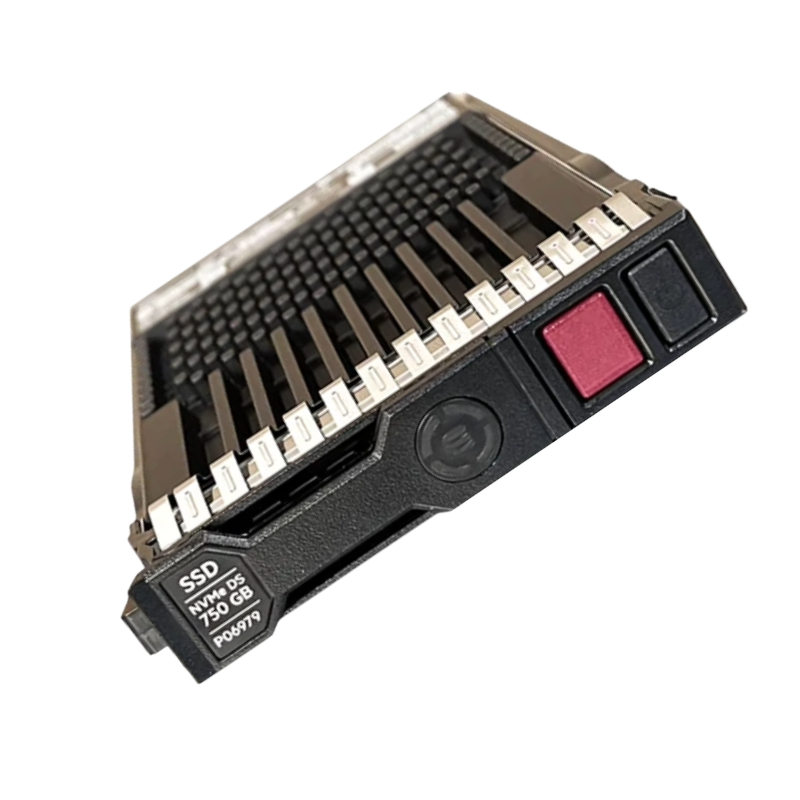


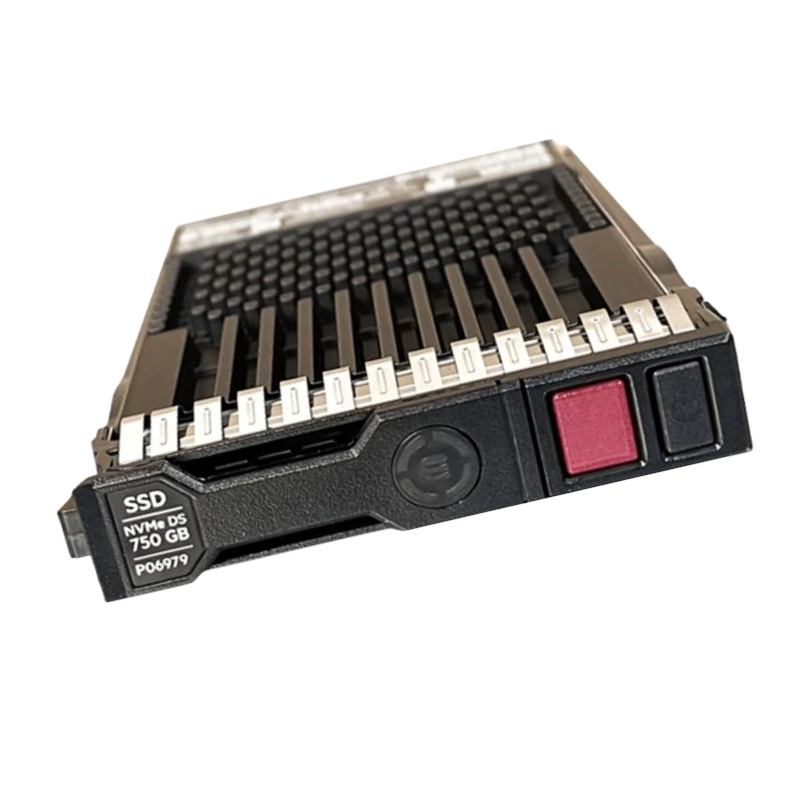
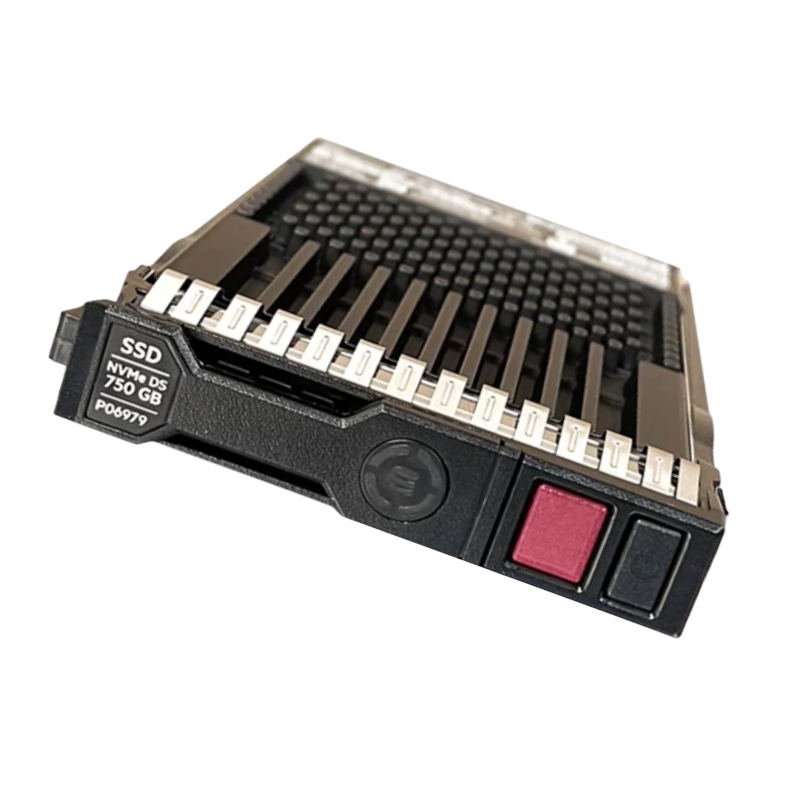
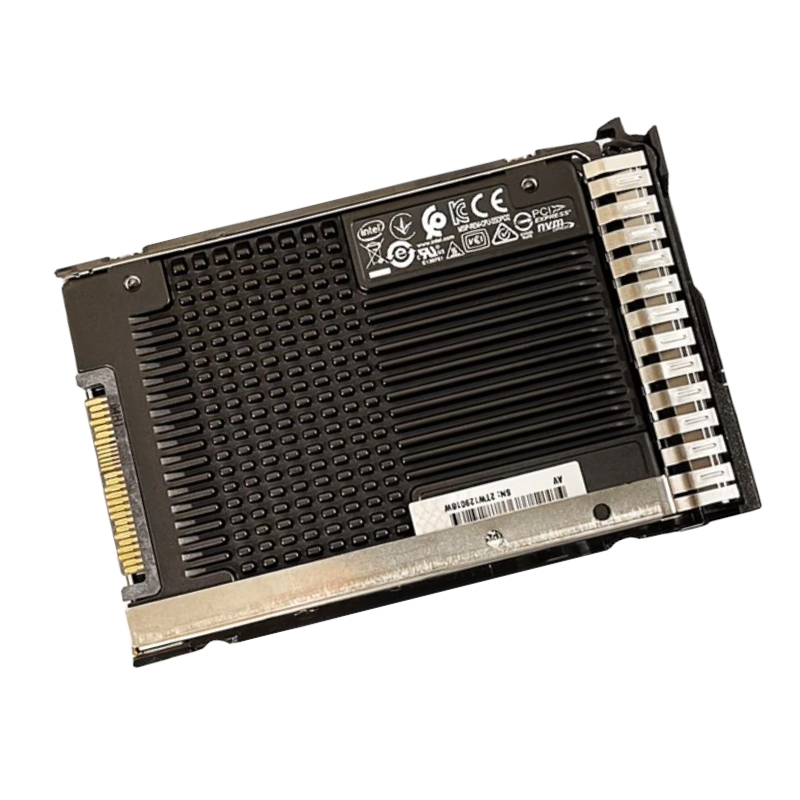
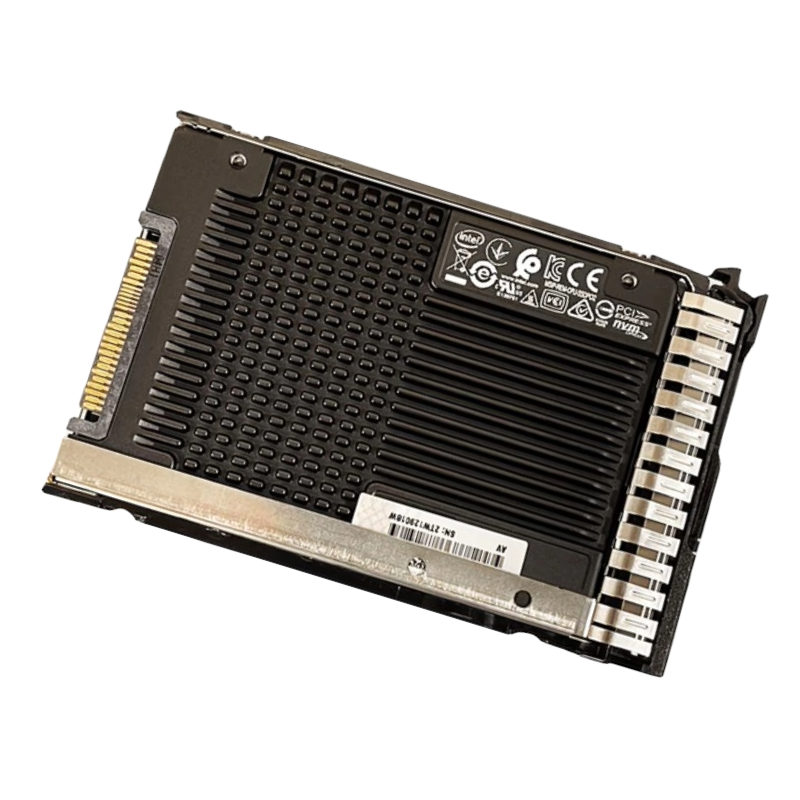
HPE 877718-002 750GB Write-Intensive SFF PCI-Express X4 (nvme) SCN Digitally Signed Firmware with tray Solid State Drive. Excellent Refurbished with 1 Year Replacement warranty
The category centered on the HPE 877718-002 750GB Write-Intensive Small Form Factor NVMe solid-state drive describes a class of enterprise storage hardware engineered for write-heavy workloads, low latency transactions, and dense server integration. This category emphasizes the combination of a 2.5-inch SFF physical profile with a PCI-Express Gen3 x4 NVMe interface, delivering an architecture that balances high throughput, low latency, and enterprise grade endurance. The drives carry HPE’s digitally signed firmware and are commonly sold bundled with the HPE Smart Carrier NVMe tray (SCN), a carrier designed to fit HPE server sleds and front-access bays, which streamlines deployment in rack servers and HPE blade and cartridge systems.
At its core, the category is defined by three interlocking attributes. The first is the two-and-a-half inch small form factor that provides compatibility with a broad range of enterprise server bays and U.2 adapters designed to host SFF NVMe drives. The second is the PCI-Express x4 NVMe interface which leverages NVMe’s optimized command set over PCIe lanes to reduce I/O overhead and maximize both sequential bandwidth and random IOPS. The third defining attribute is the presence of HPE’s digitally signed firmware, a security measure intended to ensure the drive’s firmware has not been tampered with and to guarantee that updates come from a trusted vendor source. These characteristics together position drives in this category as reliable building blocks for caching layers, write-back tiers, and latency-sensitive databases.
This category is aimed primarily at enterprise workloads that generate intensive write traffic or require sustained high write endurance. Typical applications include write-heavy databases, logging and telemetry ingestion layers, high-throughput virtualization hosts, VDI (virtual desktop infrastructure) nodes with heavy write churn, and fast caching layers that accelerate write-back operations. Because these drives are rated with high DWPD (drive writes per day) specifications, they are often chosen for host environments where consistent long-term write performance and predictable lifetime endurance are critical design considerations.
Drives in this category are explicitly characterized as write-intensive, a classification that implies higher endurance thresholds than general purpose or read-optimized enterprise drives. The HPE 877718-002 specifications typically indicate a high DWPD figure—commonly cited at around 30 DWPD for certain models in this class—along with random read and write IOPS figures in the hundreds of thousands. Those performance numbers reflect the drive’s internal flash type, firmware optimizations, and controller design, which prioritize consistent write throughput and latency under sustained load. When designing systems, architects use these endurance metrics to model expected lifespan, calculate the required overprovisioning, and determine maintenance windows and replacement cycles.
The spec sheet that defines this category includes a set of measurable, load-bearing parameters. Capacity is commonly listed at 750 gigabytes usable, which for enterprise SSD measurement may refer to the raw NAND composition and logical capacity after formatting. The interface is PCIe Gen3 x4 with NVMe protocol, enabling maximum sequential bandwidth appropriate to four PCIe lanes and a command path optimized for parallel I/O on multi-core server CPUs. Random IOPS numbers for these drives are often cited in the range of roughly 575,000 IOPS for reads and 585,000 IOPS for writes at small queue depths, although real-world numbers depend on block size, queue depth, and host configuration. The drive includes HPE’s digitally signed firmware and ships with an HPE Smart Carrier NVMe (SCN) tray to ensure compatibility with HPE server bays.
Understanding performance tests and marketing figures is essential when comparing drives. Sequential throughput metrics are useful for large, contiguous data transfers, but random IOPS and latency at low queue depths better predict performance for database and OLTP applications. The NVMe stack reduces CPU overhead per I/O and supports multiple queues for parallelism; this drive category leverages that to deliver very high IOPS while maintaining low tail latencies. Engineers often measure steady-state behavior to assess garbage collection impacts and long-term write amplification. The presence of SLC or high-endurance NAND, along with enterprise-tuned firmware, reduces performance degradation during sustained writes but also invites attention to thermal and power considerations to maintain consistent throughput.
Compatibility is a critical category consideration because datacenter servers and storage enclosures demand secure mechanical fit and proper signaling. The HPE Smart Carrier NVMe (SCN) is a carrier assembly that converts the drive to HPE’s front-accessible slot form, allowing tool-less insertion and ejection while providing the server firmware and management stack with expected identifiers and status messaging. This carrier is part of why drives in this category are straightforward to deploy in HPE ProLiant systems, HPE BladeSystem environments, and other chassis with U.2 or SCN-compatible bays. Administrators should confirm server firmware compatibility and HPE SSA (Smart Storage Administrator) or related management console support to ensure accurate health reporting and firmware update pathways.
In modern hybrid storage architectures, drives from this category are used in specific tiers. They are rarely the cold archive tier and more often chosen for top-of-stack latency layers or for persistent caching. Typical deployment patterns include being fronted by a small DRAM-backed caching layer or deployed as direct-attached storage serving VMs directly. When combined with software-defined storage layers, these drives can act as fast journals, committing writes quickly before they are asynchronously tiered to larger capacity media. Integration planning should include power budgeting, thermal flow assessment, and I/O path testing to validate consistent latency and throughput under production workload patterns.
Endurance planning for write-intensive drives centers on DWPD and TBW (terabytes written) metrics. Drives in this category present figures intended to support heavy write workloads; for architects this means calculating expected daily writes per drive and planning sufficient spare capacity and rotation to meet SLA targets. Because the drives are often used in clusters and arrays, planners also account for RAID rebuild overhead, which increases write activity, and for sustained background operations like scrubbing and deduplication. Accurate life expectancy modeling also includes understanding the effect of thermal conditions and power cycles on NAND health, along with estimating realistic replacement timelines based upon vendor MTBF and field telemetry.
High IOPS and heavy write traffic generate heat. The physical constraints of 2.5-inch SFF bays and the airflow patterns of the server chassis demand careful thermal management to avoid throttling or premature wear. Power budgets must include peak and average draw for each NVMe drive as well as any added consumption from carrier adapters. Thermal throttling behaviors and power-derived performance curves are often documented by vendors and should be validated in lab tests that mimic production I/O densities. If drives show thermal throttling under sustained write tests, operators should consider improved cooling, alternate bay placement to increase airflow, or changes to chassis fan curves.
Within the enterprise SSD ecosystem, write-intensive NVMe SFF drives are compared to read-optimized variants, general purpose SSDs, and emerging non-volatile memory classes such as Intel Optane. The write-intensive HPE product line prioritizes endurance and sustained write throughput rather than maximum sequential bandwidth or absolute lowest cost per GB. Compared to read-optimized parts, write-intensive models will typically have more robust NAND types or more aggressive overprovisioning and firmware policies designed to minimize write amplification. Compared to ultra-low latency memory class products, these drives deliver better cost per gigabyte while offering very high IOPS for block storage workloads, placing them into a distinct architectural niche for cost-sensitive, write-heavy applications.
From a systems architecture perspective, the HPE 877718-002 category functions as a predictable, high-endurance NVMe tier that can be combined with capacity drives and object storage layers to build multilayered storage systems. Data center planners must account for rack density, cooling, and power provisioning as these drives enable dense compute nodes with significant I/O potential. In clustered solutions, the drives can be paired with distributed filesystem metadata services, high performance databases, or fast object caches. Capacity planning at the rack and pod level should include extra slots for hot spares and consider the effects of RAID rebuilds or erasure code reconstruction on effective endurance.
Use cases include low-latency metadata stores for scale-out filesystems, persistent caches for object storage accelerators, write-back transactional journals for distributed databases, and boot or local persistent storage for hyperconverged nodes requiring predictable write endurance. When designing these solutions, align the drive’s endurance and IOPS profile with the expected concurrency and data durability requirements of the application to avoid overspecifying capacity or under-protecting critical data.


 Contact Us
 Information
 Catalog
 Solid State Drives (SSD)
 Network Switches
 Hard Disk Drives
 HBA & Controllers
 PC & Servers
 PC & Server Memory
 CPU & Processors
 Network Routers
 Power Supplies
 Tape Drives & Libraries
 Network Devices
 Computer & Network Cables