(7% discount is applied at checkout)
Cart is empty
Your go-to destination for cutting-edge server products
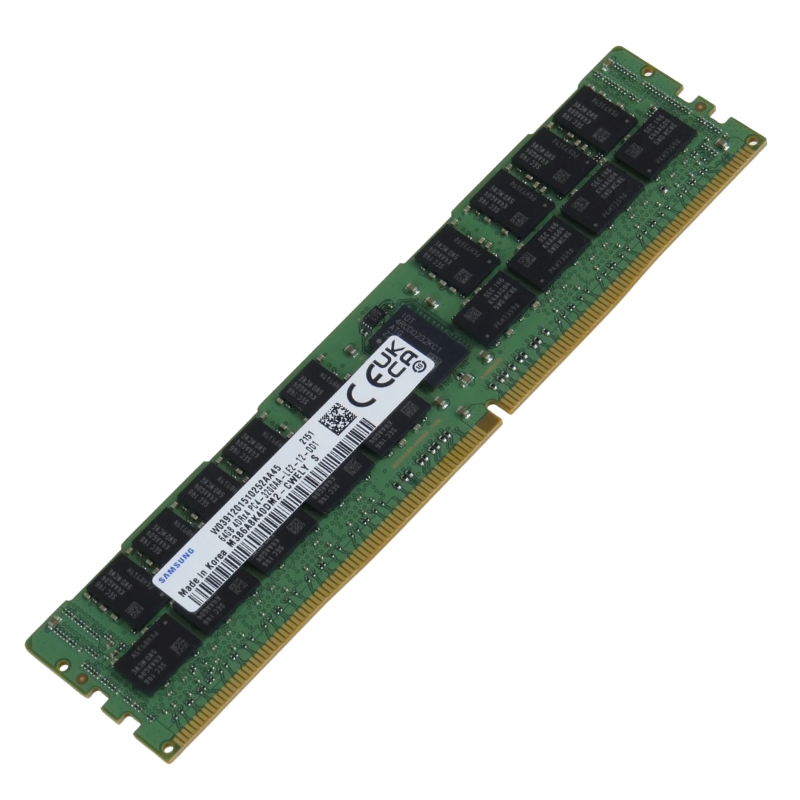


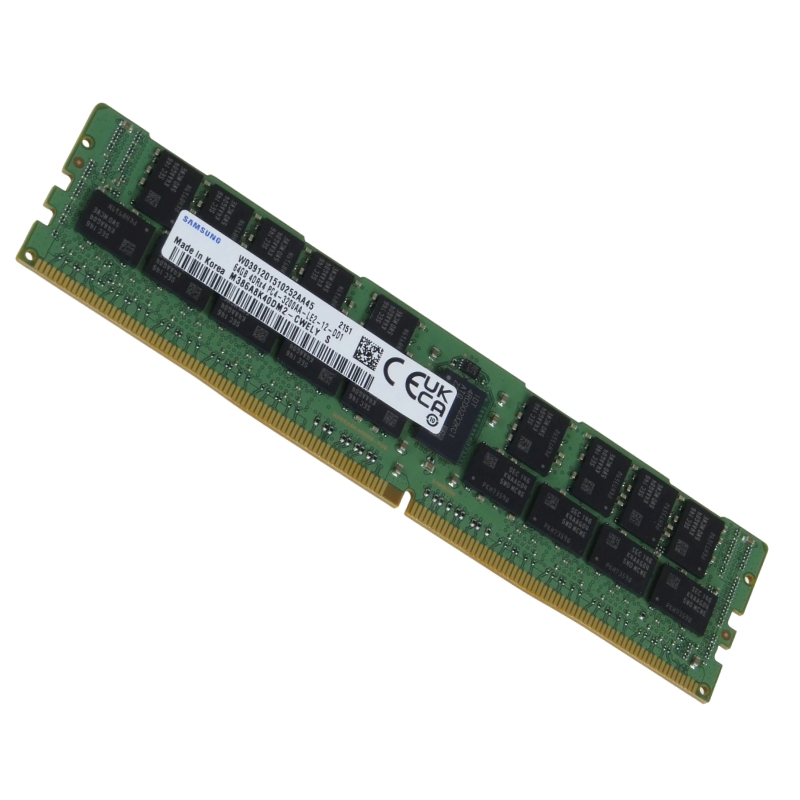
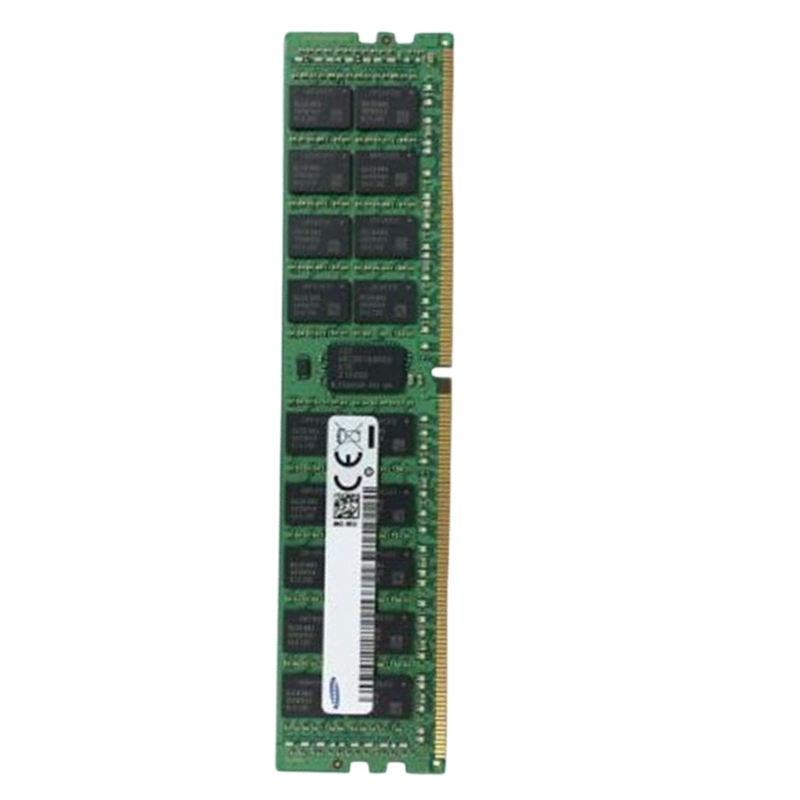
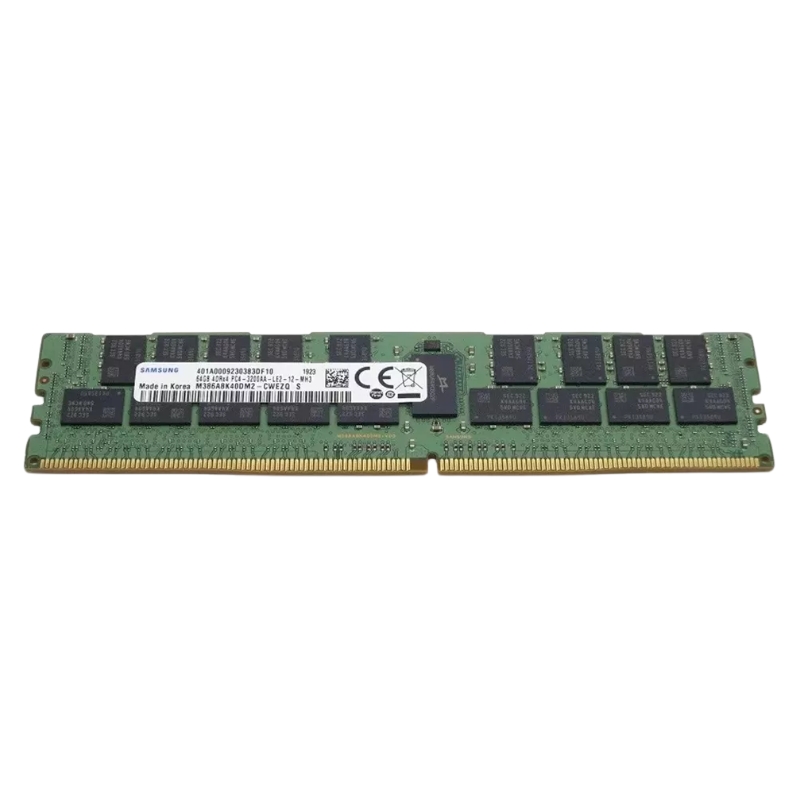
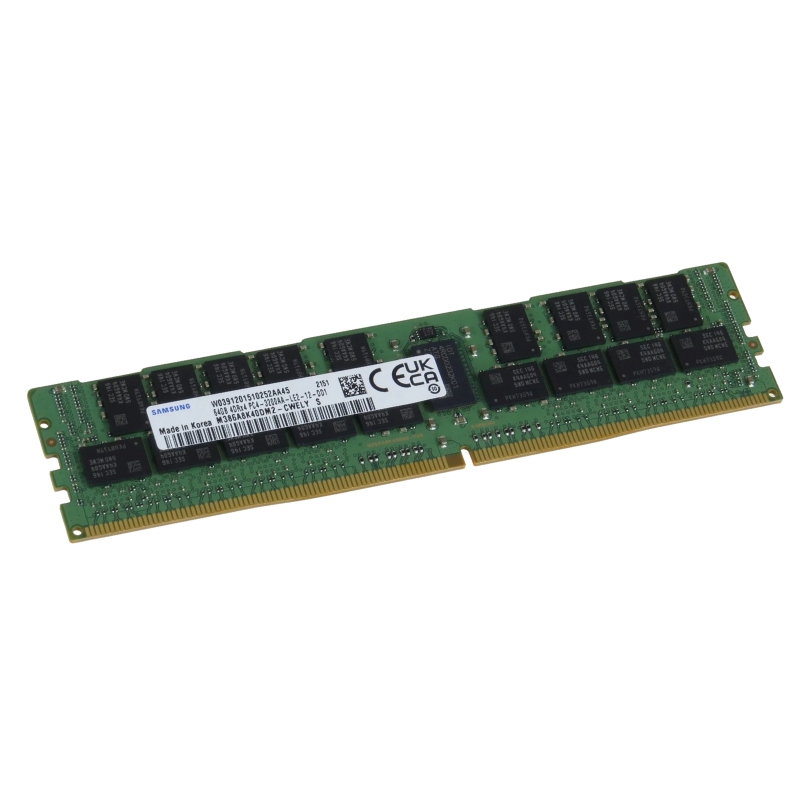
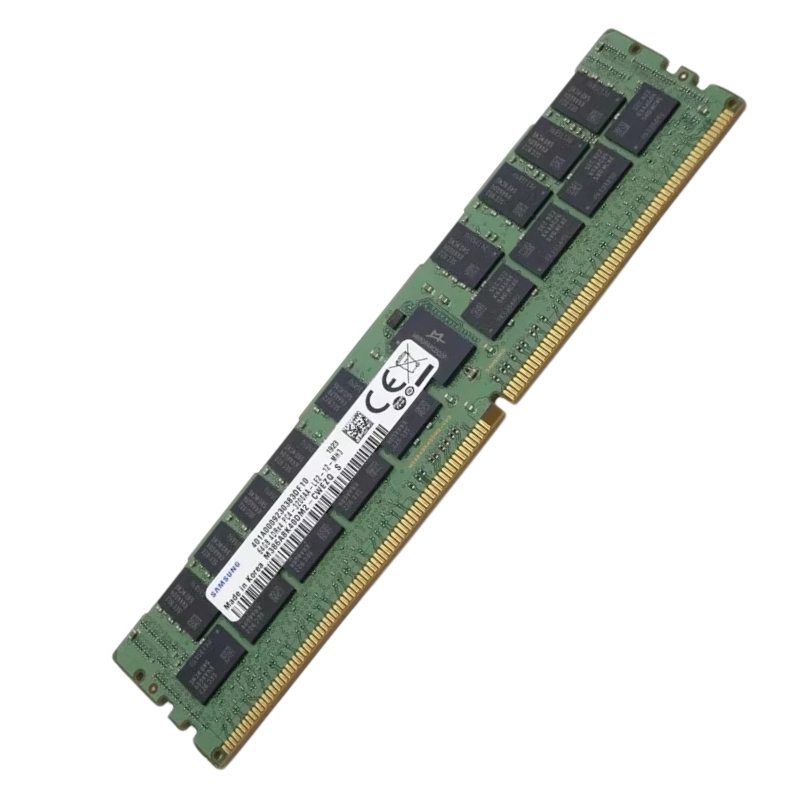
Samsung M393A8G40AB2-CWEGY 64GB 3200Mhz PC4-25600 Cl24 DDR4 SDRAM Ecc Reg Ram. New (Box Not Sealed) with 1 year replacement warranty. Minimum Order Qty. 20 Pcs
| SKU/MPN | Warranty | Price | Condition | You save |
|---|---|---|---|---|
| M393A8G40AB2-CWEGY | 1 Year Warranty | $768.00 | New (Box Not Sealed) | You save: $268.80 (26%) |
| M393A8G40AB2-CWEGY | 1 Year Warranty | $1,056.00 | New Sealed in Box (NIB) | You save: $369.60 (26%) |
The Samsung M393A8G40AB2-CWEGY DDR4 SDRAM boasts an impressive speed of 3200Mhz. This high-frequency speed allows for lightning-fast data transfer, ensuring that your system operates at its maximum potential. Whether you are loading large files, running complex software, or gaming, the 3200Mhz speed delivers unmatched performance and responsiveness.
In the mission-critical realm of server and data center operations, system stability, data integrity, and consistent performance are non-negotiable. At the heart of these requirements lies a key component: server-grade memory. The Samsung M393A8G40AB2-CWEGY represents a pinnacle of this category, a 64GB DDR4 RDIMM engineered for reliability and high-throughput computing. This module is not standard desktop memory; it is a sophisticated piece of hardware designed explicitly for servers and workstations where error-free operation over extended periods is paramount. Its specifications tell a story of robust engineering, from its ECC capabilities to its registered design and optimized signal integrity.
Before delving into architectural benefits, understanding the module's explicit technical profile is essential. The Samsung M393A8G40AB2-CWEGY is defined by a precise set of parameters that dictate its compatibility and performance envelope.
This module offers a substantial 64GB of memory capacity in a single 288-pin package. It is configured as a 1x64GB stick, meaning a single module provides this density. This high density is crucial for modern servers, allowing for maximum total system memory capacity with fewer occupied slots, which can improve power efficiency and leave room for future expansion.
Samsung's model nomenclature provides a detailed technical blueprint of the module. Breaking it down: "M393" indicates a registered DIMM module. "A8G40" denotes a 64GB capacity, a 1Gx4 DRAM organization, and a normal height PCB. "AB2" refers to the specific component revision and design. The suffix "CWEGY" is equally critical: "C" signifies a commercial operating temperature range (0°C to 85°C), "W" indicates a 3200Mbps data rate, "E" confirms ECC (Error-Correcting Code), "G" specifies a Registered (RDIMM) type, and "Y" stands for a 1.2V operating voltage. This alphanumeric string is a complete technical spec sheet in itself, defining the module's exact place in the server ecosystem.
The module conforms to the standard 288-pin DDR4 RDIMM form factor. It is a Dual Rank module (DR), meaning the memory chips are organized into two internal sets that the memory controller addresses separately. This organization can improve performance over single-rank modules in many server workloads by allowing more efficient access patterns. The physical components are mounted on a 1.2V, low-profile, green PCB typical of server-grade memory.
Registration is a buffer technology that significantly enhances system stability, especially in memory-intensive configurations. An RDIMM incorporates a register (or buffer) on the module itself, placed between the system's memory controller and the DRAM chips. This register buffers the command and address signals, reducing the electrical load on the memory controller. This allows a server to support a greater number of memory modules per channel (higher memory capacity) without signal degradation. While it adds a minimal latency penalty (typically one clock cycle), the benefit is vastly improved signal integrity and system scalability.
It is essential to distinguish this RDIMM from other DDR4 types. Unbuffered DIMMs (UDIMMs) have no buffer and are common in desktops; they offer lower latency but support fewer modules per channel. Load-Reduced DIMMs (LRDIMMs) use a more advanced buffer (isolation memory buffer, or iMB) that buffers both data and command/address lines, enabling the highest possible capacities per channel. The Samsung M393A8G40AB2-CWEGY, as an RDIMM, strikes the optimal balance between capacity support, cost, and latency for a wide range of enterprise applications.
The module operates at a data rate of 3200 Megatransfers per second (MT/s), commonly referred to as 3200MHz. In the classification standards of DDR4, this equates to a PC4-25600 designation. This figure is derived from the module's peak transfer capability: 3200 MT/s * 8 bytes = 25,600 MB/s. This high bandwidth is critical for data-intensive applications, virtualization, large databases, and high-performance computing tasks, ensuring the CPU is fed with data as rapidly as possible to minimize latency and bottlenecks.
The CAS Latency (CL) for this module is CL22. While latency numbers are often higher on server memory compared to enthusiast desktop RAM, this is a trade-off for the enhanced stability, higher capacities, and superior signal integrity required in server environments. The module operates at the standard DDR4 voltage of 1.2V, contributing to lower power consumption and reduced heat output compared to previous-generation memory, a vital factor in densely populated server racks.
The value of the Samsung M393A8G40AB2-CWEGY is not solely in its raw specifications but in the underlying technologies that enable reliable, error-resistant operation.
ECC is the cornerstone of data integrity in server memory. Unlike non-ECC memory, which can suffer from silent data corruption due to cosmic rays, electrical interference, or minor hardware faults, ECC memory includes extra bits (in this case, using a x4 DRAM device configuration) to detect and correct single-bit errors on-the-fly. It can also detect, though not correct, multi-bit errors. This capability prevents crashes, data corruption, and system instability, making it indispensable for financial servers, scientific research, medical data processing, and any application where data accuracy is critical.
The "Registered" in RDIMM indicates the presence of a register, or buffer, located between the system's memory controller and the DRAM chips on the module. This register buffers the command and address signals, reducing the electrical load on the memory controller. This design allows servers to support a greater number of memory modules and higher total capacities without overloading the controller. While it adds a minimal clock cycle of latency, the benefit in system scalability and stability is profound for multi-socket servers and systems fully populated with high-density modules.
This module is designated as Dual Rank. A rank is an independent set of DRAM chips that is accessed simultaneously by the memory controller. Dual Rank modules effectively interleave access between two internal banks, often providing better performance and efficiency compared to Single Rank modules at the same capacity, especially in memory-intensive workloads. They offer a good balance of performance, capacity, and loading on the memory channel.
The "x4" refers to the internal organization of the individual DRAM chips, meaning each chip has a 4-bit wide data interface. This configuration is particularly important for ECC functionality, as it allows for optimal use of the extra bits for error correction. x4-based RDIMMs also offer superior "Chipkill" protection, a technology pioneered for servers that can survive a complete failure of a single DRAM chip, analogous to a RAID array for memory. This significantly enhances system reliability and uptime.
Deploying server memory requires careful attention to compatibility. The Samsung M393A8G40AB2-CWEGY is not a universal component and is designed for specific platforms.
This memory module is engineered for server and high-end workstation platforms. It is compatible with servers from major OEMs like Dell (PowerEdge), HPE (ProLiant), Lenovo (ThinkSystem), Cisco (UCS), and Supermicro, provided the specific motherboard and CPU platform support DDR4 3200MT/s RDIMMs. Its primary use cases include enterprise servers powering virtualization (VMware, Hyper-V), large-scale databases (SQL, Oracle), in-memory analytics, cloud infrastructure, and high-performance computing clusters.
Optimal operation at the rated 3200MT/s speed depends on the server's CPU and its integrated memory controller. This module is designed for compatibility with Intel Xeon Scalable Processors (primarily 3rd Generation Ice Lake-SP and later) and compatible AMD EPYC processors that officially support DDR4-3200 RDIMMs. It is imperative to consult the server manufacturer's qualified vendor list (QVL) to ensure this specific Samsung module is tested and validated for a particular system model, guaranteeing seamless operation and full performance.
The combination of features in the Samsung M393A8G40AB2-CWEGY translates into tangible benefits for the end-user and system administrator.
The primary advantage is rock-solid stability. The ECC correction, RDIMM buffering, and the inherent quality of Samsung's DRAM manufacturing drastically reduce the likelihood of memory-related system crashes or blue screens. This maximizes server uptime, a key metric in service level agreements (SLAs) and operational efficiency.
High-density 64GB modules allow data centers to achieve desired total memory capacities with fewer physical sticks. This reduces the per-slot power draw (at 1.2V) and lowers the thermal load within the chassis, contributing to lower cooling costs and a smaller overall power footprint. It also simplifies inventory management and future upgrades by freeing up DIMM slots.


 Contact Us
 Information
 Catalog
 Solid State Drives (SSD)
 Network Switches
 Hard Disk Drives
 HBA & Controllers
 PC & Servers
 PC & Server Memory
 CPU & Processors
 Network Routers
 Power Supplies
 Tape Drives & Libraries
 Network Devices
 Computer & Network Cables