(7% discount is applied at checkout)
Cart is empty
Your go-to destination for cutting-edge server products


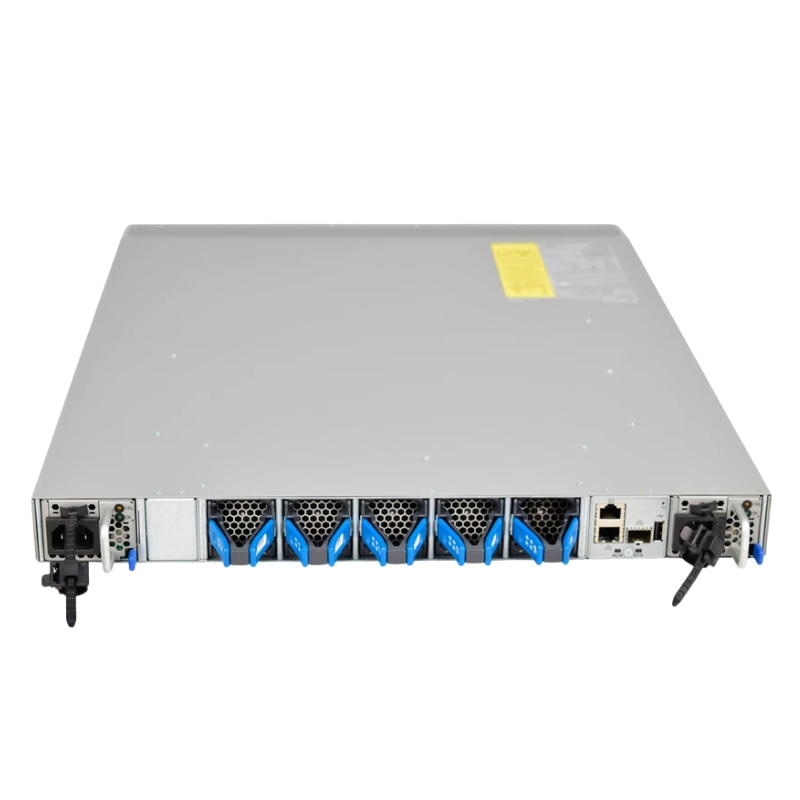
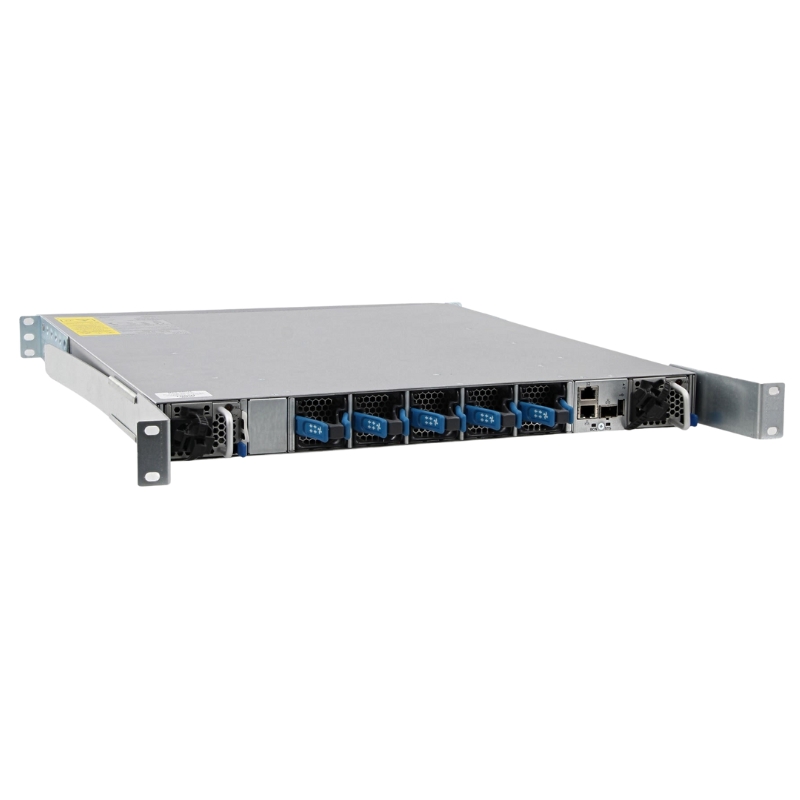
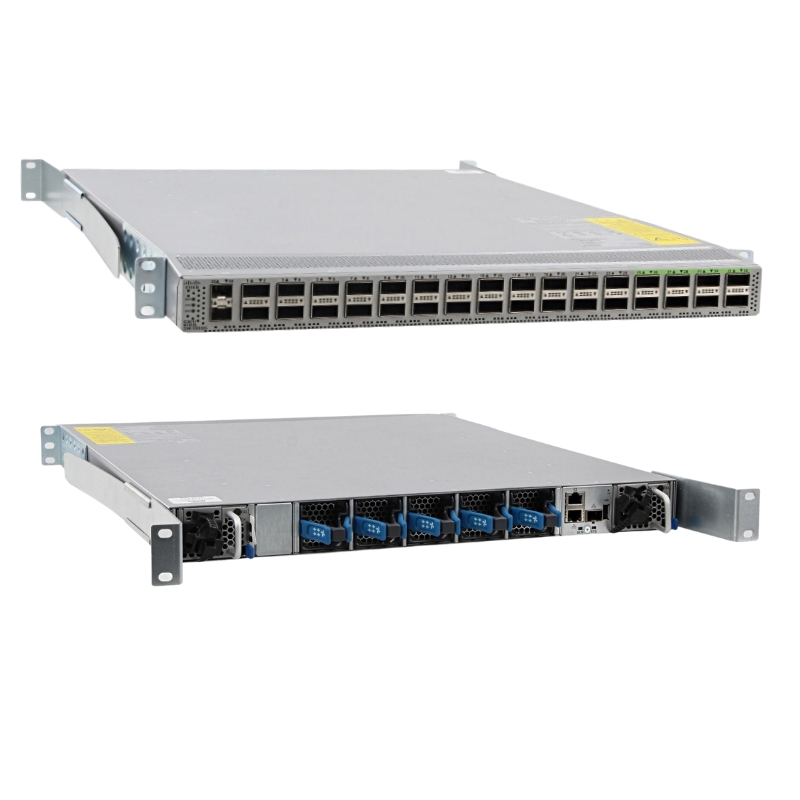
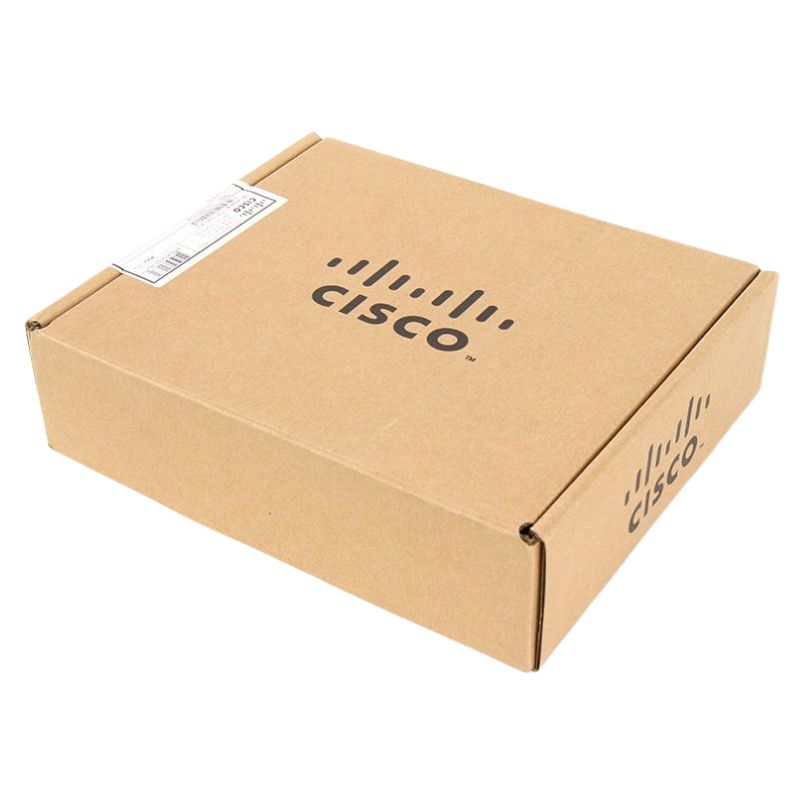
Cisco N9K-C9332C Nexus 9332C ACI Spine Network Switch with 32 Ports, supporting 40/100G QSFP28 and 1/10G SFP connections. Factory-Sealed New in Original Box (FSB) with 1 year replacement warranty
| SKU/MPN | Warranty | Price | Condition | You save |
|---|---|---|---|---|
| N9K-C9332C | 1 Year Warranty | $9,580.00 | Factory-Sealed New in Original Box (FSB) | You save: $3,353.00 (26%) |
| N9K-C9332C | 1 Year Warranty | $2,095.00 | Excellent Refurbished | You save: $733.25 (26%) |
The Cisco N9K-C9332C is engineered for modern data center fabrics, delivering ultra-fast throughput, predictable latency, and scalable architecture. Designed as an ACI spine switch, it supports demanding workloads across enterprise, cloud, and service provider environments.
This Nexus 9000 Series switch is built to handle high-bandwidth east-west traffic with flexible optical connectivity.
Built for non-blocking performance, the Nexus 9332C ensures consistent packet delivery even under peak traffic conditions.
The switch is equipped with redundant components to enhance uptime and thermal efficiency.
Comprehensive management options allow simplified deployment, monitoring, and maintenance.
The Cisco N9K-C9332C Nexus 9332C ACI Spine Network Switch represents a high-performance category of spine-layer switching designed for scalable, low-latency, and cloud-ready data center fabrics. As part of the Cisco Nexus 9000 Series, this switch category is engineered to operate at the core of leaf-spine architectures, delivering predictable performance and consistent policy enforcement across large-scale deployments. With thirty-two ports supporting 40 Gigabit and 100 Gigabit QSFP28 connectivity alongside flexible breakout options for 1 Gigabit and 10 Gigabit SFP-based connections, this category addresses the evolving bandwidth and architectural requirements of enterprise, service provider, and cloud environments.
Spine switches in this class are purpose-built to interconnect large numbers of leaf switches while maintaining non-blocking throughput and minimal latency. The Nexus 9332C platform is optimized for Cisco Application Centric Infrastructure deployments, where centralized policy control, automation, and telemetry are essential. This category emphasizes deterministic forwarding, deep buffering, and hardware-accelerated features that allow the network fabric to scale horizontally without compromising application performance or operational simplicity.
Within a modern leaf-spine topology, the spine layer serves as the high-speed interconnect that ensures any leaf switch can communicate with any other leaf switch in a predictable number of hops. The Cisco N9K-C9332C category is designed to fulfill this role by offering uniform port speeds, consistent forwarding behavior, and the capacity to support east-west traffic patterns common in virtualized and containerized environments. By eliminating traditional aggregation bottlenecks, this category enables linear scalability as additional leaf switches are introduced.
The thirty-two QSFP28 ports provide the foundation for high-density spine connectivity, allowing each port to operate at 40G or 100G depending on deployment needs. This flexibility allows organizations to adopt 100G uplinks for future-proofing while still supporting existing 40G infrastructures. Breakout capabilities further extend versatility, enabling the same hardware platform to adapt to diverse cabling and transceiver strategies without redesigning the physical fabric.
One of the defining characteristics of the Cisco Nexus 9332C switch category is its emphasis on port density combined with flexible connectivity. The thirty-two QSFP28 ports are engineered to deliver high aggregate throughput, making this category suitable for medium to large data centers that require dense spine-layer interconnections. Each port supports both 40 Gigabit and 100 Gigabit Ethernet, allowing gradual migration from legacy speeds to higher-bandwidth links as application demands increase.
In addition to native QSFP28 operation, this category supports breakout configurations that enable a single high-speed port to be divided into multiple lower-speed connections. Through appropriate transceivers and cabling, the switch can support 1 Gigabit and 10 Gigabit SFP-based connections, extending its usefulness beyond pure spine roles. This adaptability allows the Nexus 9332C category to be deployed in hybrid designs where certain segments of the network still rely on lower-speed interfaces while others adopt high-speed connectivity.
The use of QSFP28 technology is central to the performance profile of this category. QSFP28 ports are capable of delivering 100 Gigabit Ethernet using advanced modulation and signaling techniques, ensuring high throughput with efficient power consumption. The Cisco Nexus 9332C category leverages these capabilities to provide wire-speed forwarding across all ports, supporting demanding workloads such as distributed databases, high-performance computing clusters, and large-scale virtualization platforms.
Backward compatibility with 40G Ethernet allows organizations to integrate this switch category into existing infrastructures without immediate upgrades across the entire fabric. This coexistence of speeds simplifies migration strategies and protects previous investments in optics and cabling while enabling a clear path toward higher bandwidth adoption.
Breakout functionality extends the versatility of the Nexus 9332C category by enabling a single QSFP28 port to connect to multiple lower-speed endpoints. This is particularly valuable in environments where certain devices or access-layer switches still operate at 1 Gigabit or 10 Gigabit speeds. By supporting these configurations, the category reduces the need for separate aggregation platforms and simplifies overall network design.
This flexibility also supports lab environments, transitional deployments, and mixed-speed data centers where gradual modernization is preferred. The ability to reconfigure ports through software-defined policies aligns with the broader automation and programmability goals of Cisco ACI-based infrastructures.
The Cisco N9K-C9332C Nexus 9332C category is tightly integrated with Cisco Application Centric Infrastructure, making it a foundational component of policy-driven data center networking. ACI transforms traditional network management by abstracting configuration into application-centric policies that define connectivity, security, and quality of service requirements. In this category, the spine switch operates as a high-performance forwarding node that enforces these policies consistently across the fabric.
ACI integration enables centralized management through the Application Policy Infrastructure Controller, allowing administrators to define network behavior once and apply it across hundreds or thousands of ports. The Nexus 9332C category supports this model by providing the hardware scalability and reliability required for large ACI fabrics. Telemetry, health scoring, and real-time visibility features further enhance operational awareness, enabling proactive troubleshooting and optimization.
Consistency is a core requirement in large-scale data centers, and the Nexus 9332C category delivers uniform behavior across all ports and connections. By operating as an ACI spine, the switch ensures that traffic forwarding, security enforcement, and quality-of-service policies are applied identically regardless of traffic source or destination. This eliminates configuration drift and reduces the risk of human error in complex environments.
Scalability is achieved through the modular nature of leaf-spine fabrics. As demand grows, additional leaf switches can be connected to the existing spine layer without redesigning the network. The high port density and throughput of the Nexus 9332C category support this growth model, allowing fabrics to expand while maintaining predictable performance characteristics.
Automation is a defining feature of modern data center operations, and this category supports extensive programmability through APIs and automation frameworks. Integration with orchestration platforms enables rapid provisioning of network resources in response to application lifecycle events. The Nexus 9332C category supports model-driven programmability, allowing configurations and policies to be managed programmatically rather than through manual command-line interfaces.
This approach reduces deployment times, enhances repeatability, and aligns network operations with DevOps and cloud-native practices. By serving as a reliable, programmable spine-layer platform, the category plays a critical role in enabling agile infrastructure strategies.
Performance characteristics are central to the value proposition of the Cisco Nexus 9332C category. Designed for wire-speed forwarding, the switch delivers consistent throughput across all ports, ensuring that high-bandwidth applications receive the resources they require. The architecture emphasizes low and predictable latency, which is essential for workloads such as financial trading systems, real-time analytics, and distributed storage platforms.
Advanced buffering and congestion management features help maintain performance under bursty traffic conditions. By handling microbursts effectively, the Nexus 9332C category reduces packet loss and retransmissions, contributing to overall application stability and efficiency. These performance attributes make the category suitable for mission-critical environments where network behavior directly impacts business outcomes.
The non-blocking design of this category ensures that all ports can operate at their maximum rated speeds simultaneously without contention. This is particularly important in spine-layer deployments, where traffic patterns are highly distributed and unpredictable. High aggregate bandwidth supports large-scale east-west traffic flows, which are common in virtualized and microservices-based architectures.
By maintaining consistent performance as the fabric scales, the Nexus 9332C category supports long-term growth strategies and protects against performance degradation as additional devices and applications are introduced.
Latency optimization is achieved through streamlined forwarding paths and hardware-accelerated processing. The Nexus 9332C category minimizes packet processing delays, ensuring that latency-sensitive applications can operate effectively even under heavy network loads. Predictable latency behavior also simplifies application design and capacity planning, as performance characteristics remain consistent across the fabric.
High availability is a critical requirement for spine-layer switches, and the Cisco Nexus 9332C category is designed to deliver robust reliability. Redundant power supplies, efficient cooling systems, and resilient hardware components contribute to continuous operation in demanding data center environments. The category supports in-service software upgrades and fault isolation mechanisms that minimize disruption during maintenance or unexpected events.
Operational continuity is further enhanced through proactive monitoring and diagnostics. Integrated telemetry provides real-time insights into performance, health, and resource utilization, allowing administrators to identify and address potential issues before they impact applications. This focus on reliability aligns with the expectations of enterprise and service provider environments where downtime can have significant financial and reputational consequences.
The Nexus 9332C category is well-suited for large-scale deployments that require consistent performance and centralized management. Whether deployed in private clouds, hybrid environments, or multi-tenant data centers, the category provides the scalability and control needed to support diverse workloads. Its compatibility with Cisco’s broader networking ecosystem ensures seamless integration with existing infrastructure and management tools.
Energy efficiency is an increasingly important consideration in modern data centers, and this category incorporates design elements that optimize power consumption without compromising performance. Efficient port utilization, advanced power management features, and optimized airflow contribute to lower operational costs and improved sustainability. These characteristics make the Nexus 9332C category an attractive option for organizations seeking to balance performance requirements with environmental and cost considerations.
The Cisco N9K-C9332C Nexus 9332C category supports a wide range of deployment scenarios, from enterprise data centers to service provider networks. In enterprise environments, it serves as a reliable spine-layer foundation for application-centric fabrics, supporting virtualization, container platforms, and private cloud infrastructures. In service provider contexts, the category enables scalable, high-performance fabrics that can support multi-tenant services and rapid customer onboarding.
Research institutions and high-performance computing environments also benefit from the category’s low-latency, high-throughput design. By providing consistent connectivity and predictable performance, the Nexus 9332C category supports data-intensive workloads and collaborative research initiatives that rely on fast, reliable network communication.
The forward-looking design of this category ensures alignment with emerging networking trends and technologies. Support for higher-speed Ethernet, programmability, and policy-driven management positions the Nexus 9332C category as a long-term investment that can adapt to changing requirements. As data center architectures continue to evolve toward greater automation and integration with cloud-native platforms, this category provides a stable and capable foundation.
By combining high-density connectivity, flexible port configurations, ACI integration, and robust performance characteristics, the Cisco Nexus 9332C category delivers strategic value to organizations building or expanding modern data center fabrics. Its role as a spine-layer switch extends beyond simple packet forwarding, serving as an enabler of scalable, automated, and application-aware networking that supports current demands and future growth.


 Contact Us
 Information
 Catalog
 Solid State Drives (SSD)
 Network Switches
 Hard Disk Drives
 HBA & Controllers
 PC & Servers
 PC & Server Memory
 CPU & Processors
 Network Routers
 Power Supplies
 Tape Drives & Libraries
 Network Devices
 Computer & Network Cables