(7% discount is applied at checkout)
Cart is empty
Your go-to destination for cutting-edge server products
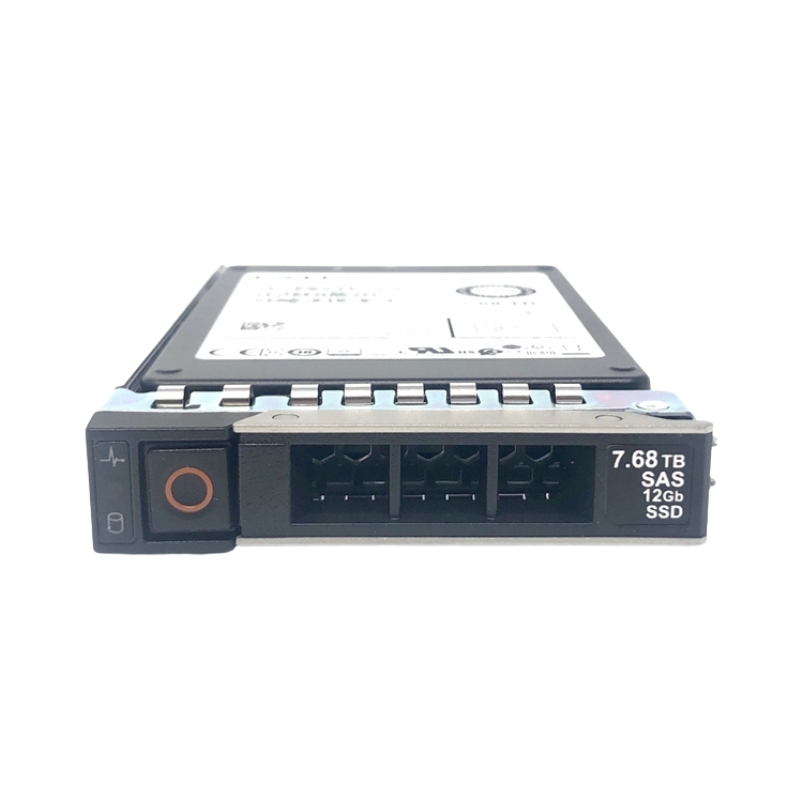


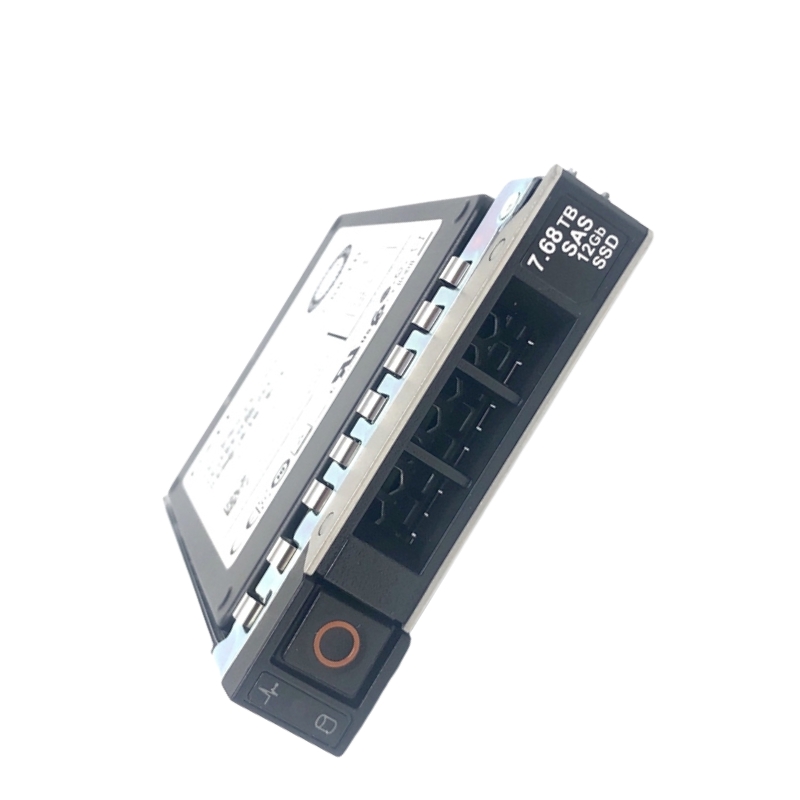
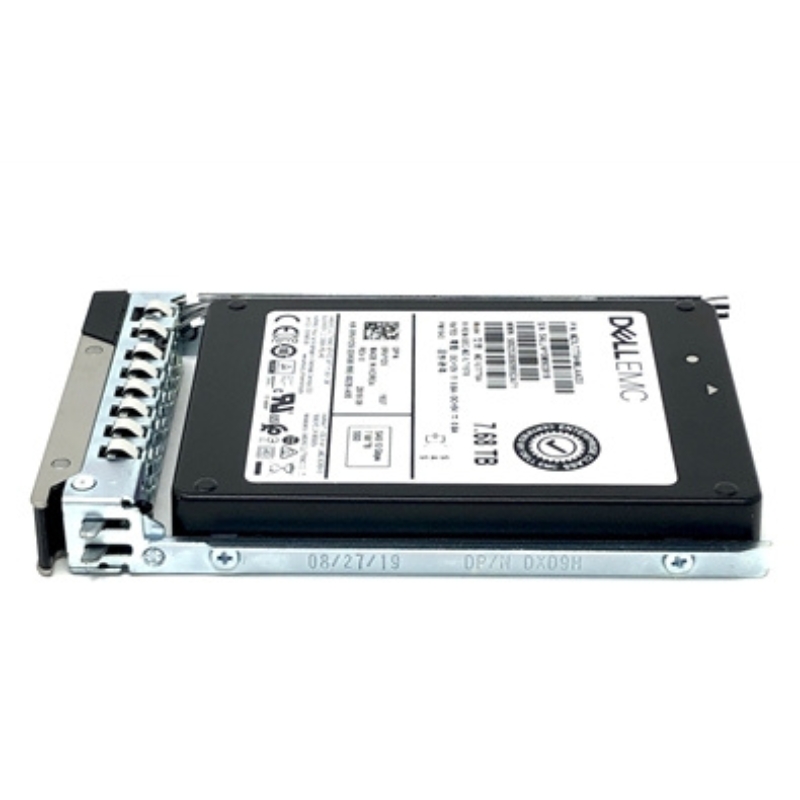
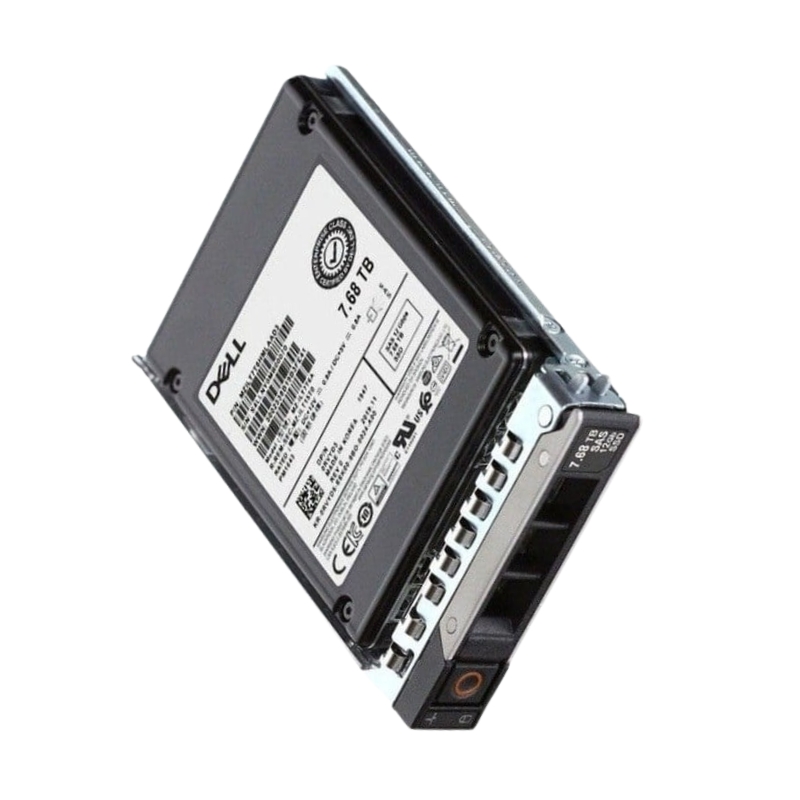
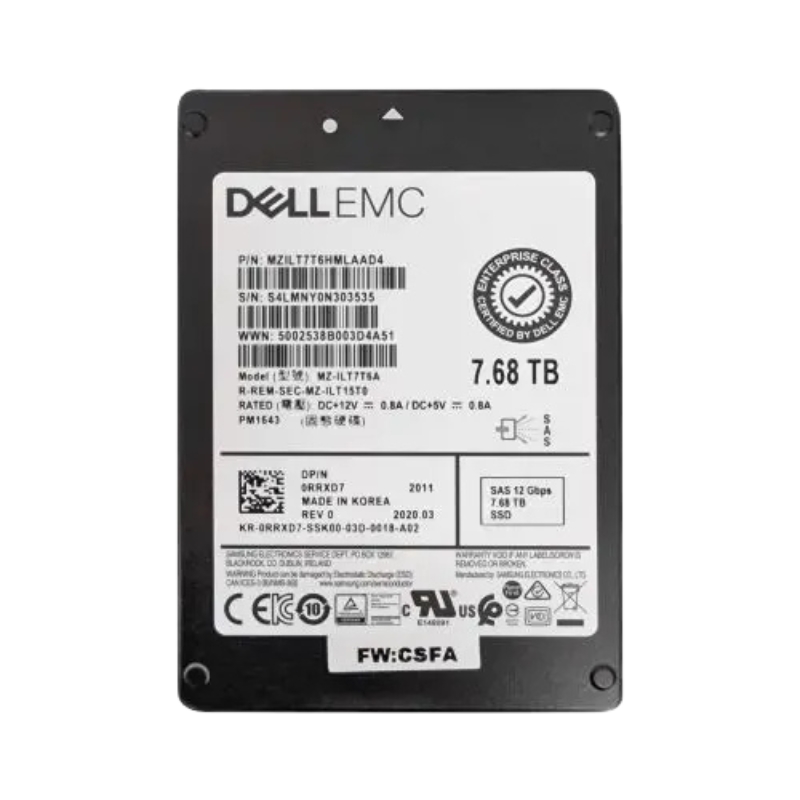
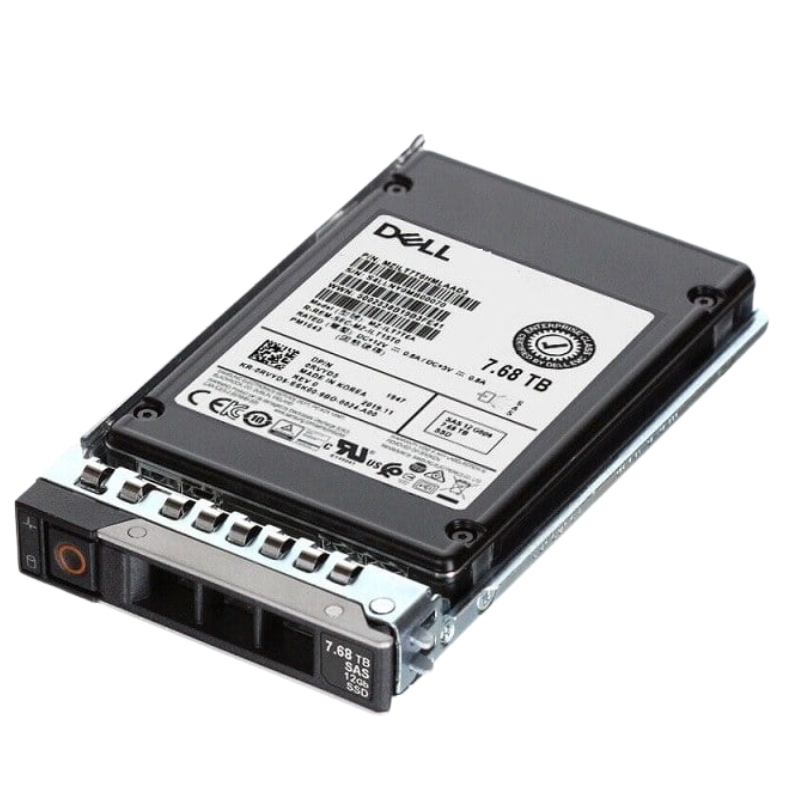
Dell 7HCWF 7.68TB Self-Encrypting SAS-12GBPS Read-Intensive TLC SFF Hot-Plug Certified SSD with tray for Server. New Sealed in Box (NIB) with 1-Year Replacement Warranty
The Dell 7HCWF 7.68TB Self-Encrypting SAS-12Gbps SSD occupies a distinguished position in modern server storage architecture, offering a large 7.68 terabyte capacity in a small form factor (SFF) package engineered for read-intensive workloads. Designed and certified for enterprise servers, this drive blends high throughput, consistent low latency, and integrated self-encryption to meet compliance and security demands without sacrificing operational performance. Built to operate on SAS-12Gbps interfaces and deliver reliable service in data center environments, the 7HCWF emphasizes predictable performance for database acceleration, virtualization read caches, content delivery, and analytics nodes. Its TLC (triple-level cell) NAND is tuned for read-heavy use profiles, while firmware and endurance management techniques optimize life expectancy and data integrity under sustained enterprise loads.
The 7.68TB capacity of the Dell 7HCWF SSD provides a compelling balance between density and compatibility. In modern rack servers where drive bay count and thermal constraints impose limits, this SFF solution allows data centers to increase usable capacity per slot while maintaining compatibility with standard SFF bays and Dell server trays. The tray-included delivery ensures immediate, rack-ready installation and guarantees mechanical fit and carrier compatibility with a wide range of Dell PowerEdge systems. When planning storage density upgrades, IT architects benefit from a high-capacity SFF SSD that avoids the tradeoffs of larger form factors, helping consolidate storage footprints and reduce physical rack space consumption while retaining enterprise-grade reliability and serviceability.
Connecting over a SAS-12Gbps interface, the 7HCWF SSD is built to deliver enterprise throughput with enhanced link reliability and end-to-end data protection features expected in SAS ecosystems. SAS provides dual-port options and robust error detection and recovery mechanisms that are crucial for mission-critical servers. For environments that require sustained sequential and random read performance, SAS-12Gbps provides a proven backbone, particularly for database read caches and archival retrieval tasks where predictable throughput is essential. The SSD’s firmware interacts with host controllers to optimize queue depth and command ordering, delivering smoother performance under mixed workload conditions and enabling enterprise software such as virtualization hypervisors and SAN controllers to efficiently utilize available I/O capacity.
This SSD is purpose-tuned for read-intensive workloads. Engineers optimized write amplification, garbage collection, and wear leveling to favor read performance and endurance profiles consistent with high read / lower write patterns. Typical deployment scenarios include large-scale web servers, caching tiers in content delivery networks, read-optimized database replicas, analytics clusters, and virtualization boot volumes where fast, consistent reads are prioritized. Read caching layers benefit from the 7HCWF’s ability to serve high IOPS with very low latency and predictable tail latency characteristics, enabling faster query response times and improved user experience for read-dominated applications.
The 7HCWF uses TLC NAND flash, which in enterprise embodiments is accompanied by advanced firmware to achieve endurance, performance smoothing, and error correction parity. Enterprise TLC implementations combine program/erase cycle management, dynamic overprovisioning, and comprehensive ECC to extend drive lifetime under sustained workloads. The firmware in the Dell 7HCWF actively manages background operations to minimize performance impact during housekeeping, ensuring that the drive sustains high read throughput even while internal maintenance operations occur. These capabilities make the drive cost-effective for high capacity needs while remaining reliable for enterprise service levels.
Security is embedded into the drive with self-encrypting drive (SED) functionality, allowing transparent hardware encryption without host CPU overhead. The SED capability supports industry-standard encryption key management protocols and can be integrated with server management software and enterprise key management systems. For organizations that must comply with regulations requiring at-rest encryption, deploying SEDs like the Dell 7HCWF simplifies compliance by providing secure data erasure features, cryptographic erase, and optional immediate drive retirement workflows. This hardware-level encryption reduces risk and streamlines processes for decommissioning drives, repurposing servers, and meeting data-privacy requirements in regulated industries.
One of the defining features of server-grade SSDs is tool-less, hot-plug serviceability. The Dell 7HCWF comes with a compatible tray that ensures correct alignment, retention, and thermal contact within Dell server chassis. Hot-plug installation allows drive replacement or upgrades without powering down the system, minimizing downtime and preserving service availability for critical workloads. The carrier also often includes LED indicators and latch mechanics consistent with Dell’s chassis standards, enabling technicians to quickly identify and service the drive during maintenance windows. In clustered deployments or high-availability setups, the ability to swap drives quickly reduces mean time to repair and helps maintain cluster health without disrupting end users.
Certification for specific server models is a crucial advantage; firmware validation ensures the SSD cooperates with server controllers, RAID firmware, and management utilities. Dell’s certification program tests compatibility across PowerEdge generations, RAID controllers, and BIOS versions to minimize surprises during deployment. This testing helps eliminate corner cases where certain firmware interactions could impact performance or stability. For mission-critical applications, the certified combination of server firmware and SSD firmware brings a predictable operational baseline and reduces integration time for systems administrators.
Understanding where the 7HCWF yields the most value helps IT teams design efficient storage tiers. This SSD excels in front-end read cache layers, virtual machine boot volumes, content caching for media delivery, and as large, fast read replicas for analytic query engines. When architecting storage stacks, combining the 7HCWF with higher endurance NVMe drives for write-heavy logs or combining it into hybrid arrays with HDDs for cold storage enables a cost-effective balance of performance and capacity. Large scale virtualization farms can use these drives as datastore acceleration points, improving boot storm resilience and VM read responsiveness. Similarly, web applications with heavy static content read patterns can significantly reduce latency and increase throughput by adopting a read-optimized SSD tier.
Performance for the 7HCWF SSD is characterized by strong sequential and random read throughput, low and predictable latency, and stable performance under steady read workloads. Benchmarks focused on read IOPS and read latency typically demonstrate the drive’s strengths, but administrators should measure performance using representative traces from their own environments to capture real behavior. The drive’s internal caching, read readahead behaviors, and firmware optimizations may interact differently with various host controllers and RAID configurations, so tuning and validation in a staging environment is recommended before widespread rollout. Performance monitoring in production—tracking metrics such as queue depth, latency percentiles, and throughput consistency—helps validate that SLAs are being met.
Positioning the Dell 7HCWF relative to other enterprise drives involves examining capacity per slot, interface protocol, endurance class, and security features. Compared with high-endurance NVMe drives, the 7HCWF offers larger capacity at a cost advantage for read-dominant use cases while retaining SAS enterprise integration benefits. Against lower-cost consumer SSDs, the 7HCWF provides server-grade firmware, certified compatibility, and SED features that consumer parts lack. In hybrid arrays, the 7HCWF can be a strategic middle layer between NVMe performance accelerators and HDD long-term storage, delivering a balance of cost and speed especially suited for read-heavy workloads and large capacity needs.
Deploying the Dell 7HCWF to its fullest requires adherence to several operational best practices. Validate firmware levels and server compatibility before mass deployment. Use representative workload testing to tune RAID or controller cache policies and confirm that drive behavior meets performance expectations under realistic load. Enable drive encryption in coordination with your key management policies and ensure cryptographic erase procedures are documented for decommissioning. Monitor drive health proactively, maintain spare inventory consistent with your mean time to repair targets, and schedule periodic firmware updates after validation. Document the deployment architecture so future upgrades and expansions proceed smoothly and predictable capacity planning can be executed confidently.


 Contact Us
 Information
 Catalog
 Solid State Drives (SSD)
 Network Switches
 Hard Disk Drives
 HBA & Controllers
 PC & Servers
 PC & Server Memory
 CPU & Processors
 Network Routers
 Power Supplies
 Tape Drives & Libraries
 Network Devices
 Computer & Network Cables