(7% discount is applied at checkout)
Cart is empty
Your go-to destination for cutting-edge server products
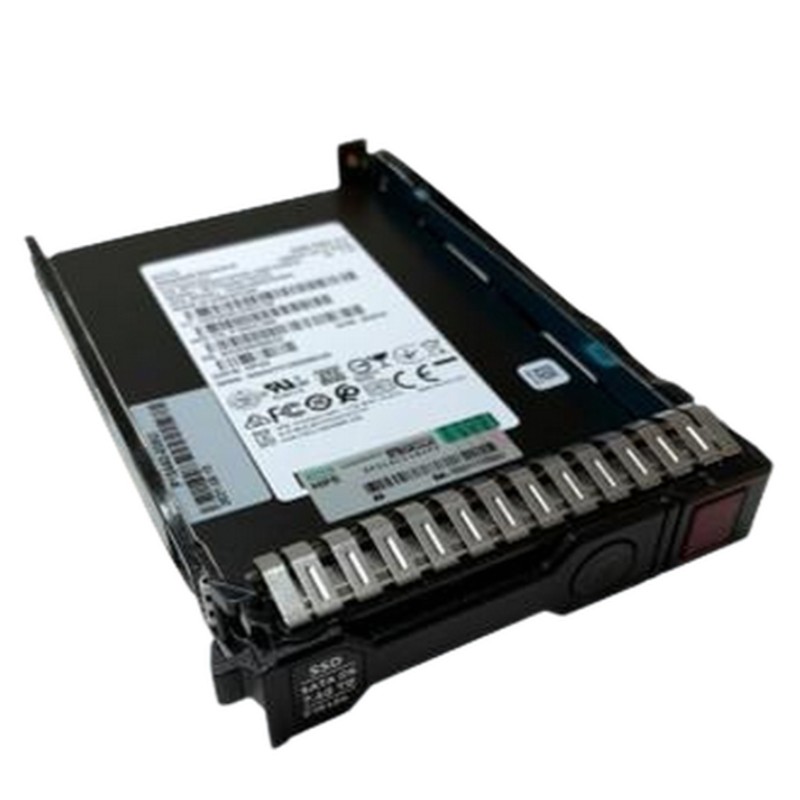


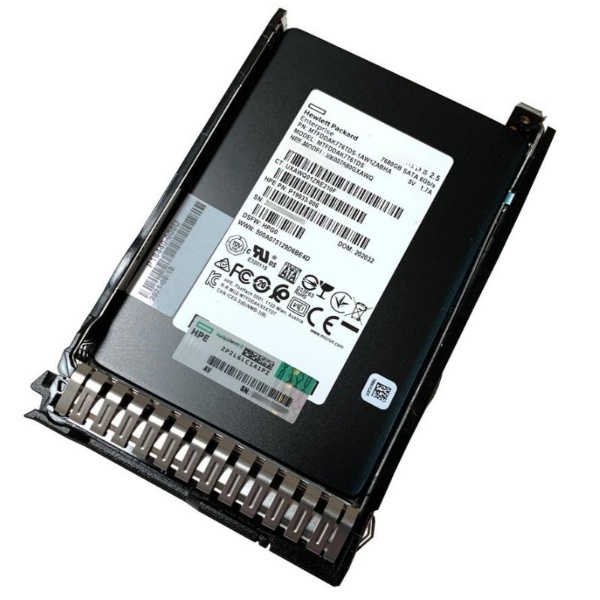
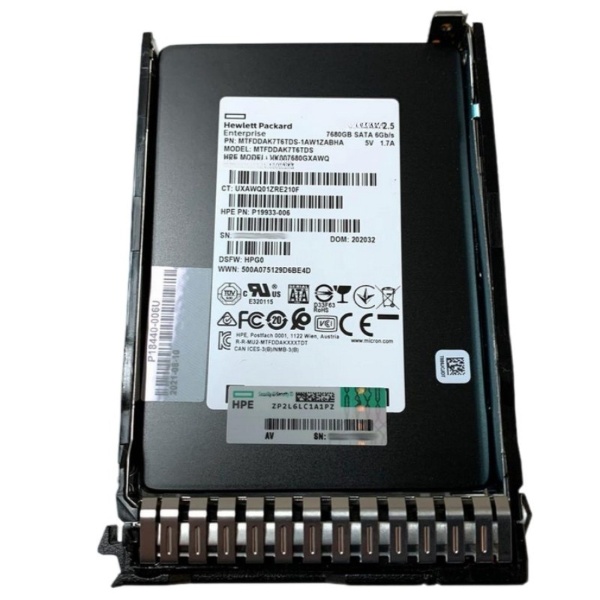
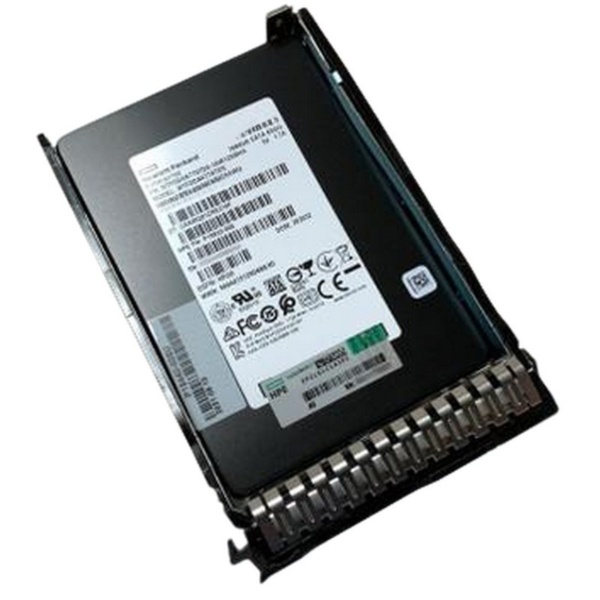
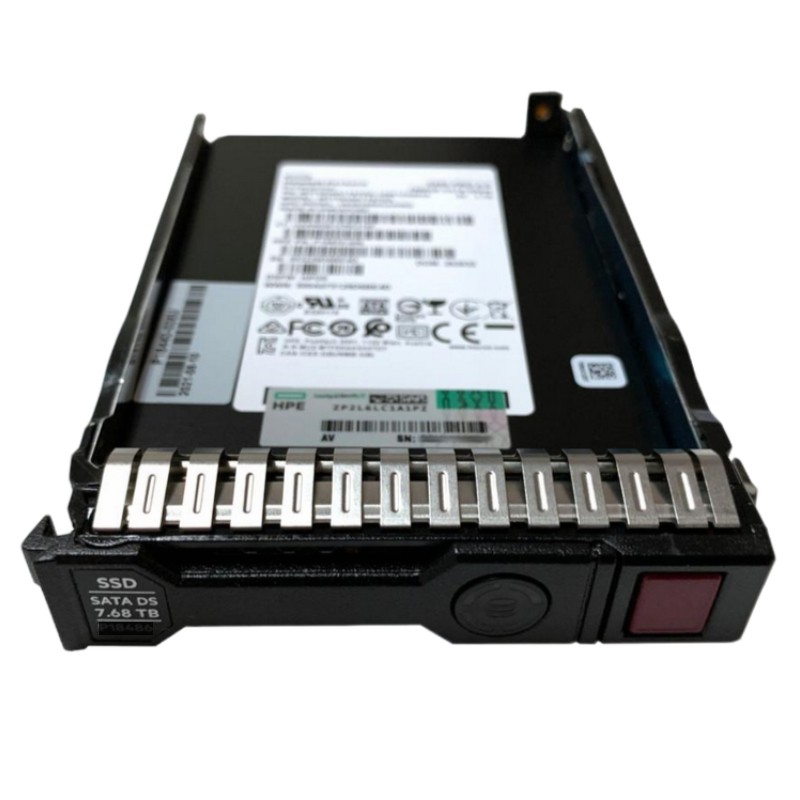
HPE P58228-B21 7.68TB SATA 6GBPS Very Read Optimized SFF Bc Solid State Drive. Factory-Sealed New in Original Box (FSB) with 3 Years Warranty
HPE’s P58228-B21 Very Read Optimized (VRO) 7.68Tb SATA 6Gbps solid state drive represents a focused class of enterprise storage designed for workloads dominated by reads: archival retrieval, content-delivery caches, large-scale virtualization read caches, database read replicas, and analytics query acceleration. Built in a small form factor that conforms to modern server bays, this drive balances high usable capacity with low-latency read performance and enterprise reliability. The category centers on delivering predictable, consistent read speeds at scale while minimizing total cost of ownership for read-heavy deployments.
HPE engineered this category to serve environments where read throughput, sustained random read I/O, and capacity density matter most. Typical deployments include web-scale content delivery, cold-tier object retrieval, database indexing nodes, and virtual desktop infrastructure (vdi) read caches. The Very Read Optimized designation signals firmware and controller tuning—specifically adjusted garbage collection, read-centric caching layers, and wear-leveling strategies that privilege read performance and maximize drive lifecycle under low-write conditions.
HPE’s Vro family is ideal when the workload profile comprises a high ratio of reads to writes. For analytics nodes that repeatedly scan datasets, or for read-replica databases that serve thousands of concurrent queries, the P58228-B21 class is tuned to favor low queue-depth latency, quick single-read response times, and reduced variability in I/O completion—attributes that improve application responsiveness and user experience.
Architects building content delivery systems and media repositories value the high-capacity 7.68Tb configuration because it reduces drive count per terabyte, which simplifies rack-level cabling, lowers per-tera power and cooling overhead, and streamlines spare inventory. For streaming caches and edge-serving nodes, the Vro drives sustain high read concurrency and fast access to frequently served objects.
This category is characterized by a set of hardware and firmware choices optimized for read operations. Key technical traits include a sata 6Gbps interface for widespread compatibility with server backplanes, enterprise-grade nand flash with vendor-selected endurance grading, a dedicated controller that prioritizes read caching and queuing efficiency, and firmware that balances wear-leveling against minimal write amplification for read-dominant I/O patterns.
Controller firmware in the P58228-B21 Vro family implements intelligent read caching, often using a portion of the drive’s high-quality nand and dynamic mapping to accelerate frequently accessed blocks. Garbage-collection algorithms are throttled and scheduled to avoid long-latency background operations during peak read times. Wear-leveling remains active but is tuned to the lower write volumes typical for read-heavy deployments, extending usable life while preserving data integrity.
Because writes are infrequent in the target workloads, vendors frequently use nand types that provide optimal capacity and cost while still meeting enterprise endurance thresholds. The result is a drive that balances per-die capacity and durability. System designers should nevertheless plan for the rare, but inevitable, write-heavy maintenance tasks such as snapshots, deduplication runs, or bulk indexing, and account for endurance budget accordingly.
Performance expectations for this category emphasize predictable low-latency reads, respectable sequential throughput, and strong random read IOPS at low to moderate queue depths. Because the interface is sata 6Gbps, peak sequential bandwidth is bounded by the bus; however, real-world application-level gains arise from reduced latency and improved I/O consistency rather than raw interface-limited throughput alone.
Applications that depend on consistent response times—search indices, metadata servers, and read-mostly databases—benefit from the Vro drive’s low variance in read latency. Reduced outliers in latency improve user-perceived performance and lower the need for overprovisioning at the application layer.
Under workloads with a read/write ratio strongly favoring reads, the P58228-B21 drive sustains high random read IOPS while maintaining steady sequential throughput for large-file retrieval. Sustained performance is a hallmark of the category: because the drive’s firmware avoids aggressive write-time housekeeping during peak activity windows, read throughput remains stable even in long-running production scenarios.
The P58228-B21 small form factor (Sff) used by this category allows high-density server and storage array integration. Compatibility with existing HPE server backplanes and many standard sata controllers makes these drives straightforward drop-in upgrades or expansions for existing fleets. The “bc” (backward compatible / base configuration) label implies compatibility with multi-vendor environments and common firmware interfaces that facilitate lifecycle management and monitoring from standard enterprise tools.
Because server trays and backplanes vary across generations, administrators should confirm mechanical and electrical compatibility before mass deployment. Hot-swap trays that support sata 6Gbps and provide adequate airflow maintain thermal headroom; conversely, older chassis with constrained cooling will need evaluation to ensure sustained performance isn't thermally limited.
Sata 6Gbps provides broad interoperability with a variety of raid controllers and hba cards. When deploying the drives in raid arrays, it's important to match read-optimized drives with appropriate raid levels and cache settings; for instance, raid configurations that rely heavily on write-back caching should be tuned to protect against rare write-heavy maintenance operations and to ensure reconstruction times are acceptable in the event of drive failure.
Reliability in this category is delivered through enterprise-focused features: end-to-end data-path protection, power-loss protection strategies, robust error-correcting code (ecc), and firmware-level safeguards designed to minimize the risk of data loss during anomalies. Security capabilities such as self-encrypting drive (sed) options, secure erase commands, and support for industry-standard encryption key management integrate with enterprise security frameworks.
Advanced ecc mechanisms correct flash bit errors, while internal data path protection prevents corruption during transfers between the nand, controller, and host. These protections are crucial for archival and retrieval systems where data integrity over long retention windows is essential.
Enterprise drives in this class implement firmware strategies to protect in-flight metadata and mapping tables in the event of sudden power loss. While the sata interface has inherent limitations compared to pcie/nvme regarding built-in power loss capacitors, careful firmware design and host power management reduce the probability of metadata inconsistency that could lead to data inaccessibility.
Successful deployment of Vro drives requires aligning application behavior with the drive’s strengths. Architects should place read-dominant datasets and indices on the Vro tier, reserve higher-endurance write-optimized drives for log-heavy or snapshot-intensive workloads, and implement monitoring to track write amplification, wear-leveling statistics, and average latency so any unexpected shift in workload profile can be detected early.
In multi-tier storage architectures, Vro drives are effective in the read tier beneath a smaller, ultra-fast write tier. For example, combining nvme write-optimized devices for ingest and metadata operations with Vro sata drives for long-term read-serving produces a cost-effective hybrid solution. Policies that migrate cold but frequently read objects to Vro storage maintain cost-efficiency while delivering the required read performance.
Managing firmware across a fleet of Vro drives is a critical operational responsibility. Firmware updates often carry fixes for performance tuning, security patches, and interoperability improvements. Enterprises should validate firmware upgrades in staging environments to confirm no negative interactions with host controllers or raid firmware. Additionally, consistent firmware revisions across array members simplify troubleshooting and preserve uniform behavior during reconstruction events.
Thermal profiling during staging and under load provides data to set thresholds for inlet temperature and to define acceptable fan curves. In cloud or colocation environments, confirming ambient temperature specifications and airflow patterns helps operators avoid elevated drive temperatures that reduce reliability and performance.
Per-drive power draw is a factor when calculating rack-level power budgets. Drives in this category typically offer competitive idle and active power characteristics versus older spinning media. Aggregated savings in power and cooling contribute materially to total cost of ownership when large arrays are deployed.
Compared to write-optimized ssd classes and nvme devices, Vro sata drives trade write endurance and the ultra-low latency of nvme for higher raw capacity per dollar and a firmware stack tuned to reads. Against traditional hard disk drives (hdds), they deliver enormous improvements in latency and random read iops while offering lower power per iops and improved mean time between failures (mtbf), making them an attractive upgrade path for read-heavy workloads that previously relied on mechanical storage.
Nvme devices remain the choice for the highest I/O per second and lowest latency, particularly for high-write mixed workloads. However, for read-heavy archival and content-serving use cases, the economics of large-capacity sata Vro drives frequently outweigh the performance differential. Architects should quantify both latency sensitivity and cost per usable terabyte to determine the best design tradeoffs.
When assessing migration from hdds to Vro ssd storage, teams must consider access patterns: reads dominate, random access becomes feasible, and seeking costs vanish, drastically improving user response. The migration also enables consolidation: fewer physical drives for the same capacity, lower rack space consumption, and simplified performance tuning.
Enterprises with compliance obligations must ensure drives support secure erase procedures and integrate with key-management infrastructure when encryption is required. HPE-compatible sed options and metadata-level erasure processes assist in meeting regulatory standards for data destruction and chain-of-custody requirements.
Where physical removal and destruction are not practical, cryptographic erasure provides a rapid means to render data inaccessible by deleting or rotating encryption keys. Organizations should verify the drive’s support for industry-standard secure erase and sed protocols and test erasure routines to confirm compliance before decommissioning drives.
Depending on jurisdiction and industry, data retention and destruction rules vary. Storage administrators must map regulatory requirements to drive-level capabilities and ensure that documented processes exist for audit trails, demonstrating that proper erasure or secure disposition took place during device retirement.


 Contact Us
 Information
 Catalog
 Solid State Drives (SSD)
 Network Switches
 Hard Disk Drives
 HBA & Controllers
 PC & Servers
 PC & Server Memory
 CPU & Processors
 Network Routers
 Power Supplies
 Tape Drives & Libraries
 Network Devices
 Computer & Network Cables