(7% discount is applied at checkout)
Cart is empty
Your go-to destination for cutting-edge server products
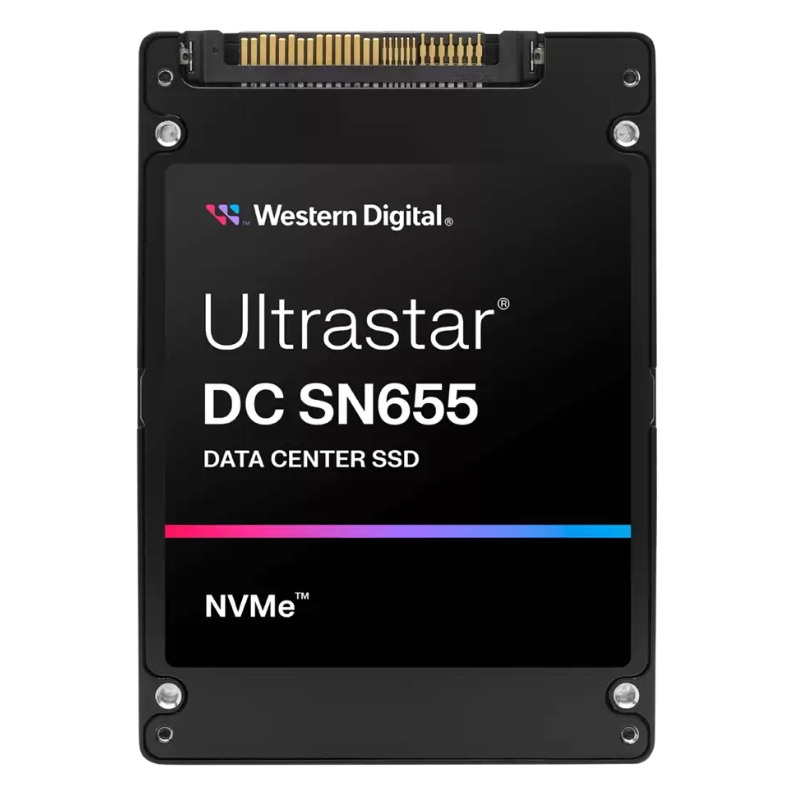


Western Digital WUS5EA1A1ESP7E1 Ultrastar DC SN655 15.36TB PCIe Gen4, NVMe 1.4b U.3 15mm SE SSD. New Sealed in Box (NIB) with 3 Years Warranty
Western Digital Ultrastar SN655 15.36TB NVMe SSD
Western Digital Ultrastar DC SN655 15.36TB (model WUS5EA1A1ESP7E1) is an enterprise-grade, high-capacity NVMe solid-state drive engineered for demanding data center workloads. Built on PCIe Gen4 and compliant with NVMe 1.4b, the U.3 15mm form-factor drive delivers a balance of sustained throughput, consistent low latency and enterprise endurance for mixed read/write applications.
When selecting an enterprise NVMe solution, consider the Ultrastar DC SN655 15.36TB if you need a large-capacity, U.3 form-factor
drive with exceptional read throughput and enterprise-class endurance. If your priorities are higher DWPD, lower wattage or a different
capacity point, evaluate other enterprise NVMe models and compare on:
The Western Digital WUS5EA1A1ESP7E1 Ultrastar DC SN655 15.36TB PCIe Gen4 NVMe 1.4b U.3 15mm single-ended enterprise solid state drive occupies a distinct niche within high-capacity data center storage. Positioned for mixed-workload enterprise environments that demand a blend of sustained throughput, low latency and strong endurance, this model belongs to a class of NVMe devices designed for demanding read/write patterns, latency-sensitive applications and scale-out storage architectures. The Ultrastar DC SN655 series is purpose-built for modern server and storage platforms that exploit PCIe Gen4 bandwidth and advanced NVMe management, delivering capacity, reliability, and operational features expected of data center class media.
The drive’s form factor and interface are central to its category identity. As a U.3 (U.3 compliant) device in a 15mm profile it targets chassis and backplane systems that accommodate high-capacity 2.5-inch enterprise drives. The PCIe Gen4 interface doubles the per-lane bandwidth relative to Gen3 devices, enabling higher sequential throughput and better parallelism for NVMe command queues. Compliance with NVMe 1.4b ensures compatibility with modern host firmware, and opens access to features such as improved namespace management, enhanced telemetry and richer power management states. The single-ended (SE) designation in this model name typically signals a particular internal flash configuration and firmware tuning optimized for enterprise workload characteristics.
Although marketed as 15.36TB nominal capacity, usable capacity depends on firmware reserved space, host provisioning and any deliberate overprovisioning chosen by system administrators. Overprovisioning is commonly used to improve performance consistency and extend endurance under write-intensive workloads. Administrators should account for the device’s formatted capacity when sizing arrays, and plan for spare capacity headroom to maintain predictable latency and consistent sustained throughput during heavy write cycles and background garbage collection tasks.
Enterprise NVMe drives in this class deliver very high sustained sequential read and write speeds, making them appropriate for large dataset movement, backup staging and hot tier storage. Their random IOPS profile supports transactional databases, virtualization hosts and mixed application stacks where many small reads and writes occur concurrently. Performance characterization should be workload-specific: synthetic benchmarks provide maximum theoretical figures, but real application performance depends on queue depth, IO size distribution and host stack configuration.
One of the strongest selling points for enterprise NVMe devices is the low and predictable latency compared to legacy spinning media. The Ultrastar DC SN655 series includes firmware and hardware features to reduce latency variance, offering stable response times under both steady-state and burst conditions. This makes the drive suitable for latency-sensitive applications such as high-frequency caching layers, financial transaction processing and front-end database tiers where reduced tail latency directly improves application responsiveness.
Enterprise environments frequently impose mixed read/write workloads with varying block sizes. The SN655 family is tuned to minimize performance degradation across mixed profiles; techniques include adaptive write buffering, efficient garbage collection and host cooperative management of background activities. The result is a device that can sustain throughput and IOPS over long intervals without severe throttling—an important attribute when drives are deployed in large arrays or hyperconverged systems.
Endurance metrics and reliability mechanisms are core to the enterprise SSD category. The Ultrastar DC SN655 15.36TB includes error correction, wear leveling, and firmware mechanisms engineered to protect data integrity and maximize lifespan under enterprise write workloads. These drives are validated for data center operational patterns and typically include mean time between failures (MTBF) ratings, workload-rated terabytes written (TBW) figures and support for SMART attributes tailored to enterprise monitoring.
To prevent write amplification and in-flight data loss, enterprise units often include power loss protection features. These can be implemented through on-device capacitors or carefully orchestrated firmware flush procedures that secure volatile buffers in the event of sudden power interruption. The presence and extent of these protections should be verified when planning for applications that require strict durability guarantees such as distributed ledger storage or critical metadata layers in file systems and object stores.
Modern enterprise SSDs employ multi-layer error correction codes and dynamic media management to detect and recover from bit errors, remap problematic blocks and maintain data integrity across flash cells of differing wear levels. Sophisticated background operations manage garbage collection and block retirement with the objective of minimizing foreground latency impact; administrators should leverage drive telemetry to schedule maintenance windows and monitor long term health trends.
Wear leveling spreads writes across flash cells to avoid premature failure of heavily written areas. Combined with host-level provisioning strategies—such as reserving spare capacity or using thin provisioning features in storage arrays—this extends usable life. Lifecycle management incorporates both SMART monitoring and integration with management frameworks so that devices showing high error rates or approaching rated TBW can be replaced proactively before service degradation occurs.
When deploying 15mm U.3 drives in dense chassis, thermal and mechanical considerations are paramount. Hot-swap capability simplifies field replacement, but administrators must ensure the chassis backplane provides the correct power and signaling for U.3 devices. Airflow, drive tray design and cable routing all influence effective operating temperature and therefore drive longevity. Many data centers standardize on certain vendor chassis or backplane configurations to minimize integration complexity and ensure thermal profiles remain within vendor-specified limits.
These drives frequently operate inside larger storage ecosystems such as NVMe-oF fabrics, disaggregated storage systems, or software-defined storage platforms. Integration points include host multipathing, telemetry pipelines to observability platforms, and compatibility with RAID or erasure coding schemes used by the storage stack. Administrators should verify interoperability with key infrastructure components—hypervisors, container orchestrators and storage controllers—so drives can be managed and monitored consistently at fleet scale.
NVMe 1.4b supports enhanced power state definitions that the host can use to reduce power during idle periods. When combined with intelligent workload scheduling and host power management, these capabilities help reduce operating costs in large deployments. For always-on transactional systems, administrators must weigh the benefits of lower latency against higher energy costs; for archival or cold tiers, power savings may be prioritized.
Enterprise drives must also meet organizational security and regulatory requirements. The Ultrastar DC SN655 series offers firmware capabilities that support secure erase and cryptographic features, depending on the drive configuration and vendor options. Secure erase routines and self-encrypting drive (SED) options can assist in meeting data sanitization standards and compliance mandates for regulated industries. Integration with key management systems and clear documentation of cryptographic capabilities are essential for secure lifecycle practices.
SED variants offload encryption to the drive hardware, reducing host CPU overhead and simplifying key management where supported. These solutions need to be integrated with enterprise key management services to support seamless provisioning, rotation and revocation of keys. Administrators should confirm certified cryptographic implementations and ensure that key escrow and recovery procedures align with organizational policies to avoid data loss in case of host failures.
Predictive drive replacement prevents unplanned outages and reduces RAID rebuild times in large arrays. Using telemetry thresholds and trend analysis, operators can schedule replacements during maintenance windows before warranty limits or critical error counts are reached. This proactive lifecycle approach extends overall system availability and reduces the operational risk of simultaneous device failures during rebuild operations.
For database workloads with high random I/O or virtualization hosts with many concurrent VMs, the low tail latency and strong IOPS profile of enterprise NVMe drives reduce contention and improve responsiveness. Proper sizing and overprovisioning ensure that write amplification and garbage collection do not adversely impact application latency—especially important when many VMs share physical resources.
Throughput and predictable performance make these drives attractive for analytics pipelines and AI inference nodes that rely on fast access to large training or model artifact files. Content delivery and media streaming platforms also benefit from the sustained sequential throughput, enabling efficient delivery of large objects with minimal buffering and high concurrency.


 Contact Us
 Information
 Catalog
 Solid State Drives (SSD)
 Network Switches
 Hard Disk Drives
 HBA & Controllers
 PC & Servers
 PC & Server Memory
 CPU & Processors
 Network Routers
 Power Supplies
 Tape Drives & Libraries
 Network Devices
 Computer & Network Cables