(7% discount is applied at checkout)
Cart is empty
Your go-to destination for cutting-edge server products


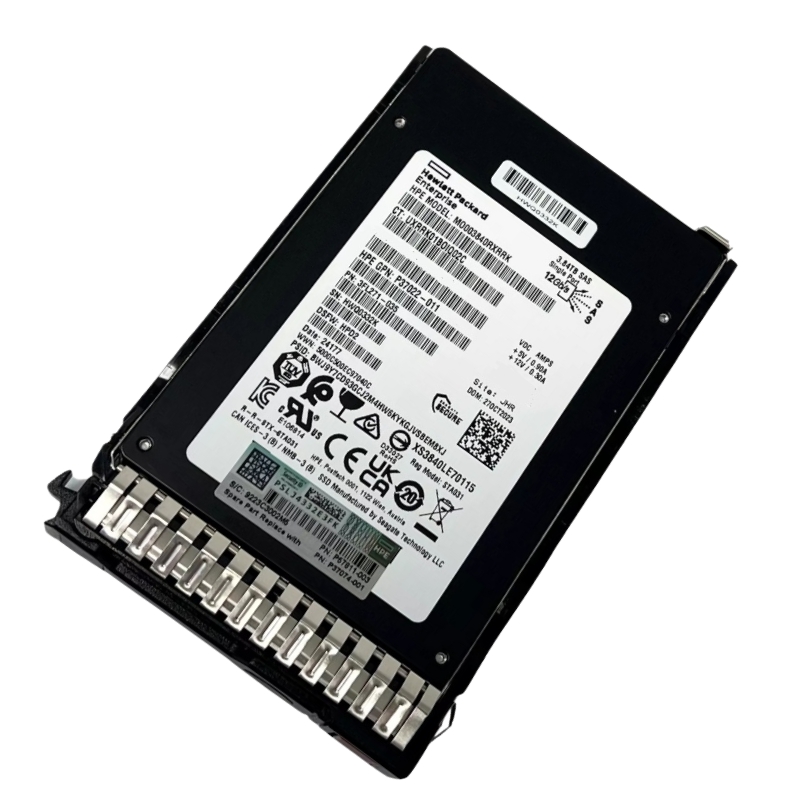
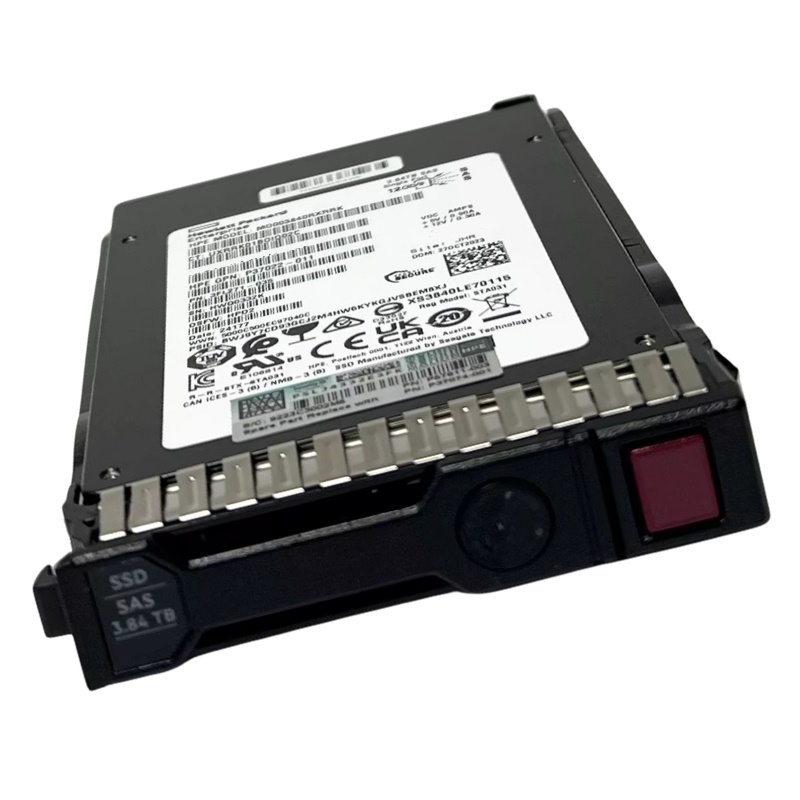
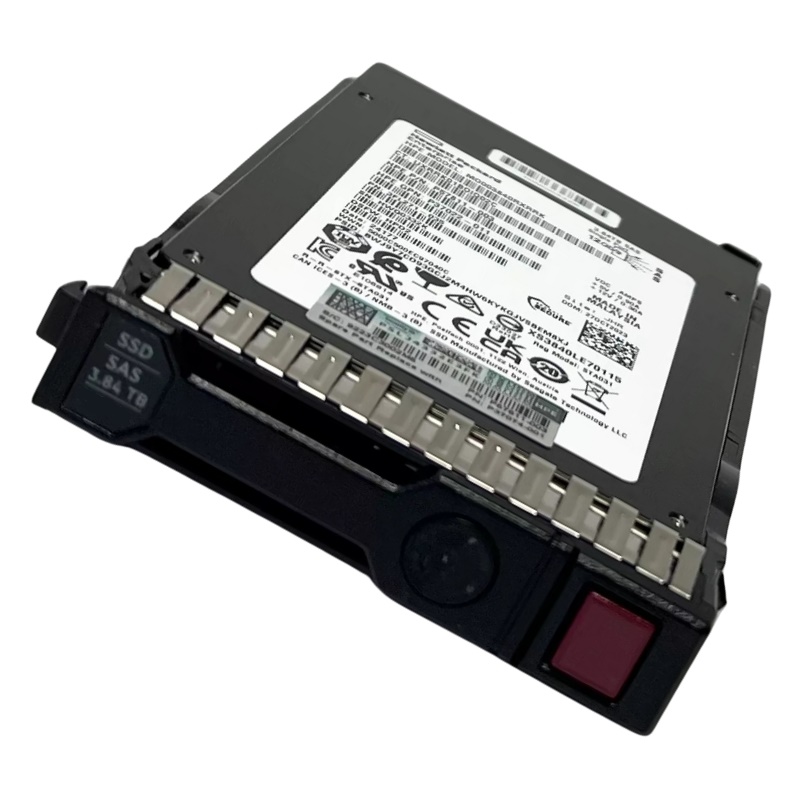
HPE MO003840RXRRK 3.84TB SAS 12GBPS 2.5inch Mixed Use Value Multi Vendor Hot Swap SSD. Factory-Sealed New in Original Box (FSB) with 3 Years Warranty
High-capacity, enterprise-grade solid state drive purpose-built for HPE ProLiant servers and hyper-converged nodes. This 2.5" SFF SAS SSD combines substantial storage density with mixed-use endurance and HPE Value reliability to support demanding business workloads.
Engineered to deliver sustained responsiveness and throughput, this SSD is optimized for transactional databases, virtualization and mixed read/write workloads.
Validated for a broad range of HPE ProLiant systems and HPE Simplivity nodes. Ideal when used in mixed-population storage arrays or as part of HPE-validated server configurations.
The 2.5" SFF hot-swap tray allows rapid field replacement and convenient scaling in dense enterprise racks. Compact height and industry-standard bay compatibility simplify upgrades and serviceability.
Specifically tuned for enterprise mixed-use scenarios where consistent latency and reliable write endurance are essential.
Built under HPE’s value-tier specifications, the drive targets organizations seeking enterprise dependability without the premium cost of tier-1 endurance classes.
The HPE MO003840RXRRK 3.84TB SAS 12Gbps 2.5-inch Mixed Use Value Multi-Vendor Hot-Swap SSD represents a focused category of enterprise storage optimized for mixed-use workloads—workloads that combine read-heavy and write-heavy activity such as virtualization, databases, virtual desktop infrastructure (VDI), mixed cloud workloads, and general purpose tiered storage. This category emphasizes a balance of performance, endurance, and cost-efficiency. It targets data centers, enterprise server environments, and storage arrays that require SAS 12Gb/s connectivity in a 2.5" form factor, delivering consistent low-latency I/O and higher tolerances for sustained mixed read/write operations.
SSDs in this category are described by a set of critical attributes that shape purchasing decisions and deployment strategies. Below are the most important characteristics and why they are relevant:
The SAS 12Gbps interface is a defining trait of this category. 12Gbps SAS provides a raw lane bandwidth that supports multi-drive arrays and heavy concurrency typical of enterprise workloads. Compared with SATA and lower-speed SAS lanes, 12Gbps SAS reduces protocol overhead and increases sustained sequential throughput—beneficial when running RAID arrays or scale-out storage.
The 2.5" form factor delivers an excellent balance of capacity, thermal efficiency, and physical density. These drives are compatible with 2.5" drive bays and many 2.5" to 3.5" adapters. Their smaller profile supports higher drive counts per chassis, which can reduce per-TB energy and cooling costs when designed into the storage architecture.
Mixed-use SSDs are typically rated with endurance metrics expressed as Drive Writes Per Day (DWPD) or Terabytes Written (TBW) over the warranty period. For a 3.84TB mixed-use class drive, endurance is balanced—higher than consumer-grade SSDs but lower than extreme endurance (write-intensive) enterprise SSDs. These drives use SLC/MLC/TLC variants combined with enterprise-grade controllers and firmware to deliver predictable performance across varied workloads.
Expect strong random IOPS performance, especially for reads, with lower and consistent latency figures that translate to better application responsiveness. In practical deployments, these drives deliver noticeable improvements for database query times, VM boot storms, and VDI concurrency compared to spinning disks or lower-tier flash. Throughput for sequential workloads will be subject to controller and array constraints, but SAS 12Gbps ensures the interface is not a bottleneck in most configurations.
A primary advantage is multi-vendor compatibility. The MO003840RXRRK designation is an HPE-labeled SKU often cross-referenced with vendor-compatible parts and multi-vendor certified drives. This category ensures compatibility across HPE ProLiant servers, HPE storage arrays, and several third-party enclosures, expanding sourcing flexibility and enabling a buy-from-anywhere strategy for procurement teams.
Hot-swap capability minimizes downtime during drive replacement or upgrades. These drives permit live system maintenance, contributing to high availability designs. Serviceability features include standardized tray and connector designs, presence detect pins, and LED/activity indicators on compatible carriers. In tiered or hybrid arrays, hot-swap simplifies rebalancing tasks and allows field replacements with minimal disruption.
When deploying in multi-vendor setups, ensure the target controller supports enterprise SAS 12Gbps features such as end-to-end data protection, NCQ, and proper error recovery timeouts (ERT). Some arrays may require firmware compatibility checks; consult vendor HCLs (Hardware Compatibility Lists) and interop guides to avoid interoperability issues. Using vendor-certified microcode and RAID controller drivers reduces the risk of incompatibility.
Mixed-use drives are particularly effective for virtualization hosts and VDI, where a mix of random reads and writes occurs regularly. The 3.84TB capacity allows denser VM placement per host, lowering overall rack footprint while improving I/O responsiveness for multiple concurrent VMs.
OLTP (Online Transaction Processing) databases and mid-tier transactional systems benefit from the low-latency random I/O performance. Mixed-use SSDs offer the reliability and endurance profile to handle frequent small writes, commit logs, and index operations typical of database workloads without incurring the cost of the highest-endurance SSDs.
These SSDs are ideal for hot-tier or mid-tier storage in tiered architectures. They can operate as primary data stores for performance-sensitive datasets or as cache/accelerator tiers sitting in front of high-capacity HDDs to dramatically reduce latency and improve throughput for the most frequently accessed data.
For snapshot repositories and replication targets that require quick read and write cycles, mixed-use SSDs provide a predictable performance envelope. Their balanced endurance makes them a cost-effective choice for systems that perform regular incremental backups and deduplication tasks.
Correctly estimating capacity and endurance needs is crucial. Calculate expected writes per day across all workloads, then map estimated TBW or DWPD to a drive’s rated endurance. For mixed-use drives, select redundancy and RAID levels that align with performance and rebuild time tolerances; RAID 10 or RAID 6 with hot spares are common enterprise patterns, though the choice depends on capacity vs. resilience trade-offs.
High-density SSD arrays can generate significant heat. Confirm chassis airflow, drive bay spacing, and cooling policies meet the manufacturer’s recommended operating temperature range. Use vendor firmware tools to monitor SMART attributes and temperature statistics. Proper thermal management will prolong drive life and reduce the potential for thermal throttling, which can impact sustained performance.
Firmware updates often include performance optimizations, bug fixes, and compatibility improvements. Maintain an inventory and update schedule for drive firmware, controller microcode, and storage array software. Test firmware updates in staging environments to ensure no unforeseen interactions with the host OS or storage stack.
Use enterprise monitoring tools to track SMART metrics such as reallocated sectors, uncorrectable error counts, wear leveling statistics, and power-on hours. Predictive failure analysis reduces unplanned downtime—replace drives flagged with deteriorating SMART metrics proactively, leveraging the hot-swap function for seamless replacements.
Mixed-use SSDs balance read and write endurance and are the most versatile for general enterprise usage. Read-intensive drives maximize read performance and are typically lower cost but have lower write endurance—suitable for cold or read-heavy analytics. Write-intensive SSDs provide the highest endurance for sustained writes (e.g., caching, logging) but at a premium cost. Choose based on the write profile of your applications.
NVMe drives deliver higher theoretical bandwidth and lower protocol overhead than SAS, providing better latency and parallelism for ultra-low-latency applications. However, NVMe adoption requires compatible controllers, backplanes, and storage architectures. SAS 12Gbps remains relevant for many arrays and for organizations prioritizing multi-vendor interoperability and proven ecosystem support. For many mixed workloads, SAS SSDs provide a favorable price/performance/compatibility balance.
Value-class enterprise SSDs like the MO003840RXRRK are engineered with enterprise firmware, capacitors for power-loss protection, and sustained performance guarantees. Consumer/SMB drives may lack these features and present higher variability in performance under load, making them ill-suited for mission-critical enterprise use.
In AFA designs, drives from this category can be used as part of a balanced node design delivering large capacity per node. AFAs built around 2.5" 3.84TB drives can offer dense capacity while maintaining enterprise-level latency.
Hybrid arrays employ mixed-use SSDs for hot data tiers and HDDs for capacity tiers. Deploying 3.84TB mixed-use drives as a hot tier reduces read amplification on HDDs and speeds up application response times. Policy-based tiering automates movement between SSD and HDD layers.
For SDS and HCI, these drives provide a reliable local storage medium for distributed filesystems, object stores, and hypervisor local caches. Their multi-vendor hot-swap compatibility simplifies node maintenance and reduces cluster-level risk during drive replacement.
Many enterprise SSDs support on-drive hardware encryption (SED — Self-Encrypting Drive). When available, encryption helps meet regulatory and compliance needs by providing cryptographic protection for data at rest. Confirm the drive’s encryption standards (e.g., TCG Opal) and integration capabilities with key management systems.
Enterprise-class drives often feature power-loss protection capacitors and firmware routines ensuring that in-flight data is flushed to non-volatile storage, reducing the risk of data corruption. These features are especially important in RAID or caching scenarios where data may be buffered in volatile memory.
End-to-end data protection features (including CRCs, protection information, and proper error handling across the storage stack) help ensure that data integrity is preserved from the host to the drive media. These capabilities are expected in enterprise-grade mixed-use SSDs.
Value-class enterprise SSDs are priced between consumer SSDs and premium endurance enterprise SSDs. The TCO should factor in energy consumption savings, reduced physical rack footprint, cooling efficiencies, performance gains (which may reduce the number of required servers), and software licensing impacts (fewer nodes may be required for the same performance).
Check warranty length, endurance-based replacement conditions, and RMA turnaround times. HPE-labeled SKUs often include vendor support pathways, which can simplify procurement and support interactions. Multi-vendor compatibility does not always carry the same warranty terms as vendor-branded drives; verify cross-vendor RMA policies if buying third-party components.
Consider mixed sourcing: vendor-branded drives for critical SLA-backed systems and qualified third-party drives for non-critical or lower-risk environments. Maintain a validated parts list and purchase spares to minimize downtime during rebuilds.
When replacing drives, follow these steps: verify data replication or redundancy, gracefully remove the drive using array management tools, perform hot-swap replacement, confirm rebuild processes, and monitor for re-silvering completion and performance stabilization. Test rebuild scenarios regularly to understand real-world rebuild times and their impact on performance.
Avoid unsupported firmware combinations. Keep detailed records for firmware versions and validate any updates in staging first. If a firmware update causes issues, have rollback plans and spare hardware available.
Virtual machines, mid-tier databases, transactional applications, caching layers, and hot-tier storage in hybrid arrays. It’s optimized for environments needing both read and write performance without paying for the highest endurance tier.
Mixing media types within a storage architecture is possible, but requires a storage controller and management software that supports tiering across different interfaces. NVMe and SAS drives can coexist within larger systems but typically occupy different tiers (ultra-low-latency vs. high-density enterprise).
Yes, provided the drive is listed as compatible or has been validated by testing. Always consult HPE compatibility matrices and test in a non-production environment when possible. Some boards may require specific carrier pins or presence signals—ensure mechanical and firmware compatibility.
Use the primary keyword near the top of the category description and in at least one H2 to satisfy search relevance. Include long-tail phrases in product lists, subheadings, and the FAQ to capture targeted search queries. Provide schema-ready data points (when implementing actual HTML output on the site) like capacity, interface, form factor, endurance class, and typical use cases to help search engines understand and index the product category precisely.
Within this category it’s useful to organize drives into performance tiers: entry mixed-use (value-optimized), mid mixed-use (balanced IOps/latency), and high mixed-use (performance-optimized but still below write-intensive class). The MO003840RXRRK SKU is often positioned in the entry to mid mixed-use tier—prioritizing affordability and a reasonable endurance profile.
Entry drives deliver predictable performance for mainstream applications. They are cost-effective for large-capacity deployments and edge scenarios.
Mid-tier mixed-use drives increase IOPS and endurance to better support consolidation and higher concurrency. These are typical for primary storage in small enterprises and mid-sized cloud nodes.
At the top of the mixed-use tier, drives approach the performance of specialized models while keeping cost lower than full write-intensive SSDs—suitable for high-concurrency virtualized workloads and moderate transactional databases.
A virtualization rack might use 24 x 3.84TB mixed-use SAS drives across 2U nodes, aggregated into a SAN or pooled with SDS. This offers dense VM hosting with low-latency storage. Combine with RAID 10 or erasure-coded software RAID for resilience.
Use 12 x 3.84TB mixed-use SSDs as the hot tier and 60 x high-capacity HDDs for capacity tier. Automated tiering policies move “hot” blocks to the SSD layer, improving application performance while retaining cost-efficient capacity on HDDs.
Benchmark results should be interpreted in context of controller, RAID configuration, and host load. Repeating tests with a gradual increase in concurrency better reproduces real-world conditions. Pay special attention to latency percentiles—applications often suffer from the tail latencies rather than average values.
Even when a drive is electrically compatible, the physical caddy and presence detect pinout must match the chassis. Verify that the caddy includes the appropriate latch style, LED mapping, and mechanical fit for the target servers or arrays.
When a drive fails and the array rebuilds, the extra load can cause performance degradation. Simulate rebuild scenarios and validate that your redundancy and rebuild policies meet SLAs during degraded states.
High-capacity drives reduce BOM complexity and power/cooling costs per TB, but a single high-capacity drive failure affects more data than multiple smaller drives. Balance capacity density with resilience and rebuild tolerances for your business requirements.
This category is best fit for enterprise environments needing a cost-effective enterprise SSD with enough endurance and performance for mixed workloads: virtualization clusters, mid-size databases, hybrid storage pools, VDI farms, and caching layers. Choose this class when you want a strong mix of capacity, SAS interface compatibility, multi-vendor hot-swap convenience, and enterprise features without paying for the highest endurance class.
On product-category pages, supplement descriptive content with structured data (JSON-LD) for product SKUs, capacities, interface, and form factor. Include clear filters for capacity, interface type (SAS 12Gbps), use case (mixed-use), form factor (2.5"), and vendor compatibility (HPE, multi-vendor). Provide comparison tables, spec sheets, and downloadable PDFs for engineers—these increase dwell time and improve.
The HPE MO003840RXRRK 3.84TB SAS 12Gbps 2.5" Mixed Use Value Multi-Vendor Hot-Swap SSD category is a practical choice for organizations seeking a balance between performance, endurance, and cost-efficiency. Properly deployed, monitored, and matched to workload profiles, these drives deliver enterprise-grade reliability and flexibility for heterogeneous storage ecosystems.
When designing around this category, emphasize validation: test firmware stacks, simulate failure and rebuild scenarios, and align endurance with write patterns. Keep a regular firmware patching cadence and maintain spare drives for rapid hot-swap replacement. Doing so maximizes uptime, delivers predictable performance, and optimizes the total cost of ownership for mixed-use SSD deployments.


 Contact Us
 Information
 Catalog
 Solid State Drives (SSD)
 Network Switches
 Hard Disk Drives
 HBA & Controllers
 PC & Servers
 PC & Server Memory
 CPU & Processors
 Network Routers
 Power Supplies
 Tape Drives & Libraries
 Network Devices
 Computer & Network Cables