(7% discount is applied at checkout)
Cart is empty
Your go-to destination for cutting-edge server products
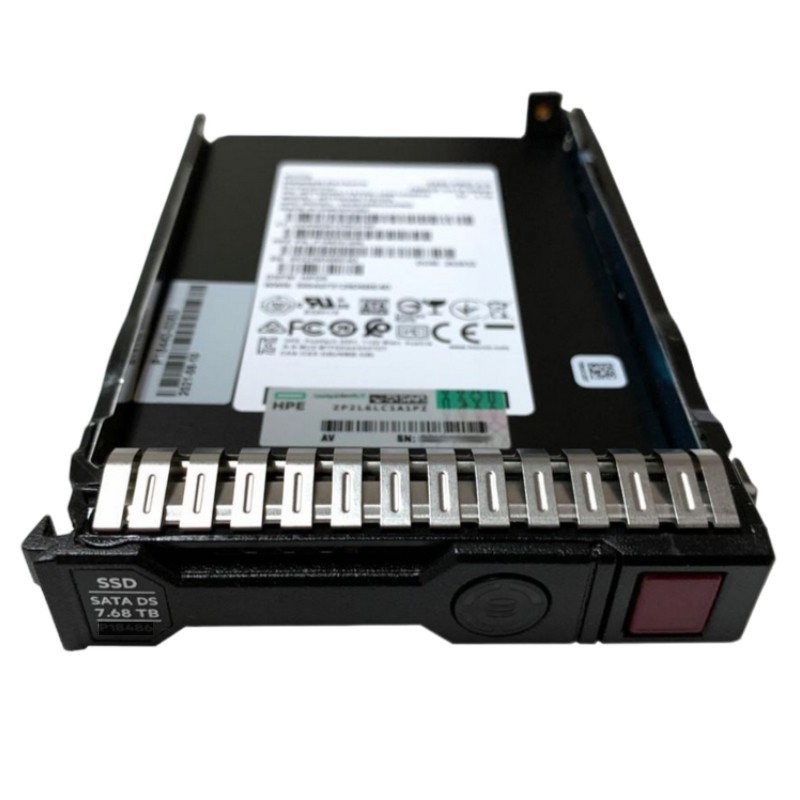


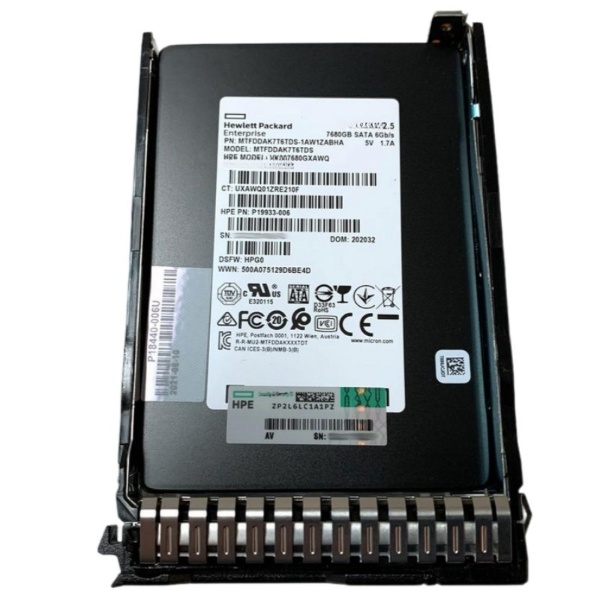
HPE P58432-001 7.68TB SATA 6GBPS Very Read Optimized SFF Bc Solid State Drive. Factory-Sealed New in Original Box (FSB) with 3 Years Warranty
HPE P58432-001 7.68TB SATA 6Gbps Very Read Optimized SFF BC solid state drive represents a high-capacity, enterprise-focused storage component engineered for workloads dominated by read operations. Designed to fit 2.5-inch SFF bays while delivering an exceptionally dense 7.68TB raw capacity, this model targets applications that require predictable low-latency reads, consistent IOPS for random read traffic, and efficient power and rack-space utilization in modern data centers. The drive's "Very Read Optimized" designation signals firmware and media tuning specifically to maximize read performance and longevity under heavy read-dominant patterns common to content delivery, virtualization read caches, database analytics where reads outweigh writes, and large-scale backup/restore operations.
The P58432-001 adheres to the small form factor 2.5-inch SFF profile, compatible with standard enterprise server trays and storage enclosures. The SATA 6Gbps interface (also referenced as SATA III) provides broad interoperability with HPE ProLiant servers, HPE storage controllers, and a wide range of legacy and contemporary SATA backplanes. Because the interface is ubiquitous across enterprise platforms, integration is simplified for upgrades and mixed-drive pools that blend HDDs, read-optimized SSDs, and general-purpose SSDs.
With 7.68 terabytes of raw capacity, this drive enables high-density storage configurations that reduce the number of drives required per rack or storage shelf. The capacity advantages permit consolidation of read-heavy datasets onto fewer devices, which consequently reduces power draw, cooling requirements, and the physical complexity of storage arrays. For organizations aiming to deliver fast read access to large datasets—such as media libraries, virtualization golden images, or analytics indexes—this capacity point is especially attractive.
Performance for the P58432-001 is tuned around read-centric metrics. Random and sequential read IOPS are prioritized, and the firmware is optimized to reduce read latency under concurrent read streams. While write performance is intentionally de-emphasized compared to mixed-use or write-accelerated enterprise drives, the drive still sustains necessary background write and housekeeping operations to preserve data integrity and wear leveling. For caching nodes, content delivery nodes, or read-cache tiers in hybrid arrays, the drive’s read latency consistency and predictable throughput are primary differentiators.
Very read optimized SSDs like the P58432-001 balance flash endurance characteristics toward read-heavy usage. Endurance metrics (often expressed in drive writes per day — DWPD — or total terabytes written — TBW) reflect the lower expected write footprint for the target workloads. This characteristic allows vendors to use high-density flash media and firmware tuning strategies that extend useful life when writes remain minimal. Reliability in enterprise contexts is further supported through advanced error-correction algorithms, robust wear-leveling routines, and power-loss protection features that secure in-flight data during unexpected outages.
Content delivery networks, media streaming services, and VOD platforms benefit from drives optimized for large-scale read access. The P58432-001 can be employed as a primary content tier for frequently accessed files or as a performance tier behind an object store where hot content must be delivered with low latency. Because reads dominate traffic for these services, the drive’s architecture reduces cost-per-gigabyte for hot storage while maintaining user-facing responsiveness.
In virtual desktop infrastructure (VDI) and server virtualization environments, read operations (boot storms, OS image distribution, and template reads) form a substantial portion of peak activity. Deploying read-optimized SSDs for golden image stores and read cache layers accelerates virtual machine boot times, lowers scheduling delays, and improves overall density of VMs per host. The P58432-001 is therefore well-suited to read-cache tiers or image repositories within VDI-focused storage designs.
Analytics workloads that rely heavily on index lookups or read-intensive queries—such as OLAP cubes, search indices, and time-series retrieval—derive direct benefit from drives tuned for reads. Locating frequently queried shards or index slices on P58432-001 drives reduces query latency and increases query throughput, supporting faster insights without incurring the cost of an all-flash high-endurance write-tier.
Systems administrators will find the P58432-001 compatible with HPE ProLiant servers and HPE storage enclosures that support 2.5-inch SATA drives. When planning deployments, confirm that the target chassis supports SATA III 6Gbps devices and that any backplane or HBA firmware is updated to vendor-recommended levels to ensure optimal compatibility. Hot-pluggable drive sleds and carrier trays designed for the server family simplify field replacements and facilitate mixing drives of varying capacities where supported by RAID controllers or storage OSes.
Read-optimized drives integrate into traditional RAID sets, erasure-coded pools, and software-defined storage (SDS) clusters. Because the P58432-001 targets read-heavy patterns, architects may select RAID configurations that favor read performance and capacity efficiency—such as RAID 6 for large capacity pools where rebuild times are significant, or erasure coding in SDS deployments for better storage efficiency. Ensure that rebuild and resilver strategies account for drive capacity and performance characteristics to avoid extended exposure during rebuild windows.
High-capacity SSDs typically consume significantly less power per gigabyte than equivalent-capacity HDD arrays. The P58432-001’s dense 7.68TB capacity yields an advantageous power-per-TB ratio, allowing organizations to reduce rack-level power consumption when consolidating workloads onto fewer devices. This efficiency directly impacts operational costs and can also simplify cooling requirements in dense compute-storage nodes.
Solid state drives exhibit different thermal characteristics than spinning media; sustained read workloads can produce steady-state heat that must be managed by adequate chassis airflow. Install drives in server bays with validated airflow paths and monitor inlet and device temperatures under load. Where possible, follow vendor recommendations for bay placement and maintain clear airflow by avoiding blockage of vents and ensuring regular dust management. Thermal throttling behaviors, if present, will be noted in firmware documentation and should be considered during continuous read workload planning.
Enterprise SSDs incorporate multiple layers of data protection beyond the drive interface. On-device error-correcting code (ECC), end-to-end data path protection, and power-loss protection mechanisms ensure that data remains consistent during transient events. The P58432-001 leverages such mechanisms to offer predictable behavior for critical read operations and to protect metadata structures used by the drive’s internal mapping tables.
For deployments requiring at-rest data protection, many enterprise SSDs support hardware-based encryption standards such as AES-based self-encrypting drive (SED) functionality and TCG Opal or IEEE 1667 authentication protocols. When used in combination with host-based key management solutions or HPE-provided encryption management frameworks, these drives can help satisfy regulatory requirements and protect sensitive datasets even if physical drives are removed from the chassis.
HPE’s portfolio often includes distinct tiers for Very Read Optimized, Mixed Use, and Write Optimized SSDs. Very Read Optimized drives like the P58432-001 emphasize capacity and read latency; mixed-use drives target balanced read/write workloads with higher endurance targets; and write-optimized drives focus on flash endurance and high sustained write throughput for logging, caching, or write-heavy databases. Choosing the correct tier reduces total cost of ownership by aligning device characteristics with real workload patterns—placing read-heavy data on read-optimized media, and write-intensive workloads on drives engineered for sustained writes.
Start capacity planning with an accurate workload profile. Measure real-world read/write ratios, IOPS distribution, and average request sizes. If read ratios exceed the threshold where read-optimized media is beneficial, consolidate hot subsets of data onto P58432-001 drives while leaving cold, seldom-accessed data on lower-cost HDD or object storage tiers. Right-sizing also requires factoring in growth projections, deduplication or compression benefits if used at higher layers, and overhead required for redundancy schemes such as RAID or erasure coding.
Hybrid configurations that combine read-optimized SSDs with mixed-use SSDs and high-capacity HDDs can yield an optimal balance of performance and cost. Use read-optimized drives for performance-critical read caches or metadata stores, mixed-use drives for databases with balanced IO, and HDDs for archival and cold storage. Such tiered architectures maximize value by applying the most appropriate media to each data class.
Use the P58432-001 as a high-capacity read cache in front of slower persistent tiers to dramatically improve read hit rates. Because many cache workloads are read-amplified, the drive’s tuning toward reads results in better cache effectiveness per terabyte compared to general-purpose SSDs. Design cache eviction policies and cache size to match typical working set sizes for the highest ROI.


 Contact Us
 Information
 Catalog
 Solid State Drives (SSD)
 Network Switches
 Hard Disk Drives
 HBA & Controllers
 PC & Servers
 PC & Server Memory
 CPU & Processors
 Network Routers
 Power Supplies
 Tape Drives & Libraries
 Network Devices
 Computer & Network Cables