(7% discount is applied at checkout)
Cart is empty
Your go-to destination for cutting-edge server products
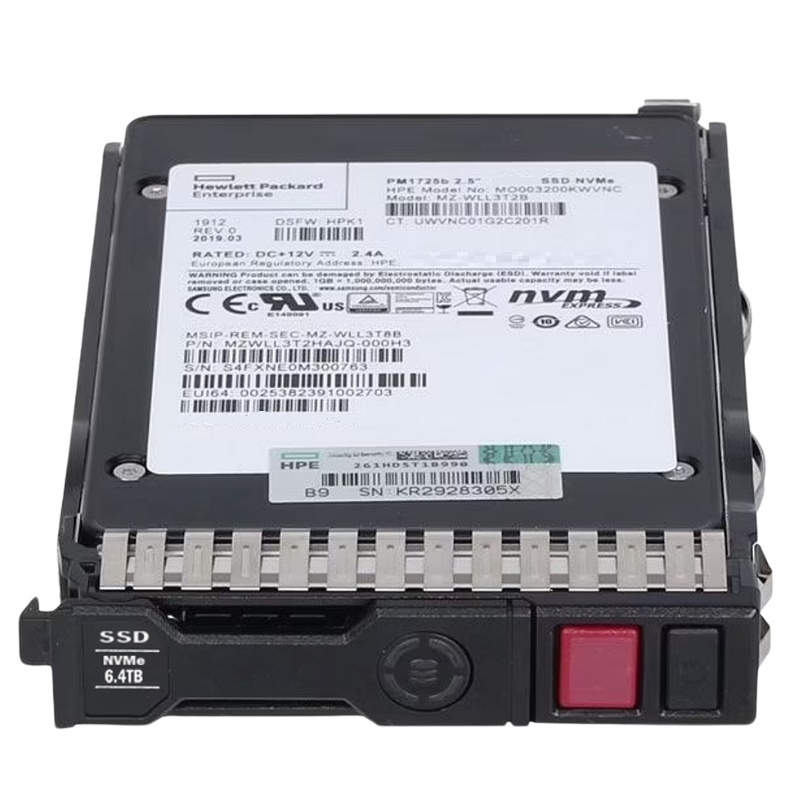


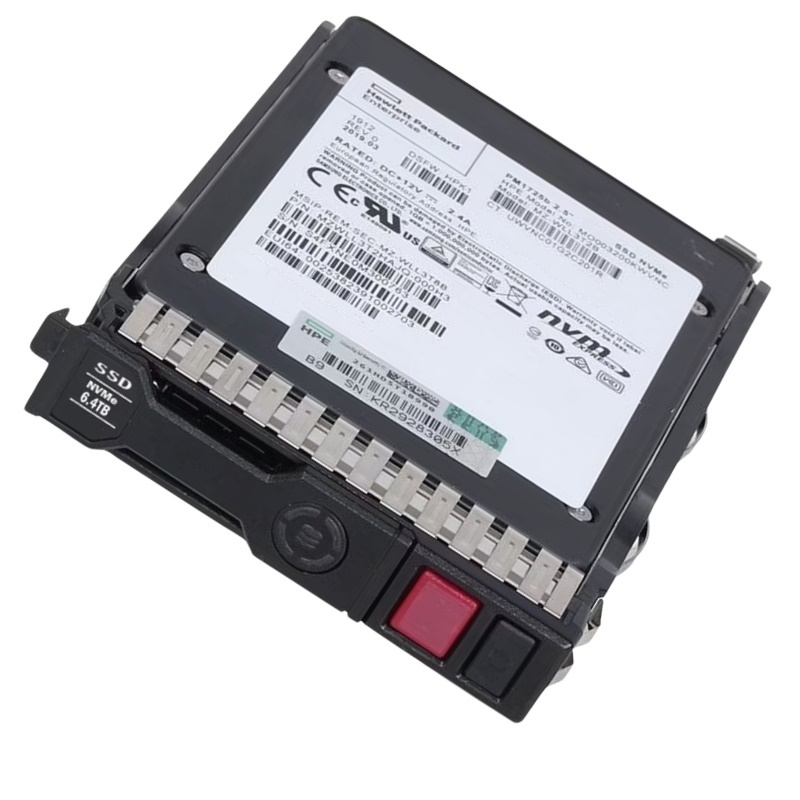
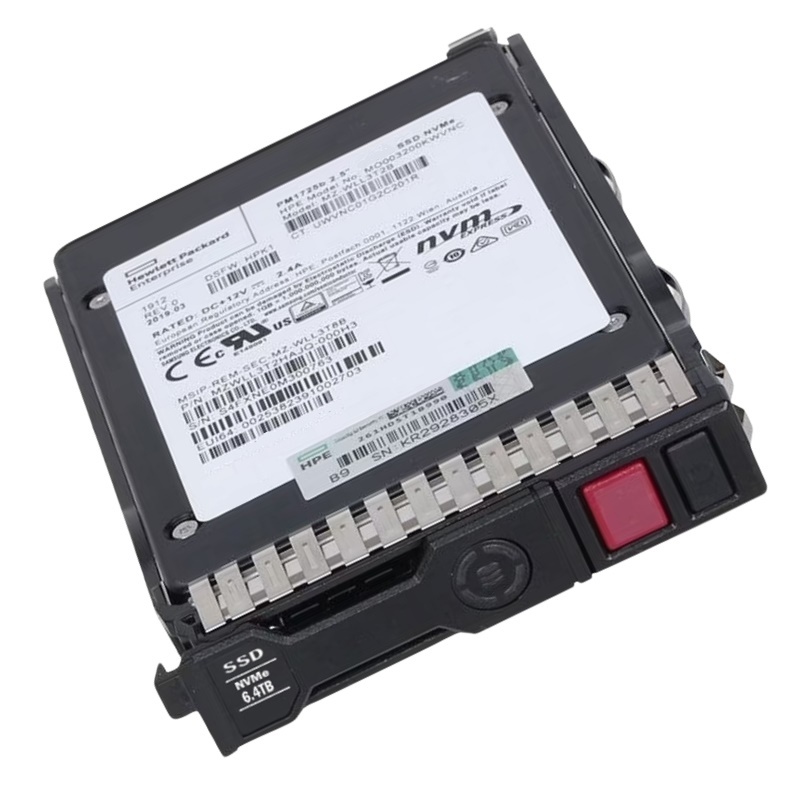
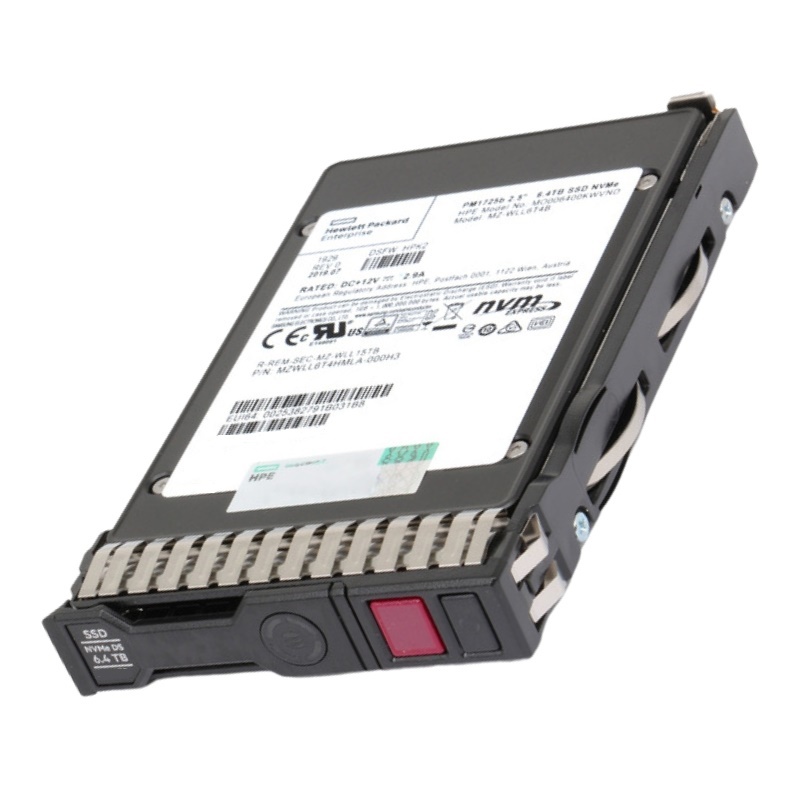
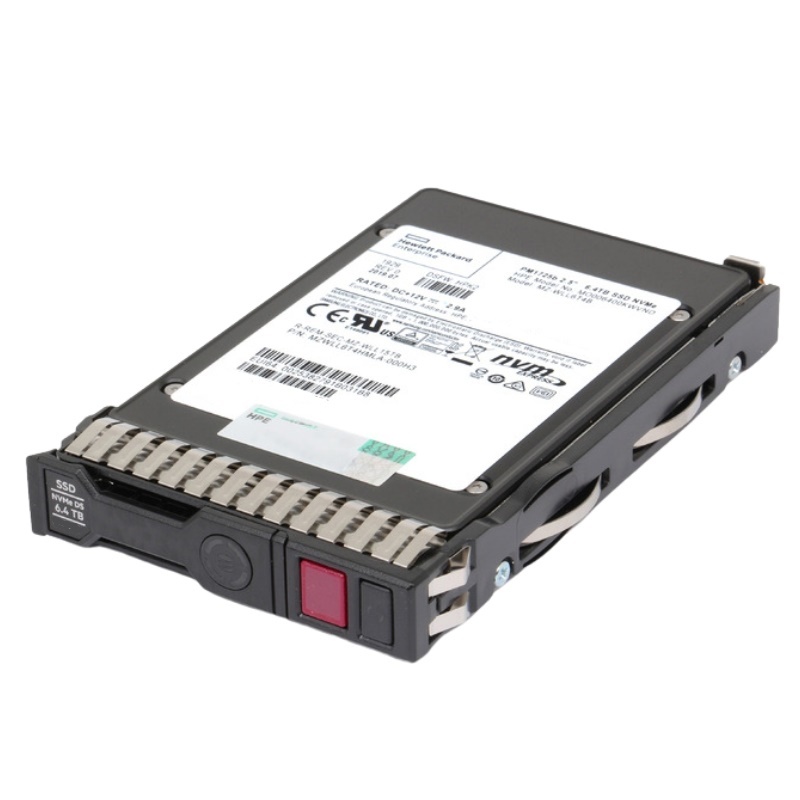
HPE MO006400KYDND 6.4TB NVMe Gen4 Mixed Use SFF BC U.3 Hot Plug Solid State Drive. Excellent Refurbished with 1 Year Replacement Warranty
The HPE 6.4TB NVMe Gen4 High-Performance SSD delivers exceptional speed, reliability, and endurance for enterprise-grade data centers. Built to handle mixed workloads with precision, this solid-state drive ensures seamless integration and blazing-fast throughput for HPE Gen10 Plus servers. Designed in a compact SFF (Small Form Factor) with a dual-port interface, it provides optimal storage density and superior performance for critical business applications.
This enterprise-class drive provides outstanding capacity and bandwidth, making it ideal for intensive read/write operations and high-speed data processing.
The HPE 6.4TB NVMe SSD is engineered for sustained reliability under heavy-duty workloads. It is compatible with HPE Gen10 Plus servers, ensuring optimized power efficiency, secure firmware, and advanced drive management capabilities.
With HPE’s rigorous testing and certification process, this SSD provides unmatched consistency and endurance. It’s crafted for data-intensive applications that require sustained throughput and rapid responsiveness, helping organizations meet modern IT performance demands.
Organizations leveraging this HPE 6.4TB U.3 NVMe SSD benefit from reduced latency, faster application load times, and improved server throughput. It enables smoother multitasking in virtualized data centers while maintaining stable thermal and power characteristics.
Thanks to its dual-port NVMe design, this SSD supports redundant pathways for uninterrupted data flow. The hot-plug capability allows technicians to replace drives without powering down systems, maximizing uptime and operational efficiency.
Engineered for HPE ProLiant Gen10 Plus servers, this SSD integrates effortlessly with existing infrastructures. It ensures scalability, making it ideal for expanding enterprises looking to boost their I/O performance and storage capacity simultaneously.
The HPE MO006400KYDND 6.4TB NVMe Gen4 Mixed Use SFF BC U.3 Hot Plug Solid State Drive is positioned as a high-density, enterprise-grade NVMe storage option optimized for modern server environments. This category groups drives built on PCIe Gen4 x4 NVMe architecture that combine substantial raw capacity (6.4TB), U.3 (U.3 / SFF-8639) physical connectivity for hot-plug serviceability, and mixed-use media profiles tuned to deliver a balance of sustained throughput and endurance suitable for database, virtualization, caching, and I/O-heavy application tiers. The drive’s form factor and carrier (SFF with BC carrier and U.3 interface) make it particularly attractive for rack servers and storage-dense chassis where serviceability and drive bay density are important considerations. :contentReference[oaicite:0]{index=0}
For many enterprise buyers the primary decision drivers are: raw capacity per slot, cost per GB, predictable performance under mixed read/write loads, and operational flexibility (hot-swap replacement, firmware management, and compatibility with existing server platforms). The MO006400KYDND sits at the intersection of those needs. It offers a large 6.4TB capacity in a 2.5-inch SFF footprint that fits high-density compute nodes while leveraging NVMe Gen4 performance to reduce latency and increase throughput for latency-sensitive workloads. That combination lets organizations increase usable capacity without sacrificing responsiveness for production services. :contentReference[oaicite:1]{index=1}
This drive adheres to a Small Form Factor (SFF) 2.5" profile and uses the U.3 connector (a common enterprise interface combining NVMe capability with hot-plug tray support). The U.3 specification and BC tray facilitate simple, tool-less replacement in server bays that support U.3. Hot-plug capability reduces downtime in maintenance operations and allows for rapid field serviceability in large data center deployments. :contentReference[oaicite:2]{index=2}
Built on PCIe Gen4 x4 NVMe, this category of drives leverages the doubled per-lane bandwidth delivered by Gen4 compared with Gen3. That results in significantly higher peak sequential throughput and improved queuing performance for multi-threaded server workloads. Models in this line commonly report peak sequential read throughput in the multi-GB/s range and random IOPS targets optimized for mixed-use workloads. For example, drives listed in this capacity class report sequential reads approaching the 7,400 MB/s range and robust random IOPS figures — useful for both large-block streaming and small-block transactional workloads. :contentReference[oaicite:3]{index=3}
At 6.4TB per device, the MO006400KYDND provides a high-density option for environments that require both capacity and performance. Packing multiple 6.4TB NVMe devices into a single chassis multiplies usable capacity while keeping rack space and power per terabyte efficient. The category therefore appeals to service tiers such as virtual machine hosts, container platforms, and content delivery systems where per-slot capacity and accessible performance both matter.
The mixed-use designation refers to a media and firmware optimization that balances endurance and performance for workloads that present both read and write demand. Unlike read-optimized drives (which prioritize read throughput and may trade endurance or write acceleration techniques), mixed-use drives are tuned to handle steady write traffic alongside heavy reads without undue wear or performance drop. Typical example workloads include database clusters, virtualization hosts with frequent snapshotting, log-intensive applications, and general purpose primary storage for application servers. :contentReference[oaicite:4]{index=4}
Random IOPS at this class of NVMe Gen4 SSDs are engineered to be high — hundreds of thousands of IOPS for small block sizes — enabling low tail latency for transactional services. These characteristics reduce query response times in OLTP databases, increase virtual machine density by reducing storage wait times, and improve the responsiveness of containerized microservices that depend on persistent storage. Vendors often publish random read/write IOPS metrics at specific queue depths to help buyers model expected latency under realistic loads. :contentReference[oaicite:5]{index=5}
The PCIe Gen4 x4 interface enables multi-GB/s sequential throughput, which benefits streaming, large file transfer, backup/restore windows, and media rendering tasks. Where previous generations limited peak bandwidth for a single NVMe lane, Gen4 doubles the per-lane bandwidth and allows enterprise controllers and flash modules to sustain higher sustained throughput when required. Published data sheets for comparable 6.4TB Gen4 U.3 drives show peak sequential reads and writes in ranges that materially shorten data ingest and replication windows. :contentReference[oaicite:6]{index=6}
Endurance for mixed-use SSDs is expressed as drive writes per day (DWPD), total terabytes written (TBW), or a combination of both across the warranty period. Mixed-use drives balance the use of NAND and controller features (such as over-provisioning and background garbage collection) to maximize useful life under heavier write mixes than read-optimized parts. When sizing for endurance, architects should map expected daily write volumes per node to the drive’s rated endurance to ensure warranty coverage and predictable refresh cycles.
Enterprise SSDs like the MO006400KYDND are typically shipped with HPE-signed or HPE-validated firmware for guaranteed compatibility with ProLiant servers and HPE storage controllers. HPE publishes firmware bundles and smart components that target groups of drive model numbers; administrators should use the vendor’s management utilities and update channels to ensure drives are running validated firmware revisions. Proper firmware management reduces the risk of intermittent detection issues, improves compatibility with controller firmware versions, and may provide performance or reliability fixes. :contentReference[oaicite:7]{index=7}
Drives in this enterprise category often include power loss protection, internal capacitors or power-fencing logic, and advanced error correction algorithms (LDPC/ECC). These measures reduce the chance of uncommitted data loss during sudden power events and increase the effective endurance of the NAND by preventing corruption. Buyers should inspect the detailed data sheet for features such as on-drive power-loss protection (PLP), end-to-end data path protection, and telemetry features that expose SMART attributes and life usage metrics to the host management stack.
U.3 NVMe drives are widely supported in modern enterprise servers and storage arrays that accept 2.5" U.3 carriers. While the physical carrier standard enables hot-swap serviceability, compatibility still depends on the server’s backplane and the system firmware (BIOS/UEFI) or RAID/NVMe controller capabilities. Many HPE ProLiant Gen10+ platforms and contemporary storage enclosures list support for HPE-branded U.3 NVMe parts; administrators should consult vendor compatibility matrices before wide deployment to confirm full feature support and drive validation status. :contentReference[oaicite:8]{index=8}
Although the drive fits into a standard SFF bay, check the drive height (commonly 15mm for enterprise NVMe devices) against the host chassis bay depth and the presence of backplane guides. Some older systems require carrier adapters or firmware settings to permit U.3 NVMe devices, so retrofits into legacy servers should be planned and tested in a controlled lab or staging environment prior to production roll out.
Use 6.4TB mixed-use NVMe drives where both low latency and higher per-slot capacity are needed. A common approach is to tier storage: place the most latency-sensitive data (hot datasets, OLTP DBs, caching layers) on NVMe Gen4 mixed-use drives, while colder blocks are moved to high-capacity SATA/SAS HDDs or lower-cost flash. This hybrid approach maximizes cost efficiency while maintaining performance where it matters most.
Implement storage telemetry (SMART logs, NVMe namespace telemetry, and vendor-specific health attributes) into your monitoring stack. Track percent life used, raw read/write counters, media errors, and thermal throttling events. Proactive monitoring enables early replacement of units that approach endurance thresholds or show signs of wear before they impact service availability.
Follow a controlled, documented firmware update process: stage updates on test systems, validate with the server and storage controller, and schedule non-disruptive maintenance windows for production. Keep firmware versions aligned with the platform vendor’s compatibility list to reduce the risk of drive detection or reliability issues. HPE’s support channels and smart components provide the recommended firmware bundles for supported drive families. :contentReference[oaicite:9]{index=9}
Many enterprise NVMe SSDs include security features such as TCG Opal or AES-256 hardware encryption to protect data at rest. When encryption is enabled, ensure key management is integrated with your organization’s KMIP server or platform key manager and that procedures for secure erase and key destruction are in place for drive retirement. Confirm with the vendor whether the specific model supports self-encrypting drive (SED) standards if encryption is a requirement.
Because SSDs employ wear-leveling and caching, traditional overwrite sanitization may not guarantee removal of all remnant data. Use vendor-provided secure erase tools which understand the device’s internal mapping, or physically destroy drives at end-of-life in accordance with your regulatory and company policies for data disposal.
Mixed-use parts are a middle ground. Read-optimized drives prioritize read throughput and may be less costly per TB but are ill-suited for write-heavy operations; endurance-oriented (or high-endurance) drives maximize DWPD at higher cost and are targeted at write-intensive applications like logging, caching, or heavy database workloads. Choose mixed-use if your environment has a balanced read/write profile and you want a longer life than read-optimized parts without paying the premium for the highest endurance classes.
HPE-branded drives typically come with firmware and validation tuned for HPE server ecosystems. Third-party OEM equivalents may be more cost-effective but might lack official qualification or the same level of support from HPE. When procurement teams weigh short-term savings against long-term operational risk, validated vendor parts typically reduce troubleshooting time and simplify warranty interactions. :contentReference[oaicite:10]{index=10}
Maintain a pool of cryogenic spares (same model or validated equivalents) to minimize Mean Time To Repair (MTTR). If U.3 trays are part of the host system design, keep a few preloaded replacement units on shelf to enable hot-swap recovery without additional tray assembly work. Evaluate return-to-vendor policies — many suppliers offer advance replacement or warranty swaps for enterprise buyers.
Enterprise SSD warranties vary by model and vendor; check the specific warranty terms for the MO006400KYDND (or the HPE-equivalent part number) for duration, TBW clauses, and RMA process. Warranty coverage is tied closely to correct firmware and supported platform use — using unsupported platform/firmware combinations may complicate or void coverage. :contentReference[oaicite:11]{index=11}
Beyond purchase price, factor in power per drive, rack density, cooling needs, license or support contracts, and administrative overhead for firmware updates and monitoring. NVMe Gen4 drives typically consume more peak power under sustained load than slower SAS/SATA options, but the improved performance can reduce the number of nodes required for the same workload — a net win for TCO if planned carefully.
Virtual machine hosts benefit from the MO006400KYDND’s balance of capacity and IOPS: busy VM fleets (especially in VDI environments) create many simultaneous small I/O operations; the drive’s random I/O capabilities help maintain consistent VM performance while the 6.4TB capacity reduces the need to spread VM disks across many physical drives.
Mixed-use Gen4 NVMe is ideal for database nodes where a combination of fast reads and sustained writes occurs — for example, mixed OLTP/analytics workloads where indexes and frequently updated tables demand low latency while larger analytical scans are throughput-hungry. Implementing these SSDs as primary storage or as a high-performance cache tier in front of slower storage can dramatically reduce transaction latencies and accelerate query response times.
Applications that perform large sequential reads and writes — media transcoding, content caching, and high-throughput distributed file services — benefit from Gen4 sequential throughput. The faster sequential speeds reduce ingest time and speed media rendering and distribution tasks when combined with appropriate network and compute resources. :contentReference[oaicite:12]{index=12}
Purchase MO006400KYDND drives from authorized HPE resellers or distribution partners to ensure you receive product with HPE-validated firmware, warranty coverage, and official support. Beware of marketplace listings that do not provide serial numbers, warranty transferability, or vendor provenance — always require proof of stock origin if warranty or firmware support is critical to your deployment. :contentReference[oaicite:21]{index=21}


 Contact Us
 Information
 Catalog
 Solid State Drives (SSD)
 Network Switches
 Hard Disk Drives
 HBA & Controllers
 PC & Servers
 PC & Server Memory
 CPU & Processors
 Network Routers
 Power Supplies
 Tape Drives & Libraries
 Network Devices
 Computer & Network Cables