(7% discount is applied at checkout)
Cart is empty
Your go-to destination for cutting-edge server products
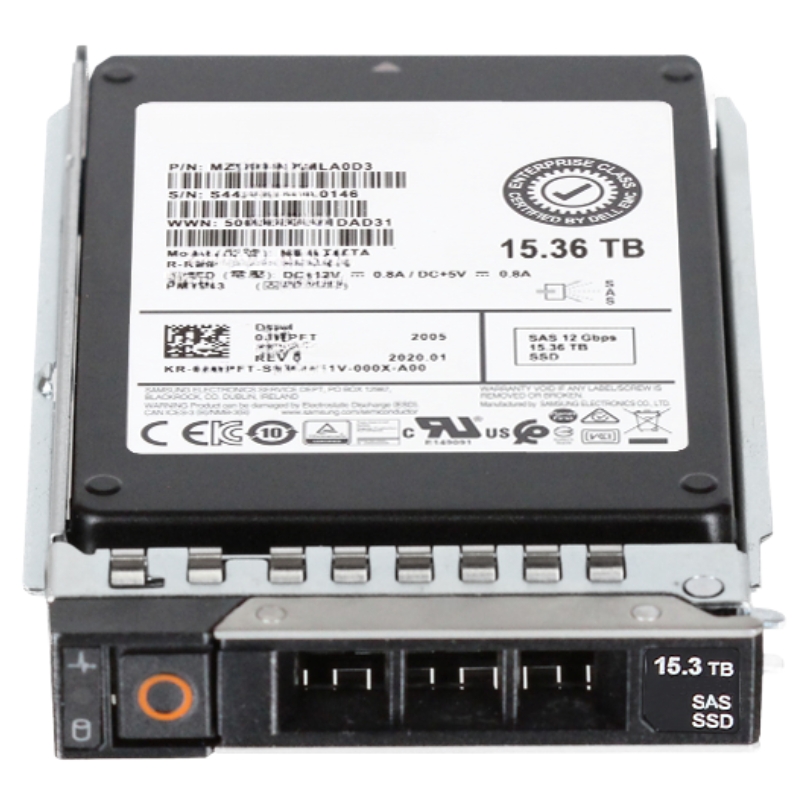


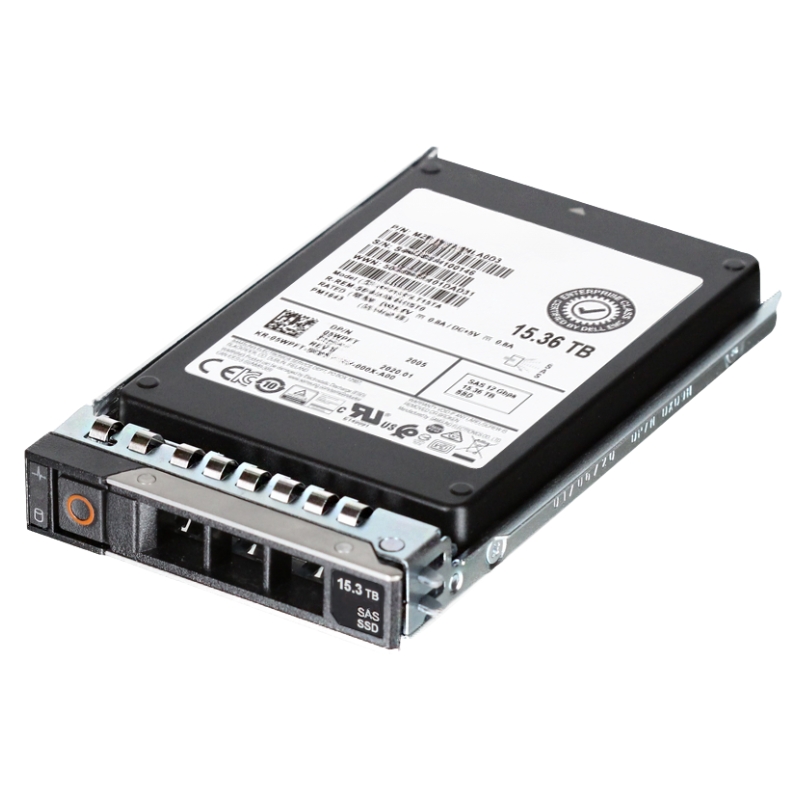
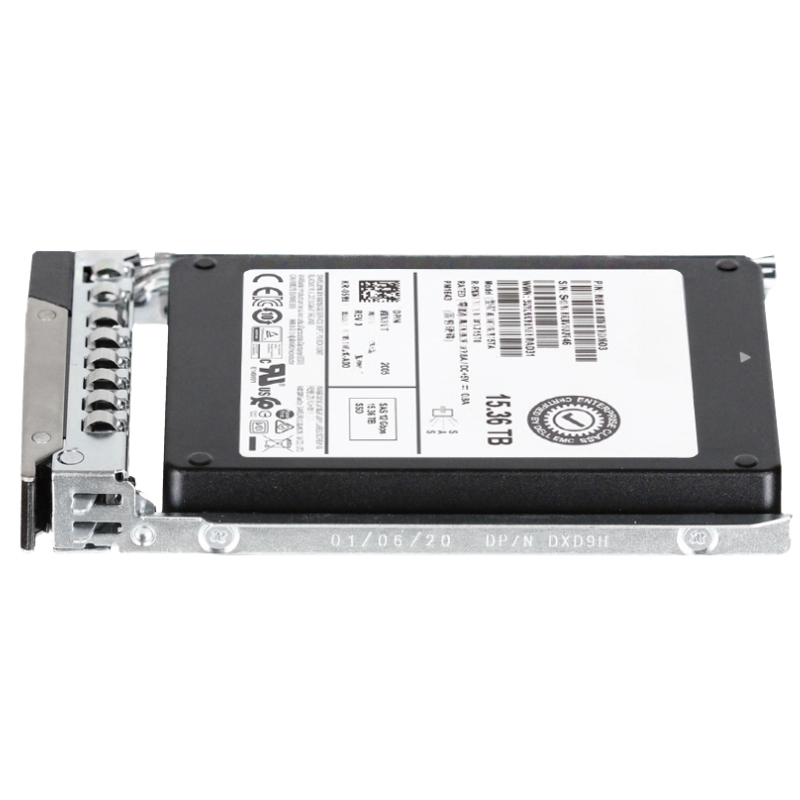
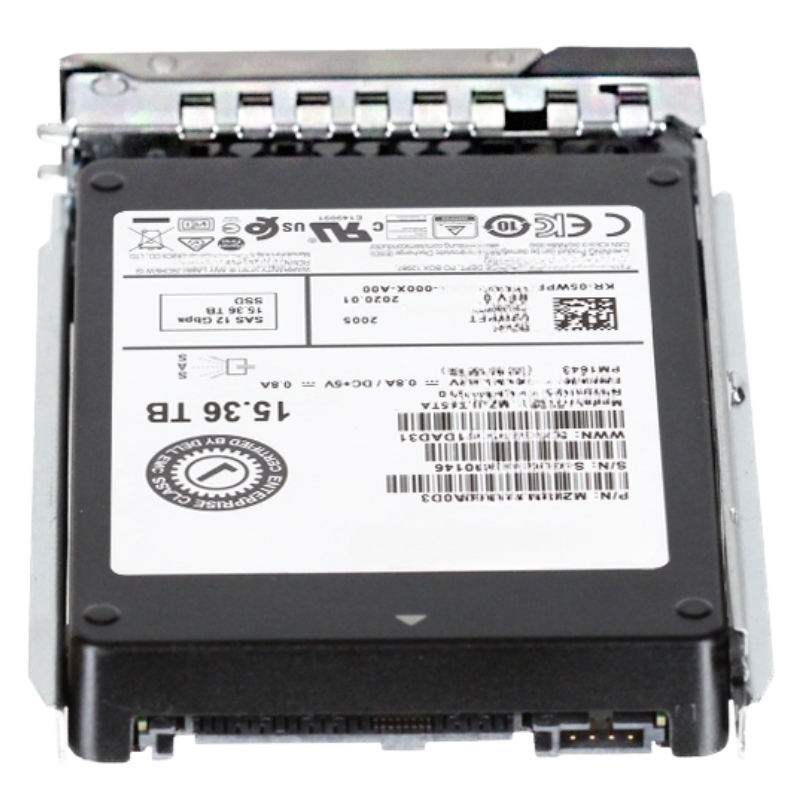
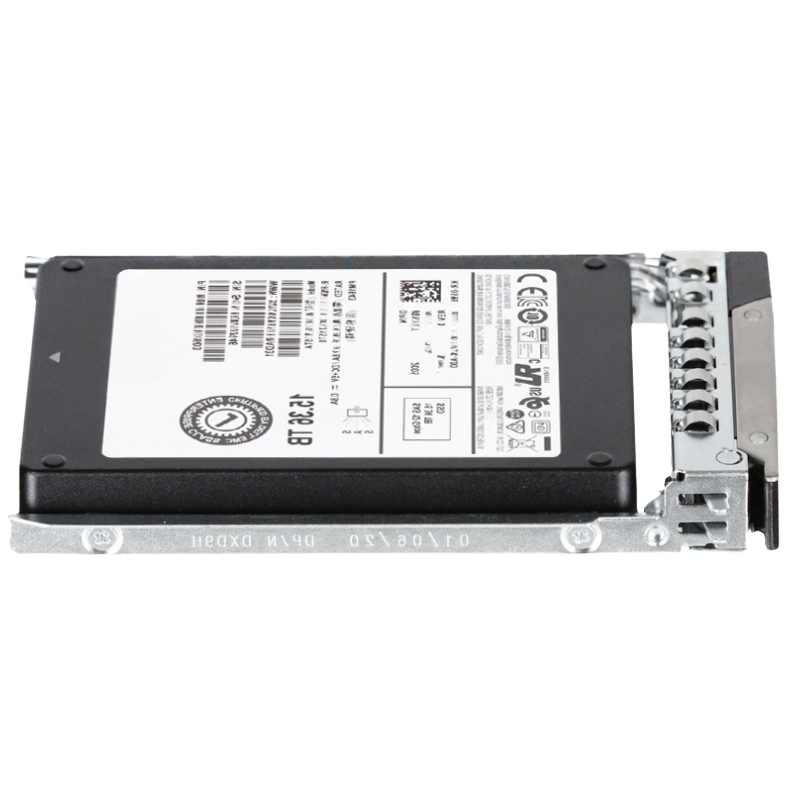
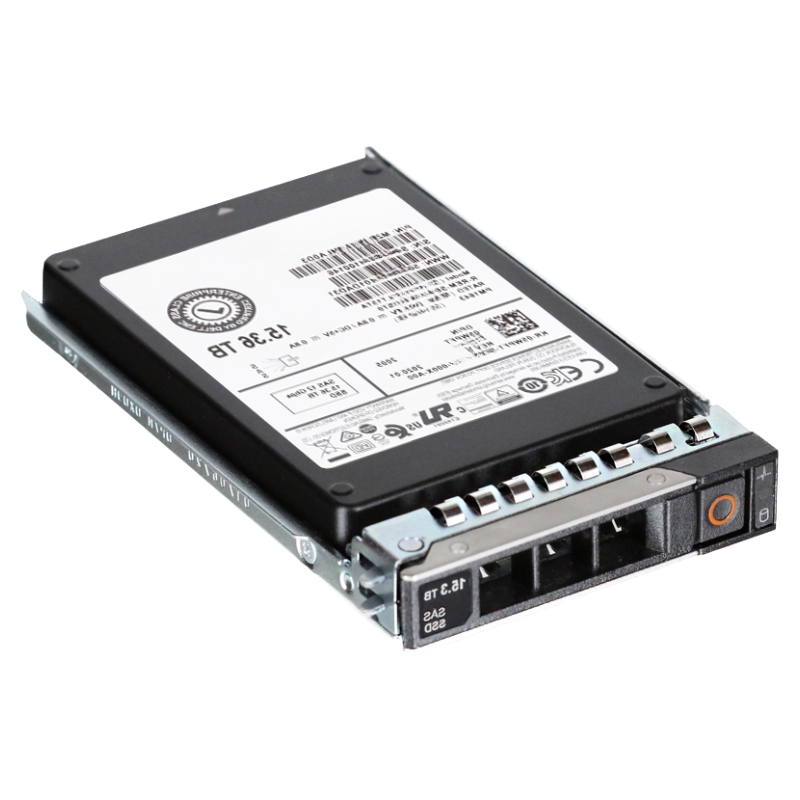
EMC 118033346 15.36TB Sas 12Gbps 2.5 Inch Enterprise Internal Solid State Drive. Excellent Refurbished with 1 year replacement warranty
The EMC 118033346 15.36TB SAS 12Gbps 2.5-Inch Enterprise Internal Solid State Drive is a premium-grade solution designed for Dell EMC storage arrays and enterprise-class servers. With its impressive capacity, high-speed SAS interface, and reliability-focused engineering, this SSD is tailored to meet demanding workloads, mission-critical applications, and large-scale data centers.
Engineered for high throughput, the EMC 118033346 ensures low latency and consistent performance for database management, virtualization, and cloud environments. By leveraging the SAS 12Gbps interface, it provides faster data transfer rates, improving server responsiveness and overall efficiency.
The EMC 118033346 integrates seamlessly with Dell EMC servers and storage solutions. Its SAS protocol ensures backward compatibility with existing infrastructure while delivering cutting-edge speed and durability for next-generation data handling.
With a massive 15.36TB of storage in a compact 2.5-inch form factor, this SSD helps maximize storage density while minimizing physical space in racks.
SAS 12Gbps connectivity provides robust and efficient data transfer speeds, ensuring high availability and reduced bottlenecks in demanding workloads.
These SSDs use a standard enterprise internal form factor suitable for server and storage enclosure bays, typically 2.5-inch SFF or U.2 depending on the specific OEM implementation. The SAS 12Gbps interface provides full-duplex, high-bandwidth connectivity with robust compatibility for enterprise controllers and HBAs, ensuring predictable performance in multi-path and high-availability configurations.
The 15.36TB capacity positions this SSD in the ultra-high-density class, allowing organizations to consolidate more data per drive and reduce total drive count in racks or arrays. This density is particularly valuable in environments where rack space, power, and cooling are constrained but capacity requirements remain high—such as hyper-converged infrastructure (HCI), archive tiers with performance demands, and dense database clusters.
Enterprise SSDs in this family typically employ multi-core controllers tuned for parallel I/O, advanced wear-leveling, and error correction (ECC). They use enterprise-grade NAND (often TLC or QLC when configured with enhanced firmware) or in cases where very high endurance is required, carefully-determined enterprise MLC variants. Firmware features include power-loss protection (PLP), background garbage collection, and end-to-end data path protection to maintain data integrity under heavy workloads.
Endurance for an enterprise 15.36TB drive is specified in drive writes per day (DWPD) or total terabytes written (TBW) over the warranty period. These drives are constructed for high endurance classes to support sustained mixed I/O workloads, with endurance-enhancing firmware and over-provisioning strategies. Built-in reliability features include:
The combination of high capacity and low latency makes this SSD ideal for dense virtualization hosts and cloud infrastructures where many virtual machines (VMs) share storage resources. The drive reduces the need for tiering to slower disks and simplifies performance provisioning, enabling more VMs per host without compromising responsiveness.
Enterprise databases—both relational and NoSQL—benefit from the drive’s random IOPS and low-latency characteristics. Analytical workloads that read large datasets enjoy the sequential throughput, while OLTP databases gain from consistent random access performance.
As a high-capacity cache or fast-tier storage device within hybrid arrays, the EMC 15.36TB SSD can accelerate frequently accessed datasets and metadata, reducing read amplification on back-end capacity tiers and improving overall cluster throughput.
Media rendering, transcoding, and large-file editing pipelines require both capacity and bandwidth. These SSDs deliver the sustained throughput needed for multi-stream video editing, VFX pipelines, and broadcast environments while maintaining fast access to project files.
SAS 12Gbps is broadly supported by enterprise RAID controllers, storage arrays, and HBAs from major vendors. Confirm compatibility with the storage array firmware matrix and controller vendor before mass deployment. Many OEM storage platforms publish validated drive lists—validate the EMC part number against those lists to ensure full compatibility.
In multi-controller arrays, SAS drives can be configured with multi-path access and redundant paths to ensure availability. Use enterprise multipath drivers and zoning best practices to avoid single points of failure and to ensure failover behavior is predictable during maintenance windows.
Firmware updates for enterprise SSDs must be applied according to vendor guidance to maintain performance and reliability. Packaging for bulk deployments may include vendor-signed update utilities and scripts—coordinate updates with change-control procedures and test in pre-production environments.
SAS 12Gbps enterprise SSDs provide proven, widely-supported compatibility with existing array architectures and multi-controller environments. NVMe SSDs, by contrast, deliver higher per-device throughput and lower latency but may require newer infrastructure (PCIe/NVMe fabrics or NVMe-oF) and updated controllers. Choose SAS 12Gbps if you need drop-in replacement compatibility, predictable integration with existing SAS infrastructures, or multi-path redundancy through established vendor ecosystems.
High-capacity HDDs remain more cost-effective on a per-GB basis for cold storage, but enterprise SSDs like the 15.36TB SAS drive deliver orders-of-magnitude better random IOPS, much lower access latency, and lower power consumption per IOPS. For performance-critical tiers or mixed workloads requiring fast metadata access and high concurrency, SSDs are the preferred choice despite higher per-GB cost.
Drive capacity is often listed as raw GB/TB; usable capacity depends on formatting, over-provisioning, and array-level parity or replication. Always calculate usable space when planning capacity.
Different firmware revisions can alter performance characteristics and fault behavior. Maintain a firmware baseline and test updates in a staging environment to avoid unexpected regressions.
Underestimating thermal load leads to throttling and reduced lifespan. Validate cooling and power provisioning when adding high-density SSDs to chassis or racks.
For IT managers evaluating EMC 118033346 15.36TB SAS 12Gbps Enterprise SSDs, follow these recommendations:


 Contact Us
 Information
 Catalog
 Solid State Drives (SSD)
 Network Switches
 Hard Disk Drives
 HBA & Controllers
 PC & Servers
 PC & Server Memory
 CPU & Processors
 Network Routers
 Power Supplies
 Tape Drives & Libraries
 Network Devices
 Computer & Network Cables