(7% discount is applied at checkout)
Cart is empty
Your go-to destination for cutting-edge server products
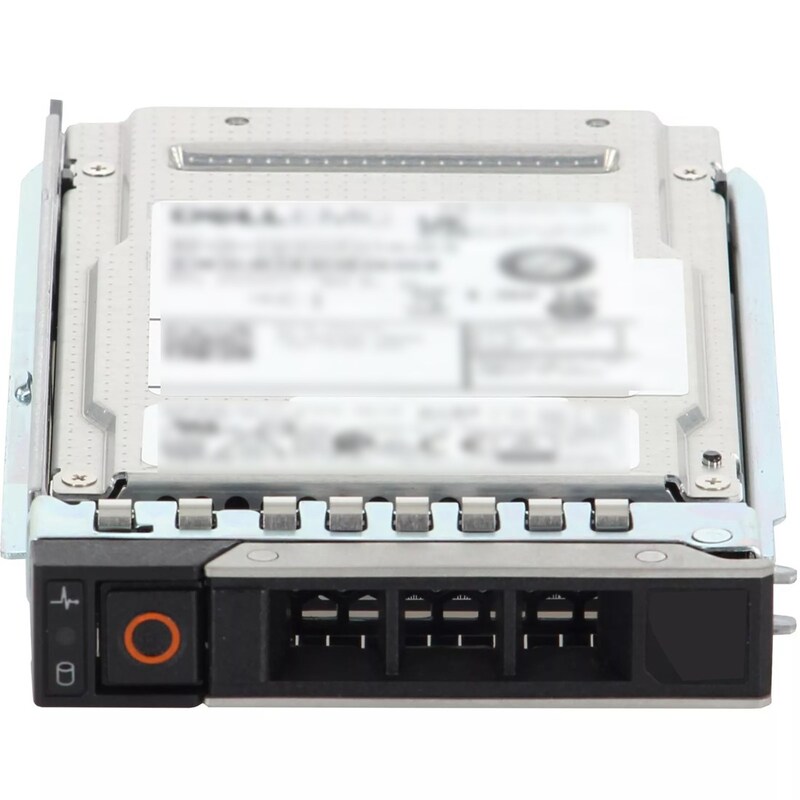


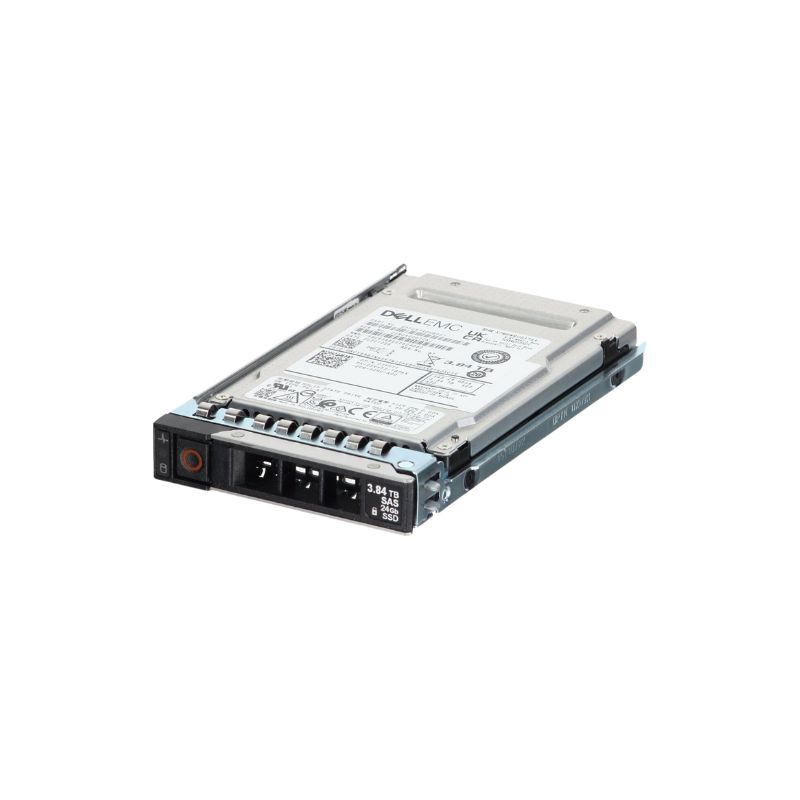
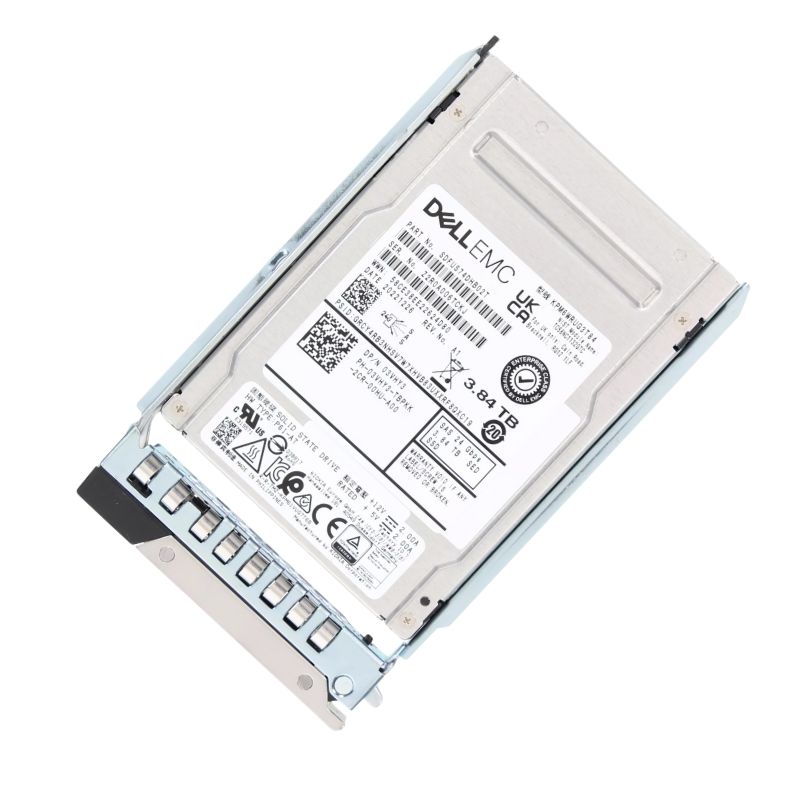
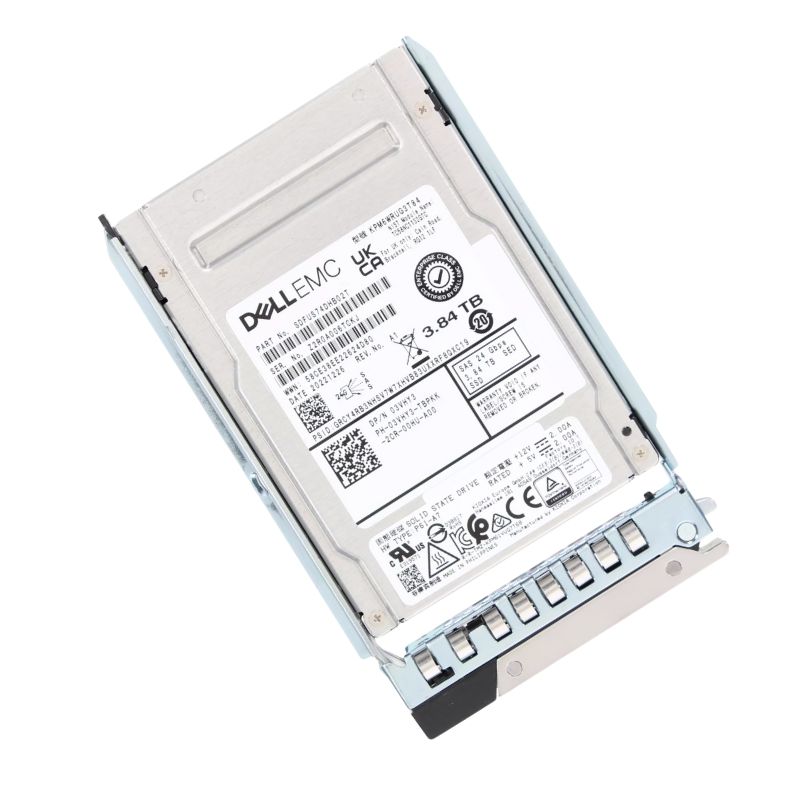
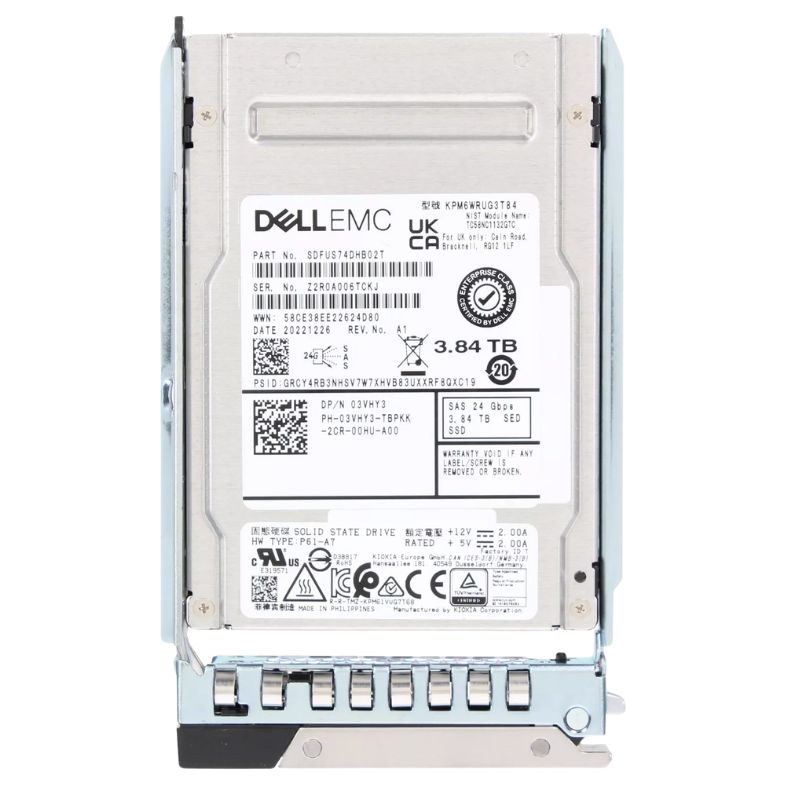
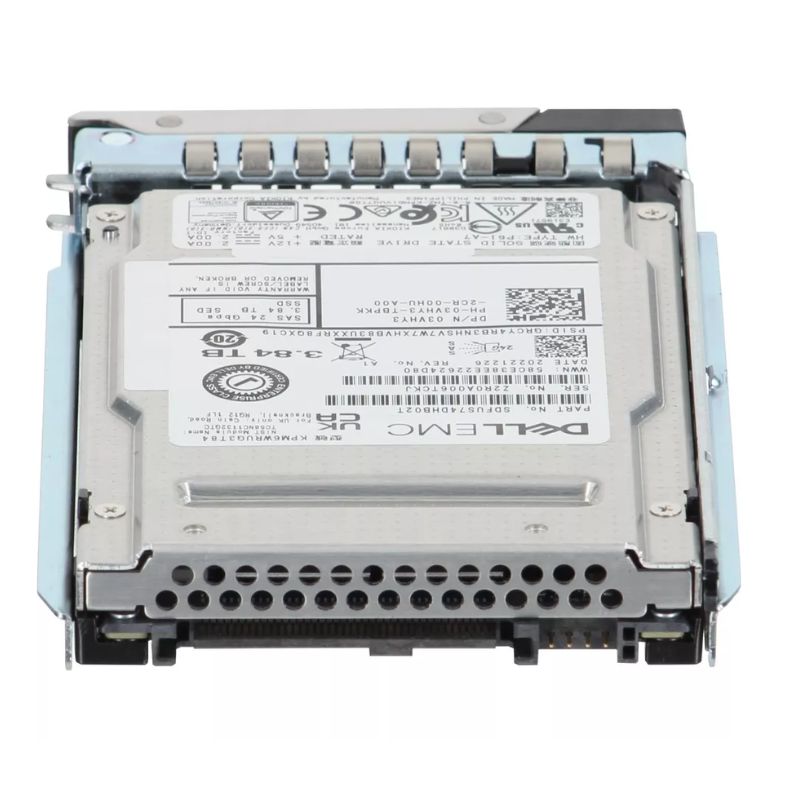
Dell 345-BGGN 3.84TB Self Encrypting Sed SAS 24GBPS RI 1DWPD TLC 2.5 Inch Enterprise Class Solid State Drive. New Sealed in Box (NIB) with 1 year Warranty
With built-in FIPS-certified hardware-based encryption, the drive ensures advanced data security and compliance.
Engineered for enterprise applications, this SSD delivers consistent high-speed read performance with 1 DWPD endurance, making it ideal for workloads with heavy read operations.
Designed with robust data integrity features, a long MTBF, and high endurance levels to minimize downtime in critical infrastructures.
Hot-swap support and compatibility with a wide range of Dell EMC PowerEdge 14G, 15G, and 16G servers make it easy to scale storage solutions across enterprise environments.
The Dell 345-BGGN 3.84TB Self-Encrypting (SED) SAS solid state drive is engineered for enterprise storage environments that demand high reliability, consistent performance, and robust data protection. Built as a 2.5-inch Small Form Factor (SFF) SAS 24Gbps drive, this model targets read-intensive workloads with a 1 Drive Write Per Day (1 DWPD) endurance rating and cost-efficient TLC NAND to deliver a balance of capacity, longevity, and affordability. Designed and qualified for use in Dell EMC PowerEdge 14G, 15G, and 16G servers, the 345-BGGN is an ideal candidate for database acceleration, virtualization read-caching, large-scale content delivery, and other enterprise applications where fast random reads and secure data-at-rest are priorities.
The 345-BGGN stands out with its 3.84TB raw capacity in a compact 2.5-inch chassis, using industry-standard SAS 24Gbps connectivity to maximize throughput in modern server backplanes and storage arrays. The drive’s TLC (Triple-Level Cell) NAND flash has been optimized for read-intensive enterprise workloads, offering a competitive price-per-gigabyte while maintaining predictable performance characteristics under sustained read operations. The SED feature ensures hardware-based encryption using Open Security Architecture standards, enabling organizations to enforce regulatory compliance and reduce exposure to data breaches through automatic encryption of all stored data without application changes.
Performance for the Dell 345-BGGN is tuned for scenarios where read latency and throughput are paramount. The 24Gbps SAS interface allows multi-lane, low-latency communication and supports native command queuing and enterprise SAS features that assist in maintaining consistent I/O under load. Random read IOPS, sequential read throughput, and host write handling are all optimized for mixed-enterprise stacks where reads dominate. The drive firmware implements sophisticated wear-leveling and garbage-collection algorithms tailored for 1 DWPD operation, reducing write amplification and extending overall service life while delivering steady read performance across a broad range of I/O sizes.
Security is a first-class capability for the 345-BGGN. As a hardware Self-Encrypting Drive, it employs an on-board controller to perform AES-based encryption of all data at rest with minimal impact on performance. The drive supports industry-standard encryption key management and passive pre-boot authentication options provided through server BIOS/UEFI integration or external key managers that support the TCG Opal or Enterprise specifications. This hardware-level protection simplifies compliance with data protection regulations such as GDPR, HIPAA, and other regional privacy mandates while enabling rapid secure decommissioning and repurposing of drives by cryptographically erasing keys instead of performing lengthy overwrites.
The Dell 345-BGGN is validated for seamless compatibility with PowerEdge 14G, 15G, and 16G platforms. Firmware tuning and qualification procedures ensure that the drive interoperates with Dell’s RAID controllers, HBA (Host Bus Adapter) cards, and server firmware stacks. Administrators deploying these drives in PowerEdge servers benefit from integrated tools for inventory, health monitoring, and firmware updates through Dell OpenManage and iDRAC, allowing centralized lifecycle management. The drive’s hot-plug capability lets data center engineers swap drives with minimal disruption, supporting high-availability maintenance procedures in clustered and RAID-protected arrays.
Reliability of enterprise SSDs is more than raw MTBF numbers; it’s about predictable behavior over the expected service life. The 345-BGGN’s specification of 1 DWPD for write endurance is matched to read-centric enterprise applications, where capacity and read performance are prioritized. The drive implements enterprise-grade error correction, power-loss protection mechanisms, and background recovery features that reduce the risk of data corruption during unexpected events. Administrators should align workload profiles to the drive’s endurance specification — leveraging the drive where reads dominate and scheduling heavier write activities for write-optimized tiers — to maximize lifespan and return on investment.
This enterprise SSD excels in several real-world scenarios. Database systems with large read caches, index-heavy OLAP workloads, and virtualization platforms using read-intensive VM images will see immediate gains in query response and application latency. Content delivery and web serving where large object reads are frequent can leverage the drive’s capacity and read throughput to reduce latency and offload higher-cost NVMe tiers for peak write bursts. Additionally, tiered storage architectures benefit by using the 3.84TB SED SSD as a mid-tier read-optimized layer, providing an economical bridge between high-performance NVMe cache and high-capacity archival HDD storage.
Compared to high-endurance enterprise SSDs, the 345-BGGN trades off write endurance for higher capacity and lower cost per TB. Against consumer SATA SSDs, it offers enterprise-grade SAS connectivity, better endurance characteristics for continuous operations, and SED features that consumer parts typically lack. When planning storage tiers, engineers will find that the 345-BGGN fits well as a primary choice for read-dominant tiers where consistent latency and secure storage are required without the premium cost of high-end write-intensive drives.
Firmware management is a critical part of enterprise SSD ownership. Dell provides firmware update mechanisms and release notes that describe performance optimizations, compatibility enhancements, and security patches. Administrators should integrate drive firmware maintenance into routine change windows using Dell OpenManage or vendor-prescribed utilities. Real-time monitoring of SMART attributes, drive health, and performance counters via standard management interfaces helps detect early indicators of wear or error conditions, enabling proactive migration and replacement before service-impacting failure occurs. The 345-BGGN’s logged metrics and alerts are accessible through iDRAC’s hardware inventory and monitoring features, making it straightforward to track fleet health at scale.
Deploying the 345-BGGN in RAID arrays or software-defined storage systems requires careful planning to ensure rebuild times, parity overhead, and fault domains are optimized. The SAS 24Gbps interface and enterprise firmware improve array rebuild behavior in comparison to slower interfaces. Nonetheless, administrators should use suitable redundancy levels (RAID 6 or erasure coding for large arrays) to mitigate the multi-drive failure risk during rebuilds. Combining these SSDs with tiering policies — where frequently read blocks migrate to the 345-BGGN tier — can provide significant performance benefits while preserving HDD capacity for cold data.
With a 3.84TB capacity, the Dell 345-BGGN presents an attractive cost-per-gigabyte proposition for enterprise architects balancing performance and budget. When constructing storage pools, it’s essential to account for usable capacity after RAID overhead and encryption metadata. The SED feature does not materially reduce usable user capacity but requires careful key management processes. Total cost of ownership calculations should include projected endurance-driven replacements, firmware maintenance cycles, power consumption, cooling, and rack space considerations. In many environments, deploying these drives as part of a tiered architecture reduces the need to populate expensive NVMe layers, offering a practical path to expanded storage with performance that meets most read-centric requirements.
Thermal profiles and power draw of enterprise SSDs vary with activity. Although the 2.5-inch SFF form factor is compact, it benefits from proper airflow in server chassis to maintain optimal operating temperatures. Dell’s server designs provide directed cooling paths for drive bays; administrators must ensure that drive bay blanking panels, air baffles, and proper rack airflow are maintained to meet manufacturer thermal specifications. Power consideration is particularly important at scale: while each drive’s power draw is lower than a mechanical disk under peak, the aggregate power when populating many bays can be significant and should be included in rack PDU, UPS, and HVAC planning.
Organizations subject to data residency, privacy, and security standards will appreciate the hardware SED features of the 345-BGGN. Encryption is performed transparently on the drive without host CPU overhead, supporting secure decommissioning workflows and minimizing the time and effort to meet audit requirements. Enterprises should adopt a documented key lifecycle policy, leverage secure key managers where applicable, and maintain chain-of-custody records for drives removed from production. When combined with server-level access controls and full-disk encryption policies, the 345-BGGN helps meet a variety of regulatory obligations and demonstrates due diligence in data protection strategies.
Understanding the warranty terms and end-of-life (EOL) roadmap for any enterprise component is essential. Dell typically provides enterprise-grade warranty coverage and support options for its certified drives; administrators should review the specific warranty duration, RMA procedures, and replacement logistics to minimize downtime in case of drive failures. Additionally, planning for graceful migration paths as the drives approach EOL will allow storage architects to upgrade capacity tiers or transition to newer SAS/NVMe technologies without disrupting business-critical services.
To maximize the value of the Dell 345-BGGN, follow deployment best practices: align workload profiles to the drive’s read-optimized design, implement robust monitoring for SMART attributes and performance metrics, and integrate firmware updates into scheduled maintenance windows. Use RAID or distributed parity systems to protect against drive failure and model rebuild windows to avoid exposing the array to extended risk. Implement encryption key management policies and periodic key rotations where appropriate. Finally, maintain accurate inventory and lifecycle records so that drives nearing their endurance thresholds can be proactively replaced or reassigned to less write-intensive roles.
Real-world adopters deploy the 345-BGGN in virtualization hosts to accelerate boot storms and reduce VM read latency, in database read-replica nodes to speed query performance, and in web-scale content delivery nodes to lower response times for frequently accessed assets. Success metrics include reductions in average read latency, improved query throughput, consolidation of working sets onto a smaller set of drives, and lower operating costs compared with always-NVMe deployments. Measuring these outcomes requires before-and-after performance baselining and careful annotation of workload patterns to correlate observed gains to the SSD tier.


 Contact Us
 Information
 Catalog
 Solid State Drives (SSD)
 Network Switches
 Hard Disk Drives
 HBA & Controllers
 PC & Servers
 PC & Server Memory
 CPU & Processors
 Network Routers
 Power Supplies
 Tape Drives & Libraries
 Network Devices
 Computer & Network Cables