(7% discount is applied at checkout)
Cart is empty
Your go-to destination for cutting-edge server products
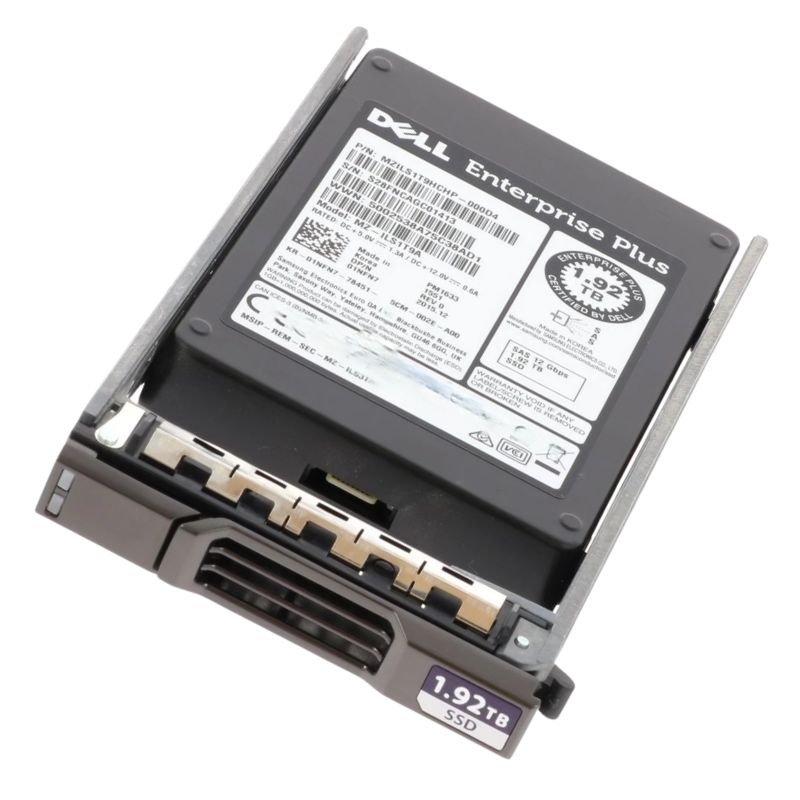


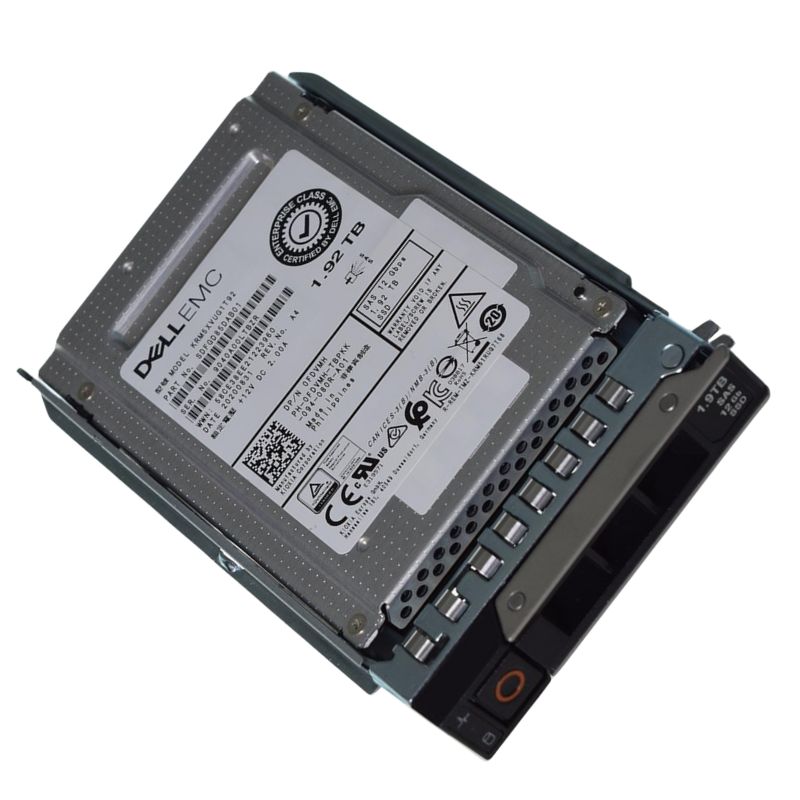
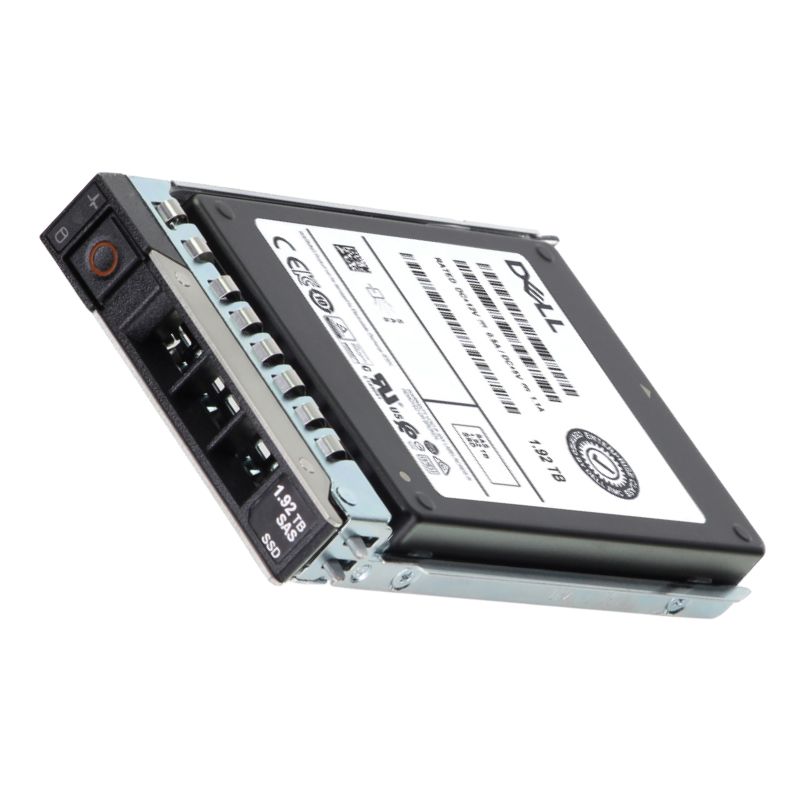
Dell 400-BFHY 1.92TB SAS 12GBPS Read Intensive TLC 2.5-inch Hot Plug SSD. New Sealed in Box (NIB) with 1 Year Replacement Warranty
Dell 400-BFHY 1.92TB SAS 12Gbps Read Intensive TLC 2.5-inch Hot Plug SSD represents a high-value storage solution designed for enterprise environments that demand consistent read performance, data reliability, and an optimal balance between capacity and endurance. Built on a SAS 12Gbps interface and using TLC NAND optimized for read-intensive workloads, this category encompasses drives tailored to database acceleration, virtualization read caches, boot volumes, and content delivery platforms.
Every drive in this category adheres to the standard 2.5-inch hot-plug form factor, making it broadly compatible with modern Dell servers and storage arrays. The compact 2.5-inch design enables higher drive density within server bays and storage enclosures, allowing organizations to scale capacity without sacrificing rack space. Hot-plug capability means drives can be serviced or replaced while systems remain online, minimizing downtime and maintaining business continuity for critical workloads.
At the heart of the 400-BFHY category is TLC (Triple-Level Cell) NAND, optimized for read-intensive operations. Dell pairs this NAND with enterprise-class controllers that implement sophisticated error correction (ECC), power-loss protection features, and firmware tuned to minimize read latency and ensure predictable performance. These controllers manage wear-leveling effectively to extend usable drive life and sustain performance across a large proportion of the drive’s lifecycle.
Performance for the 1.92TB variant in this series emphasizes sustained read throughput, low latency for small I/O operations, and consistent IOPS under mixed but read-heavy workloads. This category is ideal where read-response time impacts application behavior most, such as web servers, virtualization host caches, and analytics engines that perform frequent random reads.
Measured performance typically demonstrates high sequential read speeds enabled by SAS 12Gbps, with random read IOPS optimized for 4KB and 8KB block sizes commonly used by databases and virtual machines. Drives are engineered to reduce read amplification and maintain high queue-depth efficiency, making them reliable building blocks for read-tier storage pools.
Enterprise workloads require predictable latency, and this SSD category is tuned to provide stable read latency even under sustained requests. Firmware-level QoS mechanisms prioritize critical I/O and mitigate latency spikes that can affect multi-tenant virtualization environments. This makes the drives suitable for latency-sensitive applications and time-critical services.
While classified as read-intensive, these TLC-based SSDs still tolerate occasional write bursts and background maintenance tasks. The drives include internal buffers and DRAM-assisted caching (where applicable) to smooth out bursts of write activity and to protect long-term read performance. For systems with heavier sustained write demands, administrators should consider purpose-built write or mixed-use SSD categories; however, for many realistic enterprise patterns, the 400-BFHY series offers a strong balance of read performance and cost-efficiency.
Dell classifies this family as read-intensive, and endurance ratings are aligned to workloads characterized by low drive writes per day. Despite this, the drives incorporate enterprise reliability features such as end-to-end data path protection, robust ECC algorithms, and power-loss protection to flush critical metadata in the event of an unexpected outage. These measures reduce the risk of silent data corruption and bolster the drive's fit in production environments.
Endurance specifications expressed in TBW or Drive Writes Per Day (DWPD) provide a practical metric for lifecycle planning. For the 1.92TB model, the TBW values are designed to match read-intensive usage patterns; administrators should calculate expected writes based on their deployment profile to estimate replacement cycles and warranty alignment. Proper monitoring and logging of write metrics using Dell system management tools will help teams preemptively plan drive maintenance and replacements.
This SSD category excels in a number of targeted workloads that are dominated by read activity or that benefit from fast random read performance. Use cases include database read replicas, virtualization boot and storage caches, content distribution nodes, and analytics clusters where read throughput shapes overall system responsiveness.
Virtual desktop infrastructure (VDI) and virtual machine boot storms are classic scenarios where many small, concurrent reads cause storage bottlenecks. The 1.92TB SAS read-optimized SSD provides low-latency random read response and steady throughput to accelerate VM boot times and improve multi-user responsiveness. When deployed as part of a hybrid storage tier, it can dramatically reduce the load on slower HDD tiers and improve user experience.
Databases with heavy read-query volumes — such as reporting replicas or read-only OLAP nodes — benefit greatly from this drive class. By placing hot tables, indexes, and query caches on high-performance SAS SSDs, organizations can lower query latency and increase throughput without the increased cost of all-flash write-optimized arrays.
For content delivery networks (CDNs), web caches, and media streaming edge nodes, read-intensive performance directly affects user-perceived latency. Deploying the 400-BFHY series at the caching layer improves first-byte times and allows more concurrent sessions per node, making it an economical choice for scaling read-heavy services.
Thermal behavior is an important dimension in dense server racks. These SSDs are engineered to operate across enterprise temperature ranges, but performance can be impacted by prolonged, extreme temperatures. Proper airflow management, chassis cooling, and placement of drives in optimal bays will help sustain consistent performance and prolong drive life.
Power usage for the 2.5-inch SAS SSDs is relatively modest compared with spinning media, but under heavy sustained activity the drives will draw measurable power. When planning dense deployments, administrators should account for peak and idle power draw to avoid oversubscription of power budgets and to design efficient cooling strategies.
To protect NAND integrity, drives implement thermal throttling that can reduce throughput if internal temperatures cross safe thresholds. System architects should design airflow to avoid sustained throttling events, and monitoring should include temperature thresholds to trigger containment actions before performance is affected.
Successful deployments of the 400-BFHY drives combine correct tiering strategies, firmware governance, and ongoing monitoring. Consider deploying these drives in read-tier pools where hot data is concentrated, pairing them with higher-endurance write-optimized SSDs for write-heavy transactional layers, and using automated tiering where supported.
Hybrid architectures that combine HDD capacity with SAS SSD read-tiers can deliver excellent price-performance. Place frequently accessed datasets and read caches on the 1.92TB SAS SSDs and leave colder data on higher-capacity HDDs. This approach preserves cost-efficiency while delivering responsive IO for active workloads.
Enterprise storage best practices still recommend appropriate RAID configurations and redundancy. RAID levels that protect against single-drive failures (for example RAID 1, RAID 6, or RAID 10 depending on performance and capacity goals) ensure that read-intensive arrays remain resilient. Use of hot-spare drives and regular verification (scrubbing) helps maintain data integrity over time.
Security features increase the value of enterprise SSDs. Many drives in this category support hardware-based encryption and TCG Opal or FIPS-compliant options, enabling at-rest data protection without performance penalties. Integrating drive-level encryption with host key management systems preserves data confidentiality while allowing rapid drive replacement or re-provisioning.
Self-encrypting drive modes simplify compliance and secure disposal, since a cryptographic erase can render data irrecoverable quickly and reliably. For organizations operating in regulated industries, selecting SSDs with certified encryption options reduces administrative burden and improves audit readiness.
Even with highly reliable SSDs, robust backup and replication remain essential. Snapshotting, regular backups, and cross-site replication protect against data corruption and logical errors that hardware redundancy alone cannot resolve. Ensure that backup windows and recovery point objectives (RPOs) account for the speed at which read-tier performance and capacity may change.
Understanding where this category fits relative to other options helps guide procurement. Compared to write-optimized enterprise SSDs, the 400-BFHY series provides lower cost per GB with tradeoffs in write endurance. Against high-capacity HDDs, these SAS SSDs offer significant improvements in latency and random-read performance while at a higher cost per GB. Decision-makers should align selection with the dominant IO patterns of their applications.


 Contact Us
 Information
 Catalog
 Solid State Drives (SSD)
 Network Switches
 Hard Disk Drives
 HBA & Controllers
 PC & Servers
 PC & Server Memory
 CPU & Processors
 Network Routers
 Power Supplies
 Tape Drives & Libraries
 Network Devices
 Computer & Network Cables