(7% discount is applied at checkout)
Cart is empty
Your go-to destination for cutting-edge server products
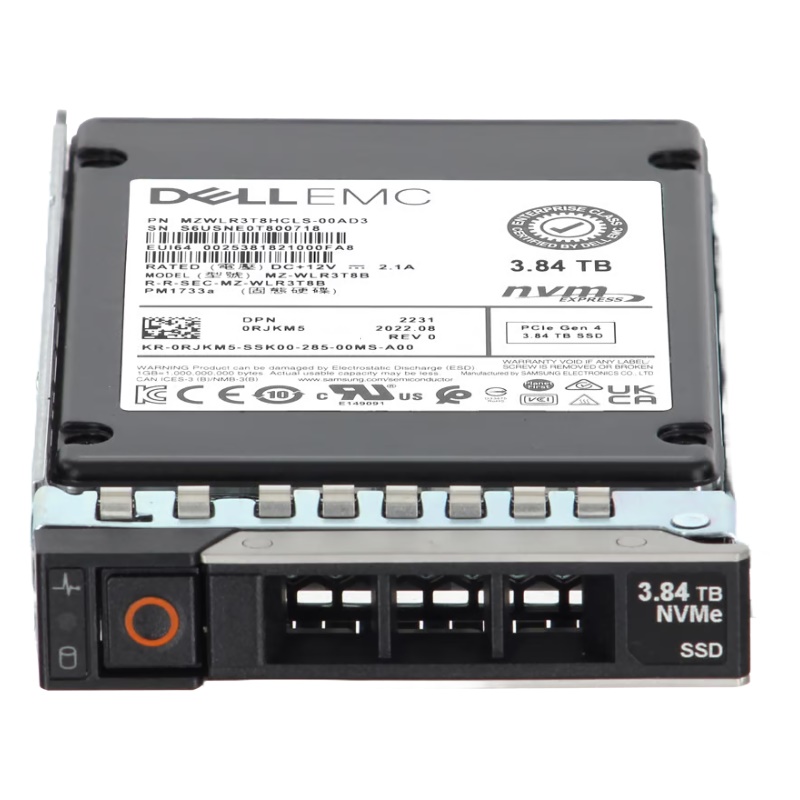


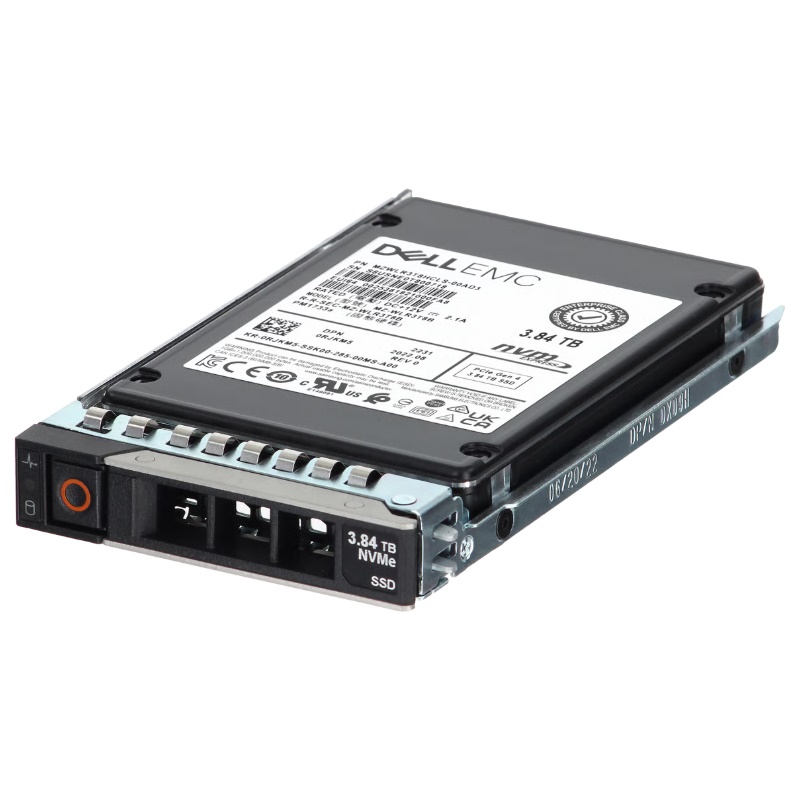
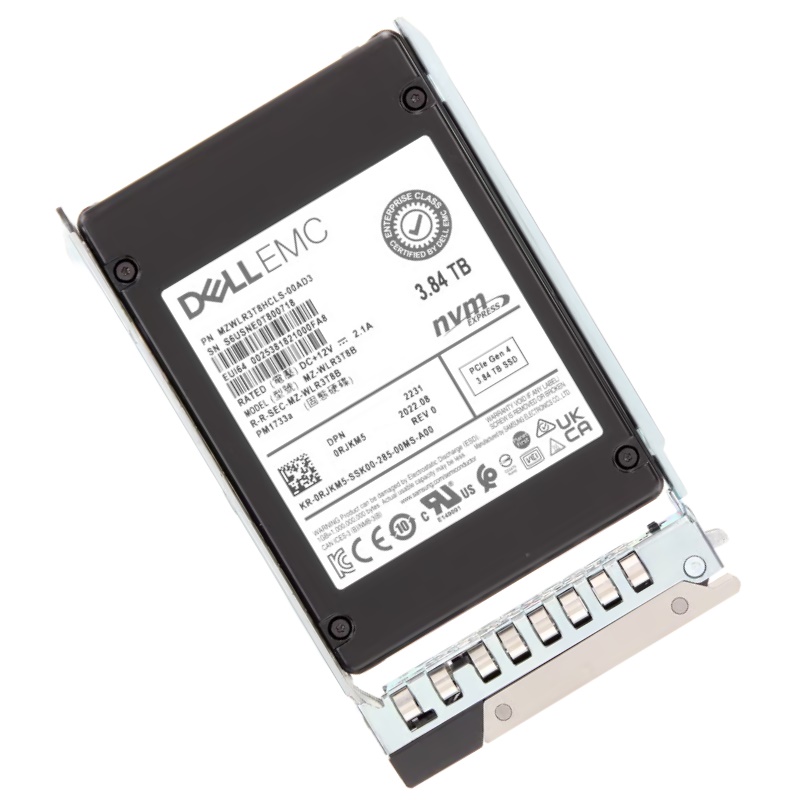
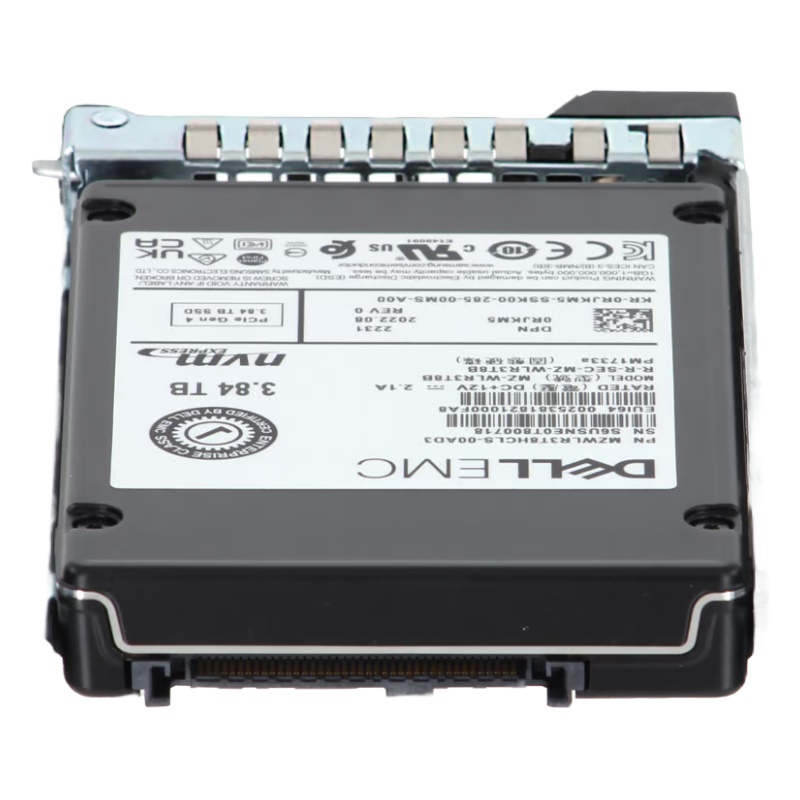
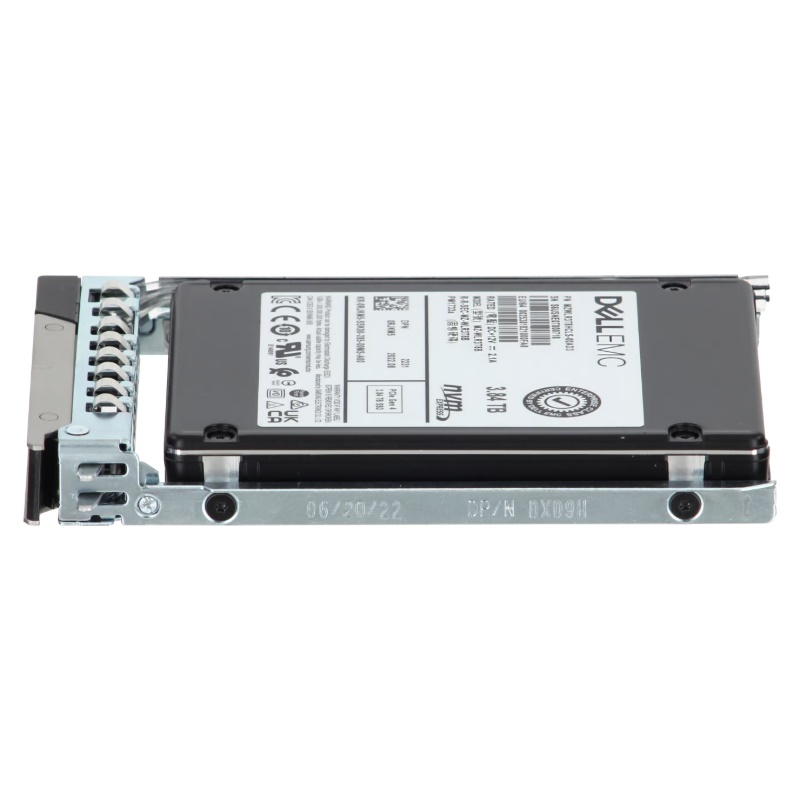
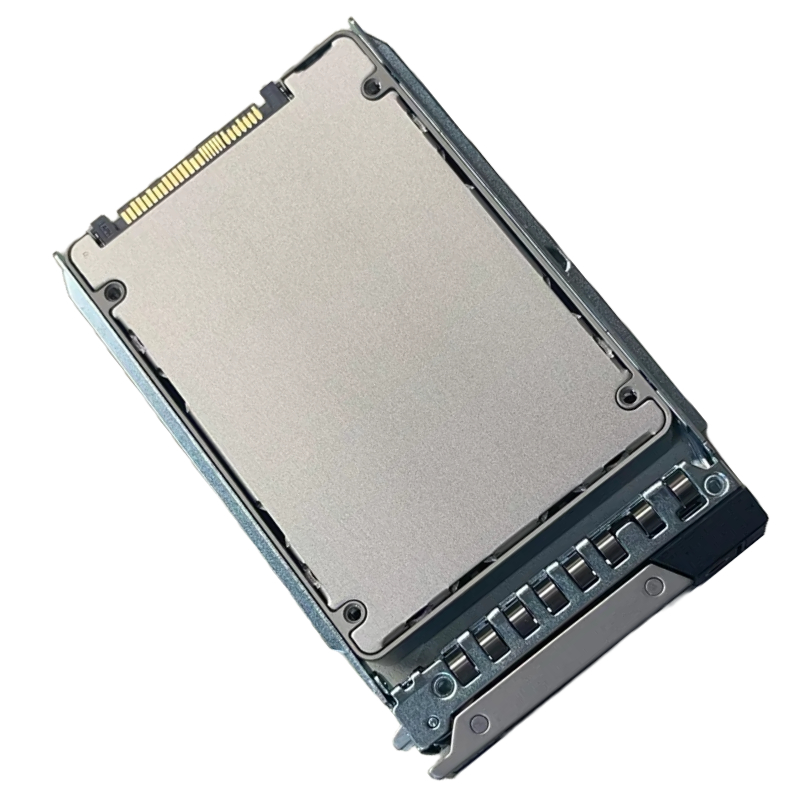
Dell Y972F 3.84TB Data Center Non-Volatile Memory Express (NVMe) Read Intensive U2 Gen4 Solid State Drive. New Sealed in Box (NIB) with 1 Year Warranty
The Dell Y972F is a high-performance, read-focused NVMe solid-state drive designed for data-center workloads. Built in a compact 2.5-inch U.2 form factor, this drive uses PCIe Gen4 x4 lanes to deliver low latency and consistent throughput where read efficiency matters most.
This drive is validated with a wide range of Dell PowerEdge servers, making it simple to deploy in heterogeneous data centers:
In today's data-driven enterprise environments, storage performance and reliability are paramount. The transition from traditional SATA and SAS interfaces to Non-Volatile Memory Express (NVMe) represents a fundamental shift in data center storage architecture. NVMe SSDs, particularly those designed specifically for data center workloads, deliver unprecedented levels of performance, latency reduction, and efficiency that are essential for cloud computing, artificial intelligence, database applications, and virtualized environments.
The NVMe protocol was developed from the ground up to leverage the performance characteristics of flash memory, unlike SATA and SAS which were originally designed for mechanical hard drives. By utilizing the PCIe interface directly, NVMe drives eliminate the translation layers that create bottlenecks in traditional storage architectures. This results in significantly higher Input/Output Operations Per Second (IOPS), substantially lower latency, and increased bandwidth that modern data-intensive applications require to perform optimally.
Data center NVMe SSDs offer several distinct advantages over previous generation storage technologies. The parallel queueing architecture of NVMe supports up to 64,000 commands per queue, compared to just one queue with 32 commands for SATA. This massive parallelism is particularly beneficial in multi-core server environments where multiple applications are simultaneously accessing storage. Additionally, NVMe drives typically consume less power per gigabyte transferred, contributing to improved Power Usage Effectiveness (PUE) in large-scale deployments.
In practical terms, the performance differential between NVMe and previous storage technologies translates to tangible business benefits. Database queries complete faster, virtual machines experience reduced storage latency, and data analytics platforms can process larger datasets in less time. For I/O intensive applications, this can mean the difference between meeting or missing service level agreements, particularly in multi-tenant cloud environments where storage resources are shared across multiple workloads.
The Dell Y972F represents the evolution of read-optimized storage solutions, specifically engineered for data center environments where consistent performance, high endurance, and reliability are non-negotiable. With a substantial 3.84TB capacity and PCIe Gen4 interface, this U.2 form factor drive delivers the perfect balance of performance, capacity, and cost-effectiveness for read-centric workloads.
The Dell Y972F utilizes the U.2 (2.5-inch) form factor, which has become the standard for enterprise NVMe drives in rack server deployments. This form factor provides optimal balance between storage density, thermal management, and compatibility with existing data center infrastructure. The 2.5-inch design allows for hot-swappable deployment in standard drive bays, facilitating easy maintenance and replacement without system downtime.
The U.2 interface provides several critical advantages for enterprise storage deployments. Unlike add-in card form factors, U.2 drives can be easily hot-swapped without requiring server downtime or accessing internal components. The interface also provides robust power delivery capabilities essential for maintaining consistent performance under heavy workloads. Additionally, the physical design supports effective heat dissipation, which is crucial for maintaining performance during sustained operations.
With 3.84TB of usable capacity, the Dell Y972F provides ample storage for a wide range of enterprise applications while maintaining consistent performance characteristics across the entire capacity range. The drive leverages PCIe 4.0 technology to deliver sequential read speeds of up to 7,000 MB/s and sequential write speeds reaching 2,500 MB/s. For random I/O operations, the drive can achieve up to 900,000 read IOPS and 120,000 write IOPS, making it well-suited for mixed workload environments.
As a read-intensive drive, the Dell Y972F is optimized for workloads where read operations significantly outnumber write operations. The drive features a endurance rating of 1.3 Drive Writes Per Day (DWPD) over a 5-year warranty period, translating to approximately 9.1 Petabytes Written (PBW). This endurance specification makes it suitable for a wide range of enterprise applications beyond simple read caching, including databases with moderate write requirements and content delivery networks.
Drive Writes Per Day (DWPD) and Terabytes Written (TBW) are critical metrics for evaluating SSD endurance in enterprise environments. DWPD specifies how many times the entire drive capacity can be written to per day over the warranty period, while TBW represents the total amount of data that can be written to the drive over its lifetime. The Dell Y972F's 1.3 DWPD rating indicates it can withstand having its entire 3.84TB capacity written 1.3 times daily for five years, demonstrating robust endurance for read-intensive applications.
The transition to PCIe 4.0 represents a significant milestone in storage performance, effectively doubling the bandwidth available compared to PCIe 3.0. With 16 GT/s (GigaTransfers per second) per lane compared to 8 GT/s for PCIe 3.0, PCIe 4.0 x4 interface provides up to 7.877 GB/s of theoretical bandwidth, eliminating storage as a performance bottleneck in most enterprise workloads.
PCIe 4.0 maintains backward compatibility with previous generations while introducing several architectural enhancements. The increased transfer rate reduces latency for storage operations and allows for more efficient utilization of the available lanes. For NVMe drives, this means reduced command completion times and improved quality of service, particularly important in multi-tenant environments where consistent performance is critical.
The bandwidth improvements offered by PCIe 4.0 have tangible benefits across a wide spectrum of enterprise applications. Database systems experience faster transaction processing, virtualization platforms support higher VM densities, and data analytics workloads complete in shorter timeframes. The Dell Y972F leverages this increased bandwidth to deliver performance that meets the demands of modern data center applications while providing headroom for future workload requirements.
When compared to PCIe 3.0 NVMe drives, the performance differential is substantial. PCIe 4.0 drives typically deliver 70-90% higher sequential read performance and 50-70% higher random read IOPS. This performance uplift enables organizations to achieve more work with fewer drives, potentially reducing total cost of ownership through improved storage efficiency and reduced rack space requirements.
Read-intensive SSDs represent a crucial category in the enterprise storage hierarchy, specifically engineered for applications where read operations dominate the I/O profile. The Dell Y972F delivers the optimal balance of performance, endurance, and cost-effectiveness for these workloads, making it an ideal choice for a wide range of enterprise applications.
In database environments, particularly those supporting online transaction processing (OLTP) and data warehousing, read operations typically account for 70-80% of total I/O. The Dell Y972F provides the consistent low-latency performance that database systems require for optimal operation. The high random read performance enables faster query processing, while sufficient write endurance accommodates transaction logs and database updates without performance degradation.
Content delivery networks and media streaming platforms represent classic read-intensive workloads where content is written once and read many times. The high sequential read performance of the Dell Y972F enables rapid content delivery to end users, while the substantial 3.84TB capacity allows for storing large media libraries. The drive's endurance characteristics ensure reliable operation even in environments with frequent content refreshes.
VDI deployments, particularly those utilizing non-persistent desktop pools, generate predominantly read I/O as multiple users boot from and access common gold images. The high random read performance of the Dell Y972F supports rapid boot storms and application launches, while the moderate write endurance accommodates user profile data and temporary files. The capacity point allows for storing multiple desktop images with ample room for overprovisioning.
Big data analytics platforms often process large datasets that are written once during ingestion and subsequently read multiple times during analysis. The Dell Y972F's high sequential read performance accelerates data scanning operations common in analytics workloads, while the random read performance supports more complex query processing. The balance of capacity and performance makes it suitable for both primary storage and caching layers in analytics architectures.
In data center environments, storage reliability is as important as performance. The Dell Y972F incorporates comprehensive enterprise-grade features designed to ensure data integrity, maximize availability, and extend the operational lifespan of the drive in demanding 24/7 environments.
The drive implements sophisticated error correction mechanisms, including Low-Density Parity Check (LDPC) codes, to detect and correct errors that may occur during data transmission or storage. This advanced ECC capability ensures data integrity even as NAND flash cells approach their endurance limits, providing an additional layer of protection against data corruption.
Enterprise environments require protection against data loss during unexpected power events. The Dell Y972F incorporates robust power loss protection circuits that include capacitors capable of providing sufficient backup power to complete in-progress writes and flush volatile cache contents to non-volatile memory. This ensures data consistency even during unplanned power interruptions, making the drive suitable for write-back caching applications.
To maximize endurance and prevent premature failure, the drive implements sophisticated wear leveling algorithms that distribute write operations evenly across all available NAND flash blocks. This prevents specific blocks from wearing out faster than others, extending the overall lifespan of the drive. Additionally, advanced bad block management identifies and retires failing memory cells, maintaining performance and reliability throughout the drive's operational life.
The Dell Y972F features end-to-end data protection, which maintains data integrity checks from the host interface through all internal data paths to the NAND flash media. This comprehensive approach detects and corrects errors that might occur during internal data transfers, providing an additional layer of protection beyond standard interface-level CRC checking. This is particularly important in mission-critical applications where data corruption cannot be tolerated.


 Contact Us
 Information
 Catalog
 Solid State Drives (SSD)
 Network Switches
 Hard Disk Drives
 HBA & Controllers
 PC & Servers
 PC & Server Memory
 CPU & Processors
 Network Routers
 Power Supplies
 Tape Drives & Libraries
 Network Devices
 Computer & Network Cables