(7% discount is applied at checkout)
Cart is empty
Your go-to destination for cutting-edge server products
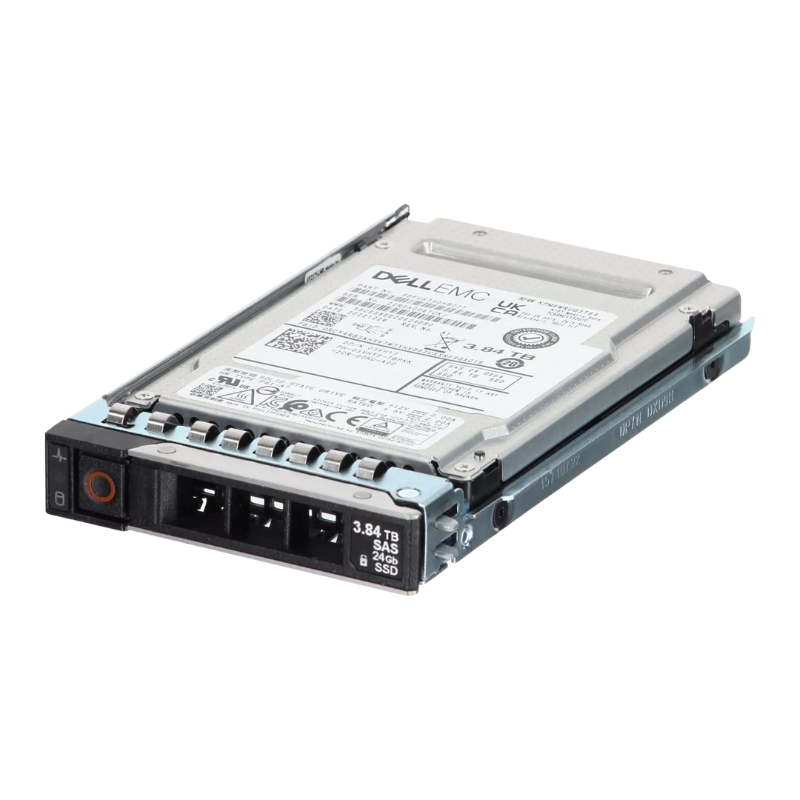


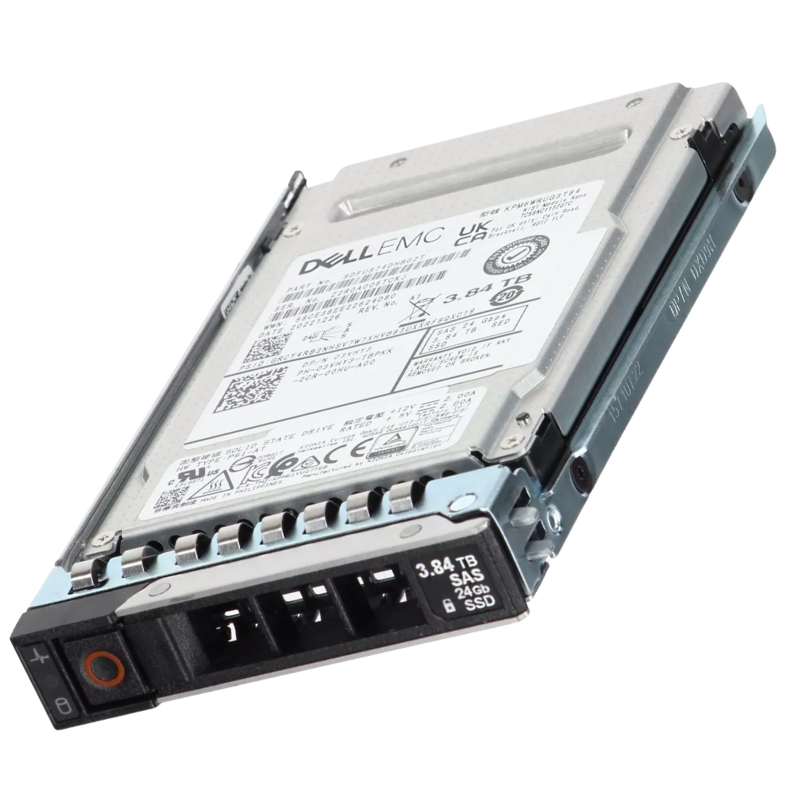
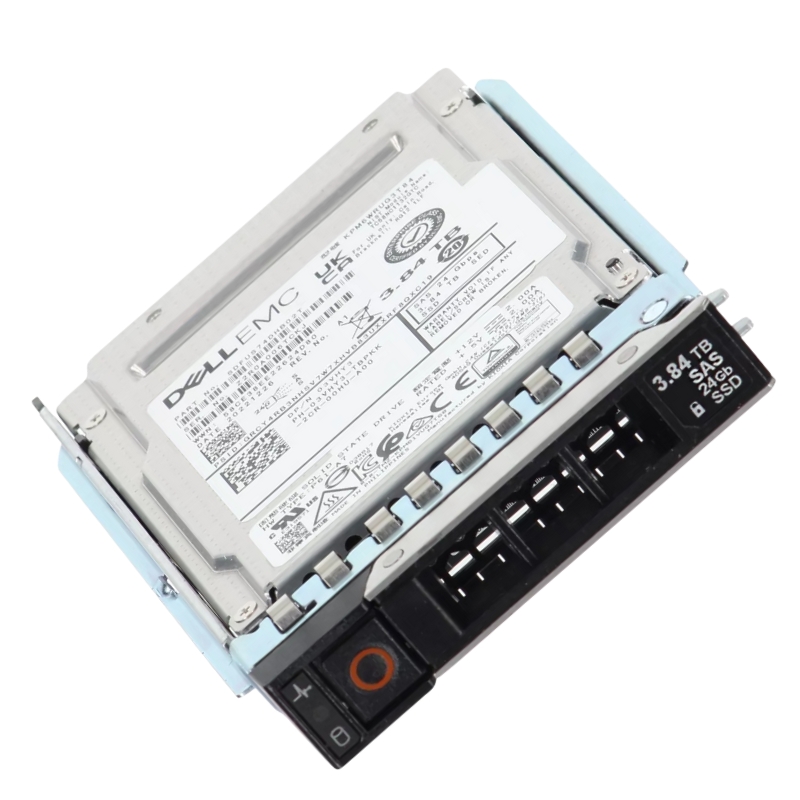
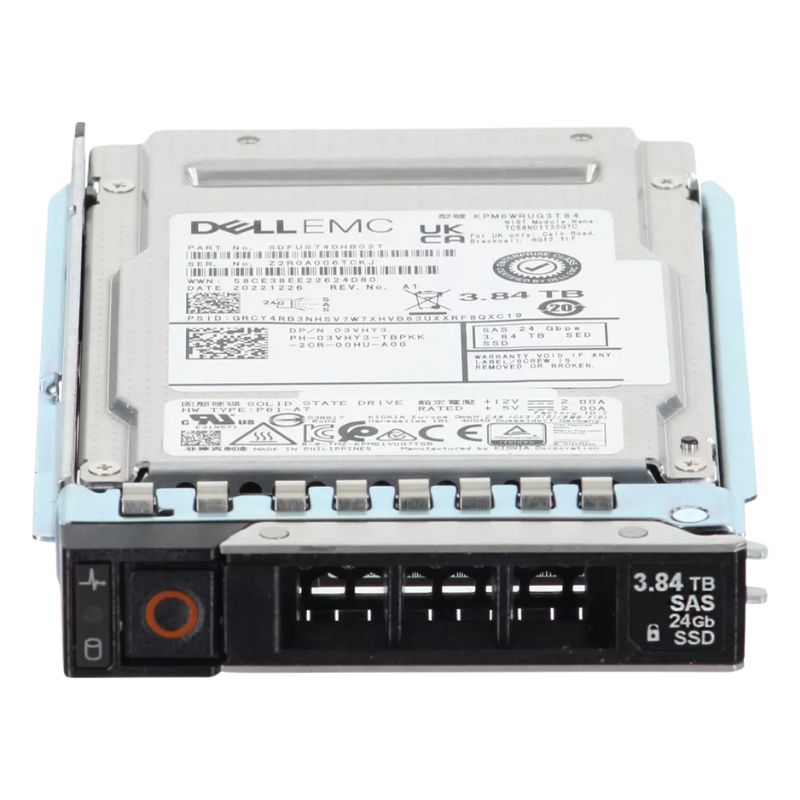
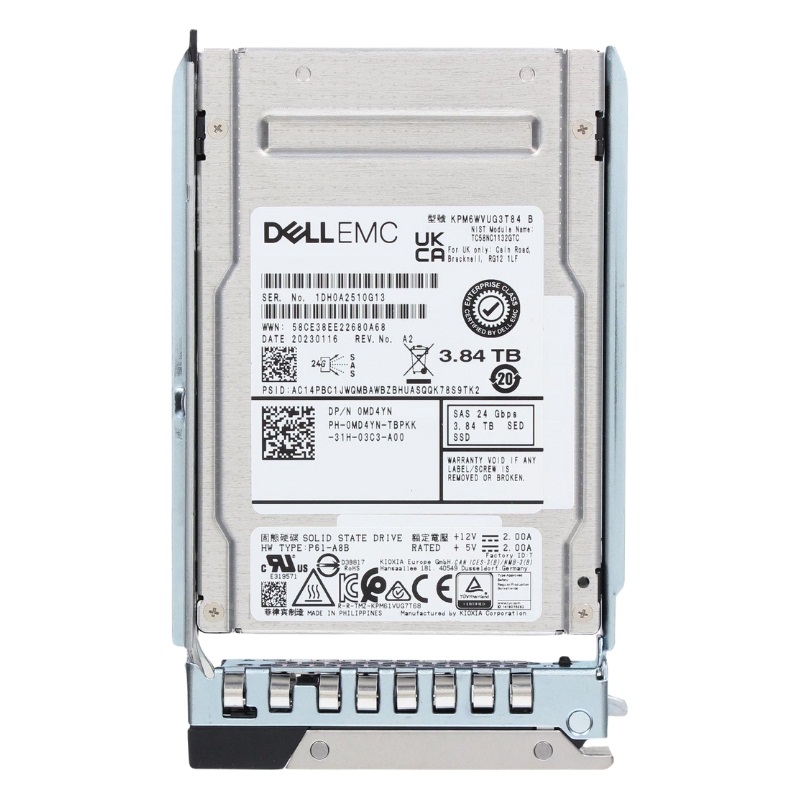
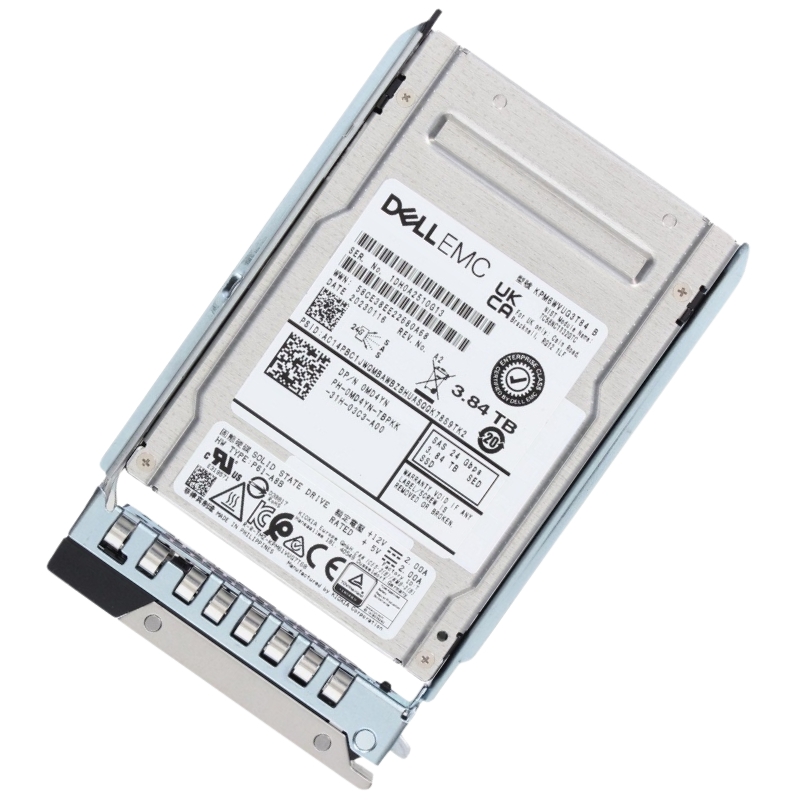
Dell 345-BGKH 3.84TB Self Encrypting Sed SAS 24Gbps Read Intensive 2.5 Inch Enterprise Class Solid State Drive. New Sealed in Box (NIB) with 1 year Warranty
The Dell 345-BGKH 3.84TB Self Encrypting SED SAS 24Gbps drive belongs to a focused category of enterprise-class solid state drives engineered for modern PowerEdge deployments. This category emphasizes secure, high-capacity 2.5-inch SFF drives that combine hardware-based encryption, SAS 24Gbps connectivity, and read-optimized flash media to meet demanding datacenter requirements. Products in this family are purpose-built for Dell EMC PowerEdge generations — commonly deployed across 14G, 15G, and 16G server platforms — where reliability, predictable performance, and data security are not optional. The category centers on read-intensive use cases and mixed transactional workloads where consistent low latency and strong data-at-rest protections are required, while maintaining endurance levels tailored to one drive write per day (1DWPD) and leveraging triple-level cell (TLC) flash tuned for enterprise longevity.
This category description is written with search intent in mind: prospective buyers search for “Dell 345-BGKH”, “3.84TB SED SAS 24Gbps SSD”, “read intensive enterprise SSD”, “1DWPD TLC 2.5-inch SFF”, and “PowerEdge compatible self-encrypting drives.” The category page should rank for long-tail queries like “secure 3.84TB SAS SSD for Dell PowerEdge 14G” and “enterprise read-optimized 24Gbps SAS SED 2.5-inch SSD.” To capture both technical decision makers and procurement teams, content here balances precise technical details with use-case explanations, deployment guidance, and comparisons to adjacent drive types (mixed-use or write-intensive SSDs and HDDs used at tiered storage boundaries).
At the heart of this category is the SAS 24Gbps interface delivered over the standard 2.5-inch small form factor (SFF) housing. This combination ensures backwards compatibility with legacy SAS controllers while enabling higher throughput on modern backplanes. The 24Gbps SAS physical layer and protocol-level optimizations allow multiple lanes of fast, reliable communication designed for multi-path connectivity and enterprise-grade multipathing. The 2.5-inch SFF design supports dense server and storage chassis configurations, making these drives ideal for high-density compute nodes and enterprise storage arrays where space efficiency and hot-plug convenience are essential.
The defining capacity in this SKU class—3.84 terabytes—strikes a balance between raw storage density and predictable flash behavior. Using TLC (triple-level cell) NAND optimized for read intensity, the drives deliver large usable capacity while employing controller-level wear management and over-provisioning strategies to maintain endurance consistent with a 1DWPD rating. The result is a storage medium that is cost-effective on a per-terabyte basis compared to higher-endurance write-intensive media, while still offering the performance and resilience required for read-heavy server workloads such as virtualization boot volumes, content repositories, CDN caches, and reference dataset storage.
Self-encrypting drives in this category implement hardware-based AES encryption at the drive controller level. This ensures all data written to the NAND is encrypted automatically without requiring host CPU cycles or software-based encryption layers. For environments with regulatory or internal encryption requirements—PCI, HIPAA, GDPR, and similar standards—SED eliminates a class of operational risk by protecting data-at-rest even if drives are removed from servers or repurposed. Many models support key management standards and secure erase features, enabling secure decommissioning and provisioning workflows that align with enterprise security policies.
Drives in this category are engineered and tuned for read-dominant access patterns. Controller firmware, flash management algorithms, and internal caching mechanisms prioritize low-latency reads and steady-state throughput under high IOPS mixtures. Typical workload profiles that benefit include read-heavy database replicas, virtualization boot storms, web/application caching, log analytics where sequential reads and small random reads are common, and media streaming applications. Latency consistency—often a primary SLA metric for application owners—is improved through deterministic garbage collection strategies and adaptive read/write queuing inside the drive.
The 1DWPD (one drive write per day) endurance class communicates that the drive can sustain writing its full capacity once each day across its window without compromising reliability. For a 3.84TB drive, this is engineered with realistic host workload assumptions and over-provisioned NAND margins. The 1DWPD target suits infrastructures where reads vastly outweigh writes but where occasional heavy write bursts occur, such as nightly batch jobs, backup windows, or dataset refresh cycles. Proper provisioning planning should account for host-level write amplification and filesystem behavior to ensure the drive achieves its expected service life under production conditions.
Although exact IOPS and bandwidth depend on controller, firmware revisions, and system configuration, enterprise 24Gbps SAS SED TLC drives typically offer high random read IOPS and competitive sequential throughput optimized to the SAS link speed. In real-world deployments, performance scales with queue depth and multi-pathing arrangements; single-threaded latencies remain low while aggregate throughput can be exploited across multiple drives in RAID or software-defined storage pools. Organizations should assess application IO profiles and design RAID or erasure-coded pools that preserve the read-focused strengths of these drives while mitigating rebuild times and correlated failures.
Compatibility across Dell EMC PowerEdge 14th, 15th, and 16th generation servers is a core selling point for this drive category. Drive firmware is often qualified to operate in the backplanes and storage controllers that ship with these server families. This ensures predictable behavior with Dell’s lifecycle controller, Dell OpenManage, and iDRAC-based hardware monitoring features. When selecting these drives for a specific PowerEdge platform, IT teams should verify compatibility lists and firmware versions to take advantage of vendor-validated features such as secure erase, firmware update orchestration, and drive health telemetry integrated into server management frameworks.
The 2.5-inch SFF form factor supports hot-plug serviceability and rapid field replacement without server downtime in many configurations. For environments that demand continuous availability, this enables field-replaceable drive swaps and rapid expansion of capacity. Service teams benefit from standardized trays and carrier mechanisms in Dell PowerEdge chassis, which simplify inventory management and reduce mean time to repair when a drive reaches end-of-life or needs replacement as part of proactive maintenance programs.
One of the most common applications for read-intensive SED SAS drives is as boot and system volumes for virtualized servers. Large-scale virtualization deployments benefit from the drive’s predictable read performance during VM boot storms and application launches. The SED feature provides an additional security layer for images that contain sensitive configuration information or credentials, and the 2.5-inch format fits naturally into dense hyperconverged nodes.
Content repositories that require fast, scalable read access—such as media libraries, software distribution points, and content delivery caches—are ideal targets for this drive category. These environments often involve large datasets that are read frequently but updated infrequently, aligning with the read-optimized profile and 1DWPD endurance. The high capacity of the 3.84TB SKU reduces the number of individual drives required and simplifies indexing and search performance at scale.
Compared to mixed-use and write-intensive SSDs, the read-intensive SED drives trade higher write endurance for lower cost per gigabyte and larger effective capacity. For environments with sustained heavy write patterns—such as transactional databases with high update rates—mixed or write-optimized media may be more appropriate. Conversely, when the majority of IO is read-oriented, the read-optimized drives deliver a better economic balance while still providing enterprise-grade durability and predictable latency.


 Contact Us
 Information
 Catalog
 Solid State Drives (SSD)
 Network Switches
 Hard Disk Drives
 HBA & Controllers
 PC & Servers
 PC & Server Memory
 CPU & Processors
 Network Routers
 Power Supplies
 Tape Drives & Libraries
 Network Devices
 Computer & Network Cables