(7% discount is applied at checkout)
Cart is empty
Your go-to destination for cutting-edge server products
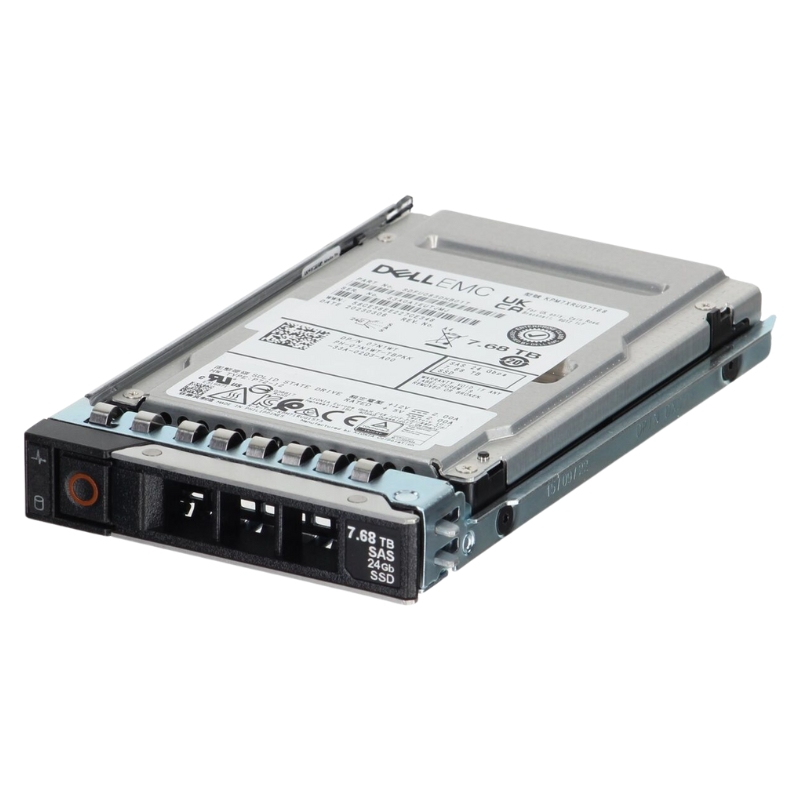


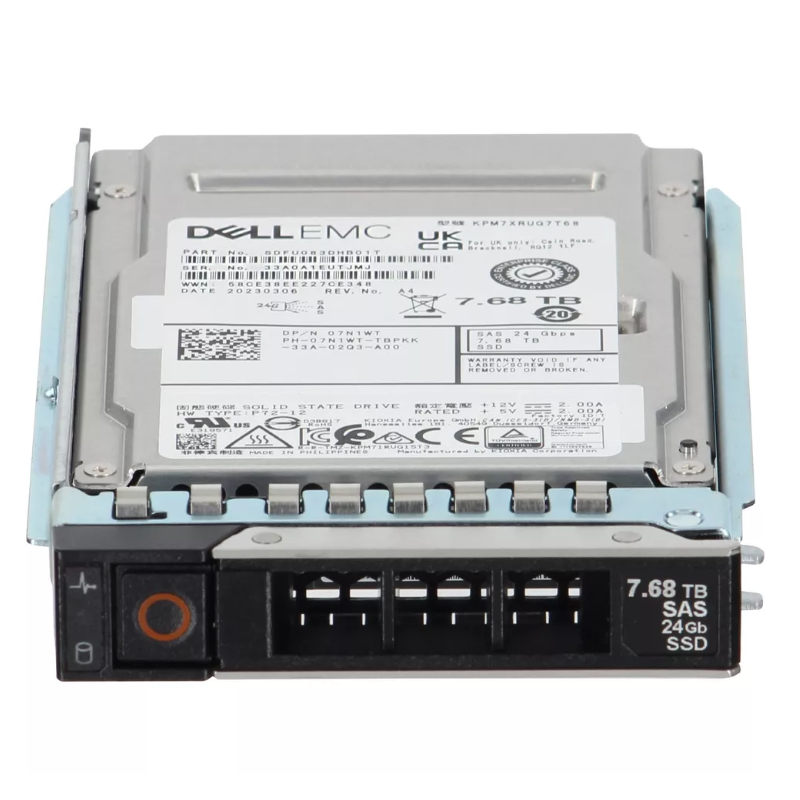
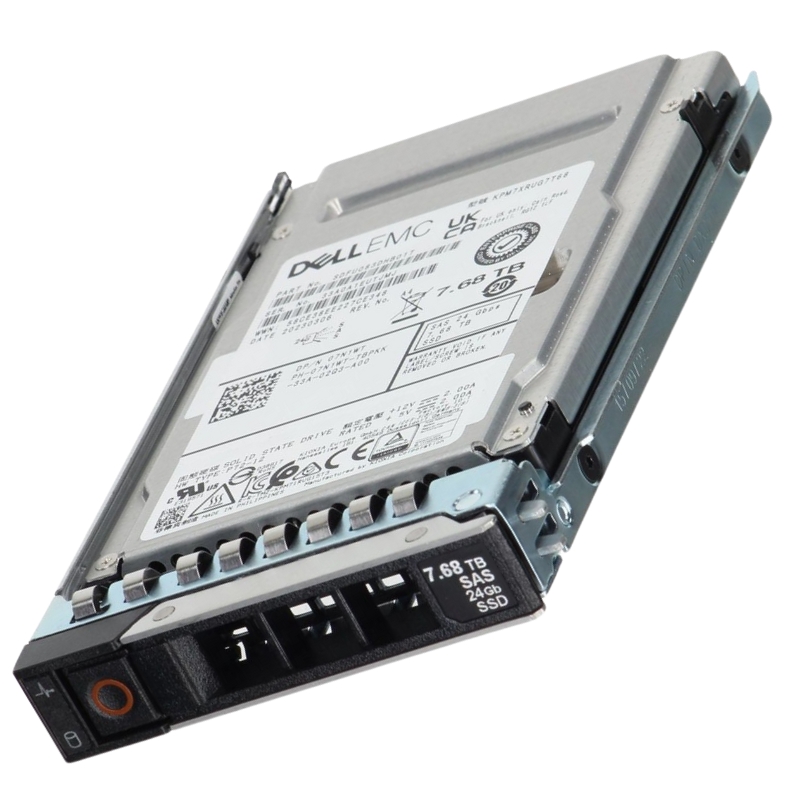
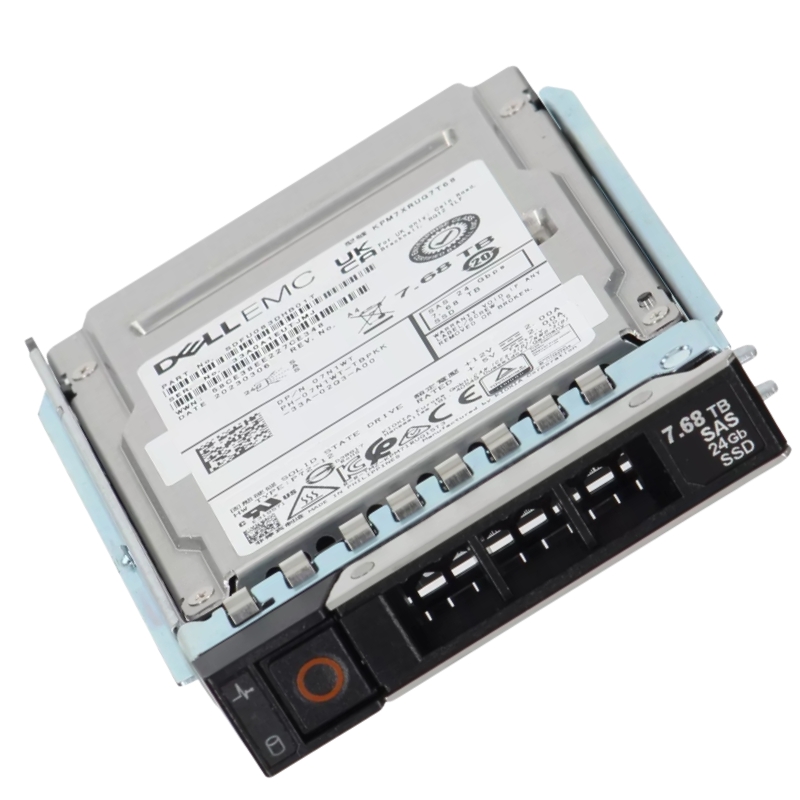
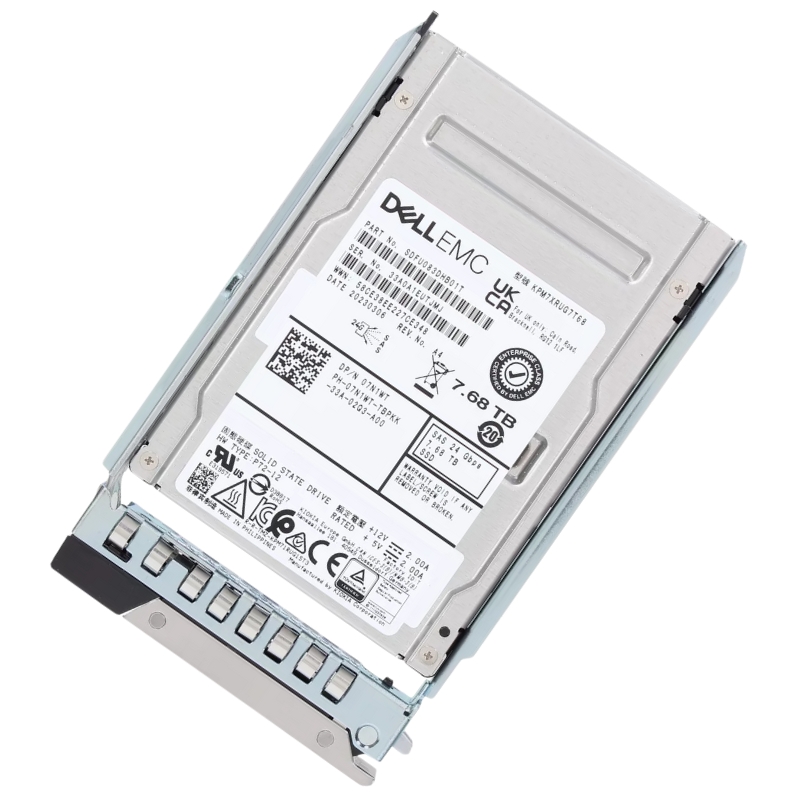
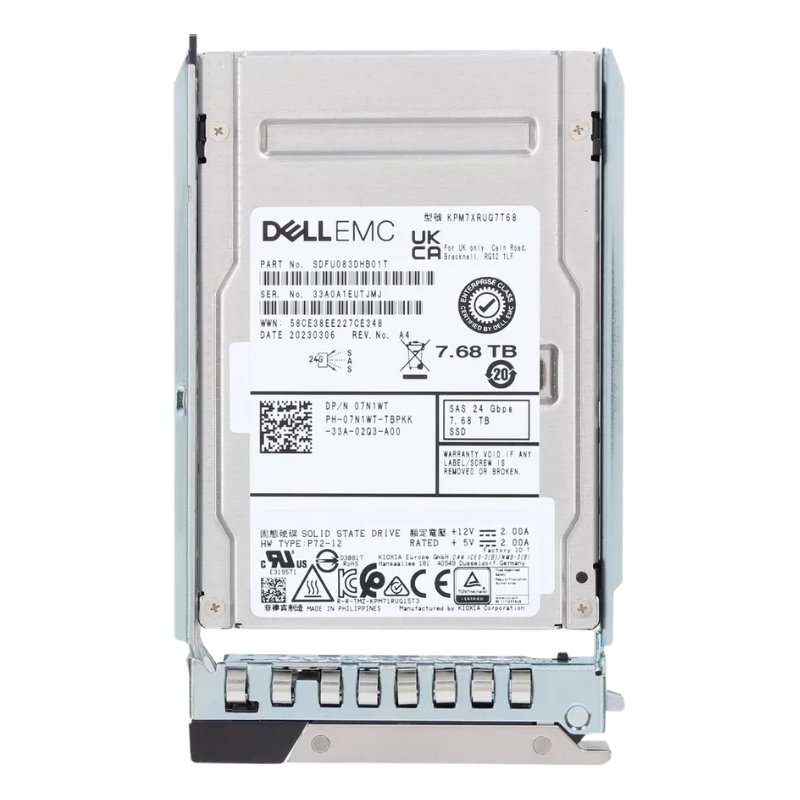
Dell 345-BGKK 7.68TB Self Encrypting Sed SAS 24GBPS Read Intensive 2.5 Inch Enterprise Solid State Drive Poweredge Server. Excellent Refurbished with 1 Year Replacement Warranty
The Dell 345-BGKK is a high-performing enterprise-grade solid state drive designed for Dell EMC 14G, 15G, and 16G PowerEdge servers. Offering advanced self-encrypting technology, robust read-intensive endurance, and hot-swap functionality, this drive ensures reliable storage performance in demanding business environments.
The Dell 345-BGKK is a purpose-built enterprise solid state drive that balances large capacity with data security and drive longevity for read-intensive server workloads. Offered in a 2.5-inch small form factor that fits modern Dell EMC PowerEdge chassis, this drive combines a 7.68 terabyte raw capacity with SAS 24Gb/s connectivity, self-encrypting hardware, and TLC flash media tuned for read-dominant use cases. The result is a storage component designed to deliver predictable, efficient read performance for virtualization, large-scale databases, analytics, and archival hot-tier workloads while providing the encryption, manageability, and fault-tolerance enterprises expect from OEM-validated modules.
At the heart of the 345-BGKK's appeal is its enterprise SAS interface operating at 24 gigabits per second, which provides a stable, multipath-friendly channel between the drive and server backplane. The drive's 2.5-inch SFF footprint and hot-plug capability enable easy integration and replacement in Dell EMC 14th, 15th and 16th generation PowerEdge servers without disrupting clustered services. NAND technology uses triple-level cell (TLC) flash tuned for read-intensive workloads; firmware and over-provisioning are configured to maximize read consistency and extend useful device life under typical read-heavy enterprise patterns. The drive's endurance rating of approximately 1 drive-write-per-day (1 DWPD) places it squarely in the read-intensive segment: optimized for environments where reads significantly outnumber writes but where occasional sustained writes still must be tolerated without compromising reliability.
With 7.68TB of usable capacity in a compact 2.5-inch package, the 345-BGKK offers systems architects an opportunity to increase per-slot storage density while avoiding the power and cooling overhead of larger LFF drives. This density is particularly useful in high-density server designs and blade enclosures where maximizing usable terabytes per chassis improves rack-level storage economics. When deployed across multiple nodes, these high-capacity SFF SSDs reduce the number of servers required for a given working data set, simplifying management and lowering total cost of ownership for read-heavy workloads.
Data privacy and regulatory compliance are central concerns in enterprise deployments, and the 345-BGKK addresses them with on-board SED features. Hardware-based encryption protects data at rest without imposing CPU overhead on host processors, and key management can be integrated with existing enterprise key-management systems or the server's built-in management utilities. Because encryption and decryption are transparently handled by the drive, administrators can enable robust data protection quickly across a large fleet while maintaining straightforward replacement procedures through hot-swap support. Self-encrypting functionality also streamlines secure decommissioning and drive retirement workflows, as cryptographic erasure is far faster and more reliable than multi-pass software wipes for large-capacity devices.
Dell tunes the firmware stack on the 345-BGKK for enterprise reliability — aggressive error correction, wear-leveling strategies, and background maintenance procedures such as garbage collection and thermal management are all calibrated to preserve predictable behavior under heavy server loads. The firmware includes SMART telemetry and vendor-specific health reporting which integrates with Dell OpenManage and related server management tools, enabling proactive replacement planning and minimizing unplanned maintenance windows. Error recovery in the drive is designed to cooperate with RAID and controller retry policies so that transient conditions do not disrupt application availability.
Although targeted at read-intensive workloads, the 345-BGKK offers a balanced performance envelope that supports a wide range of enterprise applications. Firmware optimizations and robust SAS link behavior prioritize consistent random read I/O and low-latency access for database indexes, virtual desktop read patterns, and cache layers. The drive's internal architecture emphasizes stable throughput over occasional peak bursts, making it well-suited to scenarios where predictable servicing of IOPS at low latency matters more than peak sequential write throughput. For mixed-use or write-heavy applications, architects should consider drives with higher DWPD ratings, but for large-scale read-dominant systems the 345-BGKK represents a performant, cost-effective choice.
One of the practical advantages of OEM-branded SSDs like the 345-BGKK is validated compatibility. This drive is intended for seamless integration with Dell EMC PowerEdge servers across 14th, 15th and 16th generation models where 2.5-inch SAS SFF bays and compatible backplanes are present. Because drive behavior and firmware are tuned to the server firmware and RAID controller expectations, customers deploying these drives in supported platforms benefit from tested hot-swap, firmware update, and inventory reporting workflows. Administrators should confirm part numbers and server firmware compatibility when designing a refresh or expansion project, but in validated PowerEdge environments the 345-BGKK minimizes surprises in behavior and manageability.
The 2.5-inch form factor minimizes space while maintaining enterprise-grade cooling and thermal awareness. The drive's thermal profile is tuned for modern server airflows, and on-board sensors report temperature metrics so data center management systems can track and react to anomalous heating events. Because the drive is intended for chassis environments with optimized cooling, it's important to maintain recommended front-to-back airflow and avoid mixing unsupported media types in a single bay that could change the thermal characteristics at the slot level.
Enterprises find the 345-BGKK attractive for a variety of read-centric applications. When used as primary storage for virtual machine image libraries, the drive's fast random read performance improves VM boot storms and reduces latency during peak access. For analytics and reporting platforms, the drive provides large working sets close to compute nodes so that frequent read queries do not suffer from network or cold-storage latencies. Content delivery caches, search indexes, and metadata stores also benefit from the drive's capacity and read optimization, as do tiered storage designs where the 345-BGKK serves as a hot tier ahead of slower archival media.
At rack and pod scale, a consistent deployment of 7.68TB SFF SAS devices simplifies capacity planning and improves predictability for capacity growth models. Architects can map expected growth rates in TB/month to a discrete count of devices and account for redundancy overhead in RAID or erasure-coded systems. The use of OEM drives in homogenous arrays reduces the number of unique firmware combinations operators must manage, which in turn lowers operational risk during firmware rollouts and reduces the chance of unexpected incompatibilities at scale.
The 345-BGKK is engineered to operate cleanly behind enterprise SAS controllers and RAID adapters commonly found in PowerEdge systems. Controller write-back cache policies, battery-backed caching, and global hot-spare strategies all interact with the drive's internal wear-leveling and write-aggregation strategies. When used in RAID groups, the drive's steady-state behavior supports reliable rebuilds and predictable degraded-mode performance. For extreme performance or redundancy tolerance, ensure controllers are configured according to Dell best practices for SSD-backed RAID arrays and that firmware of both drive and controller are maintained at supported levels.
Rated at roughly 1 DWPD, the 345-BGKK is intended to endure workloads that read far more data than they write. This rating provides a useful shorthand when sizing arrays: it indicates the manufacturer-tested sustainable daily write budget for the drive that will help preserve warranty and predictable lifespan. Operationally, administrators should monitor SMART attributes, media wear indicators, and delta write/erase statistics via server management tools to anticipate replacements proactively. Regularly scheduled inventory checks and health dashboards help identify outliers before they become failures, enabling planned maintenance instead of emergency swaps. For critical datasets, administrators may choose to provision spare drives and automate failover to maintain service levels during drive replacement operations.
Firmware is a core component of enterprise storage behavior. Dell publishes validated firmware revisions and update guidelines for OEM-branded drives; administrators should follow vendor guidance for rolling updates, including staging and validating in a test environment prior to wide deployment. Because firmware updates can alter performance, compatibility, or SED behavior, a disciplined update process with backups, logs, and rollback plans is strongly recommended. When possible, utilize vendor management suites to orchestrate updates and track firmware levels across the drive fleet.


 Contact Us
 Information
 Catalog
 Solid State Drives (SSD)
 Network Switches
 Hard Disk Drives
 HBA & Controllers
 PC & Servers
 PC & Server Memory
 CPU & Processors
 Network Routers
 Power Supplies
 Tape Drives & Libraries
 Network Devices
 Computer & Network Cables