(7% discount is applied at checkout)
Cart is empty
Your go-to destination for cutting-edge server products
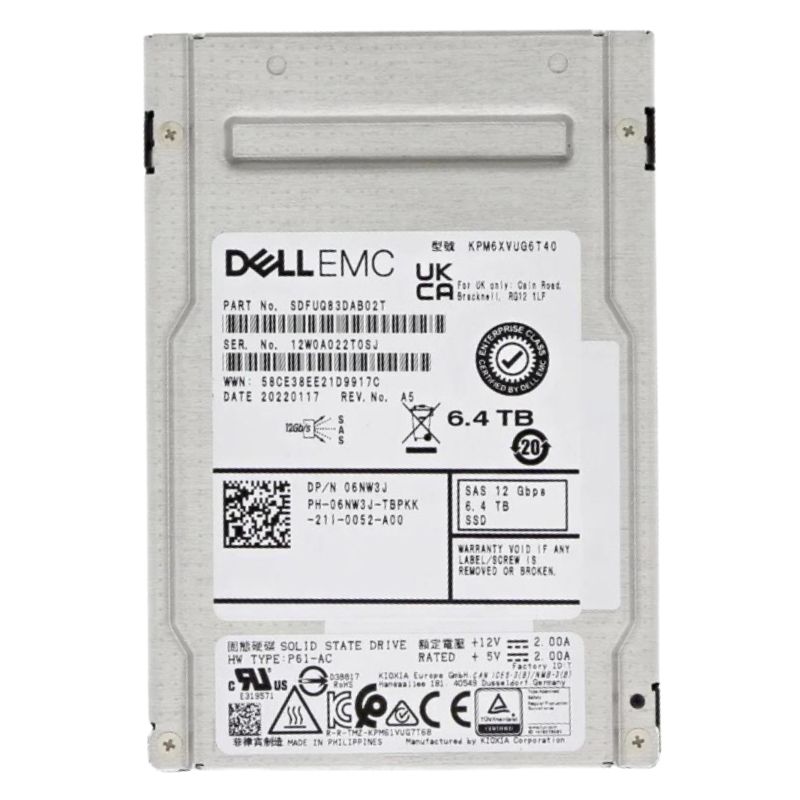


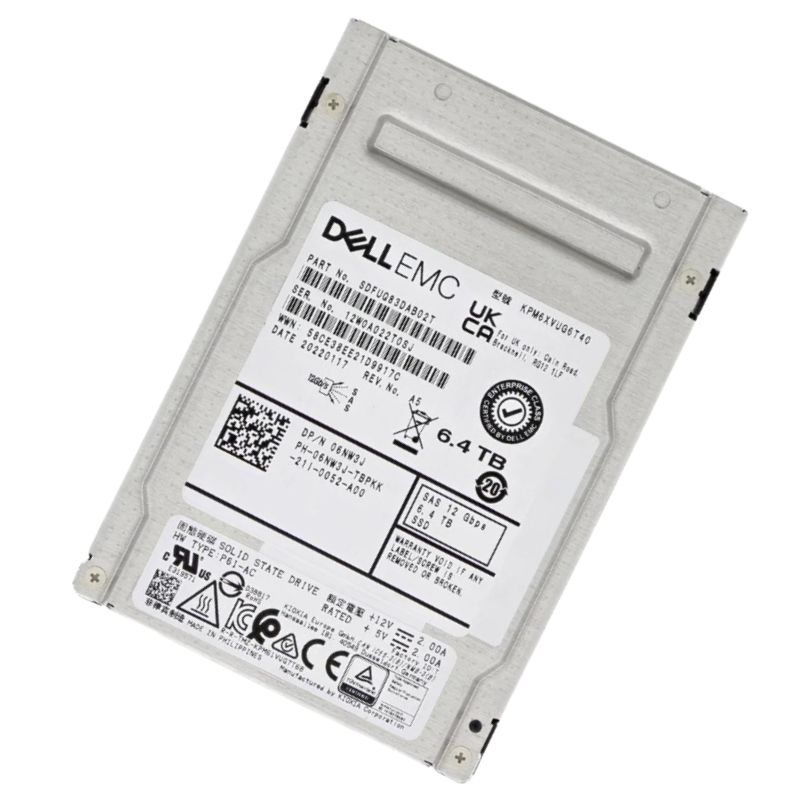
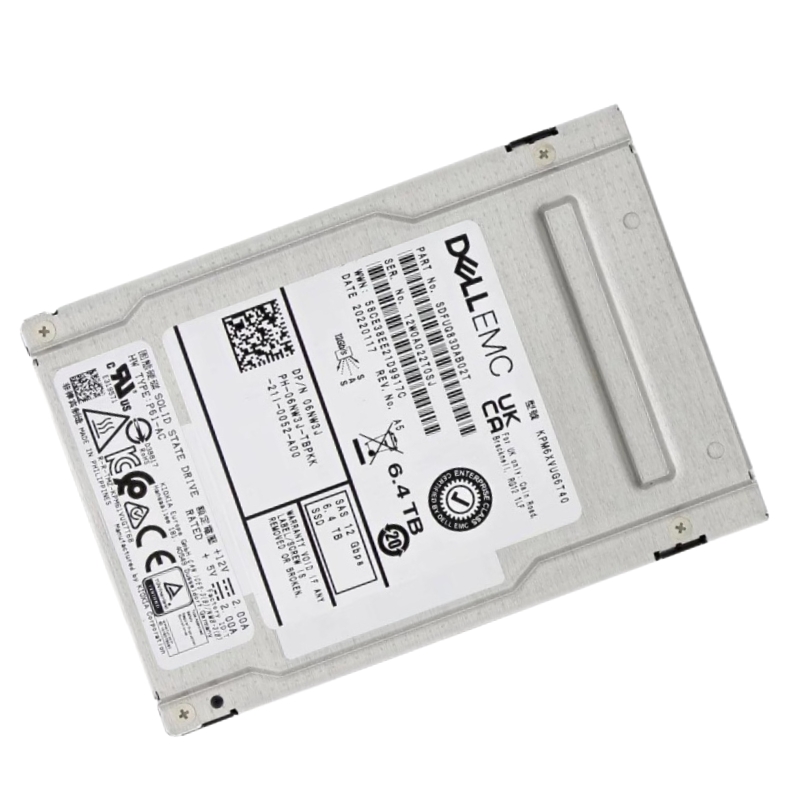
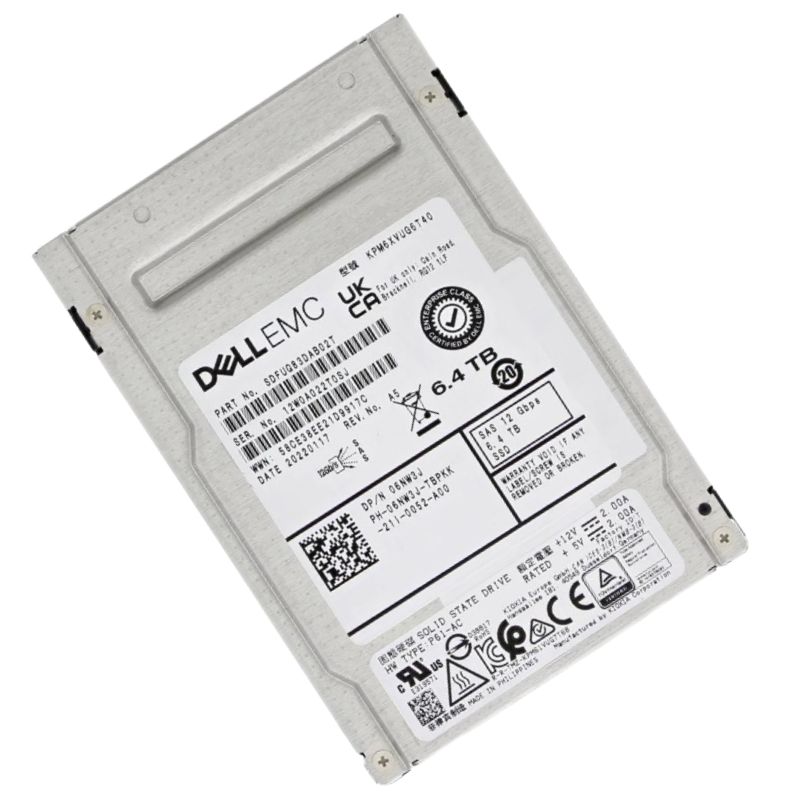
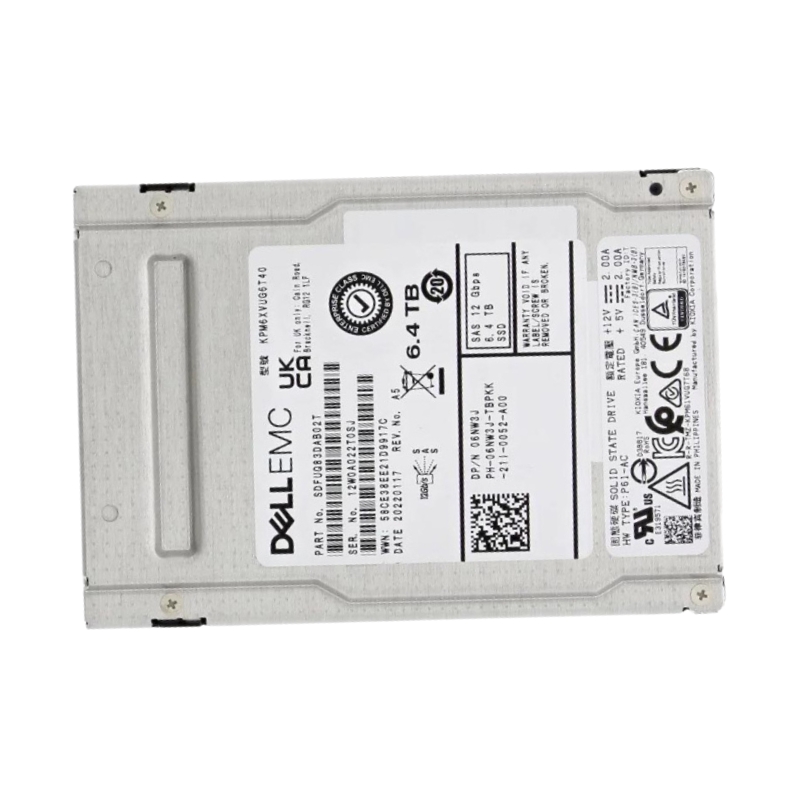
Kioxia SDFUQ83DAB02T 6.4TB SAS 12GBPS Mixed Use 3DWPD TLC 2.5 Inch Hot-Plug Solid State Drive. Excellent Refurbished with 1 year replacement warranty
The Kioxia SDFUQ83DAB02T is a high-performance 2.5-inch solid-state drive engineered for enterprise-grade storage solutions. Designed with 12Gbps SAS interface and Mixed Use TLC (Triple-Level Cell) flash technology, this SSD ensures reliable performance, durability, and flexibility in data-intensive environments.
The category of enterprise 2.5‑inch Serial Attached SCSI (SAS) Solid‑State Drives designed for mixed‑use workloads has emerged as a critical tier in data centre storage architectures. These drives bridge the gap between strictly read‑intensive models and high‑end write‑intensive devices by offering balanced endurance, high capacity and enterprise‑grade connectivity. In this category, a model such as the KIOXIA SDFUQ83DAB02T 6.4 TB Triple‑Level Cell SAS 12 Gb/s Mixed‑Use 3 DWPD Hot‑Pluggable 2.5‑Inch Enterprise SSD exemplifies the sophistication and capability of this class of storage components.
Mixed‑use solid‑state drives are specifically engineered to handle both read‑dominant and moderate write workloads in enterprise settings. They provide sufficient endurance—often rated in Drive‑Writes‑Per‑Day (DWPD) metrics—to support business‑critical applications such as virtualised servers, mid‑tier databases, container platforms and virtual machine farms. For instance, many enterprise SAS mixed‑use drives are specified at around 3 DWPD to guarantee a predictable service life under sustained workload.
The use of a SAS interface—in this case 12 Gb/s—provides enterprise‑class performance, dual‑port capability (in many designs) and broad compatibility with server backplanes and storage arrays. The 2.5‑inch hot‑pluggable form factor substantially increases drive density in rack‑mounted servers and storage enclosures, while enabling system administrators to swap drives without downtime. Together, these physical and interface characteristics make the mixed‑use SAS SSD category an ideal choice for environments where serviceability, uptime and performance matter equally.
Capacity is a major differentiator in the mixed‑use SAS SSD category. With models now reaching 6.4 TB and beyond, organisations can consolidate storage tiers and minimise upfront drive count. Endurance remains central: in mixed‑use categories typical ratings of approximately 3 DWPD suggest the drive can sustain writing its full capacity three times per day over the warranty period or service life. Flash memory technology, especially Triple‑Level Cell (TLC) NAND, allows manufacturers to optimise for cost per gigabyte while still retaining acceptable endurance and performance. In the enterprise class, TLC is paired with robust controller architecture, over‑provisioning and firmware algorithms to maintain reliability under heavy operation.
The SAS 12 Gb/s interface setting is indicative of the class’s readiness for heavy enterprise I/O. It allows high sequential and random throughput, which is essential for virtual machine boot storms, database query bursts and high‑volume logging, while also supporting dual‑port redundancy in many server environments. Hot‑plug support, enabled via 2.5‑inch standard trays, ensures operational continuity: drives can be removed and replaced without shutting down the host, a critical feature for 24 x 7 data‑centre operations.
In environments that host many virtual machines, containers or dynamic application workloads, the mixed‑use SAS SSD category is a core building block. The high capacity allows for many VMs to share a single drive or a pool of drives, while the endurance ensures consistent performance even during intense operations like migrations, snapshots or backups. The hot‑plug and dense form factor enable these drives to fit into high‑density compute racks and be replaced easily without service interruption.
Databases that handle online transaction processing (OLTP), large‑scale analytics or dynamic indexing workloads must balance fast reads and frequent writes. The 6.4 TB mixed‑use SAS SSD fits within a tier‑1 or tier‑2 storage array where it can serve as a high‑performance pool ahead of spinning disk or slower flash tiers. Its endurance supports consistent write activity and its interface ensures latency remains low. The hot‑swap environment means individual drives can be replaced during scheduled maintenance windows while the rest of the system remains live.
Many storage architects deploy a mixed‑use SAS SSD as a flash‑cache layer in front of larger, slower spinning drives, or as part of an all‑flash array where cost efficiency and capacity scalability are required. Given the drive’s 2.5‑inch format, hot‑plug ability and SAS interface, integration into existing server or storage systems is relatively straightforward. These drives enable performance tiers that respond quickly to active workloads while preserving data‑centre density and serviceability.
When deploying mixed‑use SAS SSDs in enterprise storage architectures, administrators must consider thermal design, power budget, firmware updates and monitoring. High‑capacity drives often generate more heat under sustained load and may require increased airflow or modified rack cooling strategies. Monitoring SMART metrics, wear‑levelling data and error counts is essential to ensure longevity and predict replacement timing. The hot‑plug capability simplifies service but also mandates that the storage arrays or servers are configured with appropriate redundancy and path fail‑over support. Ensuring firmware is current can close gaps in reliability, performance or data‑integrity features.
Selecting the appropriate drive from this category requires matching workload profile, capacity requirement and durability expectations. For organisations that primarily perform reads with occasional writes, a mixed‑use SAS SSD offers more endurance than a read‑intensive model, without the higher cost of write‑intensive drives. One must evaluate expected daily write volumes, random I/O requirements, interface compatibility (SAS 12 Gb/s or SAS 24 Gb/s), form‑factor constraints (2.5‑inch bays, tray height) and hot‑plug ease. Deploying a 6.4 TB model in a 2.5‑inch, hot‑swappable format with SAS 12 Gb/s connectivity offers a compelling blend of capacity, serviceability and cost‑effectiveness for modern enterprise storage environments.
The enterprise SSD category evolves along a spectrum: read‑intensive drives minimise cost per gigabyte and prioritise large capacity with low write endurance; mixed‑use drives create a balance, with moderate write endurance and high capacity; write‑intensive drives push maximum endurance for heavy‑update workloads but at higher cost. The mixed‑use SAS SSD category offers the ideal compromise for many organisations, delivering high capacity and moderate write endurance at a competitive price point. Evidence from industry sources highlights that mixed‑use drives are often rated around 3 DWPD.
As storage demands increase, interface speeds have grown from earlier SAS generations (6 Gb/s) to SAS 12 Gb/s, SAS 24 Gb/s and beyond. Many current mixed‑use enterprise drives still use SAS 12 Gb/s for compatibility with a large installed base of enterprise servers. The 2.5‑inch form factor remains dominant for its density and hot‑plug capability. Some drives add 15 mm z‑height to accommodate larger NAND arrays. The category continues to evolve with higher layer count TLC, 3D NAND and enhanced error‑correction methodologies.
Endurance in this category is expressed typically in DWPD or total bytes written (TBW). For mixed‑use SAS SSDs, 3 DWPD is a common point that ensures the drive can sustain moderate write workloads while also delivering high capacity and latency performance. Detailed technical documentation for enterprise models frequently quotes hundreds of thousands of hours of Mean Time To Failure (MTTF) or similar reliability metrics. Organisations evaluating drives in this category may also examine features such as power‑loss protection, end‑to‑end data path integrity, encryption options or hot‑spare support as part of lifecycle risk management.
Ensuring the host system supports the SAS interface speed (12 Gb/s or higher) is fundamental. The backplane must allow 2.5‑inch hot‑plug drives and the controller must support the required throughput and queue depth. Because high‑capacity enterprise SSDs operate at high speeds, the chassis thermal design must be capable of sustaining proper airflow over the 2.5‑inch drive bays. Rack‑mounted servers or storage shelves should provide consistent airflow, avoid obstruction of vents and support firmware‑driven cooling policies. Failure to match thermal and power requirements can lead to increased latency, performance throttling or reduced drive lifespan.


 Contact Us
 Information
 Catalog
 Solid State Drives (SSD)
 Network Switches
 Hard Disk Drives
 HBA & Controllers
 PC & Servers
 PC & Server Memory
 CPU & Processors
 Network Routers
 Power Supplies
 Tape Drives & Libraries
 Network Devices
 Computer & Network Cables