(7% discount is applied at checkout)
Cart is empty
Your go-to destination for cutting-edge server products
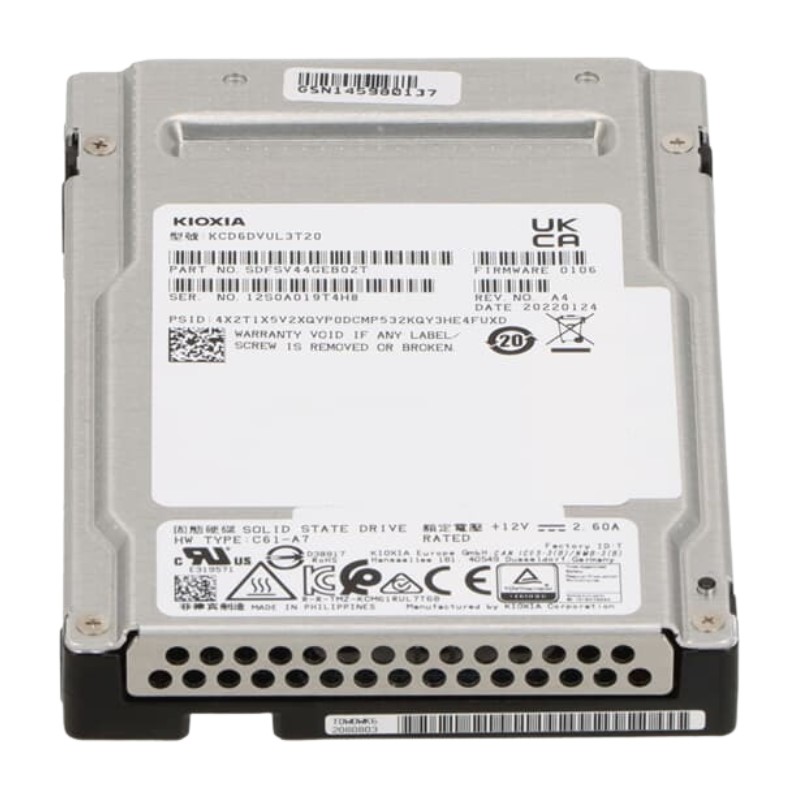


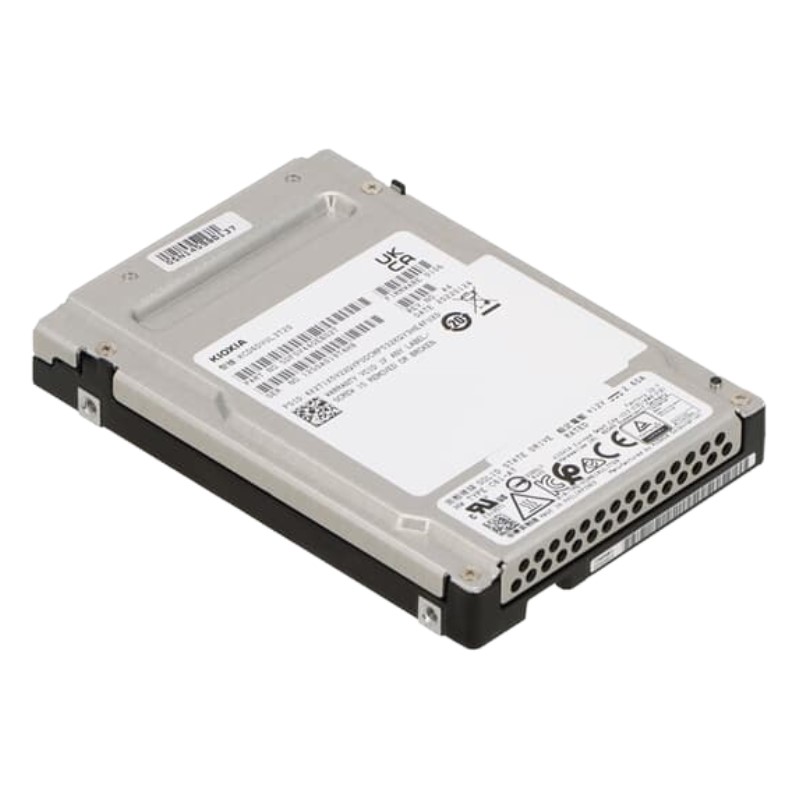
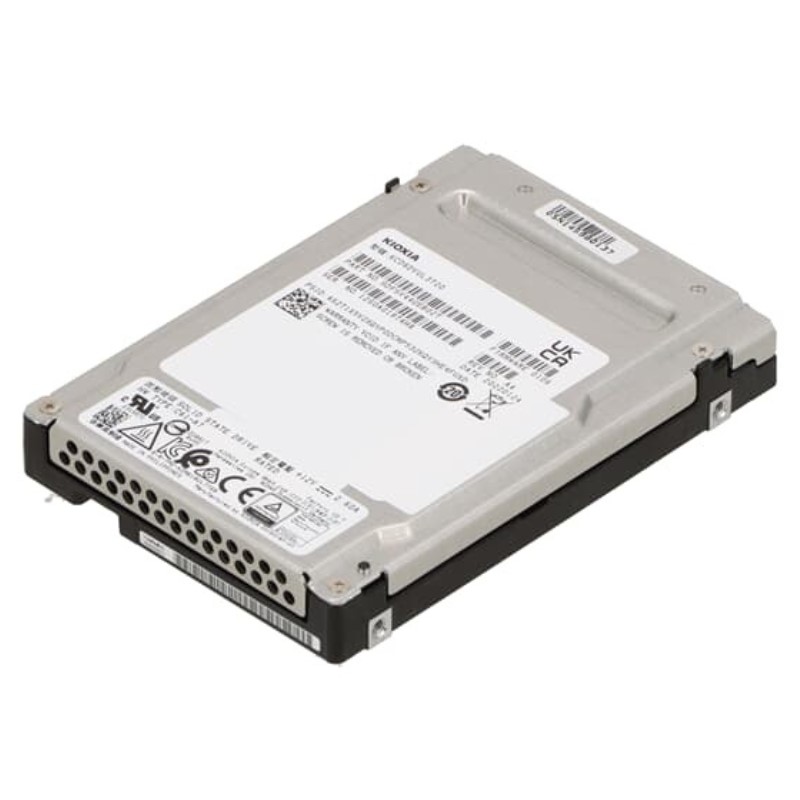
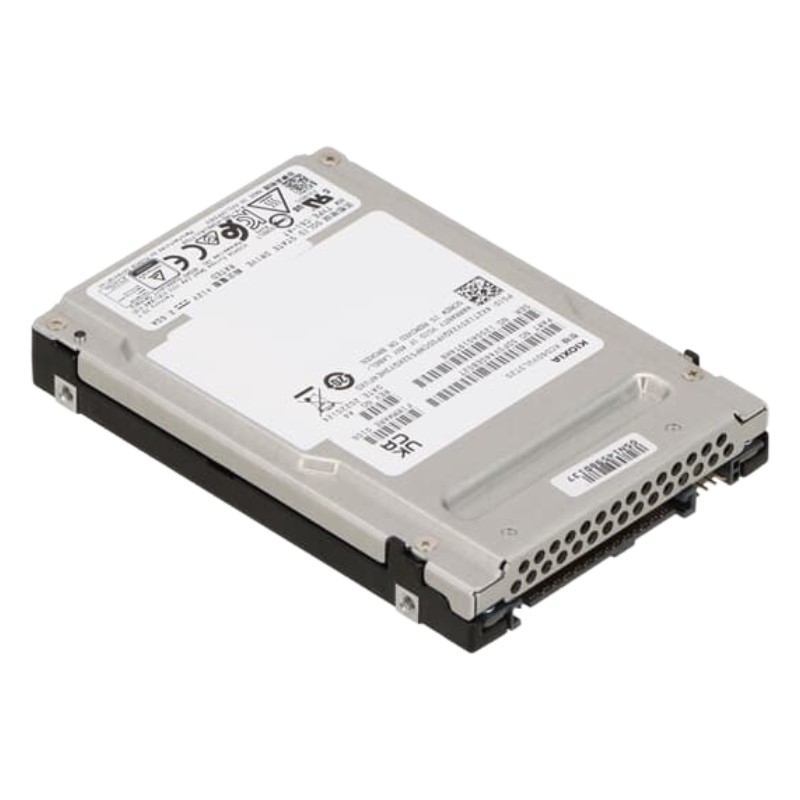
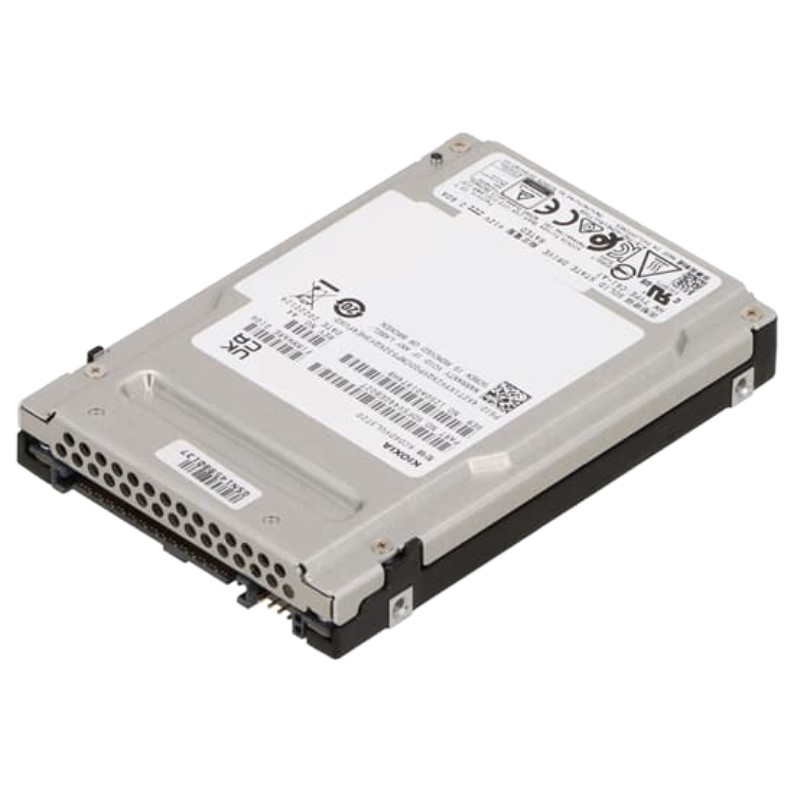
Kioxia SDFUY85DHB01T 1.6TB SAS 24GBPS Pm7-v Series Mixed Use Bics Flash TLC 2.5 Inch Enterprise Internal Solid State Drive. New Sealed in Box (NIB) with 3 years Warranty - Dell Version
| SKU/MPN | Warranty | Price | Condition | You save |
|---|---|---|---|---|
| SDFUY85DHB01T | 1 Year Warranty | $1,799.00 | New Sealed in Box (NIB) | You save: $629.65 (26%) |
| SDFUY85DHB01T | 1 Year Warranty | $940.00 | Excellent Refurbished | You save: $329.00 (26%) |
The Kioxia SDFUY85DHB01T is a high-performance 1.6TB solid-state drive tailored for enterprise applications. Designed for mixed-use workloads, this SSD utilizes advanced BiCS Flash TLC technology and offers blazing-fast data transfer speeds over a SAS 24Gbps interface.
The enterprise solid state drive (SSD) category addresses more rigorous demands than typical consumer drives. These drives are engineered for 24×7 operation, high endurance and consistent performance under heavy workloads. Within this broader category, the mixed‑use segment bridges the gap between read‑intensive and high‑endurance write‑heavy enterprise drives. The PM7‑V family from KIOXIA exemplifies that middle ground by providing substantial write endurance while remaining optimized for workloads typical of data warehousing, web services and streaming media. :contentReference[oaicite:2]{index=2}
In this classification, the SDFUY85DHB01T variant offers a 1.6 TB capacity, enabling organisations to deploy a 2.5‑inch (15 mm) SAS form‑factor SSD with enterprise‑grade characteristics including a 3 DWPD (drive writes per day) endurance rating. :contentReference[oaicite:3]{index=3}
As data centre environments require both throughput and reliability, this mixed‑use category sits between pure read‑intensive (low DWPD) drives and ultra‑high endurance drives (high DWPD). It offers a balanced proposition: capacity, performance and durability without the cost premium of the highest endurance tiers.
Drives in this class adopt the SAS 24 Gbps interface (also known as SAS‑4) combined with a 2.5‑inch (15 mm) form factor. For example, the PM7‑V series supports single‑ or dual‑port SAS‑24G, which enables high throughput and enterprise connectivity with legacy SAS infrastructure. :contentReference[oaicite:4]{index=4} The drive’s 2.5‑inch footprint is intended for standard server bays, making deployment in blade servers, tower servers or rack‑mount arrays straightforward.
The PM7‑V family uses BiCS FLASH™ 3D TLC memory, employing 112‑layer stacking technology to achieve high densities and reliability. :contentReference[oaicite:5]{index=5} The mixed‐use classification is defined by an endurance of 3 DWPD for five years in this series, meaning that the drive can endure writes equivalent to its full capacity three times per day over its warranty period with 100% random write workload. :contentReference[oaicite:6]{index=6} These characteristics lend the category the ability to support demanding enterprise workloads while controlling cost.
Drives in this mixed‐use segment offer both high sequential throughput and high random I/O performance. For the SDFUY85DHB01T and related PM7‑V drives, sustained sequential read speeds reach up to approximately 4,200 MB/s (for 128 KiB transfers) and sustained sequential writes up to around 3,400 MB/s for the 1.6 TB model. :contentReference[oaicite:7]{index=7} Random I/O performance is impressive: up to 720,000 IOPS for 4 KiB random reads and up to 320,000 IOPS for 4 KiB random writes (for the 1.6 TB variant). :contentReference[oaicite:8]{index=8} These metrics illustrate why the mixed‑use category is instrumental in modern enterprise storage infrastructure where both latency‑sensitive small‑block I/O and large sequential transfers are required.
Reliability in this class includes a mean time to failure (MTTF) of up to 2.5 million hours for the PM7‑V family. :contentReference[oaicite:9]{index=9} Additional enterprise features include power‑loss protection (PLP), end‑to‑end data protection including T10 Data Integrity Field (DIF) support, self‑encrypting drive (SED) options, FIPS compliant SED configurations and other advanced security features. :contentReference[oaicite:10]{index=10} These drives qualify for five‑year limited warranties, aligning with typical enterprise lifecycle and support expectations.
In large scale analytics environments the storage system must service a mix of sequential scanning and random access queries. Drives in the mixed‑use category such as the PM7‑V series excel at sequential throughput while maintaining strong random I/O, delivering balanced performance. The 1.6 TB capacity of the SDFUY85DHB01T supports moderately sized data sets while offering the endurance to handle repeated writes common in data transformations and indexing.
Web server back‑ends and transactional applications demand consistent latency under mixed read/write loads. The mixed‑use class is optimized for such real‑world operational loads rather than purely read‑intensive or purely write‑intensive extremes. With up to 720 K IOPS random reads, the PM7‑V drives offer robust responsiveness in multi‑tenant or high‑concurrency environments. :contentReference[oaicite:11]{index=11} The 3 DWPD endurance rating allows sustained mixed workloads without sacrificing lifetime reliability.
In environments where multiple virtual machines or containers share storage, the workload profile becomes highly mixed: periodic large sequential transfers, random I/O bursts, and significant metadata writes. Mixed‑use enterprise SSDs fill this niche. The SDFUY85DHB01T model offers that flexibility by combining enterprise‑grade endurance, SAS interface compatibility, capacity and performance for consolidated server platforms.
The broader enterprise SSD market segments into read‑intensive (e.g., 1 DWPD), mixed‑use (e.g., 3 DWPD) and heavy‑use/high‑endurance (e.g., 10 DWPD+) categories. The mixed‑use subcategory therefore stands apart by offering a middle ground with features and cost‑efficiency tailored to volumes of moderate writes but heavy mixed operations.
Within the PM7‑V family, capacities span from 1.6 TB to 12.8 TB. :contentReference[oaicite:13]{index=13} The 1.6 TB base tier provides a cost‑effective entry into the series, while higher tiers support larger workloads or data sets. This scalability is important when evaluating mixed‑use storage across different deployment sizes. The subcategory therefore appeals both to smaller server appliances and large enterprise rack‑scale systems.
The mixed‑use category typically uses SAS‑24G (SAS‑4) in dual‑port mode for high availability and redundancy. The PM7‑V series supports both single and dual port configurations, offering flexibility in connectivity and failover architecture. :contentReference[oaicite:14]{index=14} Dual‑port capability is especially relevant in enterprise storage arrays where path redundancy is required for mission‑critical workloads.
The mixed‑use subcategory is distinguished by endurance ratings around 3 DWPD, which is higher than read‑intensive but lower than ultra‑endurance models. The 3 DWPD rating for the PM7‑V series positions it to manage mixed read/write workloads effectively over a typical five‑year service lifetime. :contentReference[oaicite:15]{index=15} Endurance ratings affect lifetime cost of ownership, making this subcategory a strategic choice for organisations balancing performance, durability and cost.
Mixed‑use enterprise SSDs often include advanced security features as standard. The PM7‑V series offers sanitize instant erase (SIE), self‑encrypting drive (SED) options, FIPS certified models and full end‑to‐end data protection including PLP and T10 DIF. :contentReference[oaicite:16]{index=16} These features make the mixed‑use category viable for regulated industries, governmental deployments and enterprise environments with strict data integrity requirements.
Drives in the mixed‑use category must meet industrial operating environments. The PM7‑V series specifies operating temperatures from 0 °C to 70 °C and non‑operating from –40 °C to 80 °C. Vibration tolerance of 21.27 m/s² (2.17 Grms) and shock tolerance of 9.8 km/s² (1 000 G) underscore the durability of these enterprise‑grade drives. :contentReference[oaicite:17]{index=17} The mechanical dimensions (69.85 mm width × up to 100.45 mm length × 15.0 mm thickness) and weight (around 130 g) make the drive compatible with typical 2.5‑inch hot‑swap trays and server bays. :contentReference[oaicite:18]{index=18}
Adequate airflow and proper thermal design in server chassis help maintain sustained performance and reliability in mixed‑use SSD deployments.
When deploying drives from this category into existing storage arrays or SAN/NAS deployments, administrators must verify SAS controller compatibility with 24 Gbps SAS links, dual‑port support if required, and form factor clearance. The mixed‑use drives are optimised for migration from legacy 12 Gbps SAS systems, leveraging higher bandwidth while maintaining backward compatibility. Integration with RAID controllers, HBA cards or storage appliances should consider firmware, vendor‑certification and compatibility with SED or SIE models when used in secure or multi‑tenant environments.
Mixed‑use enterprise SSDs aim to deliver a balance of performance and power efficiency. For the PM7‑V series, typical ready power consumption is approximately 5 W. :contentReference[oaicite:20]{index=20} In large‑scale deployments, cumulative power savings and thermal reduction make the mixed‑use category attractive compared with older spinning‑disk or lower‑specification SSD alternatives. Proper system ventilation and power budget modelling are critical during rack deployment.
The 1.6 TB capacity level in this category represents a foundational tier with strong value. With sequential read performance up to 4,200 MB/s, sequential write approaching 3,400 MB/s, random read IOPS up to 720K and random write IOPS up to 320K, this model offers a highly capable option for mixed‑workload server environments. :contentReference[oaicite:21]{index=21}
The endurance rating of 3 DWPD ensures suitability for sustained write‑intensive phases while preserving reliability and data integrity. This makes the 1.6 TB mixed‑use drive a compelling selection for mid‑tier enterprise servers, multi‑tenant virtualised host systems and data‑heavy nodes within larger storage arrays.
The mixed‑use category supports scalability both in capacity and performance. Higher tiers within the PM7‑V family scale to 12.8 TB, allowing growth without changing drive architecture or interface. The 24 Gbps SAS interface ensures the drives remain relevant in next‑generation server and storage platforms. This future‑proofing is key for organisations planning consolidation, refresh cycles or growth in mixed‑workload demands.
For optimal deployment of mixed‑use enterprise SSDs, adherence to best practices is advised. Ensure that SAS backplanes and controllers support the 24 Gbps SAS standard and dual‑port operation if required. Configure firmware to exploit power‑loss protection and end‑to‑end data integrity features. Monitor drive health, utilization and endurance metrics as part of storage operations. Consider mixed‑use drives for tiers that combine performance and capacity rather than solely read‑ or write‑intensive tasks.
It is helpful to contrast the mixed‑use category with neighbouring segments. Read‑intensive drives typically offer 1 DWPD or less, emphasising high read throughput and latency‑sensitive reads, but limited write endurance. In contrast, heavy‑use/high‑endurance drives might offer 10 DWPD or more, and are optimized for very heavy writes such as logging or caching applications. The mixed‑use category, such as embodied by the PM7‑V family, occupies the middle ground and balances features accordingly. :contentReference[oaicite:22]{index=22}
Choosing the right category therefore depends on workload profile: if writes dominate, heavy‑use may be required; if reads dominate with minimal writes, read‑intensive may suffice. For mixed workloads — reads, writes, sequential and random — the mixed‑use drives provide the most efficient solution.
When configuring storage for server applications, one must assess the ratio of read to write, sequential to random, and latency sensitivity. Mixed‑use drives like the 1.6 TB SDFUY85DHB01T perform well across a broad spectrum. They support large sequential transfers, strong random I/O and the endurance to sustain daily write workloads. For example, virtualised environments with thousands of small random operations combined with periodic large backups fit perfectly into this category. The drive’s features such as PLP and data‑integrity protection further enhance suitability in such environments.
Mixed‑use enterprise SSDs often incorporate security features mandated by enterprise and government deployments: self‑encryption, FIPS compliance, sanitize instant erase, and full end‑to‑end data protection. The PM7‑V series includes SED and FIPS SED options, supporting secure multi‑tenant or regulated cloud services. :contentReference[oaicite:23]{index=23} This makes the mixed‑use category a viable choice in environments where data privacy, regulatory adherence and lifecycle sanitization are required.


 Contact Us
 Information
 Catalog
 Solid State Drives (SSD)
 Network Switches
 Hard Disk Drives
 HBA & Controllers
 PC & Servers
 PC & Server Memory
 CPU & Processors
 Network Routers
 Power Supplies
 Tape Drives & Libraries
 Network Devices
 Computer & Network Cables