(7% discount is applied at checkout)
Cart is empty
Your go-to destination for cutting-edge server products
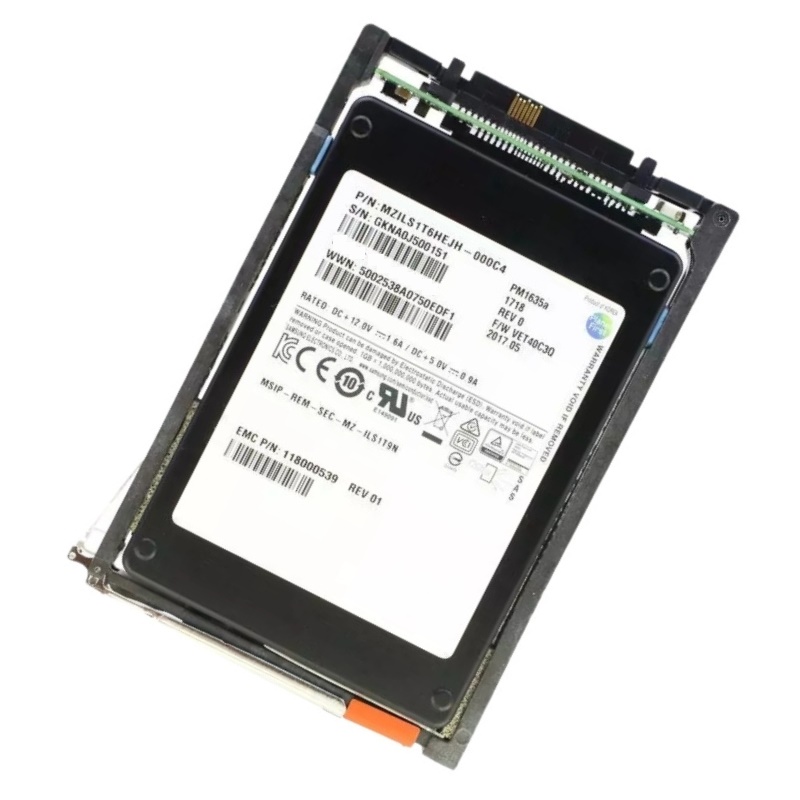


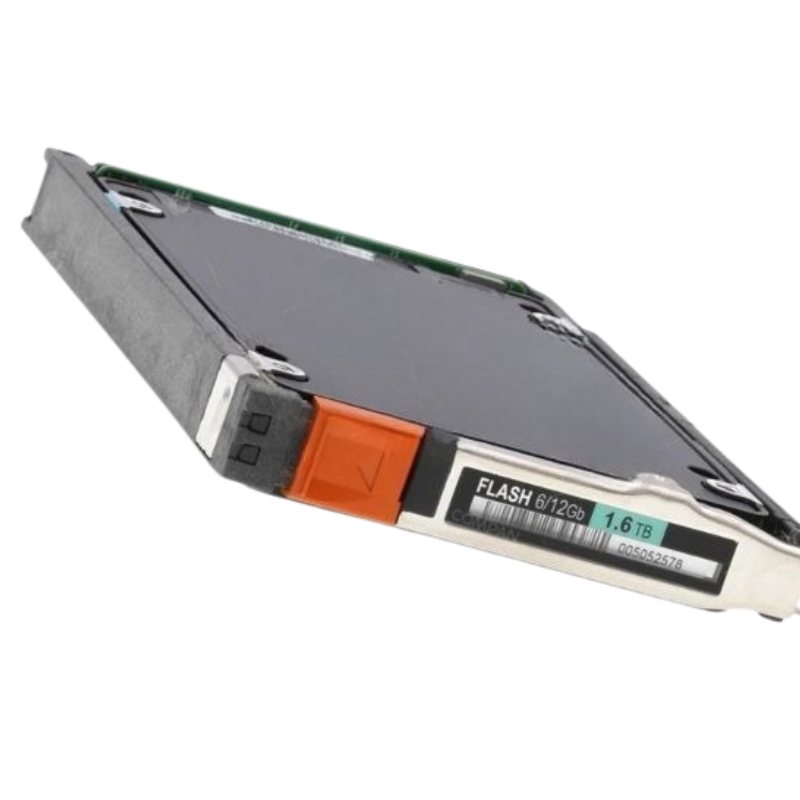
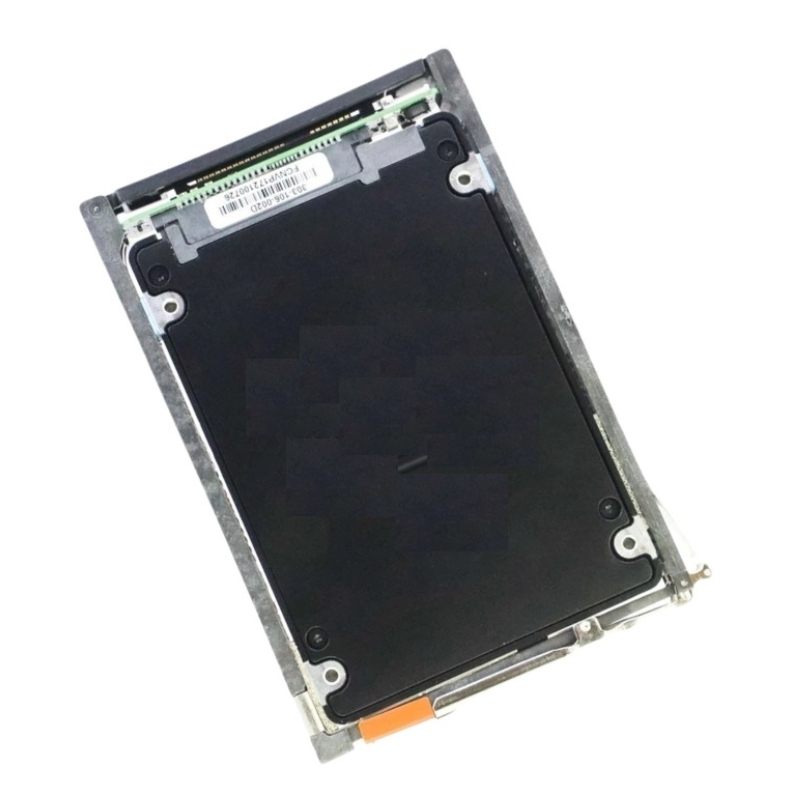
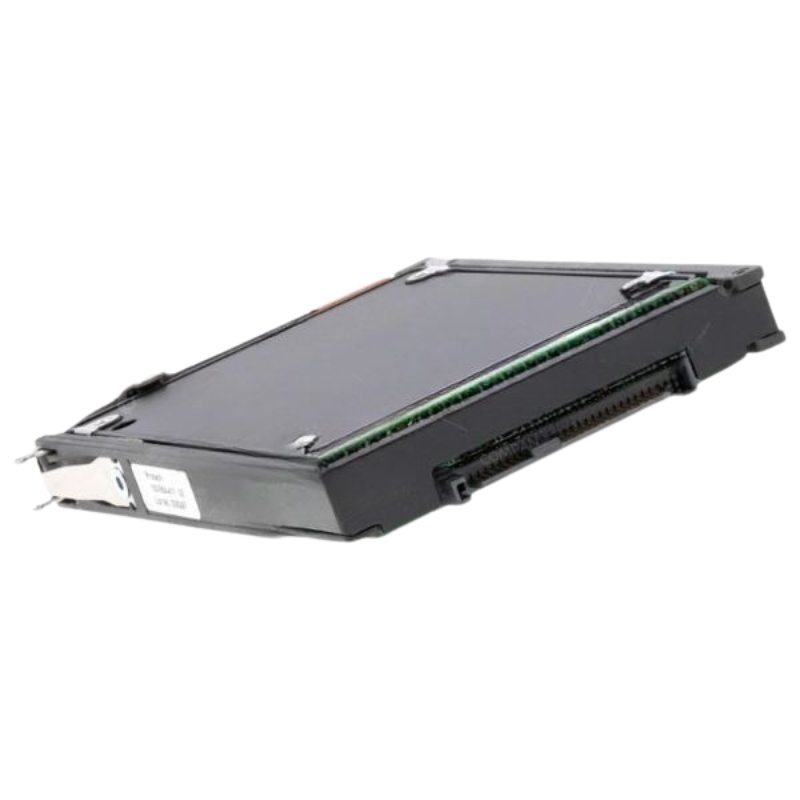
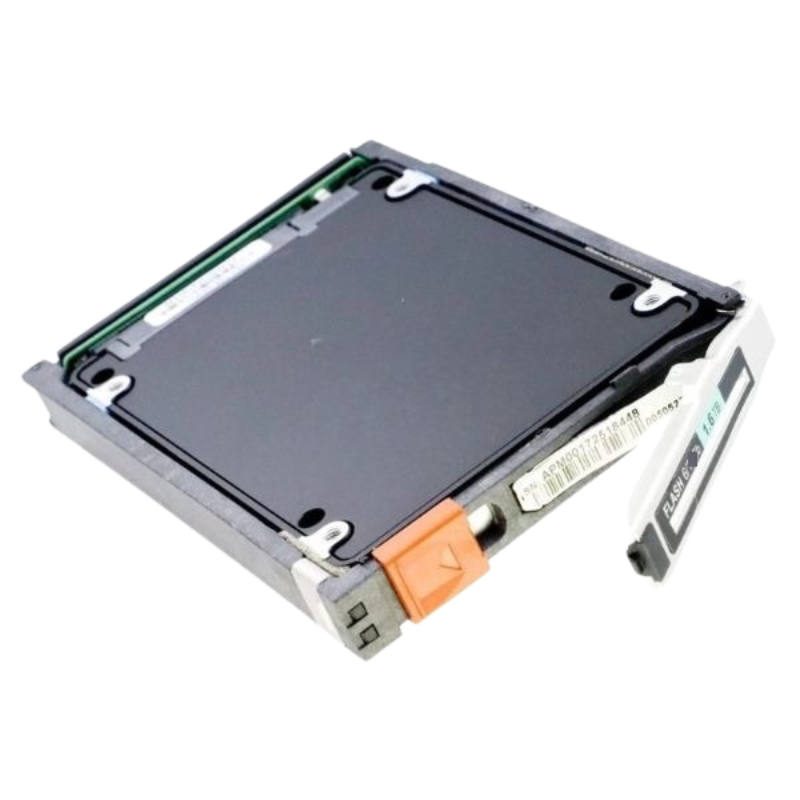
EMC 005051159 1.6TB SAS 6GBPS 3.5inch Multi-Level Cell Internal Solid State Drive. New (System) Pull with 1-Year Replacement Warranty
EMC 005051159 1.6TB SAS 6GBPS 3.5inch Multi-Level Cell Internal Solid State Drive represents a targeted category within enterprise storage that balances capacity, performance, and cost-efficiency. Designed for datacenter-class deployments, this class of drives brings Multi-Level Cell (MLC) NAND flash technology into the 3.5-inch SAS (Serial Attached SCSI) footprint, offering organizations a way to upgrade storage subsystems while retaining existing SAS infrastructure. The combination of 1.6TB capacity and SAS 6Gb/s interface positions these drives as a practical option for mixed-workload environments where sequential throughput and reasonable random I/O are both important.
Drives in this category typically deliver enterprise-grade reliability features such as power-loss protection, advanced error correction, and firmware optimized for array integration. The 3.5-inch form factor provides convenient physical compatibility with many legacy enclosures and storage trays, while the SAS 6Gbps interface ensures broad interoperability with existing RAID controllers and SAN arrays. Multi-Level Cell NAND enables higher capacities per die, which reduces cost per gigabyte relative to Single-Level Cell (SLC) designs, making these SSDs suitable where cost sensitivity is a factor without abandoning flash performance advantages entirely.
These internal SSDs are engineered with enterprise reliability metrics in mind, including mean time between failures (MTBF) targets and specified drive writes per day (DWPD) ratings. Although MLC is not as endurance-dense as newer TLC or enterprise-optimized 3D NAND variants, proper firmware management, wear-leveling algorithms, and over-provisioning strategies deliver lifespans appropriate for typical read-heavy and mixed-use workloads. Many drives in this line also include robust monitoring capabilities through S.M.A.R.T. attributes and vendor-specific telemetry, enabling administrators to track health and plan replacements proactively.
Performance characteristics for EMC 005051159-class 1.6TB SAS 6Gbps MLC SSDs emphasize sustained sequential throughput and solid random IOPS for enterprise applications. The SAS 6Gbps link provides a stable channel for sustained transfers, particularly beneficial for analytics, database backups, and sequential log write operations. For mixed and read-intensive workloads—such as virtual desktop infrastructure (VDI), content delivery, and virtualization host storage—these drives offer a favorable balance between latency sensitivity and cost per terabyte.
Although labeled as MLC-based SSDs, drives in this category are frequently deployed in roles where read I/O predominates or where mixed-use SLA requirements are moderate. When paired with intelligent caching layers or tiering strategies, these 1.6TB drives can serve as a fast mid-tier beneath ultra-fast NVMe or SAS 12Gb/s tiers and above high-capacity HDD tiers. The result is a storage hierarchy that accelerates hot data while preserving overall budgetary constraints.
Because the product identifier references EMC, administrators typically expect seamless interoperability with EMC storage arrays, server platforms, and management utilities. Firmware revisions for EMC-qualified drives often include compatibility tuning for array-level features like RAID reconstructions, background scrubbing, and predictive failure signaling. This integration reduces the risk of unexpected behavior during drive rebuilds or firmware-initiated operations and supports standardized maintenance procedures across heterogeneous fleets.
Maintaining compatibility with popular RAID controllers and HBA (host bus adapter) cards is essential for trouble-free deployment. The SAS 6Gbps physical layer is widely supported on a variety of enterprise controllers; however, administrators should always reference EMC or OEM compatibility lists to confirm validated firmware pairings. Validated combinations help ensure that advanced features such as TCQ (tagged command queuing), TCQ-optimized firmware paths, and thermal throttling behave correctly within specific array ecosystems.
The 3.5-inch form factor offers straightforward drop-in replacement for legacy 3.5-inch bays and simplifies migration strategies where rack-mounted servers and older storage enclosures were originally designed for larger spindles. The larger form factor may also incorporate more robust thermal dissipation mechanisms and space for capacitors that support full power-loss protection implementations. For datacenters with existing 3.5-inch trays and carriers, adopting 3.5-inch SSDs eliminates the need for mechanical adapters and reduces installation complexity.
Heat dissipation is a critical operational consideration for enterprise SSDs. The 3.5-inch chassis enables improved airflow channels and contact with drive caddies designed for effective heat conduction. Data center architects should evaluate enclosure fan curves and drive bay spacing to ensure optimal thermal performance, since elevated temperatures can accelerate NAND wear and trigger thermal throttling, reducing sustained throughput. Temperature-aware monitoring combined with proactive airflow design preserves both performance and longevity.
Data integrity mechanisms are a defining attribute of enterprise SSD categories. Error-correcting code (ECC), end-to-end data protection, and background media scans mitigate the risk of silent corruption. In addition, power-loss protection—often implemented with onboard capacitors and capacitor-backed volatile write caches—ensures that in-flight data is either flushed to NAND or safely committed to nonvolatile structures during unexpected power disruptions. These protections are critical for transactional workloads, databases, and any application where write atomicity and consistency are paramount.
MLC flash requires deliberate wear-management techniques to extend usable life. Effective wear-leveling disperses writes across physical blocks, while spare area and over-provisioning provide buffer space for remapping and failed block retirement. Capacity planning must therefore account not only for usable gigabytes but also for the endurance envelope expressed as TBW (terabytes written) or DWPD. Capacity planners should model workload write amplification and expected daily writes to ensure the selected drives meet the desired lifespan without excessive replacement churn.
Enterprise SSDs frequently include security capabilities such as hardware-based self-encryption and secure erase functions that help meet data protection policies and regulatory compliance standards. Self-encrypting drive (SED) functionality can be leveraged to simplify data-at-rest encryption strategies, enabling administrators to meet organizational requirements without imposing heavy CPU overhead on hosts. Drive-level secure erase enables rapid decommissioning and reuse in multi-tenant or regulated environments where sanitization proofs are required.
Robust drive management includes firmware-level provisions for authentication, secure firmware update chains, and logging. Administrators should adopt standardized firmware deployment workflows and maintain audit trails for updates. Vendor-signed firmware and staged update mechanisms reduce the risk of firmware corruption and operational surprises, particularly in multi-drive arrays where simultaneous updates can impact redundancy windows.
Successful deployment of EMC 005051159-class 1.6TB SAS 6Gbps MLC SSDs depends on thoughtful planning across hardware, firmware, and monitoring layers. Perform firmware validation in staging environments before rolling changes into production, and ensure RAID rebuild policies account for flash-specific behavior such as rapid rebuild completion but potential transient performance dips. Implementing proactive health monitoring, alerting thresholds, and predictive replacement workflows reduces unplanned downtime while optimizing drive lifespan through timely intervention.
Allocating additional spare capacity and configuring logical over-provisioning improves write performance and extends endurance. While manufacturers ship drives with baseline over-provisioning, custom provisioning at the array or host level—combined with policy-driven garbage collection intervals—can fine-tune behavior for write-heavy environments. Administrators should balance usable capacity against endurance needs, recognizing that aggressive over-provisioning reduces available space but meaningfully increases usable lifetime under sustained writes.
Before wide-scale production deployment, validate real-world workload performance using representative benchmark tools and synthetic tests. Measure random and sequential read/write IOPS, latency percentiles, and sustained throughput across expected queue depths. Benchmarking helps determine whether the 1.6TB SAS MLC drives meet application SLAs, and reveals any controller-level bottlenecks or firmware tuning opportunities. Capture latency at the 99th and 99.9th percentiles to ensure consistent experience for latency-sensitive applications.
When evaluating this SSD category, it is important to compare with alternatives such as SAS 12Gb/s SSDs, SATA SSDs, and NVMe drives. SAS 12Gbps and NVMe options generally offer higher raw throughput and lower latency, but they also come at higher cost per gigabyte. SATA drives may offer lower cost but lack advanced enterprise features and the robust signaling available with SAS. EMC 005051159 1.6TB SAS 6Gbps MLC SSDs often occupy a middle ground: superior to SATA in reliability and performance, yet more cost-effective per TB than cutting-edge NVMe deployments.
Organizations commonly deploy 1.6TB SAS 6Gbps MLC SSDs in scenarios that require a reliable mid-tier of performance. Typical use cases include database logging tiers, virtual machine boot volumes, streaming media caches, and read-optimized datasets for analytics. In tiered storage designs, these drives frequently serve as a bridge between ultra-low-latency NVMe storage and high-capacity spinning disks, accelerating hot data access while containing capital costs.
Virtualized environments benefit from the predictable performance and capacity of these SSDs. Boot storms, snapshot-heavy workloads, and metadata operations can all be accelerated by placing frequently accessed VM data onto this tier. For private cloud operators and managed service providers, the balance of performance and capacity aids in offering tiers of service that align with customer SLAs and pricing models.


 Contact Us
 Information
 Catalog
 Solid State Drives (SSD)
 Network Switches
 Hard Disk Drives
 HBA & Controllers
 PC & Servers
 PC & Server Memory
 CPU & Processors
 Network Routers
 Power Supplies
 Tape Drives & Libraries
 Network Devices
 Computer & Network Cables