(7% discount is applied at checkout)
Cart is empty
Your go-to destination for cutting-edge server products
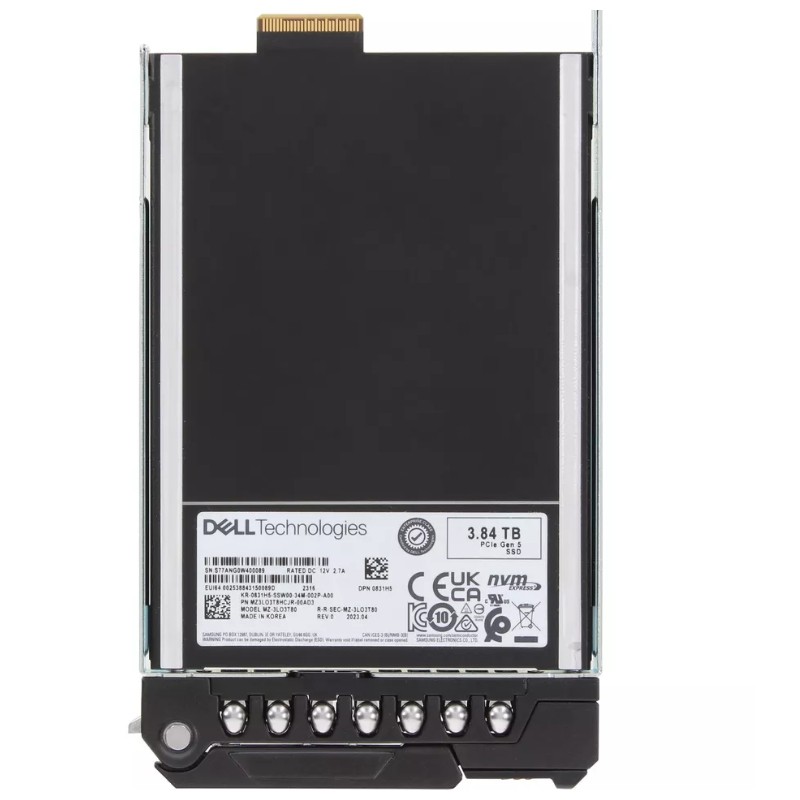


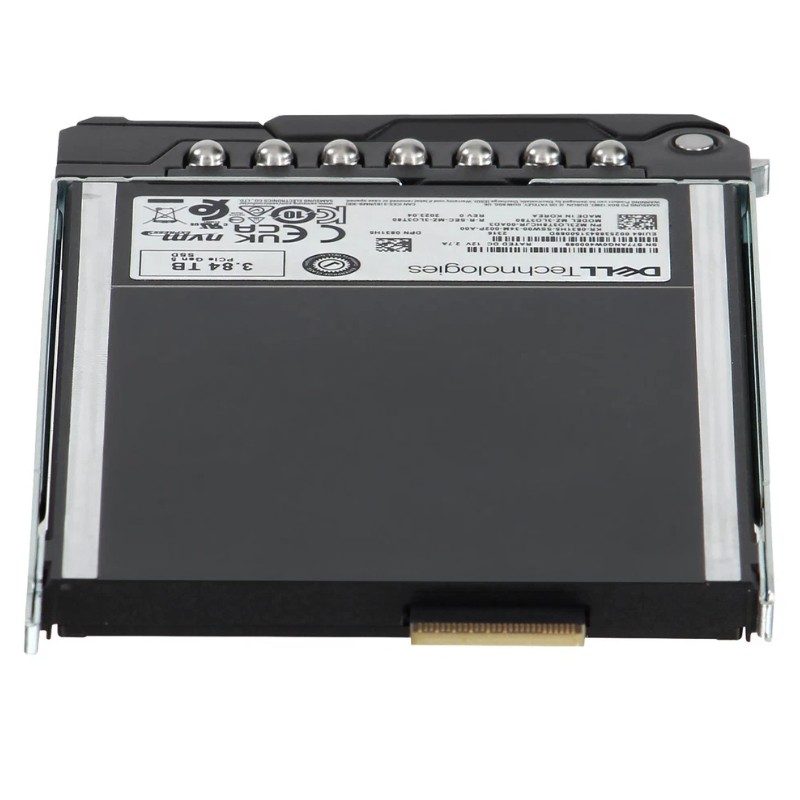
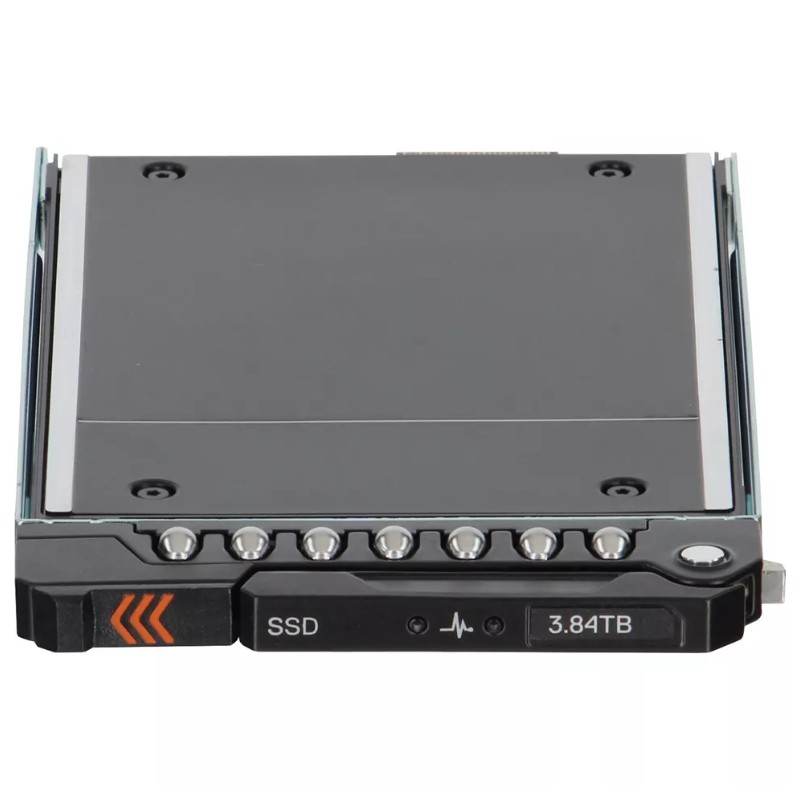
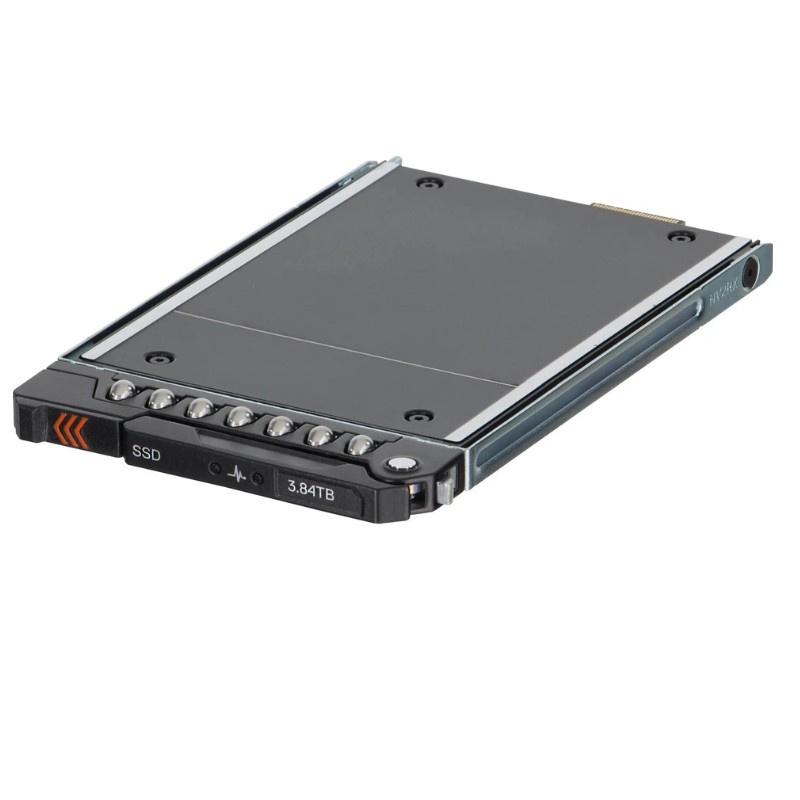
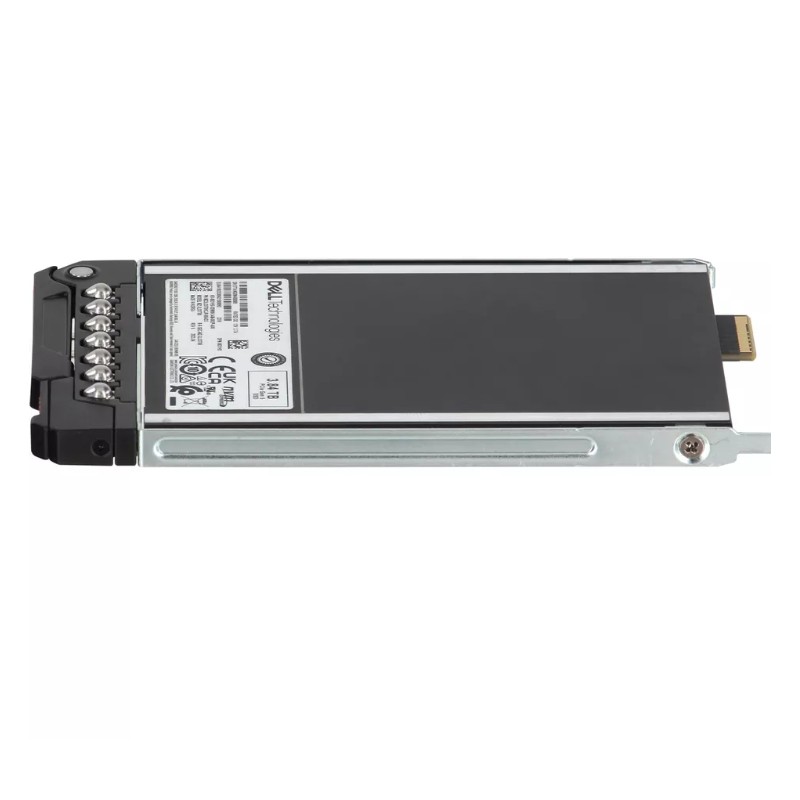
Dell 831H5 PCIe 5.0 NVMe 3.84TB Solid State Drive. Excellent Refurbished with 1 year replacement warranty
| SKU/MPN | Warranty | Price | Condition | You save |
|---|---|---|---|---|
| 831H5 | 1 Year Warranty | $3,795.00 | New Sealed in Box (NIB) | You save: $1,328.25 (26%) |
| 831H5 | 1 Year Warranty | $3,039.00 | Excellent Refurbished | You save: $1,063.65 (26%) |
Elevate your data center performance with the Dell 831H5 PCIe 5.0 NVMe solid-state drive. Built to deliver ultra-fast throughput and reduced latency, this 3.84TB drive is ideal for demanding enterprise applications, cloud computing, and mission-critical environments.
Leveraging PCIe 5.0 technology, the Dell 831H5 SSD ensures blazing-fast data transfer speeds and exceptional I/O performance. This next-generation NVMe drive is engineered for enterprises that demand high bandwidth, optimal throughput, and consistent performance under heavy workloads.
With a massive 3.84TB storage space, the Dell 831H5 offers ample capacity to store large datasets, enterprise databases, high-volume transactions, and critical virtual environments. It supports fast random read/write operations, ideal for performance-centric tasks.
Engineered to meet the evolving needs of business-grade IT ecosystems, this high-capacity SSD is designed to support the scalability of modern data centers and cloud infrastructures.
The Dell 831H5 NVMe SSD integrates seamlessly with a broad range of PowerEdge servers, ensuring optimized compatibility and performance:
Validated by Dell for consistent performance and full compatibility, the 831H5 offers plug-and-play functionality within these PowerEdge systems. Whether deploying new hardware or upgrading existing infrastructure, this SSD delivers dependable performance with minimal downtime.
Future-proof your storage infrastructure with the Dell 831H5. As data volumes continue to grow exponentially, choosing a Gen5 NVMe SSD ensures your enterprise is ready for tomorrow’s challenges — today.
The “831H5 Dell NVMe 3.84TB PCIe 5.0 SSD” class encompasses high-performance, enterprise‑grade solid state drives specifically engineered for next-generation storage infrastructures. These drives reside in the PCIe 5.0 (Gen5) NVMe category and offer capacities of 3.84 terabytes, targeting demanding workloads in data centers, virtualization, AI/ML compute, and large database applications. Below is a deep dive into features, architectural design, compatibility, usage scenarios, and optimization strategies for this SSD category and its subcategories.
This category is distinguished by several foundational traits that marketers, systems engineers, and end users should understand:
Compared to consumer NVMe SSDs or lower-tier enterprise drives, the 831H5 series delivers:
PCIe 5.0 doubles the per-lane bandwidth compared to PCIe 4.0. In practice, that means each lane offers up to approximately 32 GT/s raw signaling speed, translating to dramatically higher real-world throughput when leveraged properly. The 831H5 category harnesses this to deliver increased IOPS, reduced queuing delays, and support for wider queue depths.
As a native NVMe device, the 831H5 class benefits from:
This SSD category typically uses the E3.S (Enterprise and Datacenter Standard, small form factor) interface, which is compact and designed for front-access in server sleds or OCP (Open Compute Project) style bays. E3.S facilitates hot-swap, high-density deployment, and airflow optimization in dense racks.
Within this category, manufacturers often pair high-performance controllers with TLC or QLC NAND (or variants thereof), leveraging advanced ECC (Error Correction Code), over-provisioning, and firmware heuristics to optimize performance, endurance, and consistency. The firmware is tuned to avoid performance cliffs and to sustain throughput under worst-case I/O patterns.
While the “831H5 Dell 3.84TB NVMe PCIe 5.0” is a primary SKU, multiple variants and subcategories exist around this core offering:
Some variants may be rated for higher drive-writes-per-day (DWPD) or have enhanced over-provisioning to support write-intensive workloads such as logging, analytics, or streaming ingestion.
More premium SKUs may include additional firmware capabilities like power-loss protection, improved telemetry with extended logs, or performance mode toggles (e.g. latency-optimized vs throughput-optimized). Some variants might support encryption modules (e.g. TCG Opal, AES-based, or self‑encrypting drive modes).
Within the 3.84TB class, there may be “high-bin” and “main-bin” versions — the high-bin models guarantee tighter latency and slightly higher peak I/O, while standard-bin versions offer more cost-effective performance with slightly relaxed latency bounds.
Some variants in this category may come with heat spreaders, integrated heatsinks, or additional thermal interface materials to accommodate aggressive cooling strategies in high-density server racks.
One of the most critical facets of this category is its validation in server environments. The 831H5 Dell NVMe 3.84TB PCIe 5.0 drives are engineered and certified for integration into a wide range of Dell PowerEdge systems and similar enterprise platforms.
These server families often provide front-access drive bays or dedicated riser slots compatible with E3.S modules. The 831H5 drives are commonly hot-swappable and fully supported in Dell’s systems management frameworks (iDRAC, OpenManage). Firmware updates, monitoring, and predictive failure alerts are typically integrated into the server’s health management system.
Beyond Dell, many enterprise server vendors adopt open architecture or OCP mezzanine slots capable of accepting E3.S NVMe modules. In those environments, proper BIOS/UEFI NVMe compatibility, thermal design, host firmware updates, and power delivery must align with PCIe 5.0 specifications.
When deploying hyperconverged infrastructure or virtualization clusters (VMware vSphere, Microsoft Hyper-V, Nutanix, etc.), the 831H5 class provides fast, consistent storage for boot volumes, VM images, and high IOPS backend workloads.
In real-time transaction processing (OLTP), in-memory databases, or heavy read/write analytics workloads, latency consistency and throughput are imperative. This SSD category is ideal for relational databases (MySQL, SQL Server, PostgreSQL) and NoSQL systems (Cassandra, MongoDB) under high concurrency.
VDI workloads tend to create bursts and random I/O patterns when many desktops boot or login simultaneously. The low latency and parallelism of the 831H5 category make it well suited to host user profiles, application thumbnails, and image caching layers.
Even in architectures where primary storage is provided by slower media (e.g. SAS, SATA, or lower-cost NVMe), 831H5 drives can be used as a high-speed cache, write buffer, or burst acceleration tier. Their speed helps absorb spikes in load and reduce back-end pressure.
In this category, you can reasonably expect:
The hallmark of enterprise SSDs in this class includes:
Operating in server environments, these SSDs are designed to maintain energy efficiency while delivering throughput. Power draw is optimized dynamically, scaling with I/O demand, and many variants include power‑scaling features (e.g. low-power idle states). Excessive power use is avoided via intelligent firmware control and thermal management.
To fully exploit a Gen5 SSD in this category:
Firmware, BIOS & Driver Updates
Optimal performance and stability require:
Comparisons With Other Storage
Compared to traditional SAS or SATA enterprise drives, PCIe Gen5 NVMe devices such as the 831H5 deliver:
Vs. Other NVMe Generations (Gen3 / Gen4)
While Gen3 and Gen4 SSDs remain valuable for many applications, the 831H5 class unlocks headroom for future workloads, offering aggregate bandwidth that outpaces older Gen4 drives and avoids early bottlenecks in pipeline architectures. This makes it a strong choice for forward-looking deployments.
Imagine a cluster of Dell R760 servers, each equipped with several 831H5 modules. These drives host critical VM disks and metadata volumes, reducing storage bottlenecks even under heavy I/O load. Administrators report lower latency tail values and improved VM consistency under bursty mixed workloads.
In a high‑volume OLAP scenario, deploying 831H5 drives for index and materialized view storage can dramatically speed query response times. Benchmarks comparing to previous-gen NVMe drives show lower latency under large concurrent queries and faster throughput for large scans.
A test cluster running PostgreSQL with TPC‑C style workloads recorded up to 30% improvement in 95th percentile query latency and a 20% uplift in throughput when migrating from Gen4 NVMe to 831H5-class Gen5 NVMe devices, under identical hardware conditions.
If server chassis or airflow are not adequately designed, the 831H5 drives may thermally throttle to reduce heat, causing reduced performance. It's critical to align drive placement with cooling zones and ensure airflow over the SSD path.
Introducing older PCIe devices or inferior riser cards may force the entire lane or bus to run at Gen4 or lower speeds, negating Gen5 advantages. Always design the PCIe topology to preserve Gen5 signaling where these drives operate.
Using firmware versions not validated for your server’s motherboard may lead to suboptimal performance or errors. Always apply firmware builds endorsed by the server vendor to maintain compatibility and reliability.
Configurations that fully allocate the drive for data (leaving no spare area) may reduce endurance and lead to performance degradation over time. Ensure there is headroom or reserved capacity to allow background garbage collection and wear-leveling to operate efficiently.
While the 831H5 class is firmly rooted in PCIe 5.0, future generations (Gen6 and later) may push per-lane speeds even higher, adopt new signaling schemes, and possibly integrate with CXL or compute-exposed memory fabrics. This category offers a stepping stone to those future performance tiers.
With increased interest in memory-tiered architectures (e.g. DRAM / PMem / NVMe / storage), 831H5 drives are well-positioned to constitute the “fast storage tier” just beneath persistence memory layers. Their speed complements in-memory caching and bridges to bulk tiers efficiently.
As distributed infrastructure proliferates, compact high-performance SSDs like the 831H5 class may be deployed in edge servers, micro data centers, and remote compute nodes, enabling local caching, inference, or analytics closer to data sources.


 Contact Us
 Information
 Catalog
 Solid State Drives (SSD)
 Network Switches
 Hard Disk Drives
 HBA & Controllers
 PC & Servers
 PC & Server Memory
 CPU & Processors
 Network Routers
 Power Supplies
 Tape Drives & Libraries
 Network Devices
 Computer & Network Cables