(7% discount is applied at checkout)
Cart is empty
Your go-to destination for cutting-edge server products


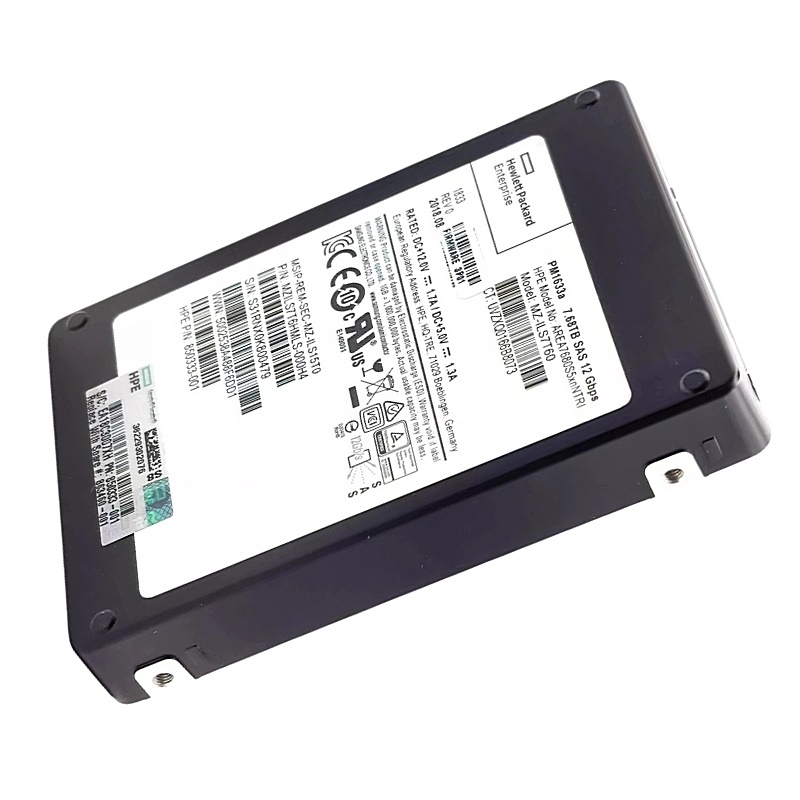
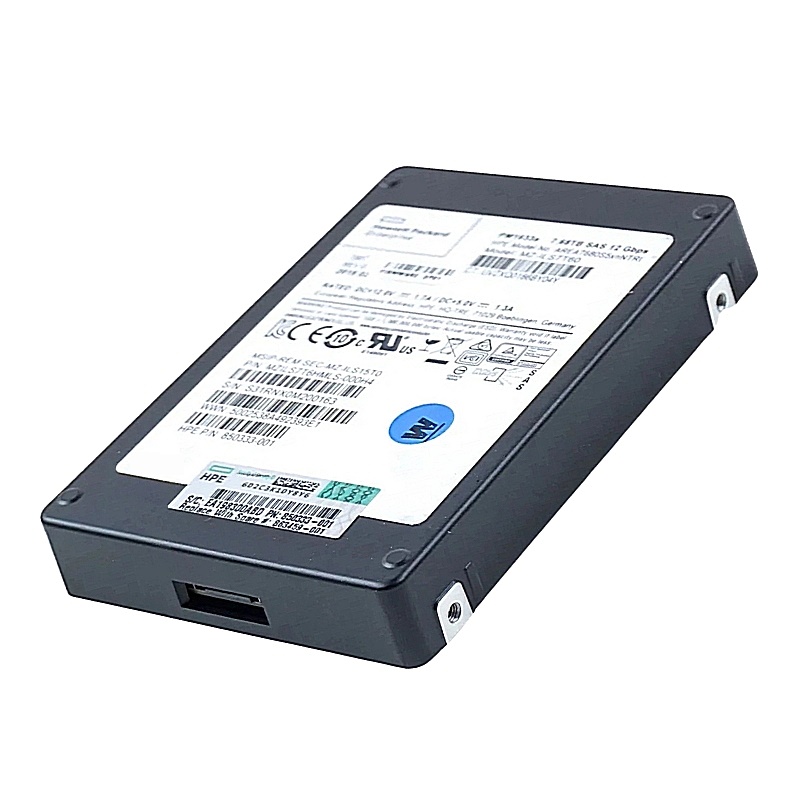
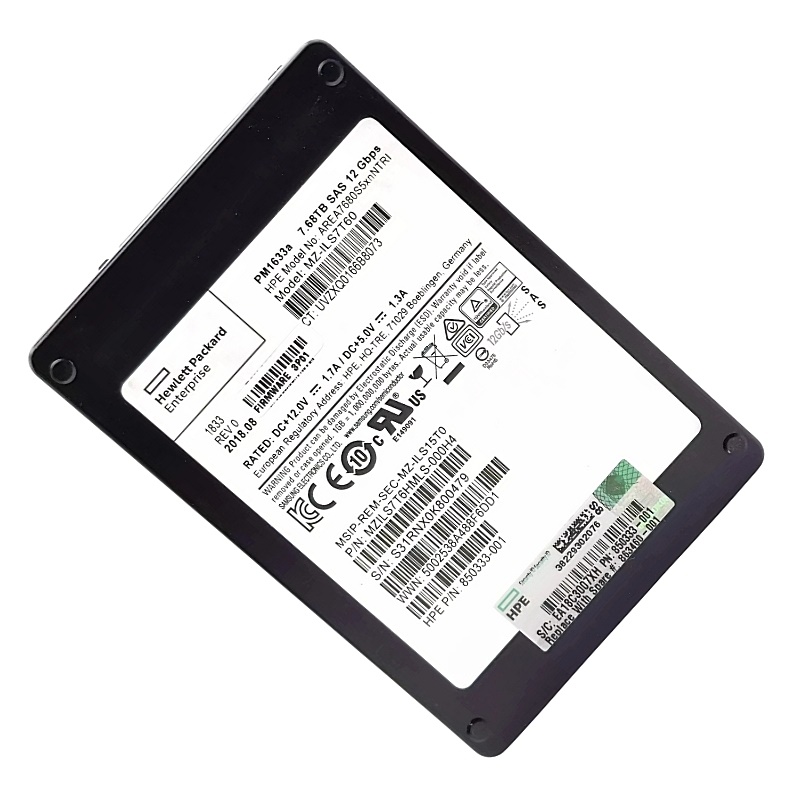
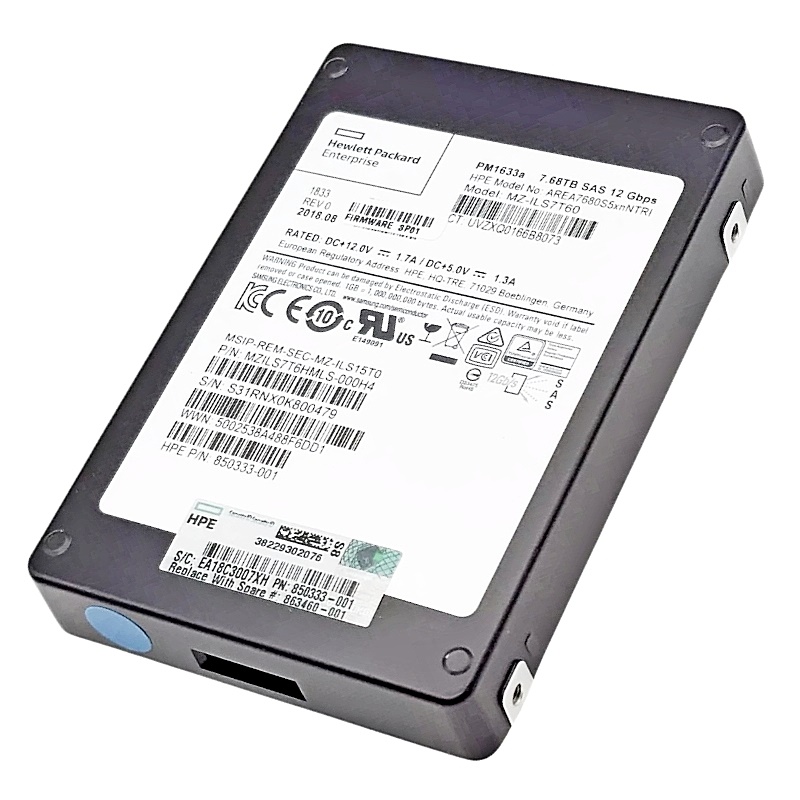
HPE P49308-001 7.68TB SAS 12GBPS Sff Read Intensive 2.5inch Solid State Drive. Factory-Sealed New in Original Box (FSB) with 3 Years Warranty
| SKU/MPN | Warranty | Price | Condition | You save |
|---|---|---|---|---|
| P49308-001 | 1 Year Warranty | $1,282.00 | Excellent Refurbished | You save: $448.70 (26%) |
| P49308-001 | 1 Year Warranty | Contact us for a price | Factory-Sealed New in Original Box (FSB) |
Product Overview: HPE P49308-001 7.68TB SAS SSD
The HPE P49308-001 7.68TB SAS 12Gbps Read Intensive 2.5-inch SFF Solid State Drive is a high-capacity, enterprise-grade storage solution designed for performance-driven environments. Engineered with hot-swap capability and bundled with an HPE Smart Carrier, this SSD is ideal for read-intensive workloads across HPE ProLiant and Synergy platforms.
HPE P49308-001 SSD, 7.68TB SAS 12Gbps, Read Intensive 2.5-inch SSD, HPE Smart Carrier drive, hot-plug enterprise SSD, HPE ProLiant Gen10 storage, high-capacity SAS SSD, secure firmware SSD, data center storage upgrade, server SSD for Cohesity, Datera, SAP HANA, CTERA, Azure Stack Hub.
The HPE P49308-001 represents the pinnacle of high-capacity enterprise SAS storage, delivering an impressive 7.68TB of storage in a standard 2.5-inch small form factor (SFF) package. This read-intensive solid state drive combines massive storage density with the reliability and performance characteristics demanded by modern data-intensive applications. As organizations grapple with exponential data growth, this drive addresses the critical need for high-density storage that maintains enterprise-grade performance, reliability, and manageability while optimizing storage efficiency and total cost of ownership.
The achievement of 7.68TB in a 2.5-inch form factor represents a significant milestone in storage technology evolution. This density enables organizations to consolidate storage infrastructure dramatically, reducing rack space requirements, power consumption, and cooling needs while increasing overall storage capacity. The drive's advanced NAND flash management and error correction technologies ensure that this high density doesn't compromise reliability or performance, making it suitable for the most demanding enterprise environments where both capacity and performance are non-negotiable requirements.
From a data center infrastructure perspective, the P49308-001 enables unprecedented storage consolidation. A single 2U server with 24 drive bays can now accommodate over 184TB of raw storage capacity using these drives, dramatically reducing the physical footprint required for large-scale storage deployments. This consolidation translates directly into reduced capital expenditures for server hardware, power distribution units, networking infrastructure, and data center real estate, while simultaneously lowering operational costs for power and cooling.
The 12Gbps SAS interface provides robust, reliable performance that fully leverages the drive's massive capacity. While newer interface technologies exist, 12Gbps SAS remains highly relevant for high-capacity storage applications, offering proven reliability, dual-port redundancy, and excellent performance characteristics for read-intensive workloads. The interface ensures consistent data transfer rates that maximize the drive's capabilities while maintaining compatibility with existing SAS infrastructure, providing investment protection for organizations with established storage area networks.
Despite its high capacity, the P49308-001 maintains consistent performance through advanced controller architecture and sophisticated NAND management. The drive delivers sequential read performance typically exceeding 1,100 MB/s and write performance around 900 MB/s, with excellent random read IOPS that ensure responsive performance even under heavy concurrent access patterns. The large capacity enables extensive caching and buffering capabilities that enhance performance for frequently accessed data while maintaining throughput for less frequently accessed information.
The 7.68TB capacity is achieved through state-of-the-art 3D NAND technology and advanced packaging techniques that maximize storage density without compromising reliability. The drive utilizes high-quality TLC (Triple-Level Cell) NAND flash optimized for read-intensive applications, with sophisticated management algorithms that ensure consistent performance and extended lifespan. Advanced error correction, wear leveling, and bad block management technologies work in concert to maintain data integrity across the massive storage array.
To maintain performance consistency and extend operational lifespan, the drive incorporates significant over-provisioning—reserved capacity not visible to the host system. This over-provisioned space facilitates efficient garbage collection, wear leveling, and background maintenance operations without impacting host-visible performance. The sophisticated space management algorithms ensure that the drive maintains consistent write performance and latency characteristics throughout its operational life, even as the available capacity is utilized.
The P49308-001 is ideally suited for applications requiring access to massive datasets where read operations dominate the I/O profile. Primary use cases include big data analytics platforms processing terabytes of information, scientific computing applications working with large simulation datasets, video surveillance systems storing high-resolution footage, and content delivery networks serving extensive media libraries. The drive's capacity enables these applications to maintain larger working datasets in high-performance storage, reducing the need for frequent data movement between storage tiers.
In data-intensive environments, the drive excels at delivering consistent read performance across the entire capacity range. Advanced caching algorithms and data prefetching mechanisms anticipate access patterns to minimize latency, while sophisticated queue management ensures fair resource allocation across multiple concurrent access streams. The quality of service (QoS) features maintain consistent performance even during periods of high demand, ensuring that critical applications receive the resources they need without degradation.
As a read-intensive drive, the P49308-001 is optimized for workloads where read operations substantially outnumber write operations. The drive typically offers 0.5-1 Drive Writes Per Day (DWPD) throughout its warranty period, supported by advanced write amplification reduction techniques and efficient garbage collection algorithms. The massive capacity means that even with moderate DWPD ratings, the absolute write endurance is substantial, capable of handling significant write workloads while maintaining the read-optimized characteristics.
The P49308-001 is engineered for continuous operation in demanding 24/7 environments, with typical MTBF (Mean Time Between Failures) ratings exceeding 2 million hours. This exceptional reliability is achieved through rigorous component selection, comprehensive environmental testing, and advanced error correction technologies. The drive operates within specified temperature, vibration, and shock parameters that ensure reliable performance in diverse data center conditions, from controlled enterprise environments to edge computing deployments.
Multiple layers of data protection ensure information integrity throughout the storage stack. These include end-to-end data path protection that validates data integrity from the host interface through the DRAM cache to the NAND flash media, advanced LDPC (Low-Density Parity Check) error correction that handles increasingly common errors as NAND cells age, and comprehensive power-loss protection that ensures data persistence during unexpected power events. These protection mechanisms work together to provide enterprise-grade data integrity across the massive 7.68TB capacity.
The drive incorporates sophisticated thermal management features that maintain optimal operating temperatures despite the high density of NAND flash components. Active power management adjusts performance characteristics based on workload demands and temperature conditions, optimizing power efficiency without compromising performance. These thermal and power management capabilities ensure reliable operation in high-density server configurations where cooling capacity may be constrained.
The P49308-001 is rigorously tested and validated for use across HPE's server portfolio, including ProLiant Gen10 and Gen10 Plus systems, Apollo storage servers, and Synergy composable infrastructure. This comprehensive validation ensures optimal performance and reliability when deployed with HPE Smart Array controllers, HPE HBAs, and HPE NVMe controllers. The drive firmware is specifically tuned for HPE's storage architecture, providing enhanced performance and management capabilities within the HPE ecosystem.
The massive capacity enables strategic storage consolidation that simplifies infrastructure management and reduces total cost of ownership. Organizations can consolidate multiple older storage systems into fewer, higher-density servers, reducing management overhead, improving utilization rates, and simplifying backup and disaster recovery processes. The consolidation also reduces software licensing costs in many cases, as licensing is often based on physical socket or server counts rather than storage capacity.
To maximize performance and reliability, several configuration strategies should be implemented. These include ensuring proper airflow across drive bays to maintain optimal operating temperatures, implementing appropriate RAID configurations based on performance and availability requirements, aligning file system parameters with the drive's characteristics, and utilizing HPE's management tools for ongoing monitoring and maintenance. Regular firmware updates ensure access to performance enhancements and reliability improvements developed throughout the product lifecycle.
Different applications benefit from specific tuning approaches tailored to the drive's high-capacity, read-intensive characteristics. For big data analytics workloads, optimizing data layout and access patterns can significantly enhance performance. For content delivery applications, implementing appropriate caching hierarchies maximizes throughput. For database systems, careful capacity planning and storage tiering ensure optimal performance for both active and archival data.
The massive 7.68TB capacity requires careful capacity planning to ensure optimal performance and longevity. Best practices include maintaining appropriate free space to facilitate efficient garbage collection and wear leveling, monitoring write amplification factors, and implementing data lifecycle management policies that move less frequently accessed data to appropriate storage tiers. These strategies ensure that the drive maintains consistent performance throughout its operational life.
The P49308-001 occupies the premium high-capacity segment of HPE's read-intensive SSD portfolio, offering unmatched storage density in the 2.5-inch form factor. Compared to lower-capacity models, it provides superior storage consolidation capabilities and better cost-per-terabyte economics for capacity-optimized deployments. The drive balances this high density with maintained performance characteristics, making it suitable for both capacity-oriented and performance-sensitive applications.
When deploying the P49308-001 in data center environments, several considerations ensure optimal results. These include verifying adequate cooling capacity for high-density configurations, ensuring proper power distribution to support multiple high-capacity drives, implementing comprehensive monitoring and alerting systems, and developing appropriate data protection strategies that account for the large capacity per drive. These considerations ensure reliable operation and maximize the value of the storage investment.
While the P49308-001 utilizes 12Gbps SAS technology, it remains well-positioned within the evolving storage landscape. The SAS interface continues to evolve with 24Gbps implementations gaining traction, and the drive's compatibility with existing infrastructure provides investment protection during technology transitions. The massive capacity addresses fundamental storage needs that will remain relevant regardless of interface technology evolution.
The drive's characteristics align well with emerging application requirements in areas such as artificial intelligence, machine learning, IoT data processing, and edge computing. These applications typically involve large datasets with read-intensive access patterns, making the P49308-001 well-suited for supporting these next-generation workloads. The capacity and performance characteristics ensure relevance as these applications mature and scale.
The storage consolidation enabled by high-capacity drives contributes to improved sustainability metrics through reduced power consumption, decreased hardware manufacturing requirements, and optimized data center space utilization. These environmental benefits align with growing corporate sustainability initiatives while simultaneously providing economic advantages through reduced operational costs. The drive's power-efficient design further enhances these sustainability characteristics.


 Contact Us
 Information
 Catalog
 Solid State Drives (SSD)
 Network Switches
 Hard Disk Drives
 HBA & Controllers
 PC & Servers
 PC & Server Memory
 CPU & Processors
 Network Routers
 Power Supplies
 Tape Drives & Libraries
 Network Devices
 Computer & Network Cables