(7% discount is applied at checkout)
Cart is empty
Your go-to destination for cutting-edge server products


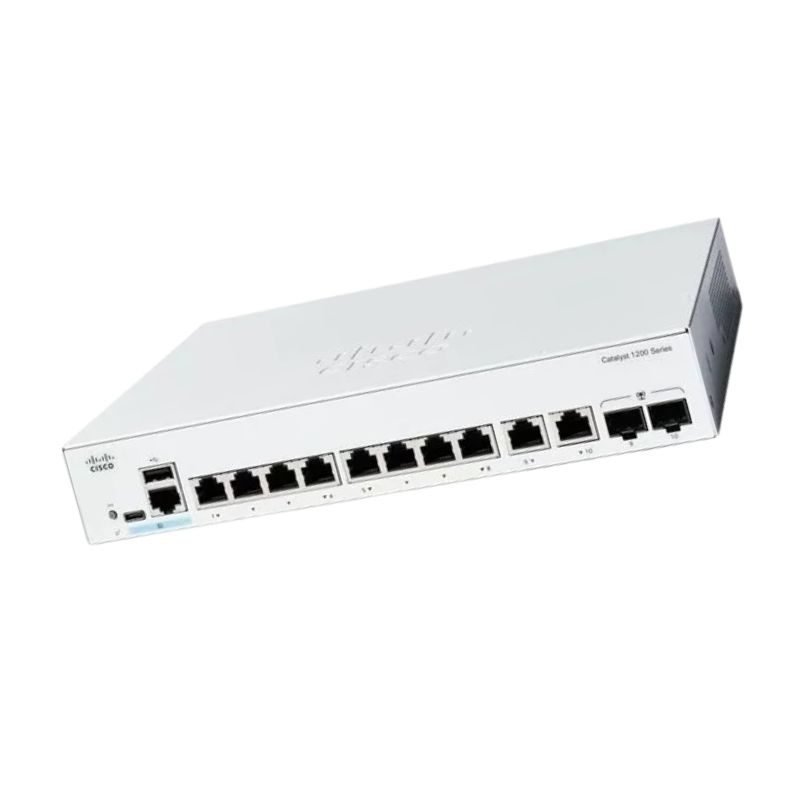
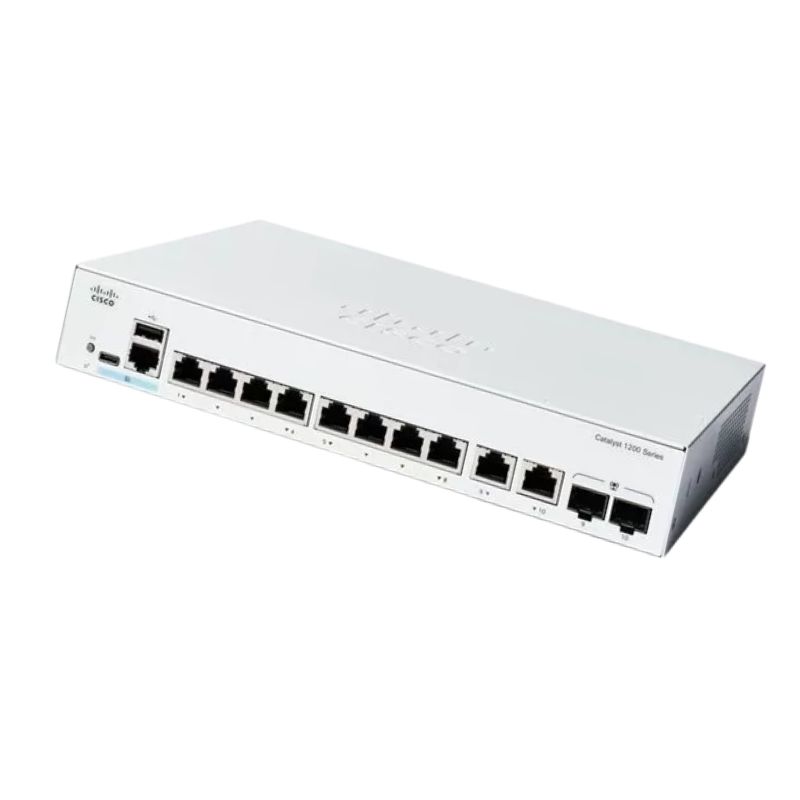
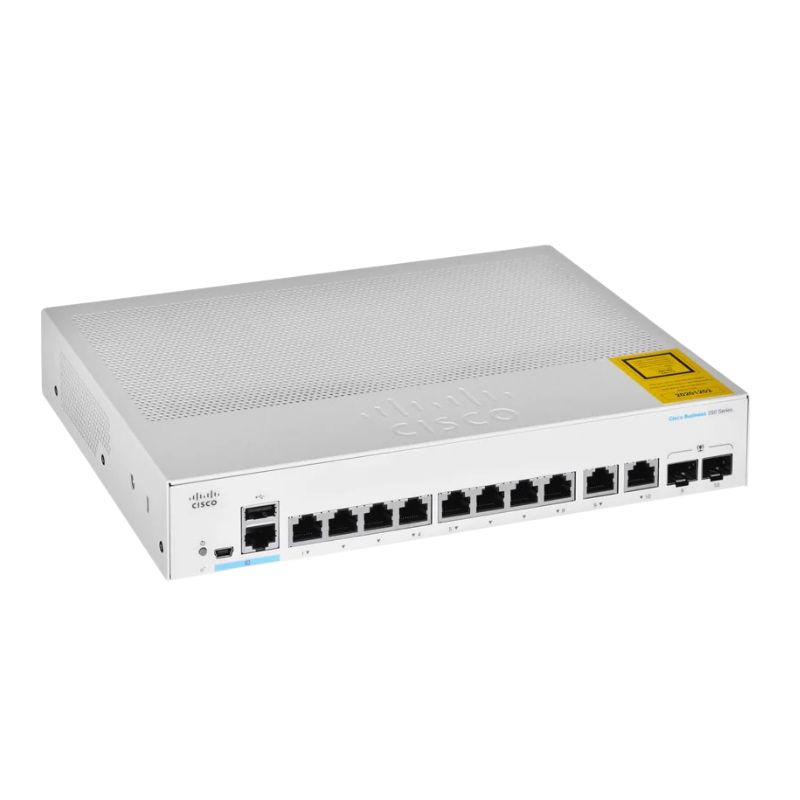
Cisco C1300-8P-E-2G Catalyst Switch L3 Managed 8 Ports 10/100/1000 (poe+) + 2 X Combo Gigabit Sfp/rj-45 Rack-mountable Poe+ (60 W). Factory-Sealed New in Original Box (FSB) with 1 year replacement warranty
The Cisco C1300-8P-E-2G Catalyst Managed Switch is a compact yet powerful Layer 3 networking solution designed for modern enterprise, SMB, and branch office environments. Built with advanced Gigabit Ethernet capabilities, this rack-mountable switch delivers high performance, secure connectivity, and intelligent Power over Ethernet Plus (PoE+) support.
This category sits at the intersection of several critical networking technologies. It goes beyond simple connectivity by offering Layer 3 static routing, allowing for basic inter-VLAN routing without a dedicated router, thus enhancing network efficiency and segmentation. The integrated PoE+ (802.3at) support delivers up to 30 watts per port, enabling it to power the latest generation of high-demand devices. The inclusion of combo Gigabit SFP/RJ-45 uplink ports provides unparalleled flexibility for connecting to fiber or copper uplinks, future-proofing the network infrastructure. These switches are designed for environments where IT expertise may be limited but the demands on the network are not, featuring a simplified, intuitive management interface alongside powerful underlying capabilities.
The physical design of the Cisco Catalyst C1300-8P-E-2G is a study in optimized density and versatility, packing critical connectivity and power into a single rack unit.
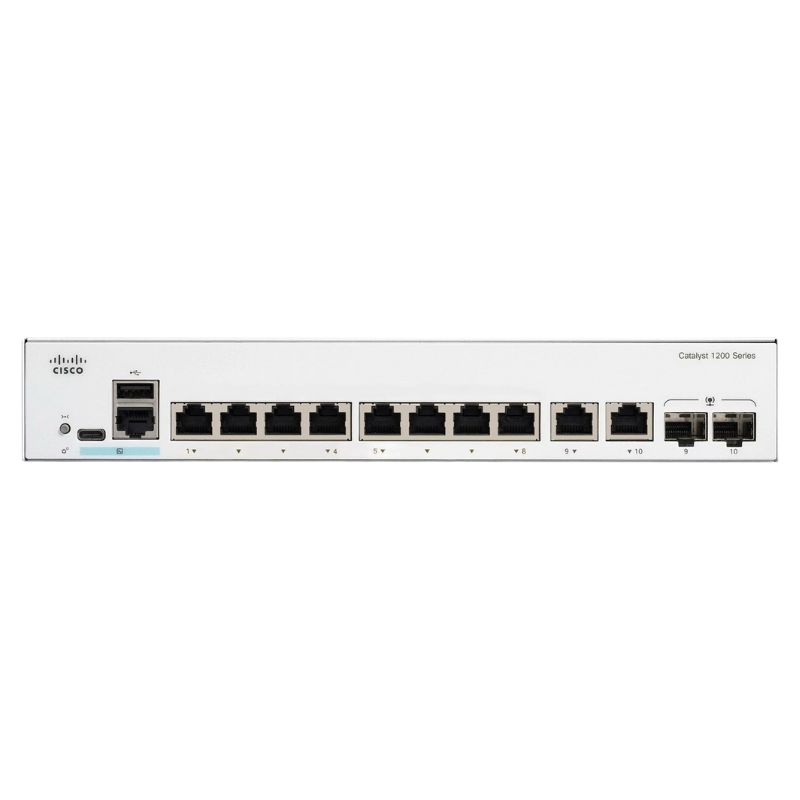
The switch's port configuration is meticulously planned to serve as a complete connectivity hub.
The eight 10/100/1000BASE-T RJ-45 ports form the core of the switch's access layer functionality.
Each port independently auto-senses speed (10, 100, or 1000 Mbps) and negotiates duplex mode, ensuring seamless integration with legacy and modern devices without manual configuration.
With a total power budget of 60W, the switch intelligently allocates power based on the requirements of each connected Powered Device (PD). It can deliver the full 30W per port on up to two ports simultaneously or distribute power across more ports for lower-wattage devices, all while monitoring for faults and overloads.
The two combo Gigabit SFP/RJ-45 ports are a defining feature for network flexibility.
Each "combo" port is a single interface with two physical connectors: an RJ-45 and an SFP slot. Only one can be active at a time, providing a choice between copper (using a standard Ethernet cable) or fiber (using an SFP module). This allows network administrators to select the optimal medium for distance, interference, or existing infrastructure.
These uplinks can be used to connect to a core switch or router using long-range fiber SFP modules, to daisy-chain another access switch using copper for simplicity, or to provide redundant uplinks for increased network reliability.
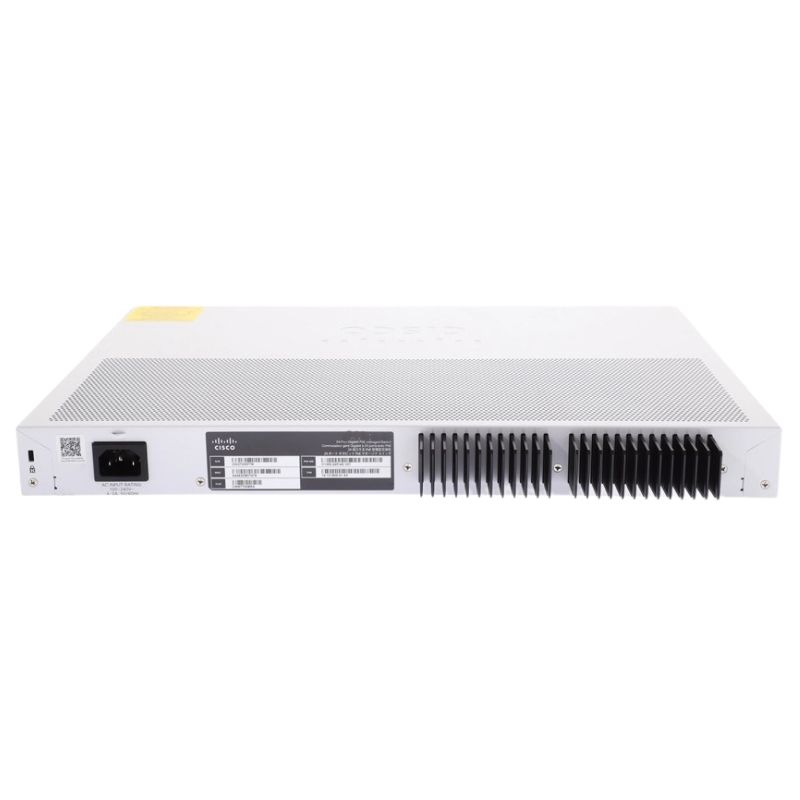
The rugged, metal chassis is built for continuous operation in varied environments.
Supplied with rack-mount ears, the switch can be securely installed in a standard 19-inch rack, optimizing space in wiring closets and server rooms. Its compact size and quiet, fanless design (in many models) also make it suitable for open-office placements.
The internal power supply is optimized for efficiency, supporting a wide range of input voltages. A well-designed thermal envelope ensures consistent performance and longevity, even when the PoE budget is fully utilized.
Moving beyond basic Layer 2 switching, this category introduces network intelligence that dramatically improves control, security, and performance.
This capability allows the switch to route traffic between different IP subnets (VLANs) internally.
Administrators can create multiple VLANs (e.g., one for data, one for VoIP, one for guests) and configure Switch Virtual Interfaces (SVIs) for each. The switch can then route packets between these VLANs based on static routes, eliminating the need to hairpin all inter-VLAN traffic through an external router, reducing latency and bottleneck.
Segmenting broadcast domains and controlling inter-subnet traffic enhances security, improves overall network performance by reducing unnecessary broadcast traffic, and allows for tailored quality of service (QoS) and security policies per VLAN.
Protecting the network edge is paramount, and this switch category includes a robust suite of security tools.
Supports port-based and MAC-based 802.1X authentication, requiring users or devices to authenticate before being granted network access. This is critical for preventing unauthorized devices from connecting to the network.
Access Control Lists (ACLs) can filter traffic based on IP addresses, MAC addresses, and protocol types. Port security features allow administrators to lock down ports to specific MAC addresses, limiting connectivity to authorized devices only.
Management access is secured via SSHv2, SNMPv3, and HTTPS/SSL, ensuring all configuration sessions and data are encrypted, protecting against eavesdropping and tampering.
In a converged network carrying data, voice, and video, QoS is essential to maintain performance.
The switch can classify traffic based on Layer 2 (CoS), Layer 3 (DSCP), or Layer 4 (TCP/UDP port) information. It can then mark and place traffic into priority queues, ensuring that latency-sensitive VoIP and video streams are prioritized over standard web traffic.
By creating a dedicated voice VLAN and applying strict QoS policies, the switch guarantees bandwidth and low latency for IP telephony, resulting in clear, reliable call quality.
The integrated 60W PoE+ budget transforms the switch from a mere data aggregator into a power distribution and control unit for the entire edge network ecosystem.
Understanding the IEEE 802.3at standard is key to leveraging its full potential.
PoE+ delivers up to 30W per port (compared to 15.4W with standard 802.3af PoE), supporting a broader range of power-hungry devices like PTZ cameras, multi-radio wireless access points (Wi-Fi 6/6E), and video phones.
The switch employs a sophisticated detection and classification process to avoid damaging non-PoE devices and to efficiently manage its power budget by understanding the power class of each connected PD.
The practical applications for a switch in this category are vast and impactful.
In a modern office, the switch can simultaneously power Cisco IP phones (which may also daisy-chain a connected computer) and the ceiling-mounted wireless access points that provide connectivity for laptops and mobile devices, creating a clean, centralized, and UPS-backed power infrastructure for communications.
For security installations, it can power multiple high-definition IP cameras with infrared illuminators, heaters, or PTZ mechanisms over a single Ethernet cable, simplifying installation and reducing costs compared to running separate power lines to each camera location.
In a retail setting, the switch can power point-of-sale systems, digital signage, inventory tracking access points, and VoIP phones, providing a consolidated network foundation that is easy to manage and scale.
Ease of management and reliable deployment are critical for resource-constrained IT teams.
Cisco provides multiple pathways to configure and monitor the switch.
For multi-device deployments, the optional Cisco Business Dashboard offers a cloud-based centralized view for monitoring, configuring, and troubleshooting an entire network of switches from a single pane of glass, greatly simplifying operations.
For on-premises management, administrators can choose between the powerful Command-Line Interface (CLI) for granular control and scripting or the user-friendly web-based graphical interface (GUI) for intuitive setup and visualization of the network status.


 Contact Us
 Information
 Catalog
 Solid State Drives (SSD)
 Network Switches
 Hard Disk Drives
 HBA & Controllers
 PC & Servers
 PC & Server Memory
 CPU & Processors
 Network Routers
 Power Supplies
 Tape Drives & Libraries
 Network Devices
 Computer & Network Cables