
(7% discount is applied at checkout)
Cart is empty
Your go-to destination for cutting-edge server products
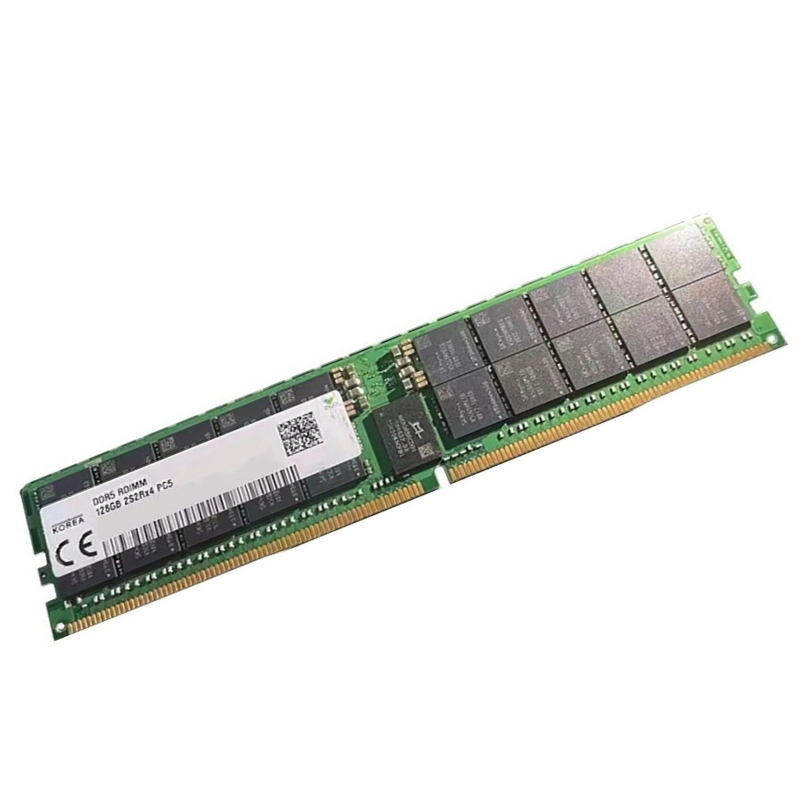
Hynix HMCT04AGERA 128GB PC5-44800 DDR5-5600MHz ECC Registered CL46 288-Pin RDIMM Memory Module. New Sealed in Box (NIB) with 3 Years Warranty
Overview of the 128GB DDR5 Memory Module
The HMCT04AGERA Hynix 128GB PC5-44800 DDR5-5600MHz memory module represents a class of next-generation DDR5 server and workstation memory solutions designed to meet the escalating demands of modern computing environments. This category of high-capacity DDR5 memory modules is engineered for systems that require exceptional bandwidth, scalability, and stability under sustained workloads. As part of the DDR5 ecosystem, modules operating at 5600MHz and delivering PC5-44800 bandwidth are positioned to support data-intensive applications, virtualization platforms, cloud infrastructure, and advanced analytics workloads.
The Hynix 128GB memory module represents a class of next-generation DDR5 server and workstation memory solutions designed to meet the escalating demands of modern computing environments. This category of high-capacity DDR5 memory modules is engineered for systems that require exceptional bandwidth, scalability, and stability under sustained workloads. As part of the DDR5 ecosystem, modules operating at 5600MHz and delivering PC5-44800 bandwidth are positioned to support data-intensive applications, virtualization platforms, cloud infrastructure, and advanced analytics workloads.
Memory modules in the 128GB capacity range occupy a specialized subcategory within the broader DRAM market. They are typically deployed in enterprise servers, high-end workstations, and mission-critical systems where memory density is a primary design consideration. This category supports configurations that maximize memory per slot, enabling fewer modules to deliver greater total system memory. Such density is particularly valuable in environments constrained by physical space, power efficiency targets, or licensing models that scale with hardware resources.
High-density DDR5 memory modules are commonly selected for platforms featuring multiple memory channels per CPU and multi-socket architectures. The ability to populate each channel with a 128GB module allows system architects to achieve balanced memory topologies while maintaining optimal bandwidth distribution. This category is well suited for modern CPUs designed with expanded memory channel counts, ensuring that memory throughput scales alongside core counts.
The PC5-44800 designation corresponds to a theoretical peak bandwidth of 44.8GB/s per module, a significant improvement over previous DDR4 standards. Memory modules operating at 5600MHz leverage DDR5 architectural advancements to deliver higher data rates while improving signal integrity and efficiency. This category addresses the performance requirements of workloads that depend on rapid data access, low latency under load, and consistent throughput across extended operating periods.
Applications such as large-scale databases, real-time analytics, in-memory computing, and scientific simulations benefit directly from increased memory bandwidth. DDR5-5600 modules reduce bottlenecks associated with memory access, allowing processors to maintain higher utilization rates. This category supports workloads where memory performance is as critical as CPU speed, enabling balanced system designs that avoid underutilized compute resources.
DDR5 introduces multiple architectural enhancements, including dual independent 32-bit subchannels per module. This design allows more efficient handling of concurrent memory requests, improving effective bandwidth utilization. Memory modules in this category capitalize on these features to deliver smoother performance under multi-threaded and parallel workloads, which are common in enterprise and professional computing environments.
The HMCT04AGERA Hynix 128GB DDR5-5600MHz memory module category emphasizes reliability as a core design principle. Systems that deploy high-capacity DDR5 modules often operate continuously and handle critical workloads where data integrity and uptime are paramount. As a result, memory solutions in this category are manufactured and validated to meet stringent quality and stability standards.
Enterprise and workstation memory modules are expected to maintain stable operation over extended periods, often in environments with elevated thermal loads. This category is typically built using high-quality DRAM components and advanced manufacturing processes to ensure consistent performance over time. Rigorous testing protocols help minimize the risk of memory-related errors and system instability.
Many high-capacity DDR5 modules are designed to support advanced error management technologies commonly used in professional systems. While specific features depend on platform support and module configuration, this category aligns with industry practices aimed at reducing the impact of memory errors. Such alignment makes these modules suitable for deployment in systems where reliability and data protection are essential considerations.
As memory speeds and capacities increase, thermal management and power efficiency become critical factors in system design. DDR5 memory modules, including those operating at 5600MHz, incorporate design improvements that help manage power consumption more effectively than previous generations. This category supports system builders seeking to balance performance gains with manageable thermal and energy profiles.
DDR5 introduces on-module power management integrated circuits (PMICs), which help regulate voltage more precisely at the module level. Memory modules in this category benefit from improved power delivery stability, reducing noise and enhancing overall efficiency. This approach supports higher operating frequencies while maintaining predictable power characteristics across varying workloads.
High-capacity memory configurations can generate significant heat, particularly in densely populated servers. Modules in this category are designed with thermal considerations in mind, enabling effective heat dissipation when deployed in properly ventilated chassis. This supports reliable operation in rack-mounted servers and high-performance workstations where airflow and cooling are carefully managed.
The category encompassing the HMCT04AGERA Hynix 128GB PC5-44800 DDR5-5600MHz memory module addresses a wide range of professional and enterprise use cases. Its combination of capacity, speed, and reliability makes it suitable for industries that rely on large memory footprints and consistent performance.
Virtualized environments and private cloud deployments often require substantial memory resources to support multiple virtual machines and containers. High-capacity DDR5 modules enable greater consolidation by allowing more workloads to run on a single physical host. This category supports efficient resource allocation, improved density, and reduced hardware overhead in virtualized infrastructures.
Modern analytics platforms increasingly rely on in-memory processing to deliver real-time insights. Memory modules with 128GB capacity and high bandwidth are well suited for such applications, enabling large datasets to be held in memory for rapid access. This category supports frameworks and databases that benefit from minimizing disk I/O and maximizing memory throughput.
Simulation, modeling, and engineering applications often involve complex datasets and computational models that demand both high memory capacity and speed. DDR5-5600 memory modules provide the bandwidth necessary to feed multi-core processors efficiently, making this category a strong fit for research institutions, laboratories, and engineering firms.
Memory compatibility is a critical consideration when selecting high-capacity DDR5 modules. This category is designed to integrate with platforms that support DDR5 technology and the specific speed and capacity parameters of PC5-44800 memory. Proper platform validation ensures that the memory operates at intended performance levels and maintains system stability.
DDR5-5600 memory modules are intended for use with CPUs featuring memory controllers capable of supporting these data rates. This category aligns with contemporary server and workstation processors designed to leverage DDR5 advancements. When paired with compatible platforms, these modules help unlock the full potential of modern CPU architectures.
The category represented by the HMCT04AGERA Hynix 128GB DDR5-5600MHz memory module emphasizes manufacturing excellence and component reliability. Memory modules intended for enterprise and professional use are produced under strict quality control processes to ensure consistency and performance across production batches.
DDR5 memory modules utilize advanced DRAM fabrication technologies that enable higher densities and improved performance characteristics. This category benefits from ongoing advancements in semiconductor manufacturing, resulting in modules that deliver higher capacities without compromising reliability. Such processes are essential for meeting the demands of next-generation computing platforms.
Before deployment, memory modules in this category typically undergo extensive validation and testing to verify compatibility, stability, and performance. These procedures help ensure that each module meets defined specifications and performs reliably under expected operating conditions. This level of validation is particularly important for high-capacity modules used in critical systems.
Selecting high-capacity DDR5 memory modules is often part of a broader strategy to future-proof system investments. This category supports scalable system designs that can accommodate growing workloads and evolving application requirements without frequent hardware replacements.
By utilizing 128GB modules, system builders can achieve substantial memory capacities while leaving room for future expansion. This approach allows organizations to scale memory resources incrementally as demands increase. The category is well suited for long-term deployments where flexibility and upgrade potential are important considerations.
Software trends increasingly favor larger memory footprints, driven by data growth, advanced analytics, and AI-driven applications. DDR5-5600 memory modules provide the bandwidth and capacity needed to support these trends. This category aligns with the trajectory of modern software development, helping ensure that systems remain capable as requirements evolve.


 Contact Us
 Information
 Catalog
 Solid State Drives (SSD)
 Network Switches
 Hard Disk Drives
 HBA & Controllers
 PC & Servers
 PC & Server Memory
 CPU & Processors
 Network Routers
 Power Supplies
 Tape Drives & Libraries
 Network Devices
 Computer & Network Cables