(7% discount is applied at checkout)
Cart is empty
Your go-to destination for cutting-edge server products
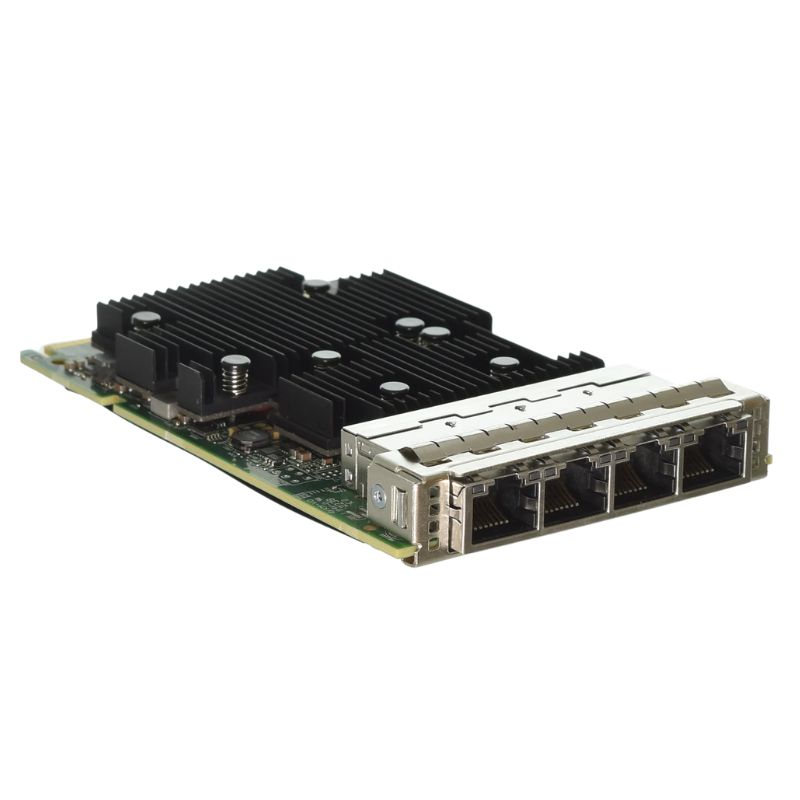


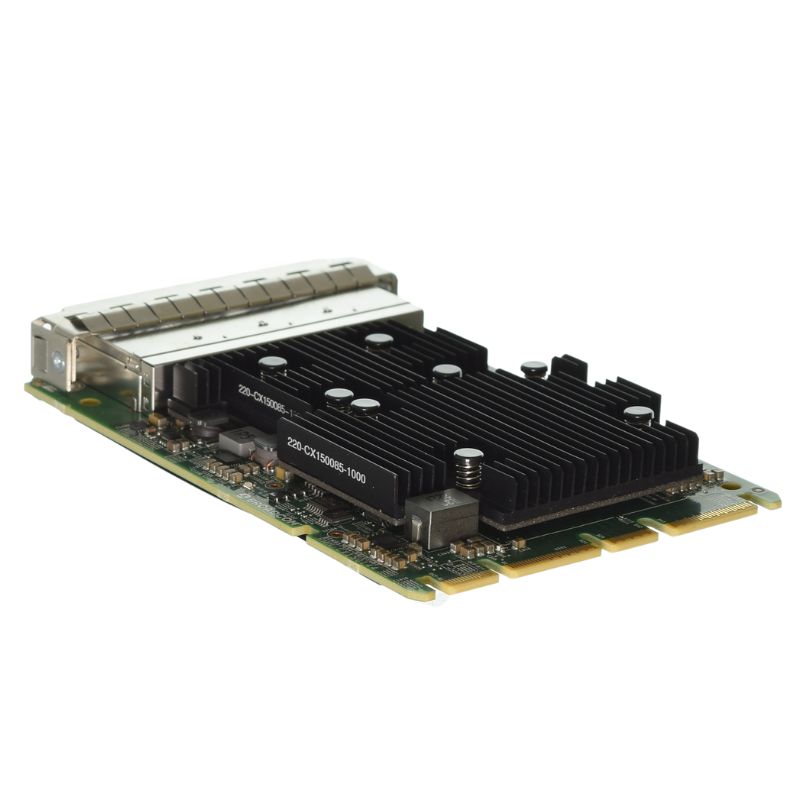
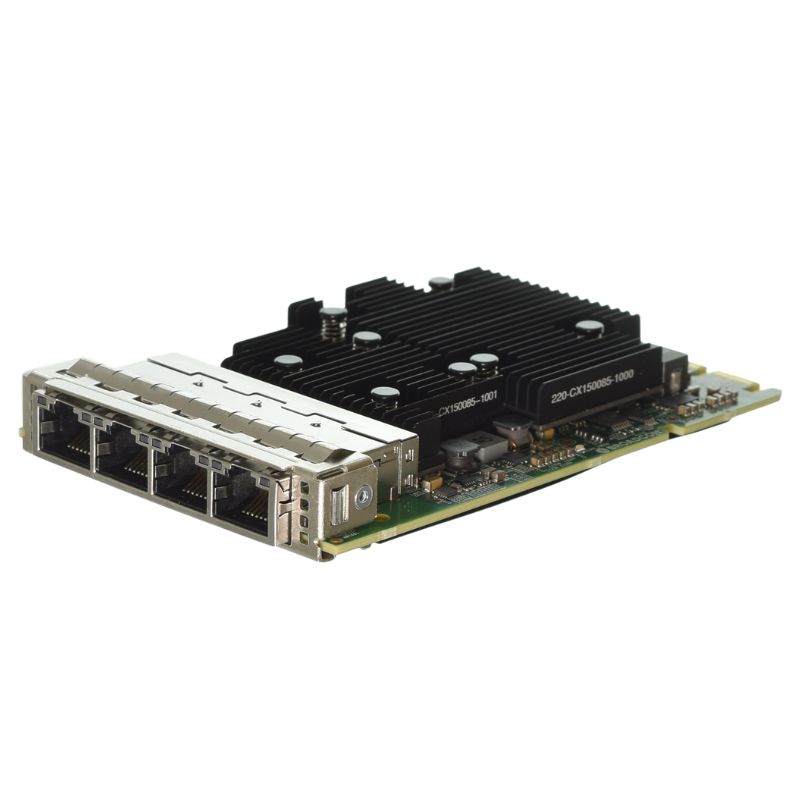
Dell JJNC9 Broadcom 57454 Quad Port 10GB Base-t OCP Interface Card 3.0 Network Adapter. Excellent Refurbished with 1 year replacement warranty
The Dell JJNC9 Broadcom 57454 Quad-Port 10Gb Base-T OCP 3.0 Network Adapter is a high-density enterprise networking solution engineered for next-generation data centers. Designed with four independent 10GbE RJ-45 interfaces, it delivers exceptional throughput, improved load balancing, and scalable connectivity for virtualization, cloud platforms, and performance-critical workloads.
The Dell JJNC9 Broadcom 57454 Quad Port 10Gb Base-T OCP Interface Card represents a high-density networking solution engineered for enterprise servers, cloud infrastructure nodes, and virtualization platforms that demand reliable multi-port 10 Gigabit Ethernet connectivity. Built on Broadcom’s advanced controller architecture, this adapter delivers four independent 10GbE Base-T ports through a compact OCP 3.0 form factor, enabling significant bandwidth aggregation, workload segmentation, and high-throughput communication within modern data center environments. It is designed to support organizations transitioning toward high-speed, software-defined networking models while maintaining compatibility with standard copper Ethernet infrastructure.
As part of Dell’s enterprise networking portfolio, the JJNC9 adapter is fully aligned with Open Compute Project (OCP) 3.0 specifications, ensuring standardized integration across supported server platforms. This compatibility allows seamless deployment in Dell PowerEdge systems and other OCP-compliant architectures where modularity, serviceability, and thermal efficiency are critical. The OCP 3.0 interface design enables tool-less installation and improved airflow management compared to traditional PCIe riser-based network adapters, making it highly suitable for hyperscale and rack-scale deployments.
At the core of the Dell JJNC9 adapter lies the Broadcom 57454 Ethernet controller, a highly integrated chipset optimized for multi-port 10GbE Base-T operations. This controller is designed to handle high-volume packet processing with minimal CPU intervention, allowing server resources to be dedicated to application workloads rather than network overhead. The architecture supports advanced queue management, efficient DMA handling, and intelligent packet steering across all four ports, ensuring consistent throughput even under heavy network load conditions.
The Broadcom 57454 chipset includes hardware acceleration features that significantly improve network efficiency in enterprise environments. These include TCP/IP offload capabilities, checksum processing, segmentation offload, and interrupt moderation technologies. By shifting repetitive networking tasks from the host CPU to dedicated silicon, the adapter enhances system scalability and reduces latency in high-density virtualized workloads. This is particularly beneficial in environments running large-scale container clusters or hypervisor-based infrastructures.
The adapter supports multi-queue architecture, enabling efficient distribution of network traffic across multiple CPU cores. Each of the four 10GbE ports can independently handle multiple queues, allowing parallel processing of network packets. This architecture improves throughput consistency and ensures low-latency communication in environments where thousands of simultaneous connections are active, such as cloud service providers and enterprise application hosting platforms.
With four independent 10GbE Base-T ports, the Dell JJNC9 adapter delivers a combined theoretical bandwidth capacity of up to 40Gbps per adapter. This makes it suitable for environments requiring high-speed data transfer between servers, storage arrays, and network switches. Workloads such as big data analytics, virtualization clusters, and high-performance computing (HPC) benefit significantly from this level of network throughput, reducing bottlenecks and improving operational efficiency.
The quad-port configuration enables logical separation of network traffic across different workloads or security zones. Organizations can assign dedicated ports for storage traffic, management traffic, virtual machine communication, or external connectivity. This segmentation improves security, reduces congestion, and enhances predictability in network performance. It also simplifies network design in complex multi-tier architectures.
The Base-T interface ensures compatibility with widely deployed Cat6 and Cat6a cabling, allowing enterprises to upgrade to 10GbE speeds without replacing existing copper infrastructure. This significantly reduces deployment costs and simplifies migration strategies for organizations modernizing their data center networks. Auto-negotiation support ensures seamless interoperability with lower-speed Ethernet devices during phased upgrades.
The Open Compute Project 3.0 interface standard used in the Dell JJNC9 adapter enables modular and efficient networking integration in modern server architectures. Unlike traditional PCIe-based adapters, OCP 3.0 cards are designed for direct motherboard attachment, reducing mechanical complexity and improving airflow dynamics within server chassis. This results in better thermal performance and improved long-term reliability in high-density rack environments.
OCP 3.0 design principles prioritize ease of maintenance and rapid replacement. The modular form factor allows administrators to quickly swap network adapters without extensive system disassembly. This is particularly valuable in large-scale data centers where minimizing downtime is critical. The simplified physical architecture also reduces the risk of installation errors and improves operational efficiency for IT teams.
In virtualized infrastructures, the Dell JJNC9 adapter plays a critical role in maintaining high-speed communication between virtual machines, storage systems, and external networks. Its multi-port architecture allows hypervisors to distribute network workloads efficiently, reducing contention and improving virtual machine performance consistency. This is essential for platforms such as VMware, Hyper-V, and KVM-based deployments.
Cloud environments require highly scalable and redundant networking solutions. The quad-port 10GbE design supports redundancy configurations such as link aggregation and failover, ensuring continuous network availability. Cloud service providers benefit from increased bandwidth density per server node, enabling higher tenant density and improved service delivery performance.
HPC environments and data analytics clusters depend heavily on fast and reliable inter-node communication. The JJNC9 adapter supports these workloads by providing low-latency, high-throughput networking that minimizes data transfer delays between compute nodes. This enhances the performance of distributed computing frameworks and large-scale analytics pipelines.
The adapter supports intelligent load balancing mechanisms that distribute traffic evenly across all four ports. This prevents congestion and ensures optimal utilization of available bandwidth. Load balancing also improves fault tolerance by dynamically rerouting traffic in case of port degradation or failure.
Quality of Service (QoS) features enable administrators to prioritize critical network traffic such as storage replication, database synchronization, and real-time communication services. This ensures that mission-critical applications maintain consistent performance even during peak network utilization periods.
Driver packages for this adapter are optimized for stability, performance, and security. Regular firmware updates from Dell and Broadcom ensure compatibility with evolving network standards and security protocols. Centralized management tools allow IT administrators to deploy updates across multiple servers efficiently.
In large-scale deployments, automated configuration tools streamline network provisioning processes. The adapter supports plug-and-play detection and integration with orchestration systems, enabling rapid deployment in cloud and enterprise environments. This reduces manual configuration overhead and accelerates infrastructure scaling.
As data center workloads continue to grow in complexity and volume, the JJNC9 adapter provides a scalable networking foundation capable of future expansion. Its multi-port architecture allows incremental scaling without requiring major infrastructure redesigns.
In high-density server environments, maximizing network throughput per rack unit is essential. The quad-port design significantly increases networking density, enabling more efficient utilization of rack space and reducing the need for additional network interface hardware.


 Contact Us
 Information
 Catalog
 Solid State Drives (SSD)
 Network Switches
 Hard Disk Drives
 HBA & Controllers
 PC & Servers
 PC & Server Memory
 CPU & Processors
 Network Routers
 Power Supplies
 Tape Drives & Libraries
 Network Devices
 Computer & Network Cables