(7% discount is applied at checkout)
Cart is empty
Your go-to destination for cutting-edge server products
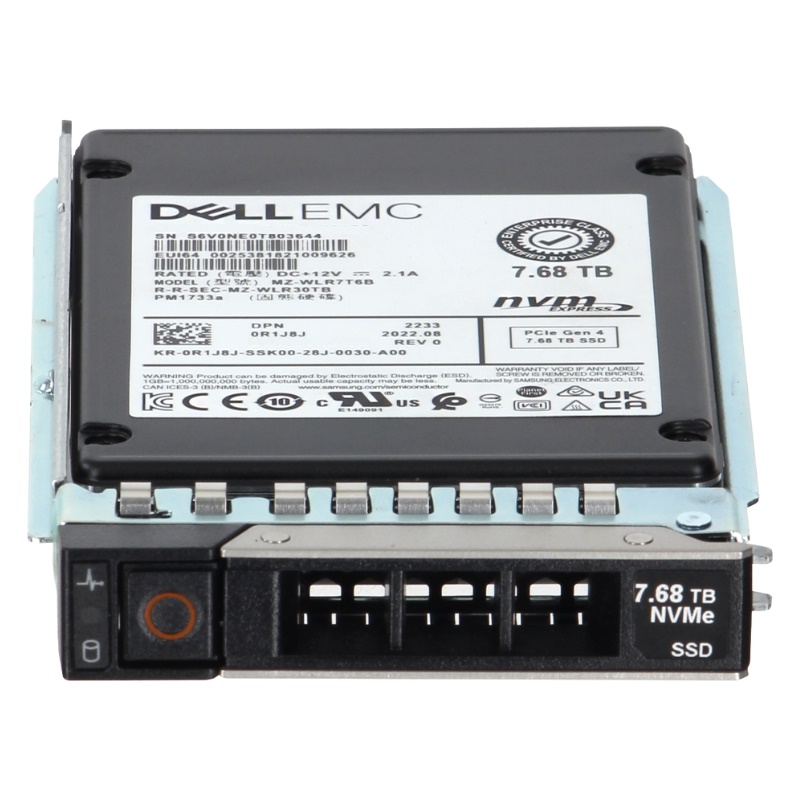


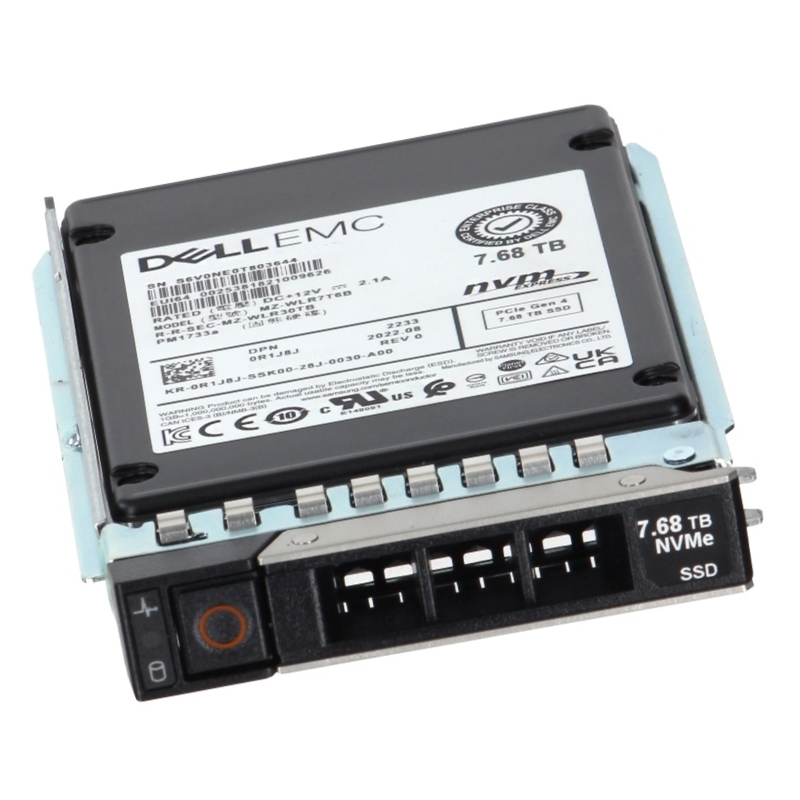
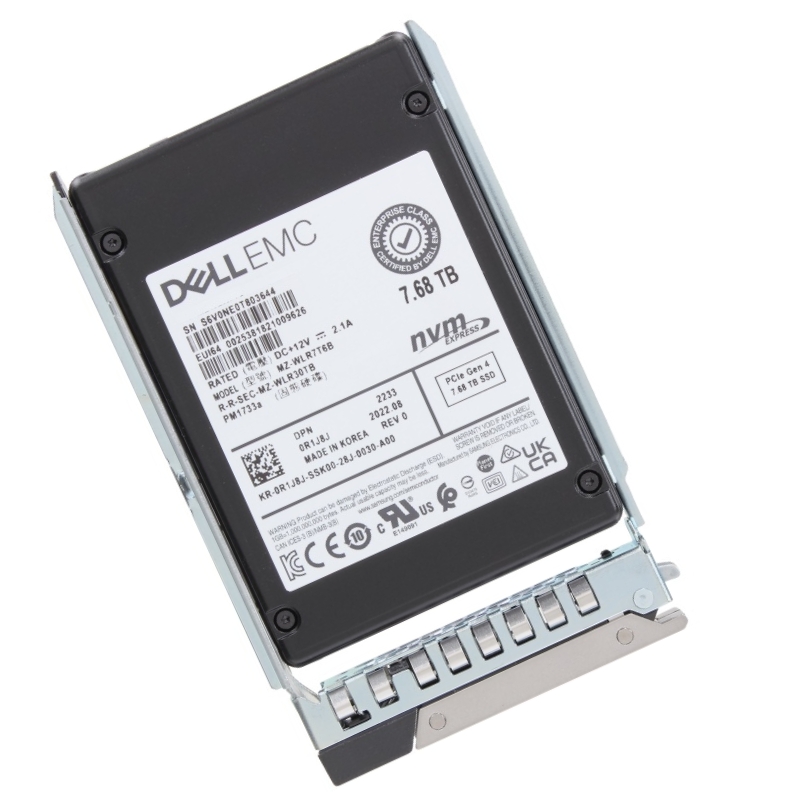
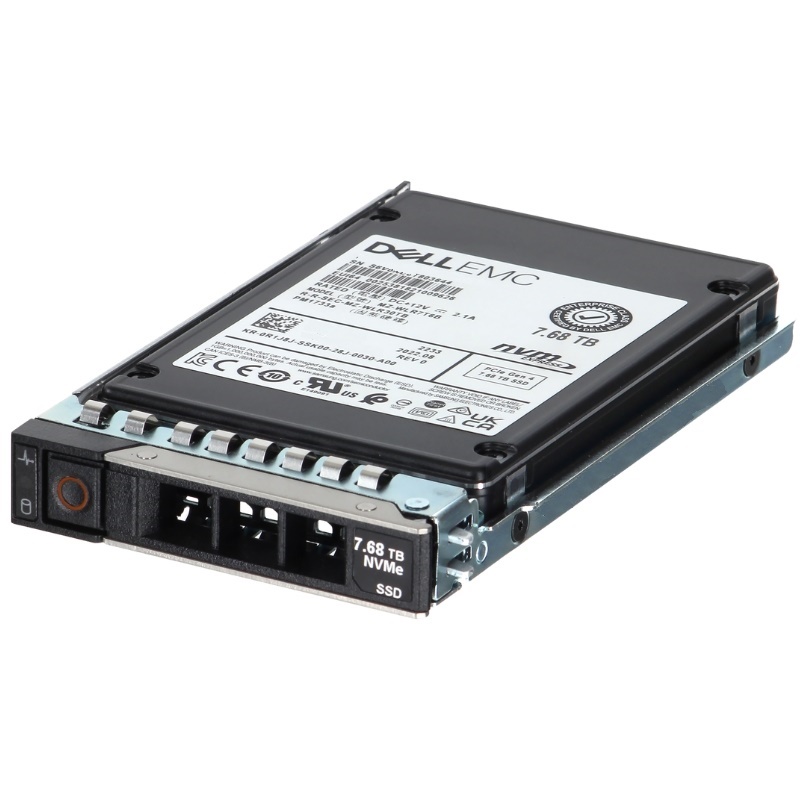
Dell 2533N 7.68TB Read Intensive PCI-Express Gen4 NVMe U.2 SFF SSD. Excellent Refurbished with 1 year replacement warranty
Dell 2533N 7.68TB Read Intensive PCI-Express Gen4 NVMe U.2 SFF SSD represents a high-capacity, enterprise-grade storage option engineered for data centers and mission-critical workloads that demand exceptional read performance, low latency, and the resilience of modern NVMe architecture. Designed to fit U.2 small form factor bays and to leverage the bandwidth of PCIe Gen4, this family of drives is optimized for read-intensive applications such as large-scale databases, content delivery, analytics engines, virtual desktop infrastructure (VDI) read caches, and cold-to-warm tiering use cases. Dell has tuned the firmware and validation process to align the 2533N series with modern server platforms, delivering consistent performance across a broad range of workloads while providing a durable, enterprise-class endurance profile and predictable service life.
Performance is the defining attribute of the Dell 2533N 7.68TB Read Intensive SSD. By leveraging PCIe Gen4 lanes and NVMe protocol efficiencies, the drive achieves substantial improvements in sequential and random read throughput compared with prior-generation PCIe interfaces. Applications that are heavy on read operations — such as analytics queries, search indices, and media streaming — benefit most from higher IOPS and reduced queue latencies. The drive is designed to deliver steady-state performance under sustained read workloads, minimizing tail latency and ensuring that read-heavy virtualized environments and caching layers respond predictably even under heavy concurrency.
Sequential read and write metrics are engineered to exploit the wider PCIe Gen4 bus, enabling large-block transfers to complete more quickly. Random I/O performance at lower queue depths is equally critical for real-world server workloads; the 2533N's controller and optimized firmware combination prioritizes small-block read efficiency so that database index hits and metadata lookups are processed with minimal delay. The result is an SSD that improves application responsiveness and reduces overall compute idle time, effectively amplifying the value of the server hardware on which it is deployed.
Latency sensitivity is a key focus for enterprise SSDs, and the Dell 2533N series is tuned to provide low and consistent read latencies. Quality of Service (QoS) considerations are baked into both firmware and drive validation: garbage collection, wear leveling, and background management tasks are scheduled to minimize their impact on foreground read operations. This approach ensures that short tail latencies do not spike unpredictably during tight I/O patterns, a common requirement for service-level agreements in production environments.
At 7.68TB, the Dell 2533N models deliver large on-device capacity that enables consolidation of hot and warm datasets into denser storage tiers. The “Read Intensive” classification signals that the drive is architected with endurance parameters favoring heavy read workloads over frequent, large-scale writes. Such a profile is ideal for systems where read requests vastly outnumber writes — for example, archival retrieval systems, streaming caches, or read-optimized analytic repositories. Endurance metrics for read-intensive drives commonly provide sufficient drive write life for moderate update patterns while maximizing usable capacity for reads.
Enterprise deployments demand predictable lifetime planning for storage. The 2533N series comes with endurance and warranty guidance aimed at helping IT teams model drive replacement, RAID rebuild windows, and maintenance cycles. Endurance is expressed in drive writes per day (DWPD) or total terabytes written (TBW) over the warranty period; the read-intensive classification typically offers an endurance rating tailored to workloads where large sequential writes are limited, yet background housekeeping and occasional updates are still expected. Dell pairs these endurance ratings with monitoring telemetry that can integrate into broader fleet management tools for health reporting and predictive replacement scheduling.
Media reliability and retention characteristics are critical for enterprise SSDs. The 2533N family uses enterprise-graded NAND flash and robust error correction mechanisms to maintain data integrity over the product life. Advanced ECC, end-to-end data path protection, and power-loss protection (where applicable) ensure that data written to media is preserved against transient failures. Data retention expectations are specified for powered-off conditions and normal operating temperatures, and Dell’s quality processes include extensive burn-in and validation tests to uncover marginal components before shipment.
The U.2 small form factor (SFF) is an industry-standard enterprise form factor that provides a compact but hot-pluggable solution for rack servers and storage enclosures. Dell 2533N drives in the U.2 SFF format are designed for straightforward integration into server chassis that support U.2 bays, enabling dense drive population without sacrificing serviceability. U.2’s physical connector supports NVMe over PCIe lanes while maintaining enterprise hot-swap convenience, making these drives ideal for environments that require rapid servicing and high availability.
Interoperability is a hallmark of Dell’s certified components. The 2533N series is validated against a broad set of Dell PowerEdge platforms and storage arrays to ensure that drive firmware, drive management utilities, and server firmware cooperate reliably. This validation reduces integration risk and helps administrators to deploy drives at scale with confidence. Compatibility matrices and firmware release notes are part of Dell’s support documentation, which informs administrators of any platform-specific settings or recommended BIOS/firmware versions for optimum performance.
Hot-plug capability in the U.2 form factor lets administrators replace drives quickly during maintenance windows or in response to predictive failures without extended downtime. This reduces mean time to repair (MTTR) and supports 24/7 operations. Deployment flexibility extends to mixed-tier configurations where read-intensive U.2 SSDs coexist with higher-endurance SSDs or hard disk drives, providing architects the ability to design storage hierarchies that balance cost per GB with performance and endurance characteristics aligned to workload profiles.
Data security at rest is an expectation for enterprise drives. The 2533N supports industry-standard encryption capabilities, enabling administrators to protect sensitive data without imposing significant performance overhead. Self-encrypting drive (SED) options, hardware-based cryptographic engines, and support for TCG Opal or Enterprise protocols (where applicable) allow drives to be used in regulated environments or where encryption is a compliance requirement. Key management and integration with enterprise key servers provide the operational controls required for secure lifecycle management.
Thermal management and power consumption are important criteria when selecting high-density storage for modern data centers. The Dell 2533N is engineered with thermal considerations to operate within design thresholds for server chassis airflow patterns. Lower power draw during idle and efficient use of power during active read operations contribute to reduced cooling load and lower total cost of ownership (TCO). For large scale deployments, cumulative power savings can be significant, improving rack-level power utilization and allowing organizations to maximize compute density without compromising thermal safety margins.
Enterprise drives are typically validated across a defined operating temperature range. Rack-level airflow planning, proper drive placement, and chassis-level cooling profiles all play a role in maintaining the drive within its optimal thermal envelope. Dell provides guidance on airflow and thermal mapping for U.2 populated bays, including recommendations for chassis fan policies and ambient limits to preserve performance and media longevity. Well-managed thermal environments also help minimize performance throttling due to thermal protections.
Power-loss scenarios can jeopardize data integrity; enterprise SSDs mitigate risk through capacitive power-loss protection or firmware techniques that ensure in-flight data is flushed and metadata remains consistent. The 2533N’s design emphasizes graceful degradation under adverse conditions so that single-drive failures do not cascade into larger system outages. Coupled with RAID protection and redundancy planning, these safeguards preserve the integrity of critical data and shorten recovery windows.
Choosing the right storage medium requires matching drive characteristics to workload patterns. The Dell 2533N 7.68TB Read Intensive SSD is ideally suited to applications where read operations dominate and where high capacity is required in a compact footprint. Typical use cases include read-caching tiers, distributed content delivery networks (CDNs), large-scale analytics where historical datasets are scanned frequently, search indexes, and virtualization environments where many VMs execute read-heavy boot storms or profile reads.
In content delivery and streaming, predictable sustained read throughput enables higher concurrent stream counts and faster seek times. The 2533N’s high capacity allows more content to be served directly from SSD tiers rather than expensive DRAM caches or slower disk tiers, improving user experience for media consumers and reducing backend latency for content providers.
Databases and search engines rely on fast index access and frequent small-block reads. Using read-intensive SSDs in index and read-layer tiers accelerates query performance and reduces query latency variability. This directly translates into faster report generation, quicker search responses, and improved end-user interactivity for analytics dashboards and transactional applications that are read-dominant.
Successful deployment of the Dell 2533N series requires careful planning around firmware compatibility, RAID configuration, thermal provisioning, monitoring integration, and data placement strategies. Administrators should evaluate RAID rebuild behavior and consider using erasure coding or RAID levels that balance rebuild times with protection overhead. Performance testing in a pre-production environment is recommended to validate QoS under representative concurrency and to tune RAID stripe sizes and cache settings accordingly.
Choosing the Dell 2533N 7.68TB Read Intensive PCI-Express Gen4 NVMe U.2 SFF SSD is a strategic decision for architects focused on delivering high read throughput, predictable latency, and dense capacity in serviceable enterprise form factors. The drive’s balance of performance, capacity, firmware maturity, and Dell’s ecosystem validation make it a compelling choice for organizations that require robust, read-optimized storage tiers. Whether deployed as a cache layer, an analytics repository, or a read-heavy VM datastore, the 2533N helps reduce application response times while maintaining the manageability and resilience required for modern data center operations.


 Contact Us
 Information
 Catalog
 Solid State Drives (SSD)
 Network Switches
 Hard Disk Drives
 HBA & Controllers
 PC & Servers
 PC & Server Memory
 CPU & Processors
 Network Routers
 Power Supplies
 Tape Drives & Libraries
 Network Devices
 Computer & Network Cables