(7% discount is applied at checkout)
Cart is empty
Your go-to destination for cutting-edge server products
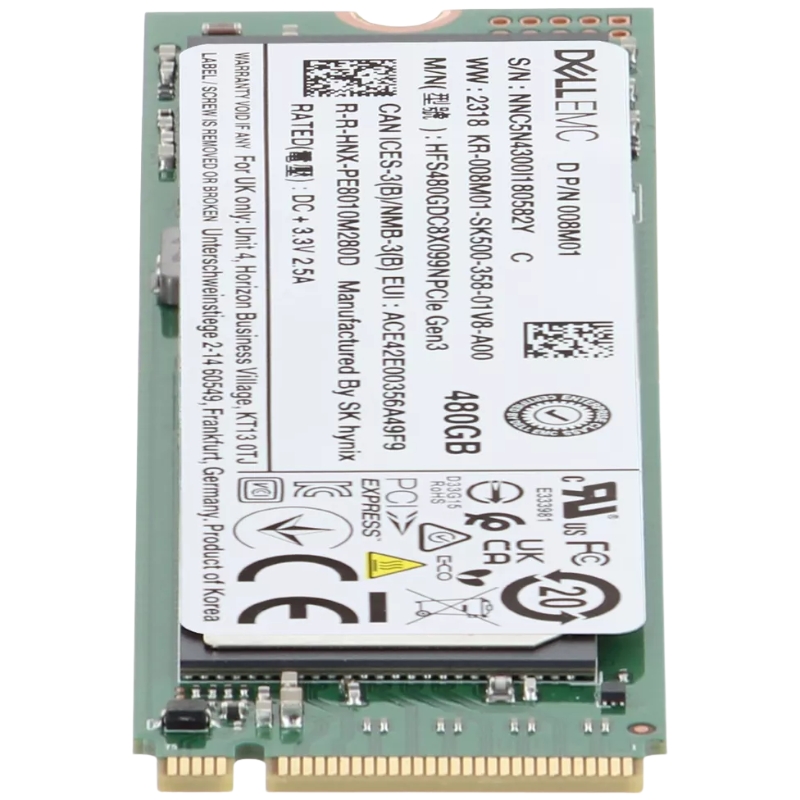


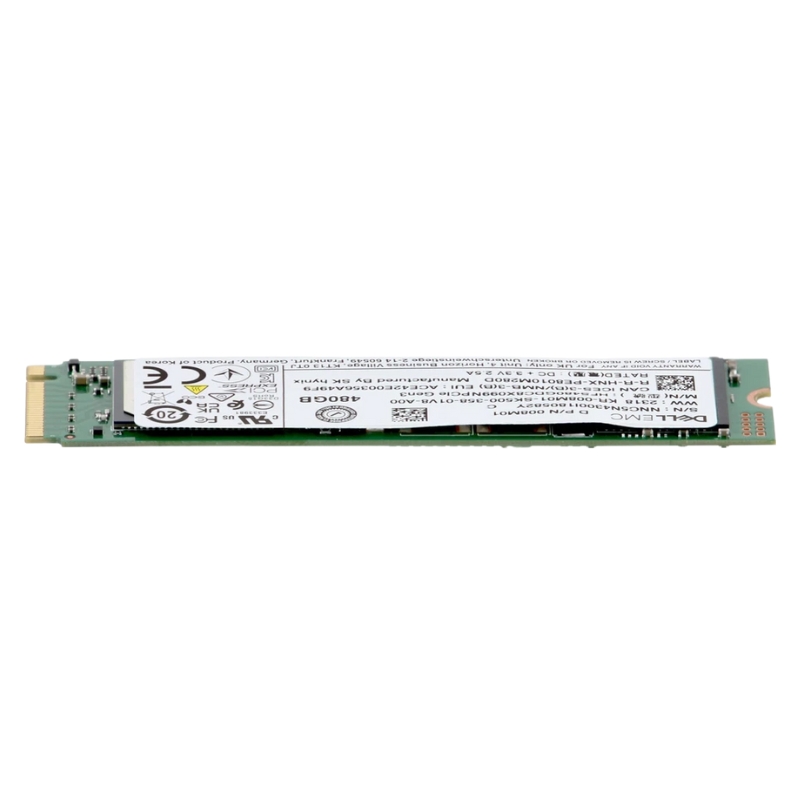
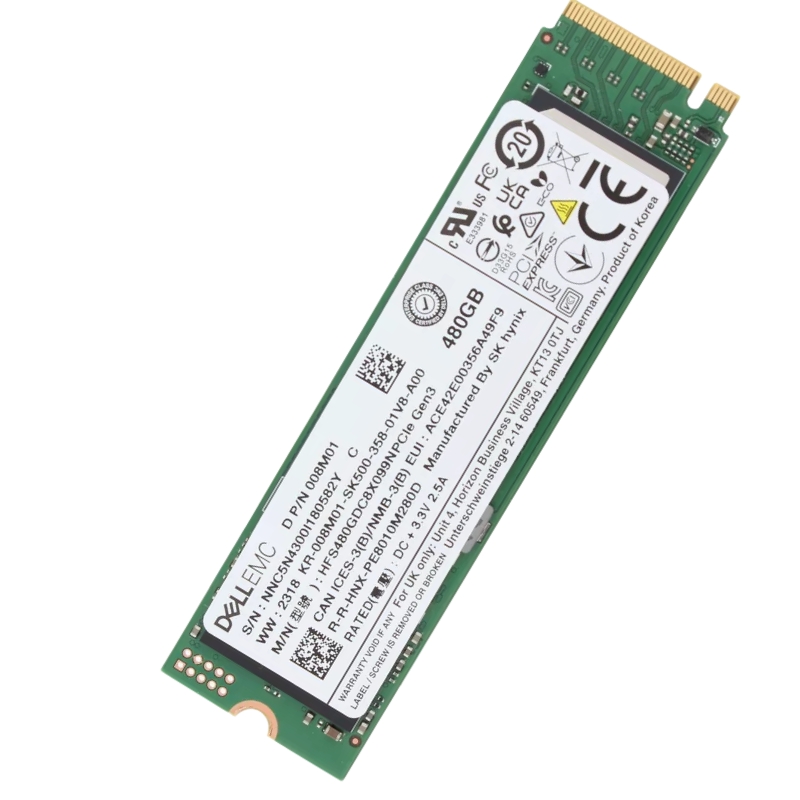
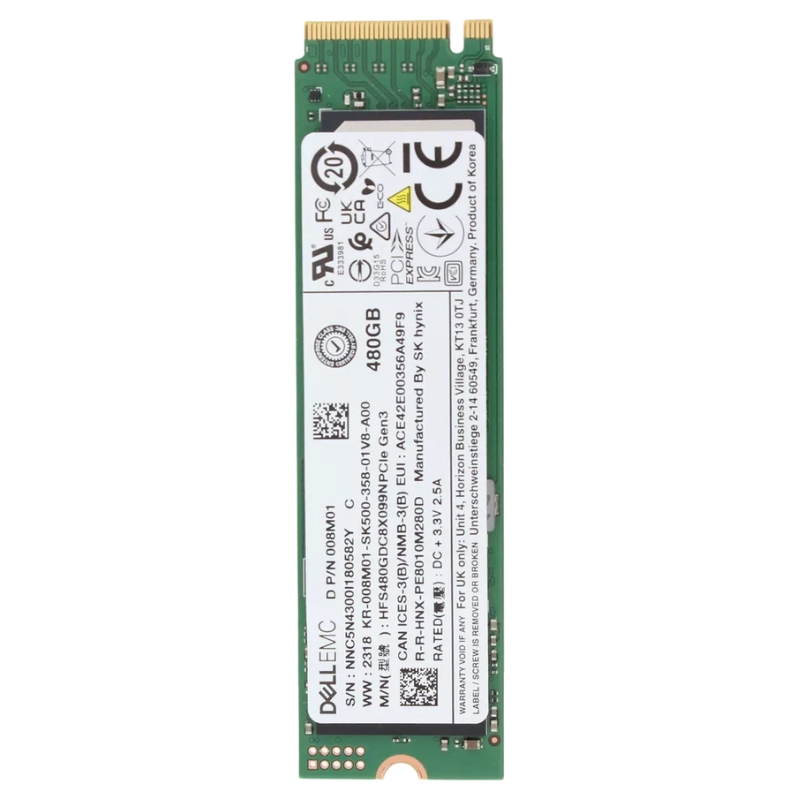
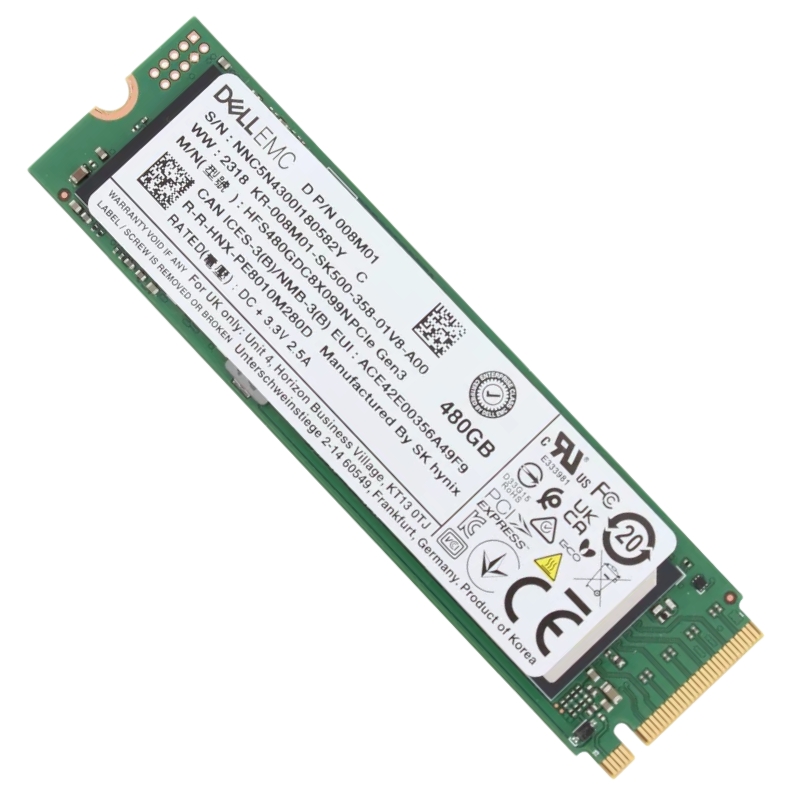
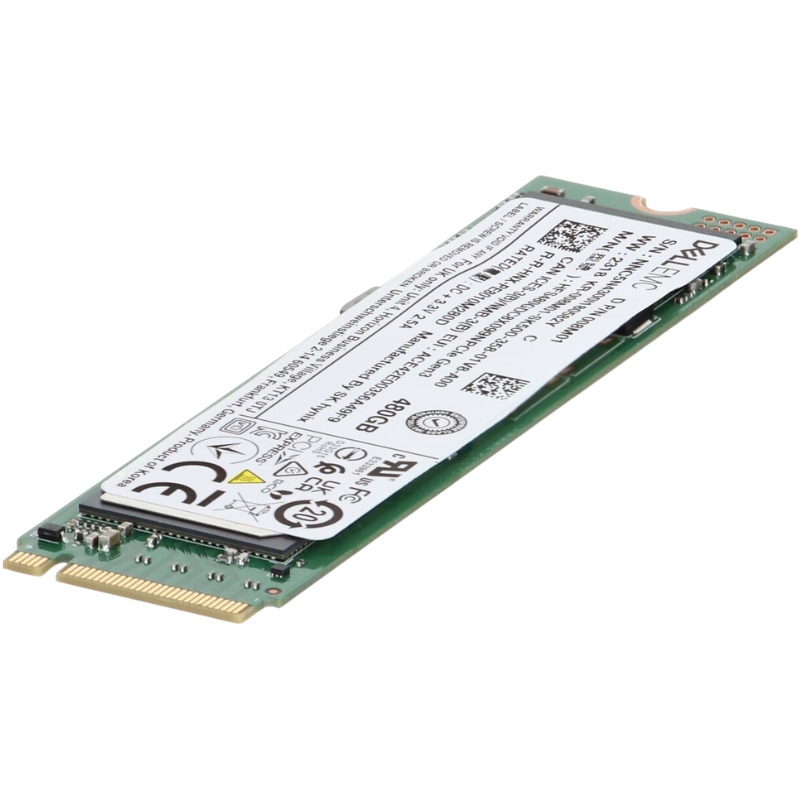
Dell 9WH4Y 480GB SATA-6GBPS M.2-2280 for Boss Card Enterprise Class 64 Layer TLC Read-Intensive 3D-NAND for Server Solid State Drive. Excellent Refurbished with 1 year replacement warranty
The Dell 9WH4Y 480GB SATA-6GBPS M.2-2280 drive for the BOSS (Boot Optimized Storage Solution) card represents a purpose-built storage option engineered specifically for modern Dell PowerEdge 14G and 15G servers. As part of the enterprise-class solid state drive category, this M.2-2280 form factor device pairs tightly with the BOSS card to deliver reliable boot, system, and log storage while reducing latency and improving system responsiveness. Built using 64-layer TLC Read-Intensive 3D-NAND technology, the 480GB capacity balances cost-efficiency with endurance and predictable performance for read-dominant server workloads, making it a common selection for datacenter deployments that require deterministic boot times, robust firmware reliability, and straightforward serviceability.
The Dell 9WH4Y model targets a specific niche inside enterprise storage: read-intensive system and boot duties. Designed to operate as part of a BOSS card configuration, it offloads the server’s primary boot duties from larger array volumes and simplifies OS deployment, firmware updates, and system recovery. The SATA-6GBPS interface provides wide compatibility with existing server controllers and management tools, while the M.2-2280 physical size allows dense placement and an efficient thermal profile on the BOSS carrier. For IT teams standardizing on 14G and 15G PowerEdge servers, the 9WH4Y 480GB drive is a tested, validated, and supported option by Dell that minimizes integration friction and shortens validation cycles for rack-scale deployments.
Compatibility is a core benefit: Dell validates this M.2 drive with specific BOSS card revisions and system BIOS/firmware versions for PowerEdge 14G and 15G families. That validation ensures server-level telemetry, integrated monitoring through iDRAC, and compatibility with lifecycle controller updates. Using validated components like the Dell 9WH4Y helps reduce RMA risk and ensures operational guidance from Dell’s support organization is applicable. IT administrators deploying these drives in bulk can expect consistent behavior across identical server models, consistent SMART reporting, and compatibility with enterprise features such as secure erasure and drive firmware updates coordinated through Dell tools.
The heart of the 9WH4Y is its 64-layer 3D-NAND architecture implemented with triple-level cell (TLC) chemistry optimized for read-intensive workloads. 3D-NAND stacks multiple layers of bit cells vertically, increasing density while allowing each cell to be manufactured with a process node that balances cost and endurance. In a read-intensive TLC implementation, controller firmware, wear-leveling strategies, over-provisioning, and ECC schemes are tuned to favor read latency consistency and read throughput, while still offering acceptable write endurance for system and log writes. This makes the drive ideal for read-heavy OS operations, application code loads, virtual machine images, and other server functions where reads vastly outnumber writes.
The M.2-2280 designation describes the physical dimensions of the drive: 22mm wide and 80mm long. That size is widely adopted for boot and system storage solutions, enabling compact mounting on the BOSS card carrier and inside system chassis without requiring additional cabling. Thermal behavior for M.2 devices is important, especially when mounted on a high-density BOSS card near other heat sources. The Dell 9WH4Y is designed with thermal throttling thresholds and firmware-aware thermal management so that under sustained workloads it will maintain data integrity and avoid thermal runaway. Proper system airflow and BOSS card cooling profiles recommended by Dell further ensure consistent thermal performance in 1U, 2U, and larger rack server designs.
Operational performance of the Dell 9WH4Y 480GB SATA drive is characterized by consistent read IOPS, low queuing latency for small block reads, and reasonable sequential throughput for system file loads. Because SATA is a legacy but still-ubiquitous interface, absolute peak bandwidth is lower than NVMe alternatives; however, the design tradeoffs favor predictability and wide compatibility. This makes the device particularly suited to hosting operating system images, boot partitions, hypervisor installations, and read-heavy application directories. For use cases that require heavy random writes or sustained high-bandwidth write operations (for example, heavy database journaling), IT teams should evaluate suitable mixed-use or write-optimized SSD classes instead of read-intensive drives to avoid exceeding endurance expectations.
During normal operations, administrators can expect the 9WH4Y to deliver low single-digit millisecond latencies for typical operating system IO patterns, and high queue-depth dependent read IOPS constrained by the SATA bus and controller. The steady-state behavior—how performance looks after the drive has been in use and garbage collection has engaged—has been tuned for minimal latency variance. This is especially important when boot storms occur in clustered or hyperconverged environments where multiple servers reboot simultaneously; a deterministic boot drive minimizes the overall time-to-ready across the infrastructure.
Typical deployment scenarios for the Dell 9WH4Y 480GB M.2 drive include dual-drive BOSS configurations where mirrored M.2 devices provide redundancy for boot volumes. In a mirrored BOSS setup, the drives are configured in a RAID-1 arrangement to provide survivability in the event of a single drive failure, ensuring the server remains bootable and operational. For virtualization hosts, the M.2 boot device frees larger, higher performance NVMe or SAS arrays to serve VM storage, reducing the complexity of storage tiering by separating system and application storage. For stateless compute nodes, a read-intensive boot device lowers capital costs while maintaining consistent boot behavior across scaling operations.
Comparing the Dell 9WH4Y to NVMe boot options highlights tradeoffs: NVMe devices provide higher throughput and lower latency, particularly under heavy concurrency, but require NVMe-capable boot firmware and sometimes more complex validation. The SATA M.2 approach retains broad compatibility and predictable behavior, and in many enterprise boot scenarios the marginal performance benefits of NVMe are not needed. When evaluating SSD classes, consider workload characteristics—read-dominant, write-heavy, mixed-use—and balance cost per GB, endurance (TBW), and interface compatibility. For many PowerEdge server use cases where the boot device simply needs reliability and determinism, the 9WH4Y is an economically sensible choice.
To optimize the Dell 9WH4Y for boot and system duties, implement these practical guidance points: align the operating system and hypervisor onto the M.2 boot device while redirecting high-write temporary directories to larger SAS/NVMe arrays; enable drive monitoring through iDRAC and set alert thresholds for early warning signs of wear; for BOSS mirrored configurations, test failover procedures so system recovery is verified; and schedule firmware updates through controlled change windows using Dell’s Lifecycle Controller for minimal disruption. These optimizations improve long-term reliability and ensure that the boot device functions predictably within the server ecosystem.
Across industries—from financial services to healthcare and cloud providers—the Dell 9WH4Y 480GB M.2 for BOSS card finds use where predictable boot and system performance matter. For financial trading platforms where server readiness must be deterministic, a validated boot device reduces variability. For healthcare systems where validated imaging and rapid system recovery are essential, a reliable read-intensive drive helps maintain uptime and compliance. In cloud and hosting environments, separating boot storage from tenant data storage enhances consolidation and simplifies backup strategies. These examples illustrate how choosing a validated server boot device contributes to overall infrastructure resilience.
As datacenter strategies evolve, administrators may consider migrating to NVMe boot devices or leveraging server boot-from-remote capabilities. However, the Dell 9WH4Y remains a practical interim and long-term solution for organizations standardizing on SATA boot storage. When planning upgrades, document current firmware revisions and validate migration paths in a test environment before fleet-wide changes. The modular nature of BOSS card deployments allows administrators to swap M.2 modules with minimal system downtime, making upgrades manageable and staged if needed.


 Contact Us
 Information
 Catalog
 Solid State Drives (SSD)
 Network Switches
 Hard Disk Drives
 HBA & Controllers
 PC & Servers
 PC & Server Memory
 CPU & Processors
 Network Routers
 Power Supplies
 Tape Drives & Libraries
 Network Devices
 Computer & Network Cables