(7% discount is applied at checkout)
Cart is empty
Your go-to destination for cutting-edge server products
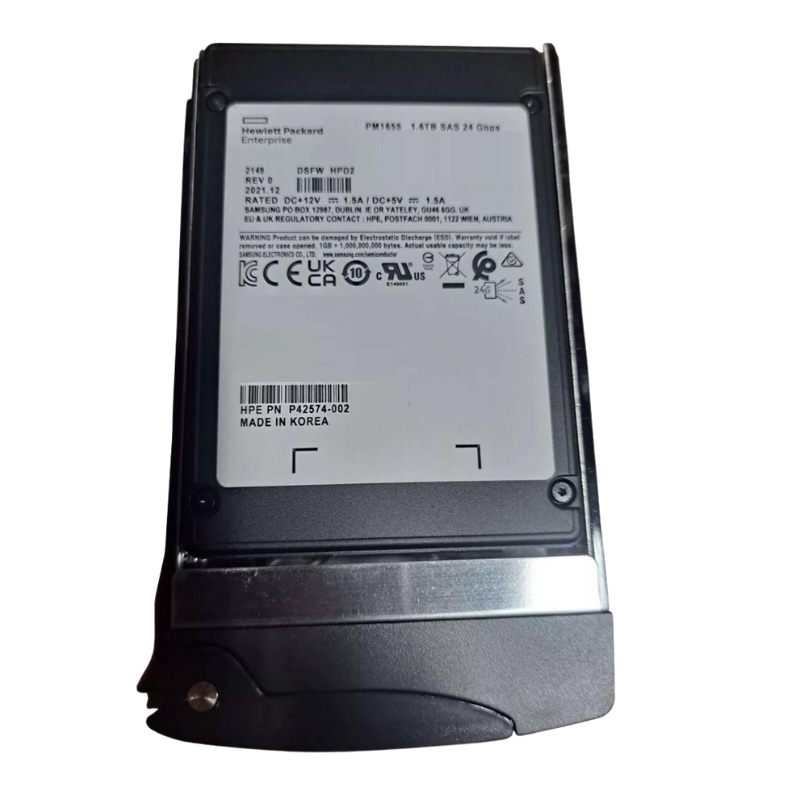


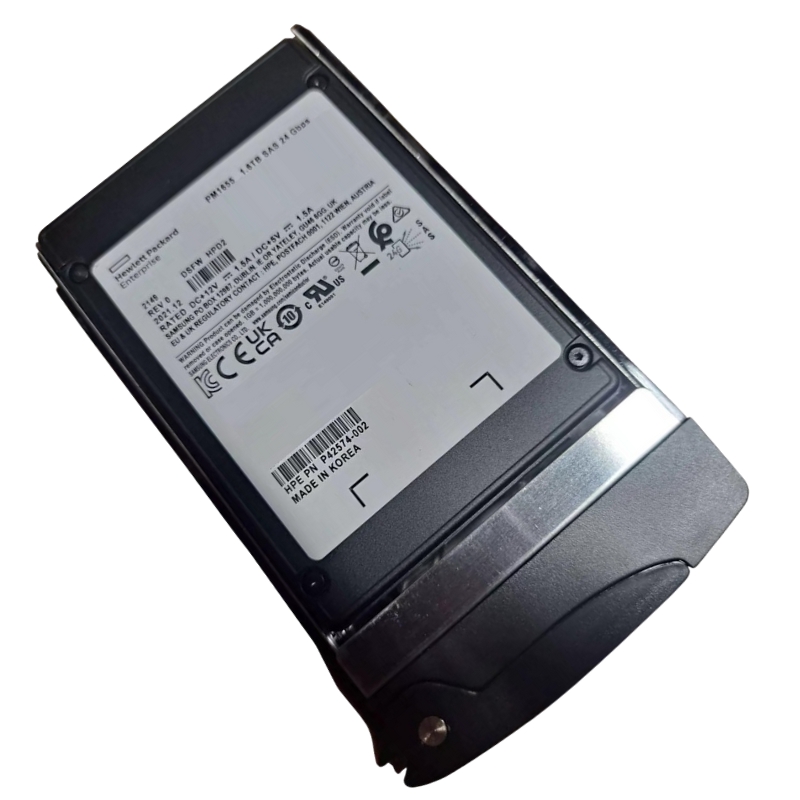
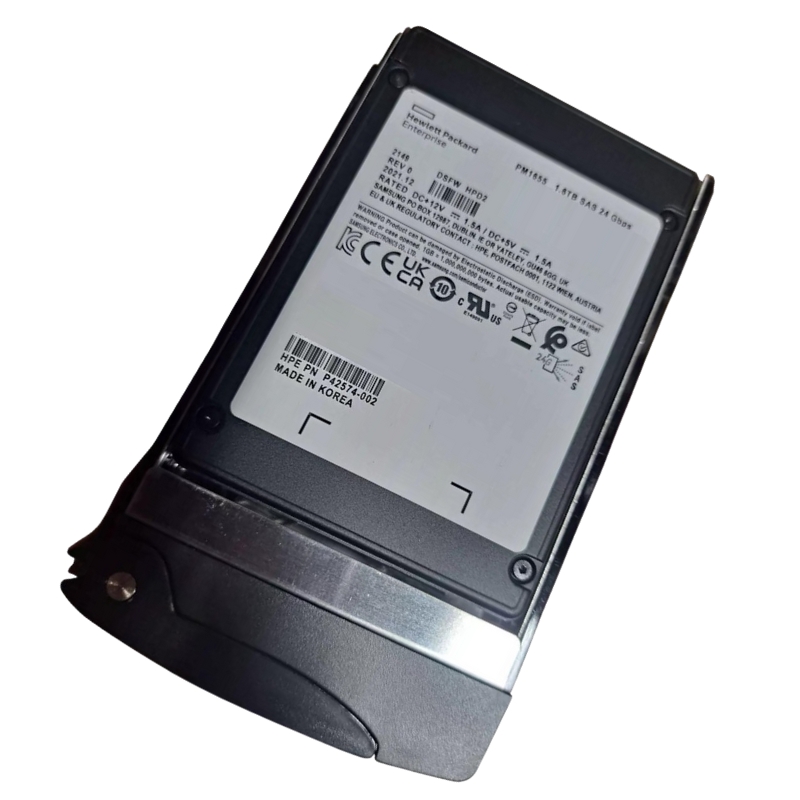
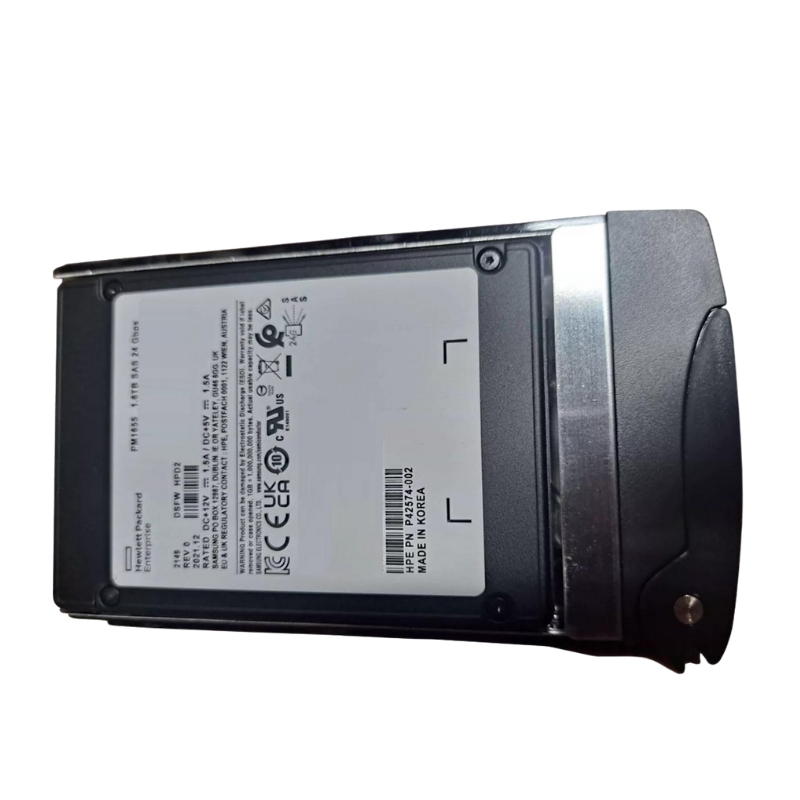
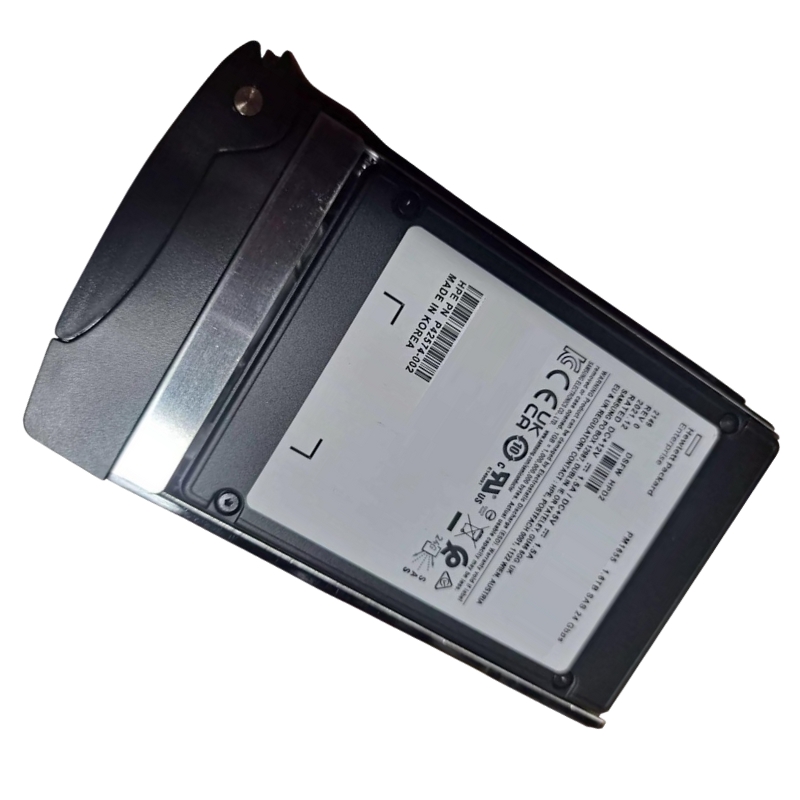
HPE P49723-001 Flex 1.6TB SAS 24GBPS Mixed Use 2.5inch SFF Rw Pm1655 SSD With Tray. Excellent Refurbished with 1 year replacement warranty
The HPE P49723-001 Flex 1.6TB SAS 24Gbps SSD is a high-performance, enterprise-grade solid-state drive designed to meet the rigorous demands of data-intensive environments. Built for both read and write applications, this Mixed Use (MU) drive delivers remarkable reliability, endurance, and consistent performance across various workloads.
Engineered with a 24Gbps SAS interface, this SSD offers enhanced data throughput and lower latency compared to earlier SAS generations. The increased bandwidth ensures faster access to stored data, reduced bottlenecks, and seamless scalability in large-scale data infrastructures.
The HPE PM1655 platform guarantees high endurance and sustained IOPS under demanding conditions. With rigorous testing and validation, this SSD ensures consistent operation in 24/7 enterprise environments. The included tray makes it ready for quick installation in compatible HPE servers and storage arrays.
This 2.5-inch Small Form Factor (SFF) SSD with a built-in tray is compatible with a wide range of HPE ProLiant and Apollo servers. Its plug-and-play design enables simplified integration and hot-swappable functionality, ensuring minimal downtime during upgrades or replacements.
The HPE P49723-001 is designed for mixed-use workloads, providing an ideal balance between endurance and performance. It delivers fast read/write speeds suitable for transactional databases, virtualization, and cloud-based storage infrastructures.
Tailored for enterprise applications, this SSD delivers outstanding stability and predictable performance, even under heavy workloads. It supports rapid data access and high throughput, making it a reliable storage component for virtualization, big data analytics, and cloud computing.
The P49723-001 SKU is targeted for HPE Flex and ProLiant ecosystems and is sold as a tested and validated part for HPE systems. Using an OEM-branded drive with the corresponding vendor's server lines ensures compatibility with tray/caddy mechanisms, firmware update paths, and integrated system tools like HPE iLO and HPE Smart Storage Administrator for health monitoring and firmware management.
Because the drive uses the SAS protocol, it remains interoperable with a wide range of enterprise-class RAID controllers, HBAs, and external arrays that support SAS devices. Still, when mixing branded OEM drives with generic controllers or non-HPE enclosures, validate:
The HPE P49723-001 Flex 1.6TB SAS 24Gbps Mixed Use 2.5-inch SFF PM1655 SSD with tray is an enterprise-class solid-state drive designed to balance high throughput, low latency, and consistent mixed-use endurance for modern data center workloads. Engineered to slot into 2.5" SFF bays and connect via a 24Gb/s SAS interface, this drive is optimized for mixed read/write environments such as virtualization, database systems, email servers, mixed OLTP/OLAP operations and general-purpose enterprise storage arrays.
Physically, the P49723-001 follows the 2.5-inch small form factor (SFF) standard which allows dense server and storage configurations. It is supplied with a tray to ease hot-swap installation into HPE servers and chassis that accept sled-mounted or caddy-mounted 2.5" devices. The 24Gbps SAS link provides backward-compatible connectivity with legacy 12Gb/s SAS hosts while also offering headroom for higher transactional throughput in compatible backplanes and controllers.
At 1.6TB raw capacity (formatted capacity will vary depending on vendor formatting and reserved over-provisioning), the drive is positioned in the mid-density tier—balancing usable capacity with performance and endurance characteristics suitable for mixed-use workloads. This capacity point is popular for systems that require predictable IOPS and moderate storage density without jumping to larger capacity devices that may trade off peak performance or endurance.
The SAS (Serial Attached SCSI) 24Gb/s interface provides enterprise-grade protocol features — multipath support, robust error recovery, and advanced SCSI command sets — which are often preferred in SANs and mission-critical server deployments. The PM1655 firmware typically includes enterprise-oriented features such as power-loss protection, media management, and SMART telemetry reporting for health and predictive failures.
The 24Gbps SAS physical layer enables higher aggregate bandwidth when paired with compatible controllers. In practical deployments, performance is determined by a combination of factors: controller capability, queue depth, host driver stack, RAID configuration (if any), and system workload patterns. For mixed-use SSDs, manufacturers tune firmware to deliver consistent low-latency responses across a mix of reads and writes rather than purely optimizing for sequential throughput alone.
Enterprise mixed-use drives like the PM1655 are tuned for stable latency under load — this means more predictable response times across sustained I/O rather than just peak burst metrics. Stable latency is critical for virtualization hosts (where many small random I/Os are generated), database systems requiring quick commit times, and multi-tenant workloads where one noisy job shouldn’t degrade overall system responsiveness.
This SSD targets "mixed-use" workloads, a classification that typically implies an optimized balance between random read and random write performance and a moderate endurance rating suitable for regular production activity. Use-cases where this drive performs well include:
Enterprise SSDs are designed with a suite of reliability features. While precise manufacturer-specified values (such as DWPD — drive writes per day — or MTBF — mean time between failures) should be pulled from the official product datasheet for procurement and design, mixed-use drives like the PM1655 commonly include:
The effective endurance of an enterprise SSD is affected by factors like host write amplification, provisioned over-provisioning, and workload characteristics. Administrators often allocate an additional small percentage of each drive as over-provisioning or rely on built-in over-provisioning to reserve spare blocks for wear-leveling. In production planning, monitor SMART attributes and endurance estimates, and plan for spare capacity and replacement cycles to avoid unexpected degradation in service.
When deciding between drives, compare across several axes:
Balance procurement cost against the total cost of ownership (TCO). TCO should include expected replacement cycles, administration overhead, potential downtime cost from degraded performance, and vendor support responsiveness. OEM-branded drives often carry the advantage of validated integration and consolidated support when paired with the same vendor’s servers and management tools.
Choose mixed-use SSDs when workloads show a roughly balanced or variable read/write mix, or when a single pool must serve many different workload types. For write-dominant workloads (e.g., intensive logging or caching with heavy sustained writes) consider higher-endurance write-optimized drives; for read-intensive workloads (e.g., content delivery or large-scale analytics reads), read-optimized or NVMe-based read-focused media might be more cost-effective.
Many enterprise SSDs support hardware-based encryption and secure erase features. Verify whether the PM1655 drive supports TCG Opal or vendor-specific encryption standards if encryption at rest is necessary for compliance. Secure erase capabilities allow safe, verifiable decommissioning of drives prior to disposal or redeployment.
Integrate drive-level events with your audit and logging framework to capture firmware update events, drive failures, and secure erase operations. This information is often required for regulatory compliance in industries like finance, healthcare, and government.
In virtualization environments, high random IOPS and stable latency directly improve VM density and user experience. Mixed-use SSDs can act as fast tier storage for VM boot drives, swap/ paging consolidation, and general-purpose datastore acceleration.
Databases benefit from predictable I/O latency and decent write endurance. The PM1655’s mixed-use tuning makes it suitable for index files, transaction logs, and data partitions that see a mixed pattern of read/write activity.
For remote or edge deployments requiring enterprise reliability but limited physical space, the 2.5" SFF form factor and tray compatibility make it easy to deploy in compact servers and appliances while preserving manageability and vendor support.
Choose filesystems and mount options that reduce unnecessary write amplification (e.g., avoid aggressive journaling unless needed, or tune commit intervals appropriately). On virtualized hosts, leverage thin provisioning judiciously and understand how the hypervisor handles deprovisioning to avoid hidden write amplification.
Use RAID levels that match your tolerance for latency vs. capacity. If using parity RAID, ensure the controller has adequate write-back cache or write-acceleration features to minimize the write amplification penalty. Align host sector sizes and RAID stripe sizes for efficient I/O patterns.
Employ host- or array-level QoS controls when available to prevent noisy neighbors from saturating shared storage resources. Limit bursty background jobs during production hours and schedule heavy rebuilds or scrubs during maintenance windows.
Adhere to vendor-specified operating temperatures and humidity ranges; SSDs are more tolerant of vibration than spinning media but still require stable thermal environments. During storage and transport, avoid exposure to electrostatic discharge and extreme temperatures.
When decommissioning drives, apply secure erase or vendor-provided crypto-erase features to sanitize data prior to disposal or redeployment. Follow local regulations for electronic waste disposal and vendor recycling programs when available.
Troubleshoot by verifying physical seat in the tray, checking backplane connections, confirming the SAS controller sees the device, and validating power delivery. Swap the drive into a known good bay to rule out a faulty slot or backplane.
If a newly inserted drive causes controller or array issues, check firmware compatibility, confirm the drive does not present a host-initiated lock, and ensure the drive’s identification string matches expected vendor identifiers. If problems persist, consult vendor support.
High drive temperature requires immediate attention: verify chassis airflow, check for blocked vents, ensure fans are working, and examine neighboring devices for abnormal heat output. High sustained temperatures accelerate wear and can cause throttling.


 Contact Us
 Information
 Catalog
 Solid State Drives (SSD)
 Network Switches
 Hard Disk Drives
 HBA & Controllers
 PC & Servers
 PC & Server Memory
 CPU & Processors
 Network Routers
 Power Supplies
 Tape Drives & Libraries
 Network Devices
 Computer & Network Cables