(7% discount is applied at checkout)
Cart is empty
Your go-to destination for cutting-edge server products
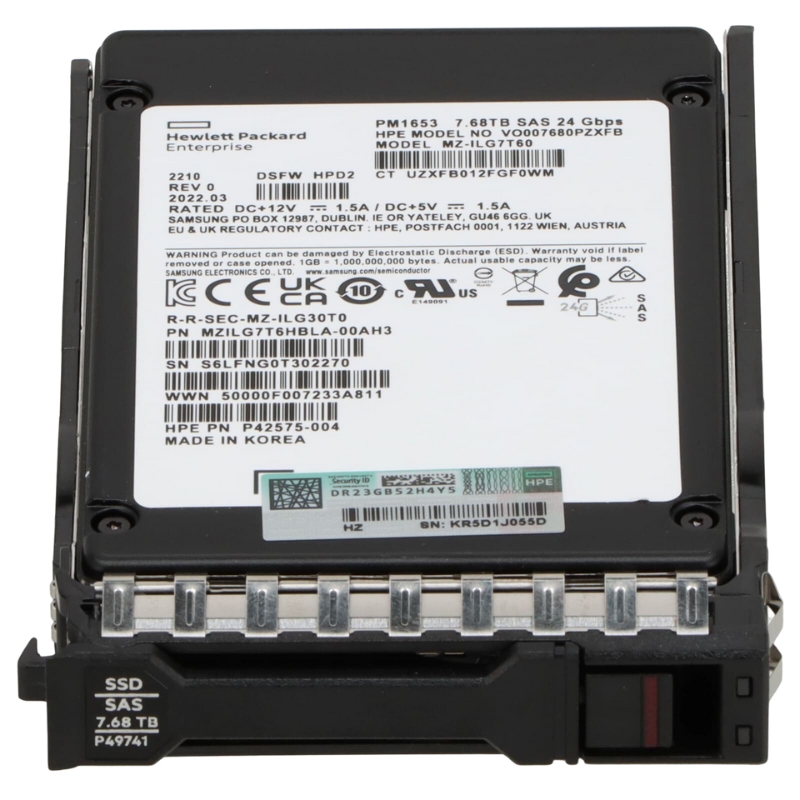


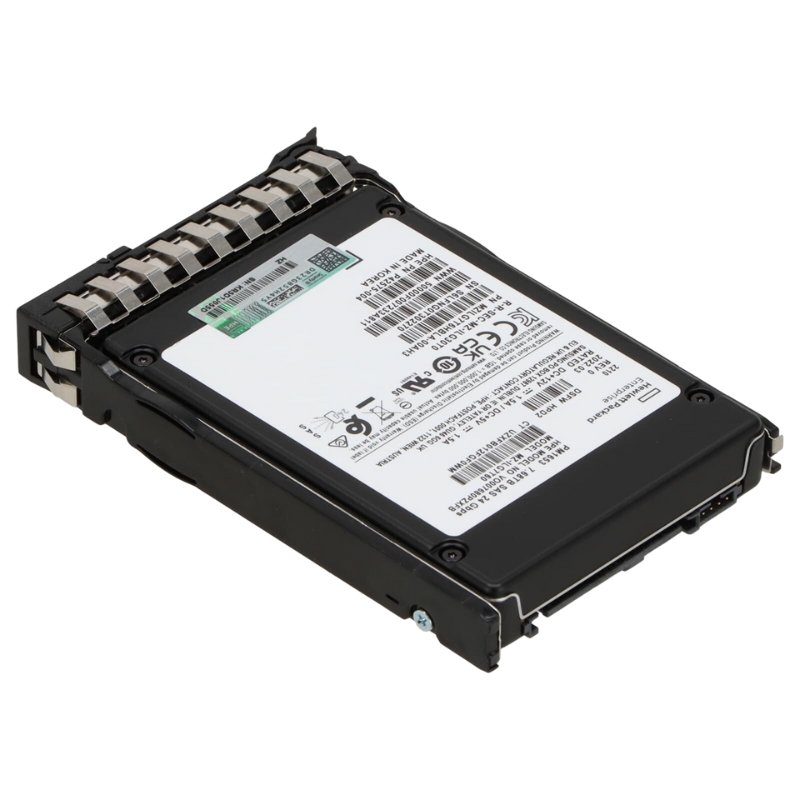
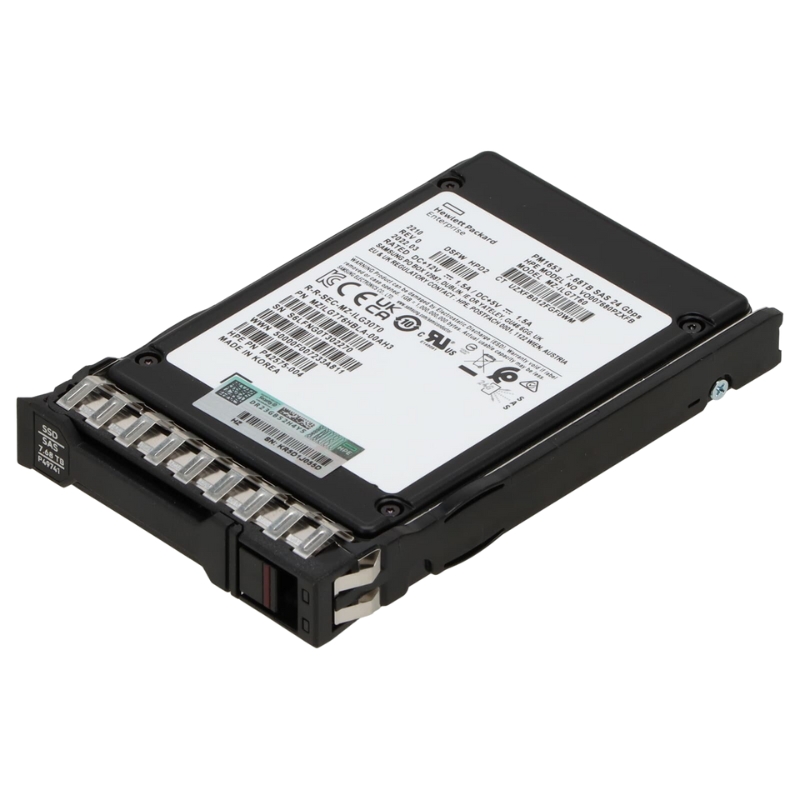
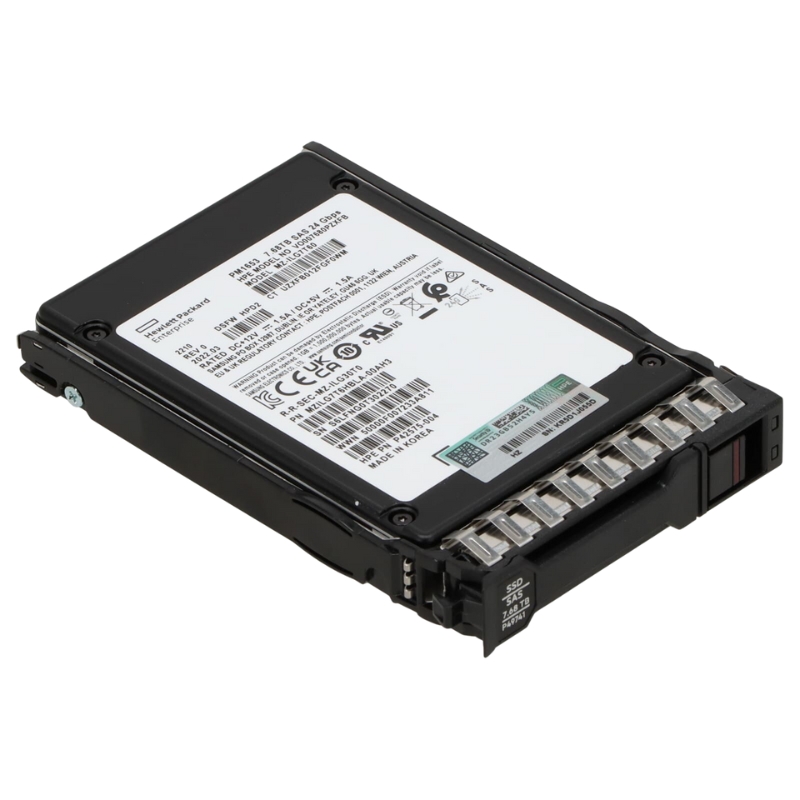
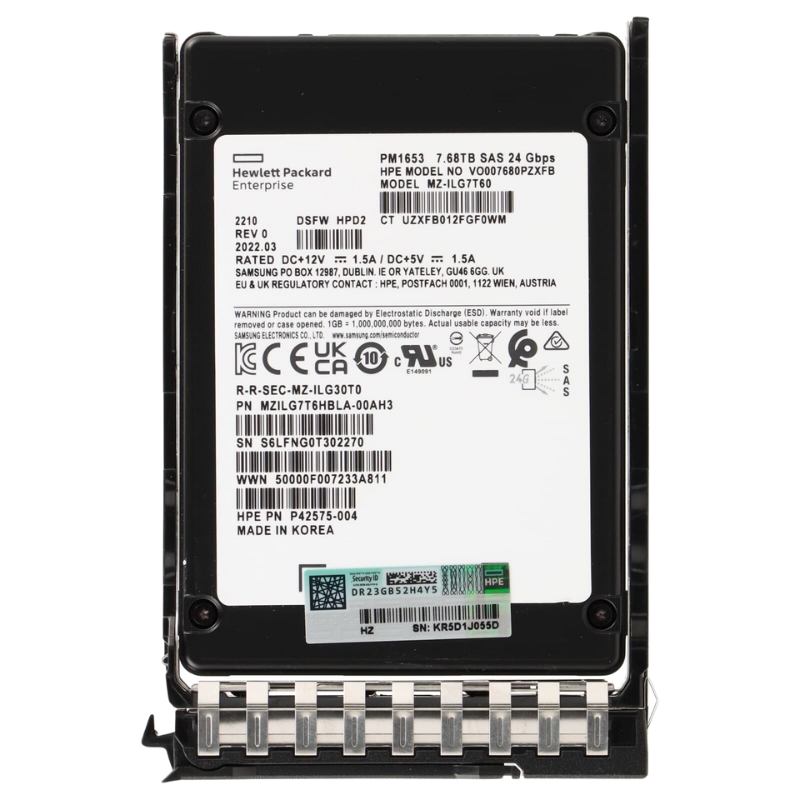
HPE P49741-001 7.68TB 2.5inch SAS 24GBPS Read Intensive BC MV SSD With Tray. Factory-Sealed New in Original Box (FSB) with 3 Years Warranty
The HPE P49741-001 7.68TB SFF 2.5-inch SAS-24Gbps Read Intensive BC MV Solid State Drive is engineered for enterprise environments that demand speed, endurance, and dependability. Built to deliver exceptional data throughput and consistent latency, this hot-pluggable SSD ensures seamless integration within HPE ProLiant Gen10 Plus Servers and other compatible systems, providing optimized performance for data centers and high-performance computing applications.
With a substantial 7.68TB storage capacity, this SSD is perfect for workloads that require high data density in limited space. Its Small Form Factor (SFF) 2.5-inch design and 15mm height make it a versatile component for enterprise storage arrays and performance-driven servers.
This drive is powered by advanced TLC (Triple-Level Cell) NAND flash memory, offering a balance between cost, capacity, and reliability. The TLC architecture enhances storage density while maintaining superior endurance, making it suitable for read-intensive workloads and enterprise-level data handling.
The SAS-24Gbps interface ensures high-speed data communication between the storage device and the server. This interface doubles the performance bandwidth compared to the previous generation, supporting rapid transfers, enhanced reliability, and multi-path connections for redundancy.
The HPE P49741-001 is designed to maintain energy efficiency without compromising performance. With a power consumption rate of only 8.56 watts, it minimizes operational costs while delivering consistent throughput.
The HPE P49741-001 seamlessly integrates with HPE ProLiant Gen10 Plus Servers and other HPE storage ecosystems. Its hot-plug and tray-mounted configuration make upgrades and replacements quick, with minimal downtime or system disruption.
Engineered for read-intensive applications, this SSD delivers efficiency in environments where rapid access and consistent data performance are critical. It suits a wide range of industries, from finance and healthcare to AI-driven data analytics.
The HPE P49741-001 exemplifies precision engineering, ensuring operational resilience and superior data protection. Its robust enclosure and advanced controller technology ensure data integrity and long-term reliability, even under heavy load.
Built to withstand the thermal demands of enterprise workloads, this SSD’s structural design facilitates efficient heat dissipation and sustained peak performance.
This drive integrates advanced error correction mechanisms and data integrity algorithms to ensure dependable performance throughout its lifespan. Enterprise users can trust this drive for critical applications requiring consistent uptime.
Beyond performance, the HPE P49741-001 delivers outstanding total cost efficiency. By reducing latency, increasing IOPS, and maintaining low energy draw, this SSD supports high operational throughput without inflating power or cooling expenses.
Investing in the HPE P49741-001 ensures long-term operational excellence and reduced maintenance costs. Its compatibility, performance consistency, and reliability make it a future-ready choice for expanding enterprise storage needs.
This category centers on a high-capacity enterprise SAS solid-state drive (SSD) specifically identified as the HPE P49741-001. With a 7.68 terabyte capacity in a small form factor (SFF) 2.5-inch drive and a 24 Gbps serial-attached SCSI (SAS) interface, these drives are engineered for read-optimized workloads in large datacenters, cloud infrastructure, virtualization hosts, and tiered storage arrays. The "read-intensive" designation signals firmware, media selection and endurance targets optimized to deliver very-high read throughput and consistent, low-latency reads over long duty cycles while offering adequate write endurance for common enterprise read-heavy applications.
Target buyers and stakeholders include:
This section highlights the essential technical and functional attributes you should emphasize on a category page to help both search engines and human buyers understand why this SSD matters.
The drive is a Small Form Factor (SFF) 2.5-inch module built to fit standard hot-swap trays and sleds used in modern rack servers and storage enclosures. The product ships with a tray, simplifying retrofit and replacement workflows—especially in HPE ProLiant servers and HPE storage chassis where tray compatibility reduces procurement friction.
The SAS 24 Gbps interface provides a robust, enterprise-class connection with dual-port capabilities (depending on controller/backplane configuration) for high availability. SAS remains the standard for mission-critical enterprise block storage where features like end-to-end data protection, full command set support (SCSI), and advanced error handling are paramount.
At 7.68TB per SFF drive, these SSDs are positioned to replace multiple spinning disks in tiered storage arrays or to act as the primary capacity tier in compact, high-I/O deployments. When multiplied across dozens or hundreds of bays in a storage array, 7.68TB modules deliver meaningful aggregated capacity with flash performance.
When crafting category content, highlight how the drive’s read-intensive profile maps to real workload types and what buyers can expect in terms of behavior and benefits.
Read-intensive SSDs are tuned for high sustained read throughput and consistent low read latency. These drives are especially valuable in applications where reads far outnumber writes—examples include content delivery systems, large read-mostly databases, OLAP analytics, search indices, and VDI read caches. The firmware and media selection aim to minimize read amplification and preserve predictable response times under heavy query loads.
Enterprise SSDs like the P49741-001 offer predictable latencies at scale. On a category page, explain that predictable latency is as important as headline IOPS numbers: predictable response time affects application SLAs, user experience, and database query runtimes. For mission-critical applications, buyers prefer drives that maintain consistent tail latency under concurrency rather than peak IOPS figures that are not sustained.
Although labeled "read-intensive," these drives still include enterprise-grade endurance characteristics suitable for environments where writes occur but are not dominant. Emphasize to purchasers that understanding their workload's write profile (sequential vs. random, write intensity as % of operations) is crucial to select the right drive family—read-intensive for read-dominant use, mixed-use for balanced read/write, and write-intensive for heavy logging and transactional writes.
Category content should reassure enterprise buyers about compatibility and outline deployment best practices, supported systems, and integration choices.
These drives are often distributed with HPE part numbers and are commonly validated for use in HPE ProLiant servers and enterprise storage arrays. While the SAS interface gives broad vendor interoperability, buyers get the most straightforward support experience when using HPE-validated hardware and firmware combinations. Using manufacturer-approved parts simplifies warranty and support interactions.
Shipping with a tray reduces installation friction. For service teams, this means predictable mechanical interfaces, consistent drive LED behavior, and standardized extraction procedures. On a category page, emphasize that included trays speed RMAs and on-site replacements—particularly in high-availability datacenter operations.
A shopper page should define related subcategories to guide customers who might seek alternative solutions or incremental upgrades.
While SAS SSDs remain a mainstay in conservative enterprise architectures due to compatibility and proven reliability, NVMe drives offer higher IOPS and lower latency via PCIe. The category page should help buyers decide between SAS and NVMe by listing tradeoffs: NVMe for maximum performance at the expense of potentially higher integration effort; SAS for compatibility, hot-swap readiness, and broad controller support.
Short, scannable content helps buyers quickly determine fit. Use a compact comparison and a practical checklist to aid decisioning.


 Contact Us
 Information
 Catalog
 Solid State Drives (SSD)
 Network Switches
 Hard Disk Drives
 HBA & Controllers
 PC & Servers
 PC & Server Memory
 CPU & Processors
 Network Routers
 Power Supplies
 Tape Drives & Libraries
 Network Devices
 Computer & Network Cables