(7% discount is applied at checkout)
Cart is empty
Your go-to destination for cutting-edge server products
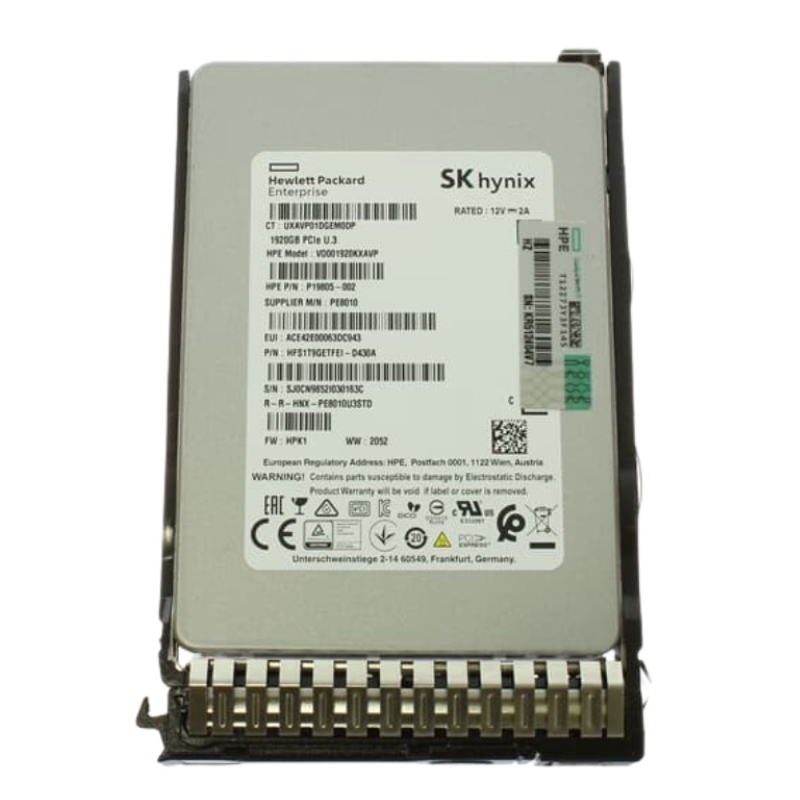


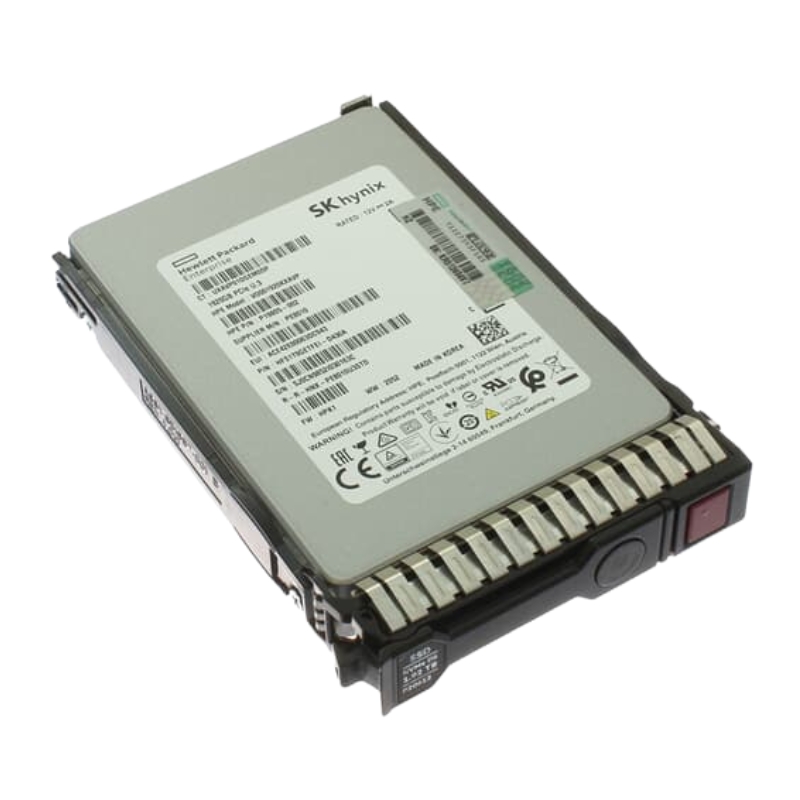
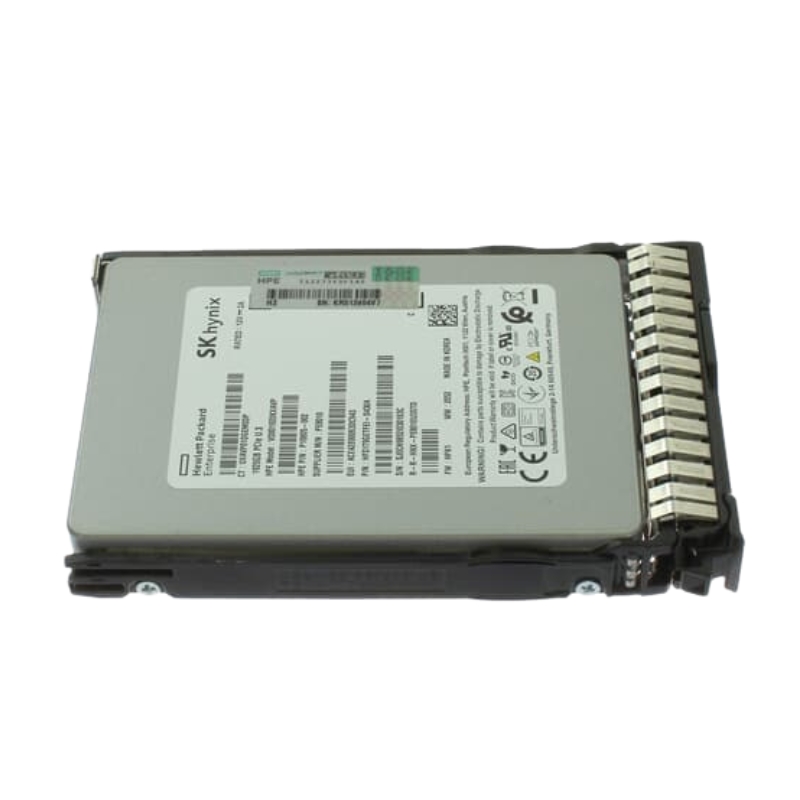
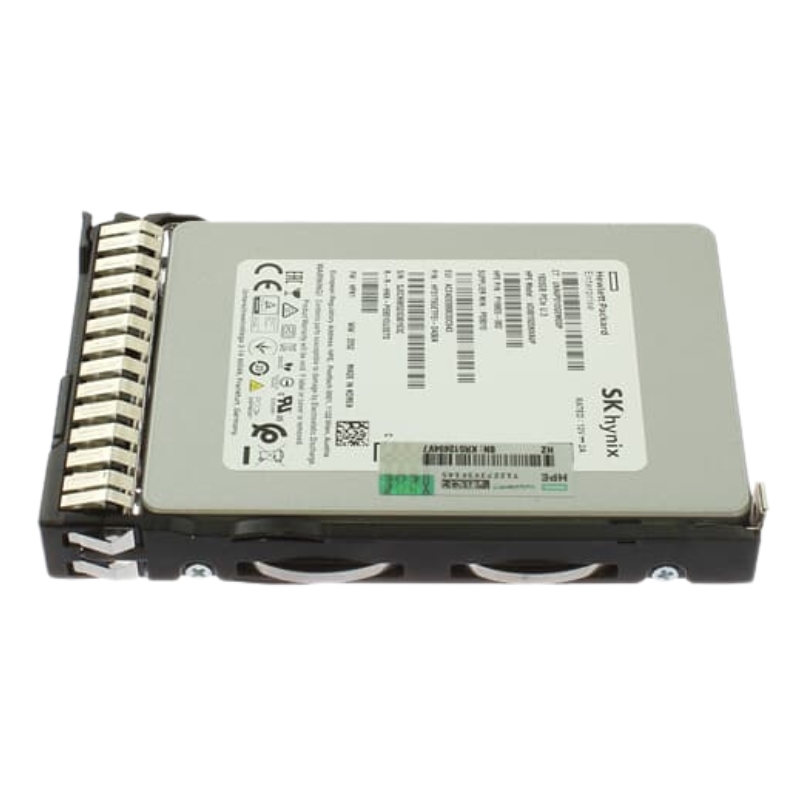
HPE P64858-001 1.92TB NVMe Gen4 Mainstream Performance Read Intensive SFF BC U.3 Static V2 SSD for Server. Excellent Refurbished with 1 year replacement warranty
The HPE P64858-001 delivers a precise 1.92TB formatted capacity within the industry-standard SFF (Small Form Factor) 2.5-inch design. This U.3 form factor represents a critical evolution in enterprise storage, providing backward compatibility with U.2 infrastructure while fully supporting the NVMe protocol. The SFF designation ensures optimal density in server configurations, allowing data centers to maximize storage per rack unit while maintaining superior thermal characteristics and power efficiency.
This drive implements the NVMe 1.4 specification over a PCIe 4.0 x4 interface, delivering significant performance advantages over previous generations. The Gen4 architecture doubles the bandwidth compared to PCIe 3.0, with theoretical transfer speeds reaching approximately 7.88 GB/s. This interface advancement reduces latency significantly while increasing input/output operations per second (IOPS), making it particularly suitable for data-intensive applications requiring rapid access to large datasets.
The drive operates on a four-lane PCIe 4.0 configuration, providing maximum interface bandwidth of 64 Gb/s (8 GB/s) when accounting for encoding overhead. This lane configuration ensures no interface bottleneck exists between the NAND flash memory and the host system, allowing the drive to deliver consistent performance even during sustained heavy workloads.
Engineered specifically for read-centric applications, the HPE P64858-001 delivers exceptional performance characteristics optimized for environments where read operations typically constitute 70-80% of storage activity. The drive maintains sustained read performance through advanced controller algorithms and NAND management techniques, ensuring consistent response times even during extended operational periods.
The drive achieves sequential read speeds up to 3,500 MB/s and sequential write speeds up to 1,200 MB/s. Random performance reaches 450,000 IOPS for read operations and 50,000 IOPS for write operations at queue depth 256. These performance metrics position the drive optimally for server applications requiring rapid data access, including database operations, web serving, and virtual desktop infrastructure.
HPE has implemented advanced QoS features that ensure predictable latency profiles, with typical read latency under 100 microseconds. This consistent performance delivery is critical for enterprise environments where storage response time directly impacts application performance and user experience.
The P64858-001 implements comprehensive end-to-end data protection, safeguarding information from the host interface through the DRAM buffer to the NAND flash media. This protection architecture includes advanced error correction codes (ECC), power-loss protection circuits, and redundant data paths to prevent corruption and ensure data integrity throughout the storage subsystem.
Enterprise-grade power loss protection circuitry ensures that in-flight data is safely written to the non-volatile media during unexpected power interruptions. The drive maintains sufficient stored energy in specialized capacitors to complete all pending write operations, preventing data loss and maintaining filesystem consistency across unexpected power events.
Full compliance with the NVMe Management Interface specification enables robust out-of-band management through the SMBus system interface. This allows comprehensive monitoring and administration of the drive independent of the primary data path, facilitating maintenance, health monitoring, and firmware updates without impacting host system operation.
As part of HPE's comprehensive infrastructure management strategy, this drive integrates with HPE InfoSight for predictive analytics and proactive problem resolution. The system collects drive telemetry, analyzes patterns, and can predict potential issues before they impact operations, significantly enhancing overall system reliability and reducing administrative overhead.
The P64858-001 serves as an excellent boot drive and primary storage solution for enterprise servers, providing rapid system responsiveness and fast application loading. Its read-optimized characteristics align well with operating system and application binaries that experience predominantly read-intensive access patterns after initial installation.
In virtualized environments using VMware vSphere, Microsoft Hyper-V, or KVM, this drive delivers strong performance for hosting virtual machine images, particularly in scenarios where multiple VMs are read-intensive in nature. The high random read performance enables rapid deployment and simultaneous operation of numerous virtual machines.
For database systems where frequently accessed reference data, indexes, and lookup tables benefit from high-speed storage, the P64858-001 provides significant performance advantages. While write-intensive database operations might require a mixed-use or write-intensive drive, read-heavy database workloads such as reporting, analytics, and query operations achieve substantial performance benefits.
Within software-defined storage solutions and hyperconverged infrastructure, the P64858-001 functions effectively as a performance tier for active datasets. Its balance of capacity, performance, and cost makes it suitable for caching frequently accessed data or hosting performance-sensitive applications while leveraging higher-capacity, lower-performance storage for archival data.
The drive is qualified and tested for use across HPE's server portfolio, including ProLiant DL, ML, and BL series servers as well as Apollo high-performance computing and storage systems. This comprehensive validation ensures optimal performance, management integration, and reliability when deployed within HPE server infrastructure.
The U.3 interface provides a unique compatibility advantage, supporting SAS, SATA, and NVMe protocols through a single connector. This enables deployment in existing U.2 infrastructure while providing a migration path to NVMe performance. The interface maintains physical compatibility with U.2 backplanes and connectors while implementing the logical signaling for NVMe operation.
The P64858-001 utilizes current-generation 3D NAND technology, which stacks memory cells vertically to achieve higher densities and improved performance characteristics compared to planar NAND. This architecture delivers enhanced endurance and lower power consumption while maintaining cost-effectiveness for the capacity point.
The drive incorporates a sophisticated storage controller implementing advanced flash management techniques including wear leveling, bad block management, read disturb mitigation, and garbage collection. These algorithms work in concert to extend drive lifespan, maintain performance consistency, and ensure data integrity throughout the drive's operational life.
The drive operates within typical enterprise power envelopes, with active power consumption during read operations approximately 8-10 watts and write operations drawing slightly higher current. Idle power consumption is optimized for data center efficiency, typically falling below 5 watts while maintaining readiness for immediate operation.
Advanced power states defined in the NVMe specification allow the drive to reduce power consumption during periods of low activity. These states are managed collaboratively by the host system and drive firmware to balance energy efficiency with responsiveness requirements based on workload demands.


 Contact Us
 Information
 Catalog
 Solid State Drives (SSD)
 Network Switches
 Hard Disk Drives
 HBA & Controllers
 PC & Servers
 PC & Server Memory
 CPU & Processors
 Network Routers
 Power Supplies
 Tape Drives & Libraries
 Network Devices
 Computer & Network Cables