
(7% discount is applied at checkout)
Cart is empty
Your go-to destination for cutting-edge server products
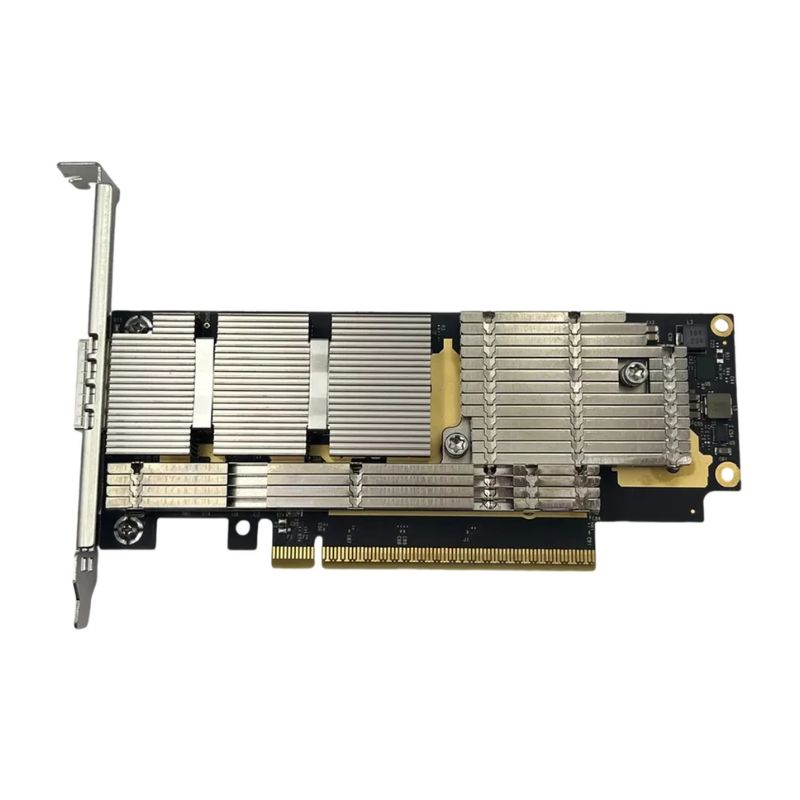
Dell X485V Single Port Network Adapter Nvidia Connectx-7 400gb/s Crypto Secure Boot. Excellent Refurbished with 1 year replacement warranty
The Dell X485V is a cutting-edge network interface card engineered for ultra-fast data transmission and secure connectivity. Designed with advanced cryptographic secure boot features, this adapter ensures both performance and protection for enterprise-level infrastructures.
The Dell X485V Single Port Nvidia ConnectX-7 400Gb/s Crypto Secure Boot Network Adapter represents a new generation of high-performance networking technology designed for modern data centers, enterprise environments, cloud platforms, and demanding computing infrastructures. This advanced network adapter combines extreme bandwidth capability, intelligent connectivity features, hardware-based security functions, and efficient data processing to support organizations that require reliable and scalable network performance.
Built around NVIDIA ConnectX-7 architecture, this adapter delivers exceptional throughput and low-latency communication for applications where every microsecond matters. The Dell X485V network adapter is engineered to support high-speed networking workloads including artificial intelligence operations, machine learning clusters, high-performance computing environments, virtualization platforms, storage networking, and advanced enterprise applications. With a 400Gb/s single-port configuration, it provides a powerful connectivity solution for businesses seeking to improve network efficiency while preparing their infrastructure for future growth.
Network adapters play a critical role in connecting servers, storage systems, and computing platforms to high-speed networks. The Dell X485V belongs to the category of advanced server network adapters designed for professional and enterprise-grade environments. Unlike standard network interface cards intended for everyday connectivity, this class of adapter focuses on maximum data transfer speed, optimized packet processing, and enhanced security.
The integration of NVIDIA ConnectX-7 technology allows the adapter to handle demanding workloads that require consistent and predictable performance. Modern organizations increasingly depend on real-time data exchange between servers and applications. Whether used in cloud infrastructure, large-scale databases, AI training systems, or distributed computing environments, high-speed adapters such as the Dell X485V help reduce bottlenecks and improve overall system responsiveness.
The most significant feature of the Dell X485V is its 400Gb/s networking capability. This level of bandwidth is designed for environments where massive volumes of information must move quickly and efficiently. As data-intensive technologies continue to expand, traditional networking solutions may become limitations. A 400Gb/s adapter provides the capacity required for next-generation workloads.
High-bandwidth networking is especially important in environments where multiple servers communicate continuously. Data centers supporting artificial intelligence models, scientific simulations, financial systems, and cloud applications often require rapid communication between computing nodes. The Dell X485V helps enable these environments by providing a high-performance connection capable of handling demanding traffic patterns.
The Dell X485V features a single-port configuration optimized for focused high-performance networking deployments. A single high-capacity port can simplify infrastructure planning while still delivering substantial bandwidth. This design approach allows system administrators to balance performance requirements, power consumption, and hardware efficiency.
Single-port adapters are commonly used in specialized server configurations where maximum throughput is required through a dedicated connection. They can be integrated into modern rack servers, enterprise systems, and high-performance computing platforms where network performance is a key factor in operational success.
The NVIDIA ConnectX-7 platform provides the foundation for advanced networking capabilities within the Dell X485V adapter. This technology is designed to deliver high-speed communication, intelligent acceleration, and optimized data movement. ConnectX-7 solutions are developed for environments where networking is closely connected to computing performance.
Through advanced hardware architecture, the adapter can help reduce processing overhead on host systems. By handling certain networking operations directly at the hardware level, the adapter allows servers to dedicate more resources to applications and workloads rather than basic data transfer tasks.
Security has become a major requirement in modern networking environments. The Dell X485V includes crypto secure boot capabilities that help protect systems from unauthorized firmware changes and potential security risks. This feature supports trusted infrastructure practices by ensuring that only authenticated firmware components can operate during system initialization.
Crypto secure boot technology provides an additional layer of protection for enterprise environments where data integrity and system reliability are essential. Servers handling sensitive workloads require confidence that their hardware components are operating with verified and trusted software. The Dell X485V contributes to this security approach by supporting protected startup processes.
Data centers contain critical systems that support business operations, customer services, and large-scale applications. A compromised networking component can create significant operational challenges. Secure hardware features within the Dell X485V help organizations maintain stronger control over their infrastructure.
The adapter’s security-focused design supports environments where compliance, reliability, and protection against unauthorized access are important considerations. By combining performance with security, the Dell X485V helps organizations build networking environments that are prepared for modern cybersecurity expectations.
The Dell X485V Single Port Nvidia ConnectX-7 400Gb/s Crypto Secure Boot Network Adapter is designed to support a wide range of advanced computing environments. Its high-speed architecture benefits organizations that depend on fast communication between servers, applications, and storage systems.
Artificial intelligence and machine learning workloads are among the areas that benefit significantly from advanced networking. Training complex models requires continuous movement of large datasets between processing units. A high-performance adapter reduces communication delays and helps maintain efficient data flow across computing clusters.
AI infrastructure often consists of multiple interconnected systems working together. Graphics processors, storage platforms, and compute nodes must exchange information rapidly to maintain performance. The Dell X485V provides the bandwidth required for these interconnected environments.
With accelerated networking capabilities, organizations can improve the efficiency of AI pipelines and reduce unnecessary waiting time caused by network limitations. The adapter helps create a foundation for scalable AI systems that can handle increasing data demands.
High-performance computing environments rely on fast communication between processing nodes. Research institutions, engineering organizations, and scientific facilities often operate workloads that require massive computational resources. The Dell X485V helps support these environments by enabling faster communication between connected systems.
Applications involving simulations, modeling, analytics, and large-scale calculations can benefit from reduced latency and increased throughput. The adapter’s design aligns with the needs of organizations that require consistent performance under intensive workloads.
Cloud computing platforms depend heavily on efficient networking. Virtual machines, containers, applications, and storage resources must communicate constantly. Network performance directly affects user experience, application responsiveness, and infrastructure efficiency.
The Dell X485V helps cloud environments manage high volumes of network traffic by providing advanced connectivity capabilities. Its architecture supports modern virtualization requirements and enables organizations to build flexible infrastructure capable of adapting to changing demands.
Storage systems are increasingly dependent on high-speed networking technologies. As applications generate larger amounts of data, storage access speed becomes an important performance factor. The Dell X485V allows servers to communicate with storage platforms at extremely high speeds, helping reduce delays in data access.
Enterprise storage environments, including distributed storage solutions and data-intensive platforms, can benefit from reliable high-bandwidth connections. This allows organizations to maintain efficient workflows while supporting growing data requirements.
The Dell X485V is designed for enterprise-level deployments where reliability and compatibility are essential. Organizations selecting network adapters must consider system architecture, workload requirements, and infrastructure goals. This adapter is intended for environments that require advanced networking capabilities rather than basic connectivity.
Server administrators often evaluate network adapters based on throughput, latency, security features, and operational efficiency. The Dell X485V addresses these requirements by combining a powerful networking platform with enterprise-focused features.
Networking requirements continue to increase as businesses adopt more advanced technologies. Artificial intelligence, cloud services, automation, and large-scale analytics are creating greater demand for faster communication systems. The Dell X485V provides a forward-looking solution designed to support these evolving requirements.
Investing in high-speed networking infrastructure helps organizations prepare for future workloads. A 400Gb/s adapter provides significant capacity that can support expansion and modernization efforts without requiring immediate hardware replacement.
Scalable infrastructure allows organizations to expand operations without experiencing unnecessary limitations. The Dell X485V supports this approach by providing networking capability suitable for both current and emerging applications.
Businesses can use advanced adapters like the Dell X485V as part of a broader strategy to improve infrastructure performance. Faster networking can contribute to improved productivity, better application delivery, and more efficient resource utilization


 Contact Us
 Information
 Catalog
 Solid State Drives (SSD)
 Network Switches
 Hard Disk Drives
 HBA & Controllers
 PC & Servers
 PC & Server Memory
 CPU & Processors
 Network Routers
 Power Supplies
 Tape Drives & Libraries
 Network Devices
 Computer & Network Cables