
(7% discount is applied at checkout)
Cart is empty
Your go-to destination for cutting-edge server products
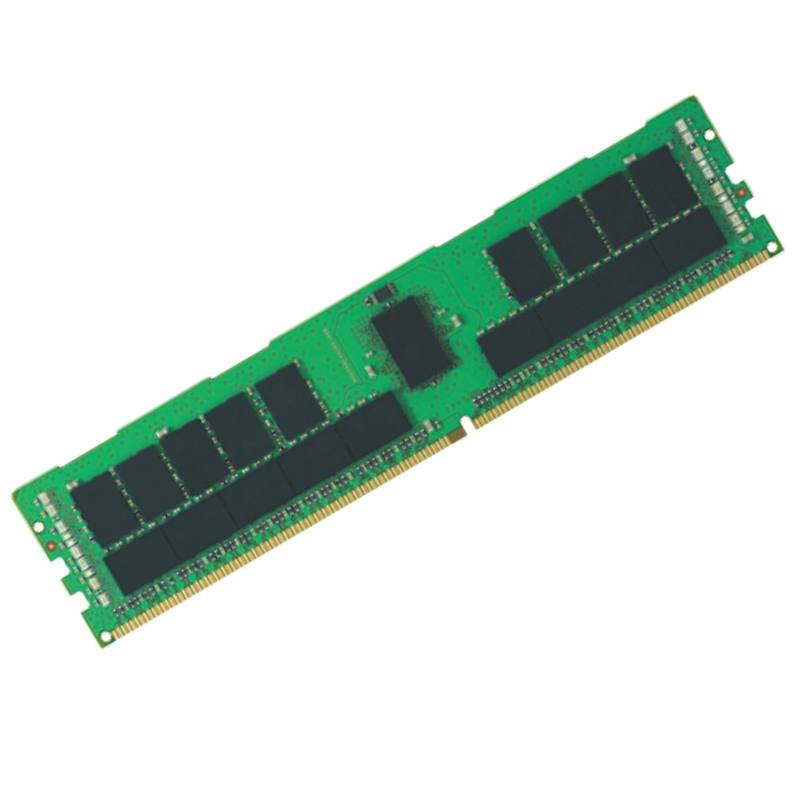
Dell AA673221 512GB Intel Opt DC Persistant Cascade Lake DDR4 SDRAM 288-Pin RDIMM PC4-21300 2666MHz DDR-T Server Memory Module. New (Box Not Sealed) with 1 year replacement warranty
The Dell AA673221 512GB Intel Opt DC Persistant Cascade Lake DDR4 SDRAM 288-Pin RDIMM PC4-21300 2666MHz DDR-T Server Memory Module represents a specialized tier of server memory that blends very high capacity with novel persistence characteristics, enabling data center architects to rethink memory, storage and application layering. This class of module delivers half a terabyte of directly accessible, byte-addressable capacity that remains available to workloads in ways traditional volatile DRAM cannot, while fitting into standard 288-pin RDIMM sockets designed for enterprise-grade platforms. The product designation is often used interchangeably with vendor and industry terminology that describes Intel Optane DC Persistent Memory modules, and the Dell AA673221 listing identifies the module as a 512GB PC4-21300 DDR4 device targeted at Cascade Lake-era server platforms.
The Dell AA673221 512GB memory module sits within a category of high-capacity, high-reliability server memory designed for modern data center workloads. This category blends enterprise-grade DDR4 registered memory technologies with platform-specific compatibility for Intel Cascade Lake generation servers and systems supporting persistent memory extensions. The category emphasizes modules that are 288-pin RDIMM form factor, operate at PC4-21300 (2666 MT/s), and are intended for applications that require maximum capacity, robust error correction, predictable latency, and long-term stability under sustained server loads. Search intent for this category often targets administrators, system integrators and specialists looking for 512GB DIMMs, validated firmware and SPD profiles, and parts that match Dell and regulatory requirements. The category content therefore highlights compatibility, key electrical and timing characteristics, and the practical operational implications for virtualization, database acceleration, and memory tiering strategies.
Modules in this category conform to the 288-pin DIMM mechanical standard used by DDR4 RDIMMs. The 288-pin layout determines the socket footprint on server motherboards and enforces specific keying and retention features for rack servers. Physical attributes include the height profile suitable for dense chassis, thermal label placement for hot-swap visibility, and the registered buffer circuitry that distinguishes RDIMM modules from unbuffered UDIMMs or load-reduced LRDIMMs. The presence of register and buffer components contributes to signal integrity and stability when multiple DIMMs are populated per memory channel, enabling higher total system capacity while maintaining electrical reliability.
PC4-21300 identifies the JEDEC speed grade corresponding to 2666 million transfers per second. This rating defines the raw data rate and indirectly describes peak theoretical bandwidth characteristics for a single DIMM operating at the specified timing and voltage. In practice, sustained throughput depends on platform memory channel configuration, the number of populated DIMMs per channel, and memory controller capabilities in the host CPU family. The 2666 MT/s grade is a widely supported and tested frequency for enterprise processors, offering a balance between latency, bandwidth, and thermal/power attributes when populated with higher-density DRAM devices to reach capacities like 512GB per module.
The 512GB capacity class represents one of the highest individual DIMM capacities available in mainstream server memory markets. Achieving such capacity commonly relies on stacking or high-density DRAM die technologies and sometimes on multiple die layers under advanced packaging. This category of modules is intended for systems that require fewer physical DIMMs to reach very large memory footprints, reducing complexity for memory population while increasing the amount of directly addressable memory per socket. Large-capacity DIMMs support memory-intensive workloads such as in-memory databases, large-scale virtual machine consolidation, big data analytics, real-time caching layers, and certain classes of scientific or engineering simulation where dataset residency in main memory significantly accelerates processing.
Category modules are engineered to interface optimally with Intel Cascade Lake generation Xeon Scalable processors and compatible server platforms. Cascade Lake memory controllers include specific support for RDIMM and persistent memory technologies, offering validation for higher capacity modules and advanced memory features. When selecting modules from this category for Cascade Lake systems, system owners should verify server BIOS revisions, vendor compatibility matrices, and Dell qualification lists to ensure stable operation. The memory controller, thermals, and BIOS memory training routines all interact with high-density modules, so platform-level certification reduces the risk of training failures and provides firmware-level optimizations for performance and power management.
The category expression references Intel persistent memory concepts. It is important to understand the difference between conventional DDR4 RDIMM operation and Intel Optane DC persistent memory technology. RDIMM modules provide volatile DRAM storage with ECC and register buffering, while persistent memory products provide non-volatile byte-addressable capacity that remains across power cycles.
The RDIMM architecture used across this category includes ECC functionality for single-bit error correction and multi-bit error detection, providing a baseline of data integrity required by enterprise systems. Registered buffering helps maintain signal quality when multiple DIMMs are present on a channel, which directly supports availability goals. The memory modules are manufactured and screened to stringent JEDEC test regimens and additional vendor-level burn-in procedures to minimize infant mortality rates and ensure field reliability. ECC combined with vendor testing and monitoring interfaces allows datacenter teams to achieve the uptime commitments expected in production services.
High-density 512GB modules can exhibit different thermal behavior compared to lower-density DIMMs, due to DRAM device packing, stacking techniques, and PCB design. Category content typically outlines recommended airflow patterns within chassis, maximum allowable ambient operating temperatures, and placement guidelines to avoid hotspots near CPUs and VRM arrays. Proper thermal management extends component life and helps maintain consistent performance under sustained load. Many modules in this class include thermal sensors or recommend system-level monitoring through platform management interfaces to proactively detect abnormal temperature conditions.
Servers configured with 512GB memory DIMMs deliver compelling benefits for virtualization and consolidation efforts. Large-capacity DIMMs reduce the number of physical DIMMs needed to reach target memory footprints for multi-tenant or multi-VM hosts, simplifying memory population and maximizing the number of VMs per socket. This is especially advantageous when deploying hyperconverged infrastructure or virtual desktop infrastructure, where resident memory per VM can be large and predictable. The category emphasizes performance under multithreaded, multi-VM scenarios and addresses memory-overcommit strategies where transparent page sharing or ballooning interacts with physical memory availability.
In-memory databases and real-time analytics frameworks benefit from the large addressable memory this category offers. By allowing entire datasets or large portions to remain resident in DRAM, latency-sensitive queries and transaction processing tasks can achieve significant throughput improvements. The category content often discusses how memory capacity reduces the need for expensive I/O operations to disk and how memory-level optimizations—such as appropriate interleaving and NUMA-aware placement—further improve database performance. For persistent memory-enabled hybrid deployments, the discussion extends to how applications can be rewritten or configured to utilize persistence semantics for faster cold restarts and improved resilience.
Optimizing performance requires careful attention to channel population rules established by server vendors. The category details how populating all memory channels evenly provides the best baseline for parallel bandwidth. High-capacity DIMMs sometimes change the way channels respond to multiple ranks per DIMM, which can affect maximum achievable clock rates when all channels are fully populated. Administrators should consult platform guidelines for rank and channel configurations and consider mixing capacities and types only when supported by the vendor compatibility lists to avoid suboptimal training or frequency dropbacks.


 Contact Us
 Information
 Catalog
 Solid State Drives (SSD)
 Network Switches
 Hard Disk Drives
 HBA & Controllers
 PC & Servers
 PC & Server Memory
 CPU & Processors
 Network Routers
 Power Supplies
 Tape Drives & Libraries
 Network Devices
 Computer & Network Cables