(7% discount is applied at checkout)
Cart is empty
Your go-to destination for cutting-edge server products
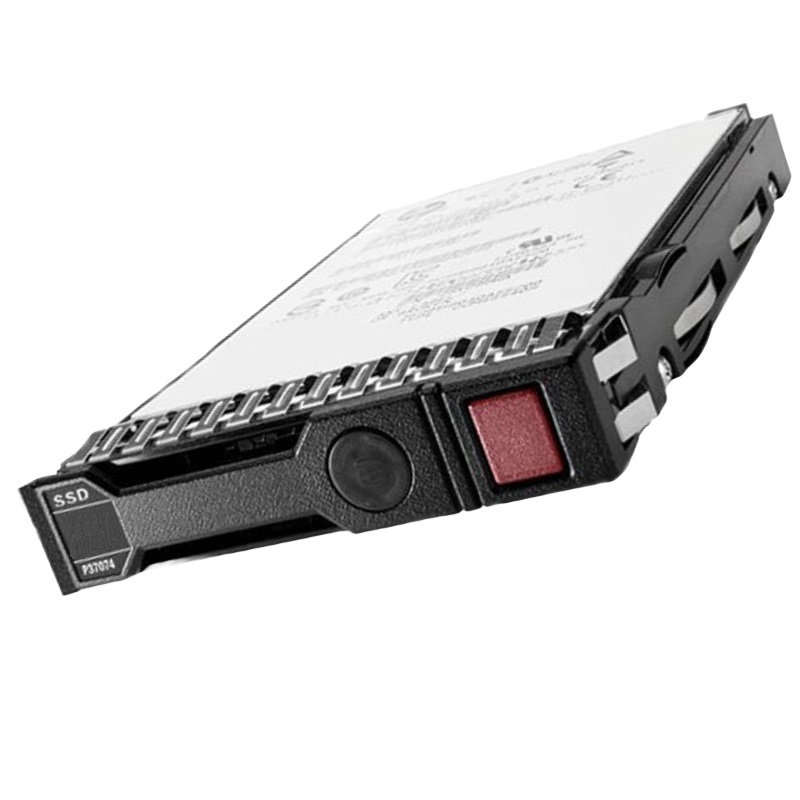


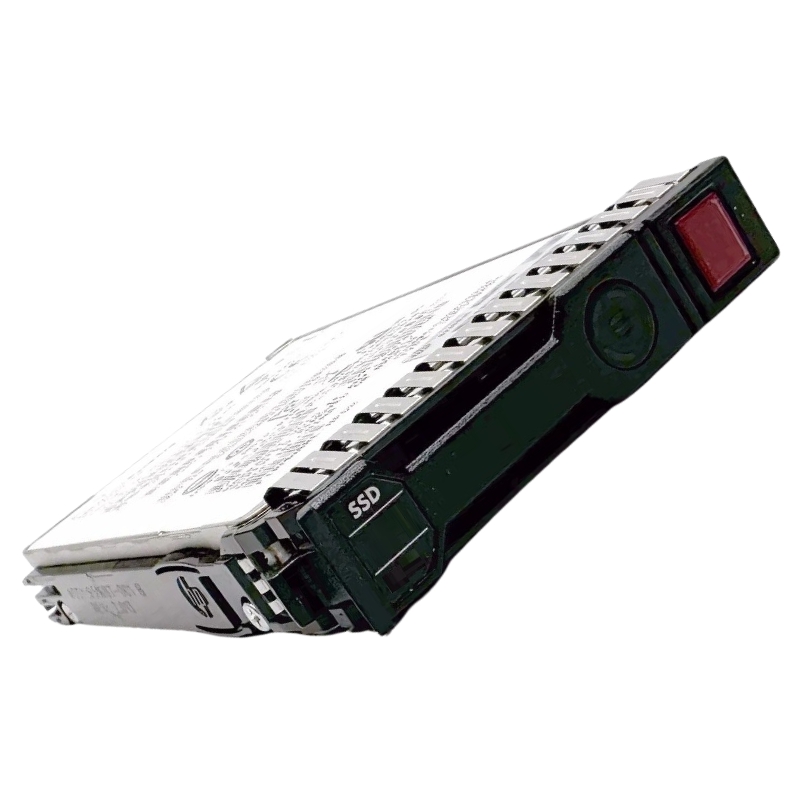
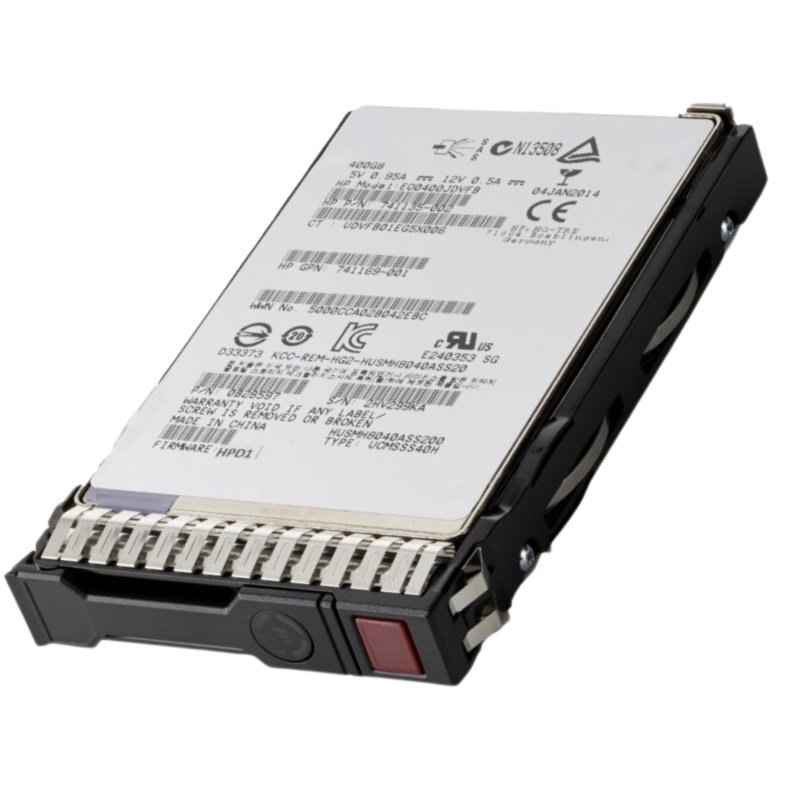
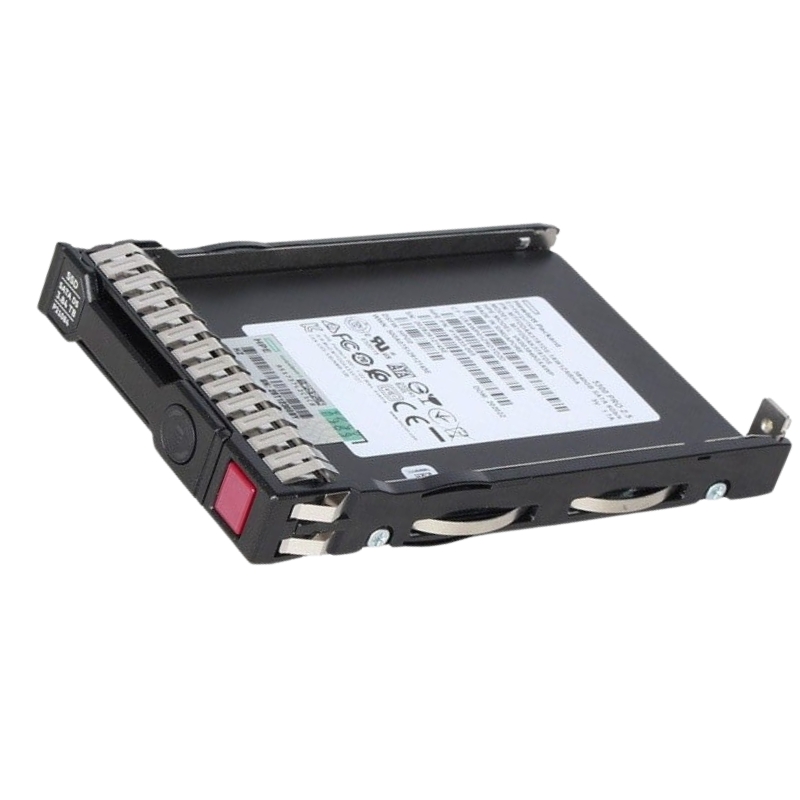
HPE P08575-001 3.84TB SATA 6GBPS Read Intensive Solid State Drive. Factory-Sealed New in Original Box (FSB) with 3 Year Warranty
| SKU/MPN | Warranty | Price | Condition | You save |
|---|---|---|---|---|
| P08575-001 | 1 Year Warranty | $2,470.00 | Factory-Sealed New Retail in Original Box (FSB) | You save: $864.50 (26%) |
| P08575-001 | 1 Year Warranty | $1,187.00 | Excellent Refurbished | You save: $415.45 (26%) |
The HPE P08575-001 is a high-performance, enterprise-grade solid-state drive designed for data centers and storage-intensive environments. With a capacity of 3.84TB and SATA 6Gbps interface, this read-intensive SSD is built to deliver superior performance and reliability for demanding applications.
This category encompasses the P08575‑001 HPE 3.84TB SATA 6 Gb/s read‑intensive solid state drives and closely related models that share the same interface, capacity class, workload profile, or enterprise usage. Products here are intended for data center applications, read‑heavy workloads, server storage shelves, archival acceleration, and caching tiers. The category also includes variants or similar SSDs with the same 3.84 TB capacity, SATA 6 Gb/s interface, and read‑optimized endurance rating, often produced by HPE or compatible OEM suppliers.
Within this subcategory, drives are engineered for read‑intensive operations, meaning they offer higher read throughput and optimized wear leveling for environments where write operations are comparatively modest. These drives typically deliver high sequential and random read performance while supporting moderate write workloads. Their endurance rating is suited to read‑dominant workloads such as analytics, query processing, big data reads, or backup acceleration, as opposed to mixed‑use or write‑intensive applications.
All drives in this class employ the SATA III interface, operating at 6 Gb/s (Gigabits per second). They are compatible with server backplanes, hot‑plug SATA slots, and enterprise storage enclosures that support this interface. Their form factor often aligns with small form factor (SFF) or 7 mm tall profiles to accommodate modern server drive caddies. Because they use the standard SATA protocol, they integrate with a wide variety of controllers and legacy systems, offering broad compatibility for upgrades and replacements.
Devices in this category frequently employ MLC (multi‑level cell) NAND flash technology to balance endurance and cost. The controller firmware is tuned specifically for read latency reduction, command queuing efficiency, and predictive read caching. Error correction, bad block management, and flash wear leveling are optimized to prioritize read stability over heavy write stress tolerance. The P08575‑001 family uses enterprise‑grade components built for consistent throughput over extended periods.
In sequential read mode, these drives can sustain transfer rates of approximately 525 MiB/s under optimal conditions, leveraging internal parallelism, multi‑channel flash access, and internal caching buffers to maintain speed. Sequential write throughput is rated around 480 MiB/s, though in write bursts only, since sustained writes in read‑intensive drives may throttle as internal housekeeping (garbage collection, overprovisioning) kicks in. The firmware controls write amplification, allowing the drive to maintain stability when write operations occur.
For random reads, the P08575‑001‑class SSDs deliver as many as 69,000 IOPS (input/output operations per second). This makes them suitable for database lookups, index scans, or small‑block reads from applications. Random write performance is more modest, around 28,000 IOPS, reflecting the drive’s design emphasis on read activity. In scenarios where occasional writes are required—such as metadata updates or caching the occasional write transaction—this level of performance remains adequate.
These SSDs are engineered to run with thermal management in server racks, often designed to dissipate heat through the drive housing or adjacent chassis cooling airflow. Due to their read‑optimized nature, average power consumption under typical loads is lower compared to write‑intensive drives, offering energy efficiency for data centers. Under peak loads, the drive draws more power but remains within enterprise thermal envelopes. Drive firmware may include thermal throttling to maintain optimal operation under elevated temperatures.
Within this product grouping, models might vary by capacity steps—such as 1.92 TB, 3.84 TB, or higher—and by endurance classification, including read‑intensive (RI), mixed‑use (MU), or write‑intensive (WI). The 3.84 TB read‑intensive SKU sits at a mid-to-high capacity point for RI drives, making it attractive for bulk read pools. Compared to its lower capacity counterparts, it delivers more data volume for reads per device; compared to write‑intensive variants, it offers cost savings for read‑dominant workloads while sacrificing some write tolerance.
Compared to mixed‑use or write‑intensive drives, this read‑intensive category trades off write endurance and aggressive write caching in favor of cheaper cost per gigabyte and optimized read stability. In environments where writes remain sporadic or limited—such as boot drives, read caching layers, data analytics staging, or read-replica storage—this category shines. For heavy update workloads, another SSD category may be more appropriate.
In modern rack server environments, drives of this class are frequently installed in hot‑plug bays within drive cages or server backplanes. They act as read cache accelerators, mid-tier read storage, or front-end read pools. Administrators integrate them with RAID controllers, SATA HBAs (host bus adapters), or onboard SATA ports, ensuring they play nicely with conventional storage logic. Their firmware features often support SMART monitoring, error logging, and health metrics, enabling proactive maintenance.
In storage arrays or JBOD enclosures, multiple drives of this category may be aggregated into read tiers or read-optimized pools. In tiered storage systems, they serve as the middle or lower read layers beneath high-speed NVMe tiers, handling bulk read traffic cost-effectively. Their modest write characteristics are often managed by absorbing writes in higher-end tiers or via write buffering in controller logic.
One of the most compelling uses is in read cache acceleration. In hybrid storage architectures, frequently accessed data is migrated into this SSD class to accelerate reads, while writes are committed to more robust tiers first. Tiering logic promotes the hottest read blocks into P08575‑001 class drives, flattening read latency and reducing back-end load. Over time, this drives better throughput and lower latency for read-heavy workloads without overinvesting in write-intensive hardware.
Drives in this category employ dynamic wear leveling, static wear leveling, and overprovisioning to spread writes evenly across NAND cells, preserving longevity even when writes are infrequent. Because writes are less frequent, the endurance threshold is rarely challenged in properly sized deployments. Error correction mechanisms, ECC algorithms, and redundant error detection protect data consistency, while background scrubbing and media refresh cycles guard against bit rot.
Typical enterprise SSDs in this category advertise MTBF (mean time between failures) in the multi-million hour range, backed by drive-level diagnostics and health monitoring. HPE’s quality control, manufacturing standards, and burn-in testing reduce early failure risk. Users can monitor SMART attributes such as media wear percentage, uncorrectable errors, and spare block usage to assess drive health proactively.
When selecting within this category, one should map expected read throughput and working set size to drive capacity. A 3.84TB drive suits large active datasets or read cache pools. If the working set is smaller, lower-capacity variants may suffice; if it’s larger, multiple drives or alternate categories may be required. Ensuring headroom avoids performance degradation as the drive fills up.
Ensure the drive’s firmware is recognized by the target storage controllers or host bus adapters. Compatibility with hot-plug protocols, SMART telemetry, and firmware updates should be verified. Some environments require certified SSDs for interoperability; drives in this category often carry HPE’s certification or cross-reference support for HPE server platforms.
Subcategories include lower capacities such as 1.92 TB or higher capacities beyond 3.84 TB, tailored for varying workloads. As NAND scaling progresses, newer capacity points will emerge, enabling denser read‑intensive storage within the same SATA footprint. Users may switch within this subcategory as data volumes scale.
While this category focuses on SATA 6 Gb/s interface, modernization trends push toward NVMe-based read‑intensive SSDs with lower latency and higher parallelism. Over time, as infrastructure supports NVMe, many deployments may transition. However, the existing SATA class remains relevant for backward compatibility and environments constrained by legacy infrastructure.
Continuous monitoring of drive health is vital. The drive’s SMART attributes, media wear levels, error rates, and spare block count provide insight into the remaining life. Systems should trigger alerts when thresholds approach prescribed limits, allowing preemptive replacement before failures occur.
Even in read‑oriented use cases, data retention policies require periodic refresh operations to prevent data degradation over time. In long deployments, periodic rewriting or scrubbing of data ensures bit integrity and helps correct latent errors. The storage system should schedule quiet-time refresh cycles that minimally impact performance.


 Contact Us
 Information
 Catalog
 Solid State Drives (SSD)
 Network Switches
 Hard Disk Drives
 HBA & Controllers
 PC & Servers
 PC & Server Memory
 CPU & Processors
 Network Routers
 Power Supplies
 Tape Drives & Libraries
 Network Devices
 Computer & Network Cables