(7% discount is applied at checkout)
Cart is empty
Your go-to destination for cutting-edge server products
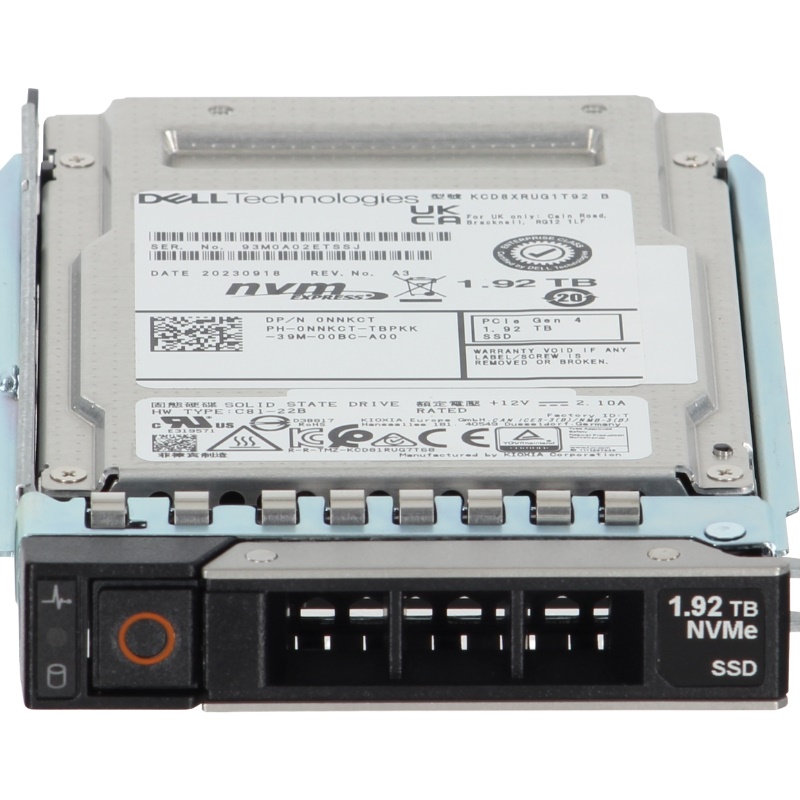


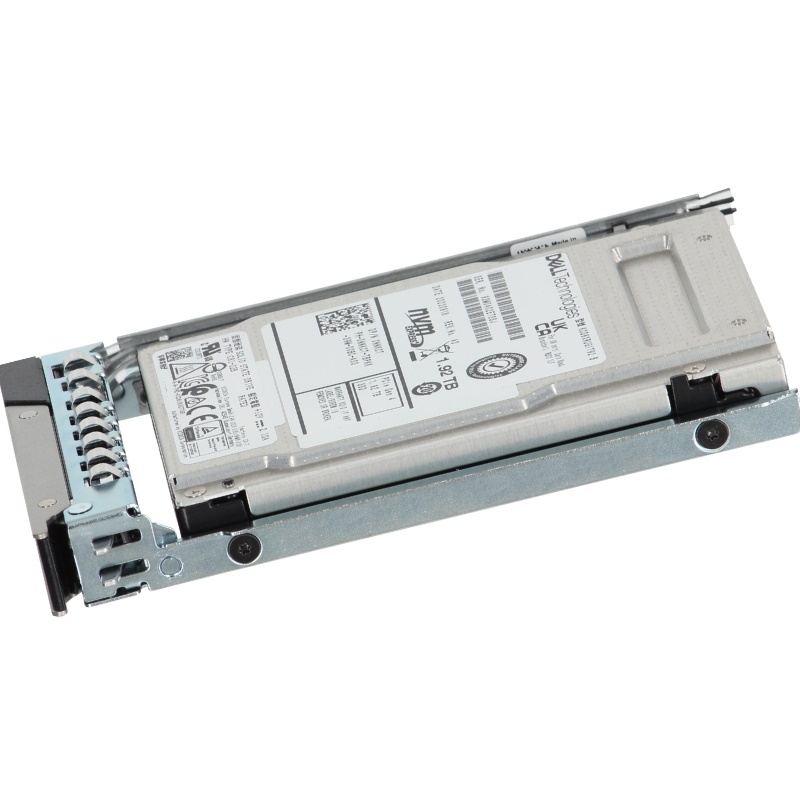
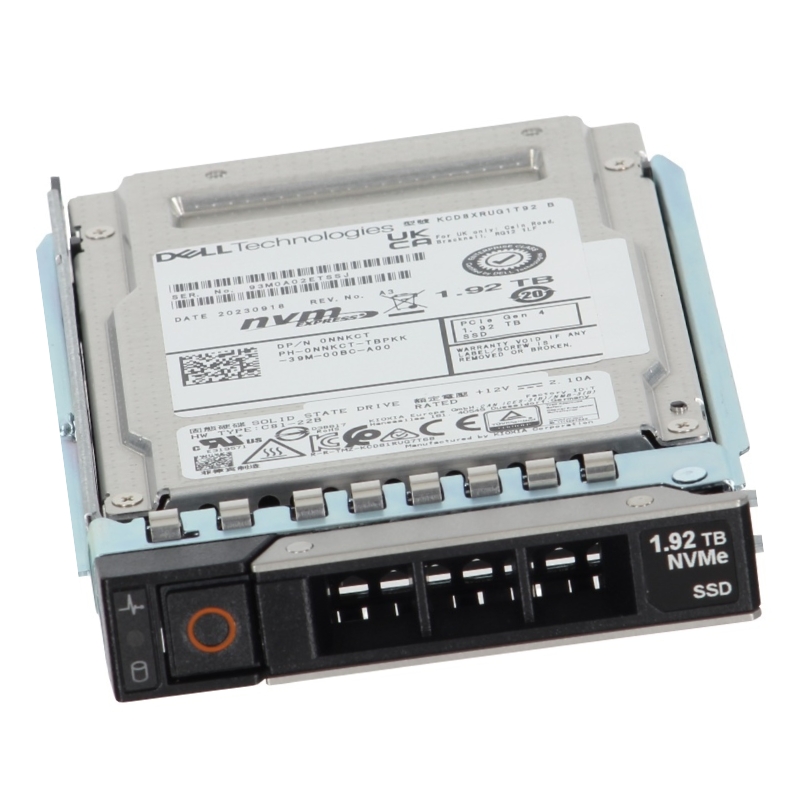
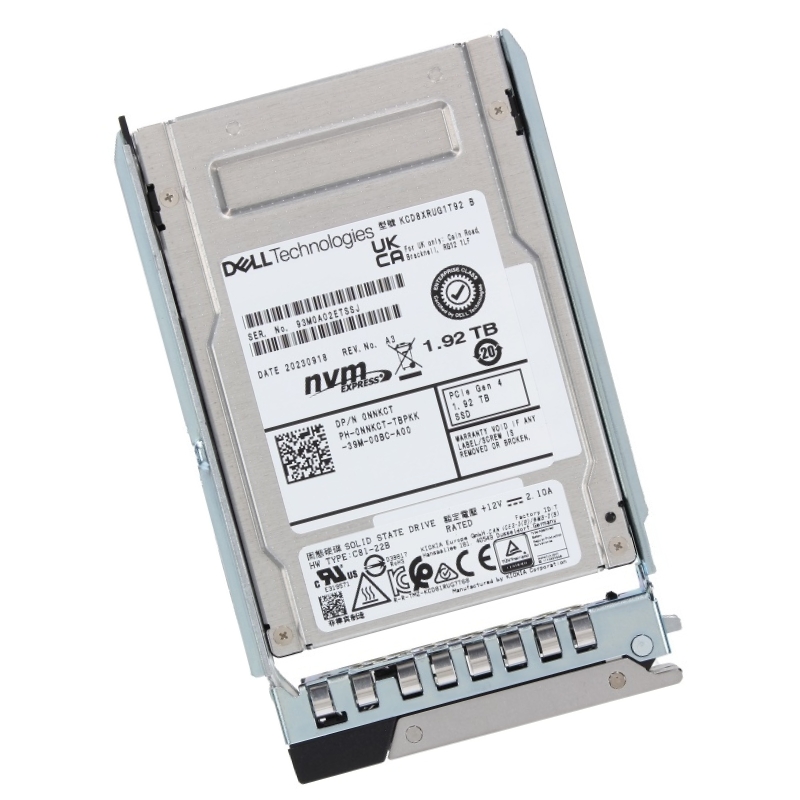
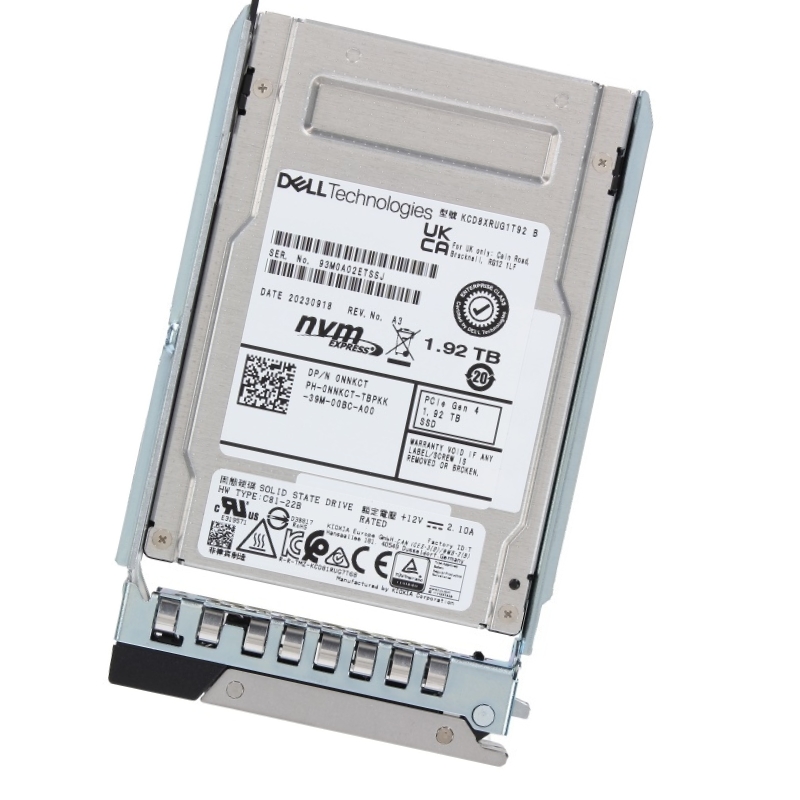
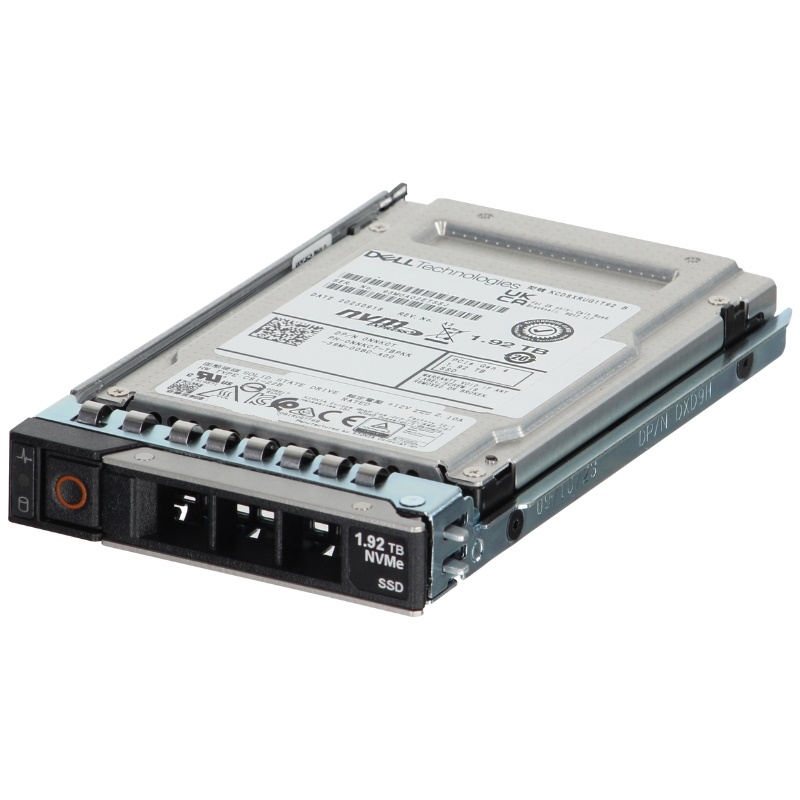
Dell 1XMPH 1.92TB PCI-E Gen4 X4 NVMe Read Intensive TLC 1 Dwpd U.2 2.5-inch Enterprise SSD. Excellent Refurbished with 1 year replacement warranty
| SKU/MPN | Warranty | Price | Condition | You save |
|---|---|---|---|---|
| 1XMPH | 1 Year Warranty | Contact us for a price | Excellent Refurbished | |
| 1XMPH | 1 Year Warranty | $1,472.00 | New Sealed in Box (NIB) | You save: $515.20 (26%) |
Dell 1XMPH 1.92TB PCI-E Gen4 x4 NVMe Read Intensive TLC U.2 2.5-inch Enterprise SSD represents a high-value, performance-focused storage option engineered for modern data center workloads that emphasize heavy read activity with consistent low latency and enterprise reliability. Designed to slot into U.2 form factor bays and optimized for PCI-Express Gen4 x4 NVMe lanes, this drive balances sequential and random read performance while employing TLC NAND tuned for read-intensive endurance profiles. The product is positioned for organizations that require dense, fast storage for database acceleration, virtualization read caches, content delivery, analytics, and boot pools where predictable read throughput and operational efficiency matter most.
Dell 1XMPH leverages the U.2 2.5-inch enterprise form factor to provide hot-pluggable convenience in server and storage arrays while maintaining the thermal and mechanical robustness expected by enterprise operators. The PCI-E Gen4 x4 NVMe interface unlocks higher raw bandwidth compared to Gen3, enabling improved headroom for bursty workloads and sustained throughput on read-heavy operations. At 1.92TB capacity and TLC NAND construction, this model strikes a careful compromise between cost per gigabyte and performance longevity, optimized specifically for read-intensive use cases where write amplification and endurance are secondary concerns compared to consistent read latency and throughput.
PCI-Express Gen4 x4 connectivity multiplies theoretical bandwidth over prior generations, and NVMe protocol eliminates legacy SCSI bottlenecks, enabling significantly lower I/O overhead, deeper queue depths, and faster command execution. These attributes translate into tangible benefits: reduced CPU cycles per I/O, improved IOPS at high concurrency, and better utilization of multi-core systems for data-centric applications. The U.2 connector maintains enterprise compatibility with hot-swap trays and backplanes common in modern server chassis, simplifying deployment and maintenance.
TLC (Triple Level Cell) NAND in this Dell part is tuned for read-intensive workloads, with the SSD controller and firmware employing sophisticated wear-leveling, error correction (ECC), and read disturb mitigation to extend usable life under targeted operating conditions. Firmware plays a critical role in balancing performance and endurance: intelligent background garbage collection, adaptive over-provisioning strategies, and read-optimized caching algorithms help preserve read consistency while minimizing background write penalties. For enterprise environments, firmware stability and update mechanisms are essential; Dell’s firmware validation processes and release cadence are designed to ensure compatibility with server platforms and to provide corrective updates when necessary.
Performance for the Dell 1XMPH 1.92TB model will typically emphasize sustained sequential and random read metrics alongside respectable, if lower, write throughput due to the read-intensive classification. Sequential read speeds approach the upper bounds of PCI-E Gen4 x4 capability under ideal conditions, while random read IOPS benefit from NVMe command queueing and the controller’s parallelism. Typical enterprise benchmarking scenarios—such as 70/30 read/write mixed profiles, pure random read workloads (4K QD32), and large sequential streams—showcase how the drive favors read latency and throughput over sustained write endurance, making it a strong candidate for read caching layers and large-scale content repositories.
Under realistic enterprise loads, administrators should expect low single-digit millisecond or sub-millisecond median latencies for read operations and high thousands to low hundreds of thousands of IOPS depending on queue depth and workload characteristics. Sequential throughput for large block transfers will be driven by the Gen4 x4 link and the drive’s internal parallelism, delivering a meaningful uplift versus comparable Gen3 devices in large-file transfer or streaming scenarios. Actual numbers will vary based on system configuration, CPU capability, RAID controllers or software stacks, and thermal constraints imposed by the server chassis.
Enterprise use demands predictable latency and quality of service (QoS). This Dell SSD is engineered to deliver stable read latency under sustained load through firmware prioritization and internal resource scheduling. Predictability is more valuable than peak throughput for many applications—consistent millisecond-level response times ensure that databases, virtual desktops, and real-time analytics maintain service levels under concurrent access patterns. Administrators can further tune system I/O schedulers and NVMe driver parameters to squeeze additional determinism depending on workload sensitivity.
Although categorized as read-intensive, the 1XMPH model still incorporates enterprise-grade features to protect data integrity and extend life. Built-in ECC, power loss protection mechanisms, and end-to-end data path validation help prevent corruption during unexpected events and reduce the likelihood of silent data errors. Endurance is expressed in drive writes per day (DWPD); this particular unit targets 1 DWPD, which is well suited to environments with low to moderate daily write volumes and heavy read demands. For many real-world deployments such as content repositories, media streaming caches, and read-heavy database replicas, this endurance profile offers an excellent balance of longevity and total cost of ownership.
Power loss protection (PLP) circuitry is a hallmark of enterprise SSDs, and in the Dell 1XMPH series, capacitive buffering and controller logic are designed to flush critical in-flight data to NAND in the event of abrupt power disruption. This mitigates the risk of metadata corruption and supports safe recovery when systems come back online. Additionally, internal telemetry and SMART attributes allow monitoring of media health, wear levels, and error rates—critical signals for proactive replacement planning and for integrating with data center monitoring platforms.
Data retention under prolonged power-off periods and robust error correction strategies are carefully engineered into the drive architecture. Advanced ECC algorithms correct for common flash errors, while background scrubbing and read-refresh routines help prevent data degradation through read disturb mitigation. From an operational viewpoint, this provides peace of mind that cold-stored data and long-term snapshots maintain integrity within the expected retention window when drives are stored or when they remain idle for extended intervals.
The Dell 1XMPH 1.92TB NVMe drive is especially well matched to several enterprise scenarios where reads dominate. Typical deployment patterns include read cache layers in hyperconverged infrastructures, boot and OS image repositories for large fleets, analytics and reporting datasets, CDN edge nodes, and database read replicas. The drive’s combination of U.2 form factor and Gen4 NVMe performance also suits tiered storage architectures where it serves as a fast index or lookup layer feeding larger, denser backends.
In virtual desktop infrastructure (VDI) and dense virtualization clusters, read amplification from OS boot storms and application launches can stress storage subsystems. The read-focused performance characteristics of this Dell SSD help absorb such spikes, improving user-perceived performance and reducing contention in shared pools. Placement strategies often use these drives for gold image storage and linked-clone backing, where read throughput and predictable latency drive the best ROI.
Search engines, analytics engines, and OLAP/reporting databases frequently read large portions of data to serve queries. In those contexts, a read-optimized SSD reduces query latencies, accelerates index scanning, and improves concurrency for mixed query patterns. Where write throughput requirements are modest or can be offloaded to other storage tiers (such as write-optimized NVMe or persistent memory), this Dell model provides a cost-effective way to accelerate read-bound operations.
In media production and content delivery networks, delivering large volumes of read requests with minimal latency and consistent throughput is paramount. The U.2 2.5-inch format simplifies integration into rack servers at CDN points of presence and allows hot-swap maintenance, while the Gen4 NVMe interface accelerates large file streaming and high-concurrency access for popular media assets.
When integrating the Dell 1XMPH drive into an enterprise environment, attention to host firmware, driver versions, and backplane compatibility is critical. U.2 connectors rely on proper cabling and hot-swap backplanes to achieve reliable operation. Dell and server OEMs publish compatibility matrices; systems administrators should validate firmware revision compatibility, driver support for NVMe features, and ensure that thermal profiles in a given chassis are adequate to prevent thermal throttling during sustained transfer windows.
High throughput sustained operations generate heat that must be managed. The U.2 2.5-inch form factor allows for integrated airflow channels and server fan curves to help dissipate thermal energy, but administrators must still validate drive bays for sufficient airflow and consider adding drive carriers with enhanced heat sinks where necessary. Monitoring SMART temperature attributes and correlating them with performance metrics allows tuning of fan policies, chassis blanking panels, and rack cooling to preserve performance under load.
Enterprise SSDs like the Dell 1XMPH incorporate security features relevant to modern data governance requirements. Hardware-based secure erase, TCG Opal support for self-encrypting drive (SED) functionality, and secure firmware update mechanisms support compliance with regulatory frameworks and internal data protection policies. When combined with key management systems and host-based encryption policies, these hardware features enable robust data lifecycle controls that are auditable and enforceable.
Self-encrypting drives alleviate CPU overhead of software encryption and help ensure that not only active data but also decommissioned drives are safely sanitized. Integrating drive encryption with enterprise key management systems and hardware security modules (HSMs) creates a secure chain of custody for keys and policies. Administrators should validate that their chosen drive supports the required encryption standards and that key rotation, escrow, and revocation workflows align with organizational security practices.
Enterprise drives intended for global deployment typically hold various certifications that validate environmental tolerances, electromagnetic compliance, and operational resilience. These certifications facilitate cross-border deployment and support procurement processes that require documented compliance with local regulations and industry standards. Verifying certification lists prior to large-scale procurement reduces risk during multinational rollouts.
Over-provisioning can be used to improve endurance and maintain consistent performance under heavy sustained I/O. Evaluate controller and firmware best practices for setting appropriate over-provisioning levels and consider aligning logical volume sizes, RAID stripe widths, and erase block alignment to maximize write efficiency and reduce read amplification. Proper provisioning also reduces background GC (garbage collection) overhead, improving foreground read predictability.
At end-of-life, follow secure sanitization processes that meet organizational policies and compliance requirements. Hardware secure erase commands and cryptographic erasure provided by self-encrypting drives expedite secure decommissioning and help avoid costly physical destruction. Documented procedures and audit trails for decommissioning align with regulatory standards and reduce risk when drives leave controlled environments.


 Contact Us
 Information
 Catalog
 Solid State Drives (SSD)
 Network Switches
 Hard Disk Drives
 HBA & Controllers
 PC & Servers
 PC & Server Memory
 CPU & Processors
 Network Routers
 Power Supplies
 Tape Drives & Libraries
 Network Devices
 Computer & Network Cables