Your go-to destination for cutting-edge server products
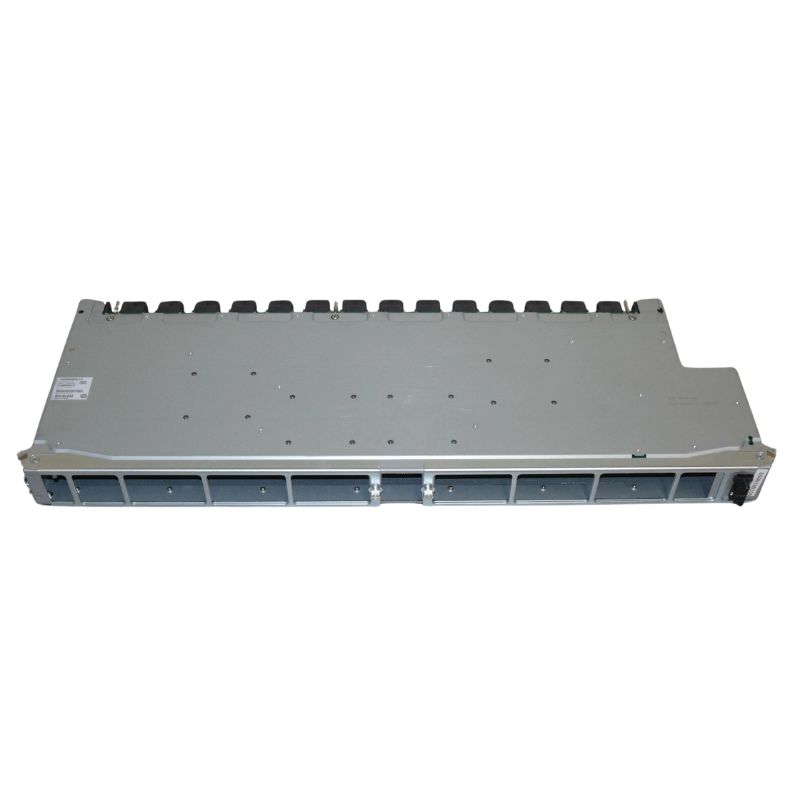
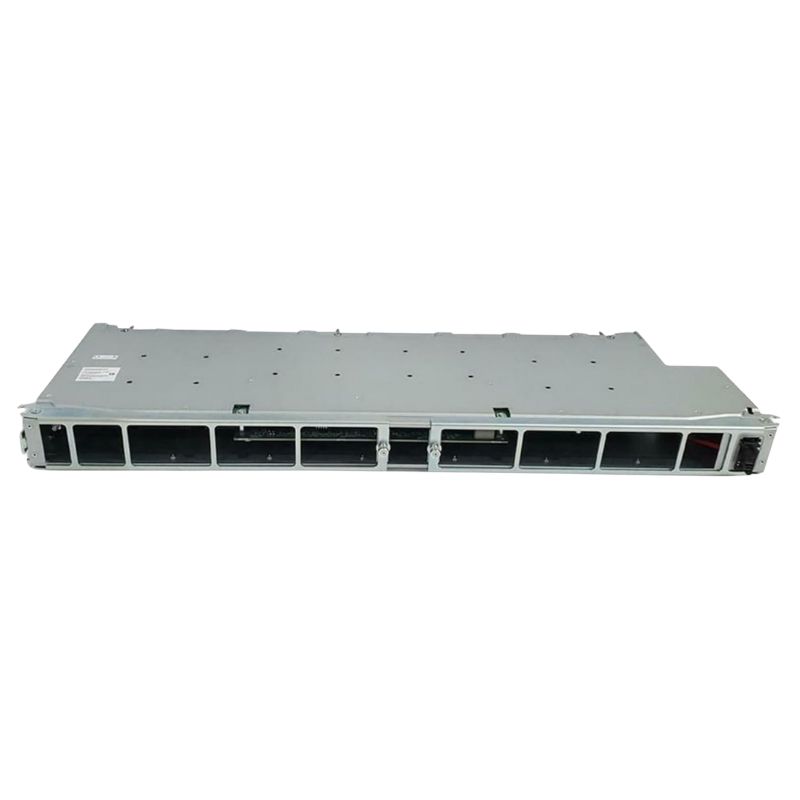
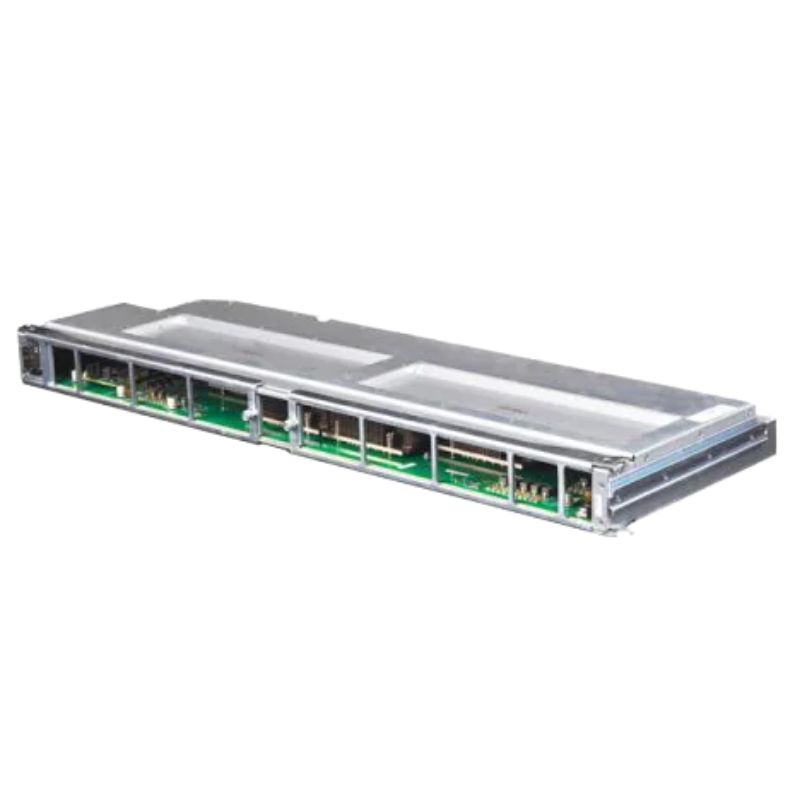
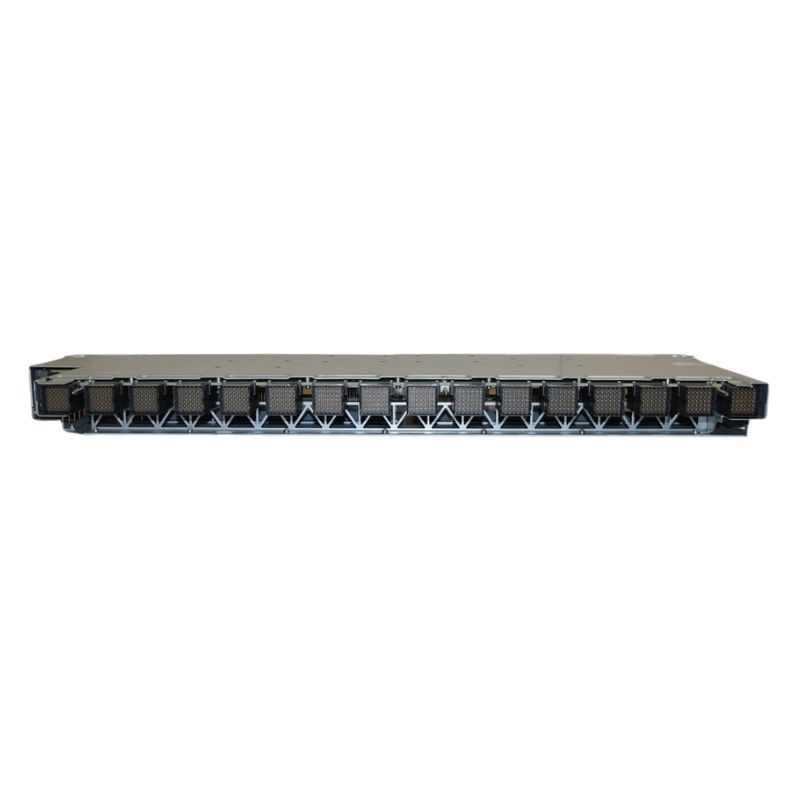
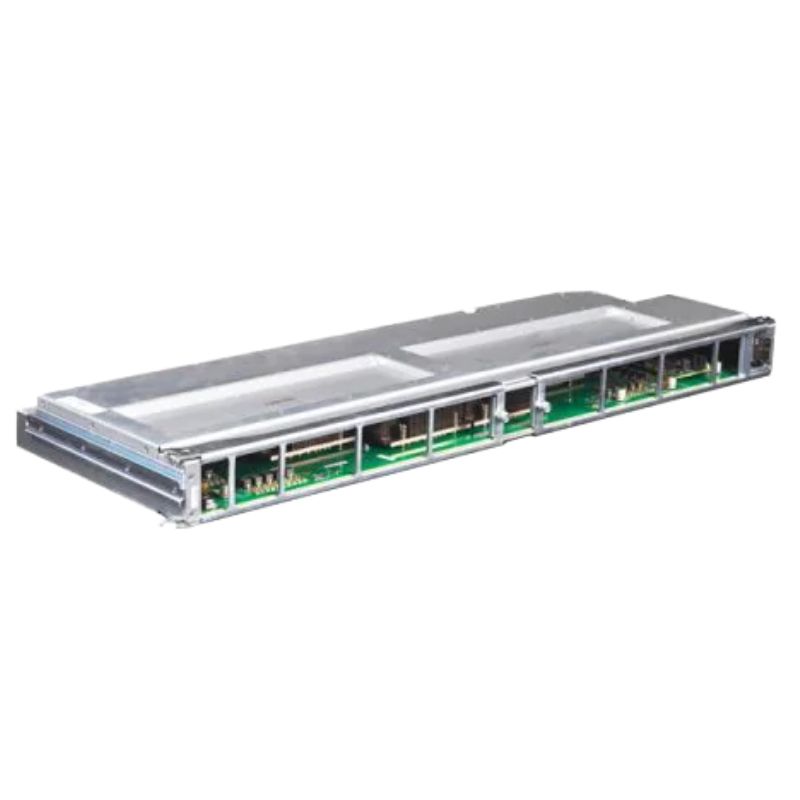
Cisco N9K-C9516-FM-E2 Nexus 9516 Series Fabric Module

N9K-C9516-FM-E2
* Product may have slight variations vs. image
Hover on image to enlarge

Brief Overview of N9K-C9516-FM-E2

Cisco N9K-C9516-FM-E2 Nexus 9516 Series Fabric Module with 100G Support. Excellent Refurbished with 1 year replacement warranty

$3,013.20
$2,232.00
You save: $781.20 (26%)
Ask a question
Price in points: 2232 points
+
Quote
Additional 7% discount at checkout
SKU/MPNN9K-C9516-FM-E2Availability✅ In StockProcessing TimeUsually ships same day ManufacturerCisco Product/Item ConditionExcellent Refurbished ServerOrbit Replacement Warranty1 Year Warranty
Google Top Quality Store Customer Reviews
Our Advantages
Payment Options
  • — Visa, MasterCard, Discover, and Amex
  • — JCB, Diners Club, UnionPay
  • — PayPal, ACH/Bank Transfer (11% Off)
  • — Apple Pay, Amazon Pay, Google Pay
  • — Buy Now, Pay Later - Affirm, Afterpay
  • — GOV/EDU/Institutions PO's Accepted 
  • — Invoices
Delivery
  • — Deliver Anywhere
  • — Express Delivery in the USA and Worldwide
  • — Ship to -APO -FPO
  • For USA - Free Ground Shipping
  • — Worldwide - from $30
Description

Product overview: Cisco N9K-C9516-FM-E2 Fabric Module

The Cisco N9K-C9516-FM-E2 is a high-performance fabric module engineered for the Nexus 9516 chassis. Designed to deliver line-rate 100 Gigabit connectivity, this fabric module provides a resilient, low-latency switching fabric for data center environments that demand massive throughput and consistent performance.

Key specifications and identifying details

  • Manufacturer: Cisco — industry-leading networking solutions provider.
  • Part Number / SKU: N9K-C9516-FM-E2.
  • Product family: Nexus 9516 Series Fabric Module.
  • Product type: Switch accessory — Fabric Module (switch backplane component).
  • Throughput: Built to support 100G fabric links for modern data center fabrics.

Performance characteristics and design

Architected for modular Nexus systems, the N9K-C9516-FM-E2 fabric module interconnects line cards and supervisor engines with a high-bandwidth fabric plane. Its optimized switching architecture reduces contention and preserves predictable forwarding behavior under heavy east-west traffic patterns common in virtualization and large-scale cloud deployments.

Scalability and capacity

The module enables the Nexus 9516 chassis to scale to multi-terabit fabric capacity, allowing enterprises to grow port density and upgrade to higher-speed line cards without a disruptive chassis replacement. This investment-protecting design helps maintain continuity as network demands increase.

Reliability and redundancy

With a focus on uptime, the N9K-C9516-FM-E2 supports redundant fabric paths and integrates with Nexus high-availability features. This ensures minimal packet loss and fast convergence during component failures or maintenance operations.

Use cases: where the fabric module shines

  • Enterprise data centers requiring predictable 100G aggregation and low-latency switching.
  • Service providers and cloud operators building multi-tenant fabrics with heavy east-west traffic.
  • High-performance computing clusters that need deterministic interconnect performance.
  • Environments planning phased upgrades from 10/40G to 100G fabrics.

Cisco N9K-C9516-FM-E2 Nexus 9516 Series Fabric Module 

The Cisco N9K-C9516-FM-E2 fabric module is a high-performance backplane and fabric-forwarding card designed for the Cisco Nexus 9516 chassis. Engineered to support dense 100G connectivity and deliver predictable, low-latency switching across modern data center environments, this fabric module plays a central role in enabling large-scale spine/leaf architectures, high-throughput campus cores, and mission-critical cloud fabrics. The module’s architecture focuses on throughput, resiliency, and operational visibility—three pillars that enterprise and service-provider networks demand from a fabric component.

Primary Benefits

  • 100G fabric support: Built to enable 100 Gigabit per second connectivity end-to-end, supporting both current and next-generation optics.
  • High aggregate capacity: Provides the switching backplane capacity necessary for high-density Nexus 9516 deployments, ensuring headroom for growth and bursting traffic.
  • Low latency: Optimized forwarding paths minimize microsecond-level transit delays—critical for real-time applications and high-frequency trading environments.
  • Redundancy and hitless upgrades: Designed for in-service software upgrades (ISSU) and redundant fabric configurations when paired with companion modules.
  • Operational telemetry: Deep visibility options via NX-OS telemetry and streaming telemetry features, helping teams monitor, troubleshoot, and optimize traffic flows.

Technical Architecture & Design Considerations

The N9K-C9516-FM-E2 is engineered as an integrated fabric module with silicon and ASIC-level features that align to the Nexus 9000 family’s forwarding plane. When designing a data center fabric using the Nexus 9516 chassis populated with N9K-C9516-FM-E2 modules, architects should weigh the following technical characteristics:

Fabric Capacity & Bandwidth

This fabric module enables full-duplex, high-throughput switching between line cards and across the chassis backplane. Designers should calculate total bandwidth demand by aggregating expected east-west traffic (server-to-server) and north-south traffic (server-to-datacenter services), then compare to the fabric’s aggregate capacity to avoid oversubscription at the chassis level.

Latency & Microbursts

Critical for latency-sensitive applications, the module’s internal buffers, queueing architecture, and ASIC performance determine how it handles microbursts. For environments with highly variable traffic patterns, combine proper QoS policies with the module’s buffering characteristics to preserve low-latency forwarding under load.

Compatibility & Interoperability

The module is intended for use inside the Nexus 9516 chassis and works with Nexus line cards and supervisory engines certified for the 9516 platform. Verify NX-OS versions and hardware compatibility matrix entries with Cisco documentation before deploying to ensure features like VXLAN, EVPN, and ACI (if applicable) operate as expected.

Scalability Patterns

  • Modular growth: Start with a baseline number of line cards for a 2-stage spine/leaf design, and grow the chassis fabric by adding N9K line-cards and fabric modules as needed.
  • Multi-chassis fabrics: Use the Nexus 9516 with N9K-C9516-FM-E2 in multi-chassis topologies to extend reach and capacity across racks or pods while maintaining unified control-plane constructs.
  • Cloud-scale readiness: The module accommodates high-density server farms and large VPC/VXLAN overlays often used in cloud-native and virtualized data centers.

Deployment Use Cases

Leaf-and-Spine Data Center Fabrics

The Nexus 9516 equipped with N9K-C9516-FM-E2 often functions as a spine or aggregation chassis in two-tier fabrics. It can interconnect multiple leaf switches with high-capacity 100G uplinks, enabling predictable latency and consistent performance for east-west traffic.

Core Aggregation in Campus & Large Enterprises

Enterprises with large campus networks can leverage the Nexus 9516 with the fabric module as a resilient core/aggregation device offering high throughput and advanced feature sets (such as policy-based routing, segmentation, and robust QoS) for converged voice, video, and data services.

Cloud Provider & Service Provider Edge

Service providers use chassis-based fabric modules to build dense fabrics with simplified operations and high port density. The 100G support is particularly valuable for aggregation points connecting multiple tenant environments or for backhaul toward peering and transit interfaces.

Feature Set & Software Integration

The N9K-C9516-FM-E2 is intended to be managed under Cisco’s NX-OS software umbrella. NX-OS provides a suite of features that enhance the fabric module’s capabilities:

High-Performance Forwarding & Advanced Protocols

  • VXLAN/EVPN support for overlay segmentation and multi-tenancy.
  • Support for advanced multicast and overlay routing needed for scalable virtualization platforms.
  • Hardware-accelerated tunneling and programmable match-action tables for modern application demands.

Telemetry, Analytics & Automation

Native streaming telemetry and programmable pipelines allow teams to export performance metrics to analytics platforms. Integration with automation frameworks (Ansible, Python-based scripts, and Cisco’s own management tools) enables repeatable provisioning and streamlined lifecycle management.

Security & Segmentation

Use NX-OS ACLs, microsegmentation via VXLAN/EVPN, and role-based access controls to secure the fabric. The module’s hardware forwarding plane supports these constructs with line-rate enforcement for large-scale deployments.

Best Practices for Implementation

Maximize the value of the N9K-C9516-FM-E2 by following practical, field-proven best practices across planning, configuration, and operations:

Capacity Planning

  • Project 3–5 years of growth when sizing port counts and fabric bandwidth; account for virtualization, containerization, and east-west traffic growth.
  • Plan uplink oversubscription ratios conservatively for latency-sensitive workloads—use 1:1 to 3:1 contrasts depending on workload types.

High Availability & Redundancy

  • Deploy redundant fabric modules and redundant supervisors where supported to ensure hitless failover in critical environments.
  • Enable ISSU capability and verify interoperability with chosen NX-OS image versions before attempting in-service software upgrades.

Performance Tuning

  • Implement QoS profiles tailored to application classes (e.g., real-time, transactional, bulk transfer).
  • Monitor buffer utilization and tweak queueing parameters if consistent drops or microburst issues appear.

Migration & Upgrade Pathways

Organizations migrating from older chassis or legacy switches to a Nexus 9516 fabric with N9K-C9516-FM-E2 should follow a staged approach:

Assessment & Inventory Mapping

Inventory current devices, map port-to-application dependencies, and identify critical flows. Use this mapping to sequence application cutovers and minimize service disruption.

Interoperability Testing

Before a full migration, validate interoperability between the Nexus 9516 fabric and existing leaf/edge switches. Confirm control-plane protocols (BGP, OSPF), overlay functions (VXLAN), and management tools are compatible.

Parallel Operations & Cutover

Run the new chassis in parallel where feasible and migrate traffic in controlled waves. For stateful services, consider leveraging traffic mirroring and staged cutover plans to reduce risk.

Operational Management & Monitoring

Operational efficiency plays a major role in sustaining a healthy fabric deployment. The N9K-C9516-FM-E2 integrates into common operations stacks and supports extensive visibility capabilities.

Telemetry & Flow Visibility

  • Export telemetry via gNMI/RESTCONF for real-time dashboards and analytics.
  • Leverage flow-based sampling (sFlow/IPFIX) to understand top talkers and detect anomalies early.

Configuration Management

  • Manage NX-OS configuration via version-controlled repositories and CI/CD pipelines to ensure consistent, auditable change management.
  • Automate routine tasks (template-based provisioning, interface templates, and role-based configuration) to reduce human error.

Health Checks & Proactive Alerts

Implement synthetic traffic checks, link-state health monitors, and proactive alerting to identify issues before they escalate. Use threshold-based alarms for buffer utilization and port error counters.

Security Considerations

Security must be integrated into the fabric’s design and daily operations. The fabric module contributes to secure posture by enabling hardware-accelerated enforcement and isolation:

Segmentation & Microsegmentation

Utilize VXLAN/EVPN overlays to segment tenant or application domains. Microsegmentation reduces lateral movement risk for compromised workloads.

Access & Authentication

  • Enforce AAA (TACACS+/RADIUS) for management access.
  • Use RBAC to enforce least-privilege access to NX-OS operational and configuration commands.

Supply Chain & Firmware Hygiene

Track firmware and software image baselines, apply security advisories promptly, and validate signed image authenticity to avoid supply-chain risks.

Comparison & Positioning (When to Choose N9K-C9516-FM-E2)

Choosing the right fabric module depends on multiple dimensions—performance, growth expectations, orchestration requirements, and feature parity with adjacent platforms. Below is guidance for when the N9K-C9516-FM-E2 is an ideal match:

When to Choose

  • Demand for sustained 100G connectivity across a high-density chassis.
  • Environments requiring low-latency forwarding and hardware-level QoS.
  • Networks that rely on NX-OS feature sets (VXLAN, EVPN, advanced telemetry).

Alternatives to Consider

If the deployment goals emphasize lower power, smaller physical footprint, or predominantly 10/25G connectivity, modular fixed switches or smaller chassis in the Nexus family could be alternatives. Assess cost-per-port, operational overhead, and long-term upgrade path when comparing.

Procurement & Cost-of-Ownership Considerations

Beyond the purchase price of the N9K-C9516-FM-E2 fabric module, evaluate the total cost of ownership across multiple axes:

CapEx vs OpEx

  • CapEx: Initial cost of chassis, line cards, fabric modules, optics, and initial spare parts.
  • OpEx: Power and cooling, software support contracts, maintenance windows and labor, and automation tooling.

Support & Lifecycle

Plan for software maintenance contracts (SMARTnet or equivalent) and verify Cisco’s lifecycle roadmap for the Nexus 9000 platform. Early alignment to support programs reduces unplanned downtime costs and ensures access to security patches and feature updates.

Troubleshooting & Common Issues

While the N9K-C9516-FM-E2 is designed for robust operation, teams should be familiar with common troubleshooting workflows and quick checks for fabric-related incidents:

Common Symptom Templates

  • Intermittent packet drops: Check buffer utilization, interface counters, and microburst metrics.
  • Control-plane flaps: Validate supervisor health, software image mismatches, and BGP/OSPF neighbor stability.
  • Performance degradation: Review QoS policies, port oversubscription, and CPU/memory usage on the chassis.

Diagnostic Tools & Commands

Use NX-OS commands to inspect fabric health, including interface statistics, ASIC counters, and telemetry streams. Where available, use debug facilities and packet captures at the leaf to isolate end-to-end issues.

Integration with Modern Ecosystems

To support modern workloads and orchestration, integrate the Nexus 9516 fabric with these common components:

Cloud Orchestration & SDN

  • Integrate with Terraform, Ansible, and Cisco’s management stack to enable reproducible network provisioning.
  • Support for SDN overlays (VXLAN/EVPN) allows cloud-native orchestrators to program network services via APIs.

Observability & AIOps

Stream telemetry data to observability platforms for anomaly detection, capacity forecasting, and automated remediation. The fabric’s telemetry endpoints can feed AIOps tools for proactive incident prevention.

Features
Product/Item Condition:
Excellent Refurbished
ServerOrbit Replacement Warranty:
1 Year Warranty