(7% discount is applied at checkout)
Cart is empty
Your go-to destination for cutting-edge server products
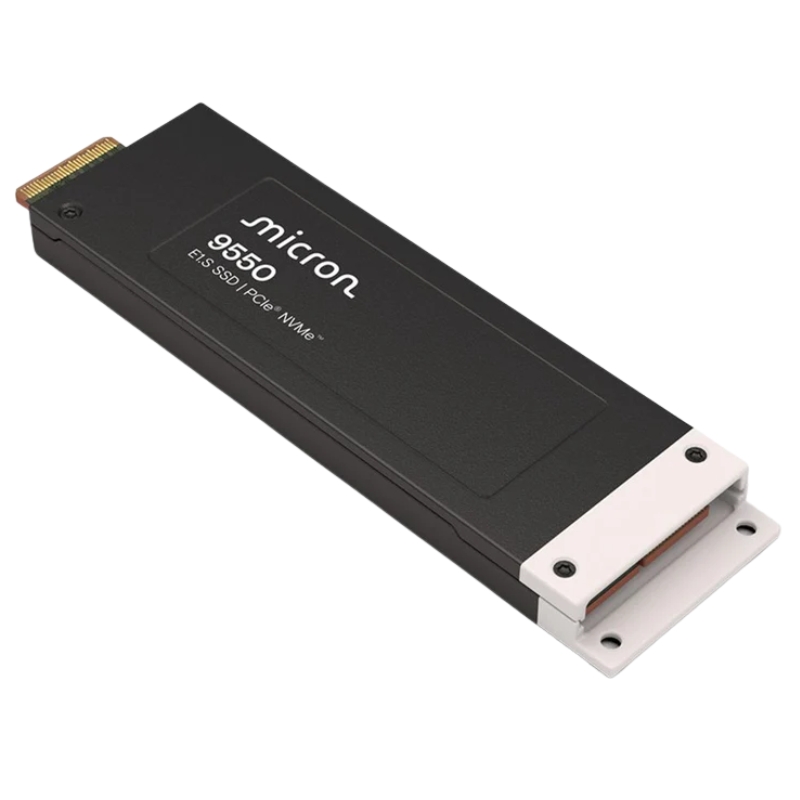


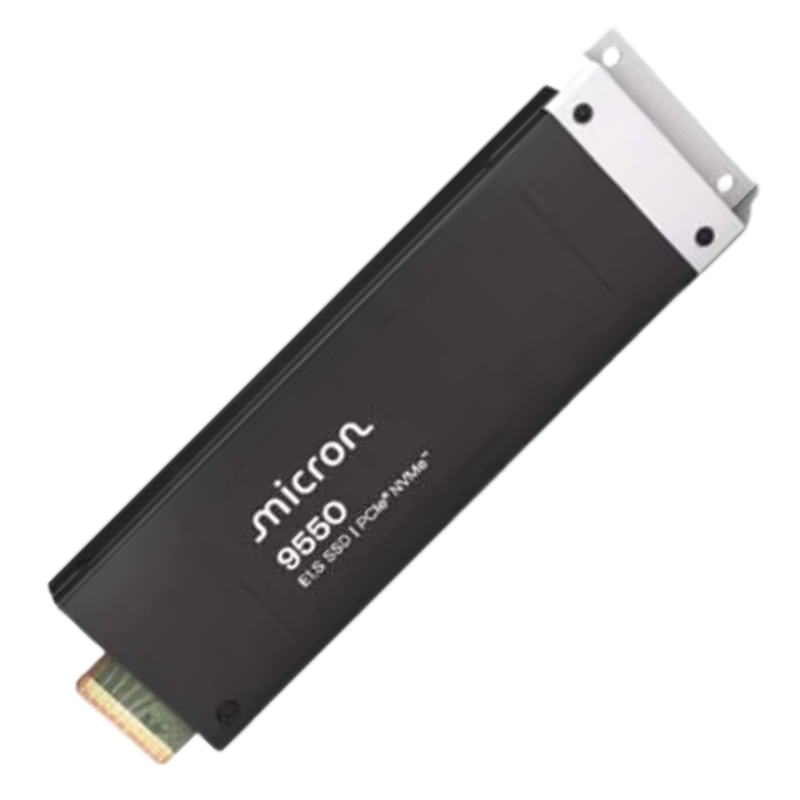
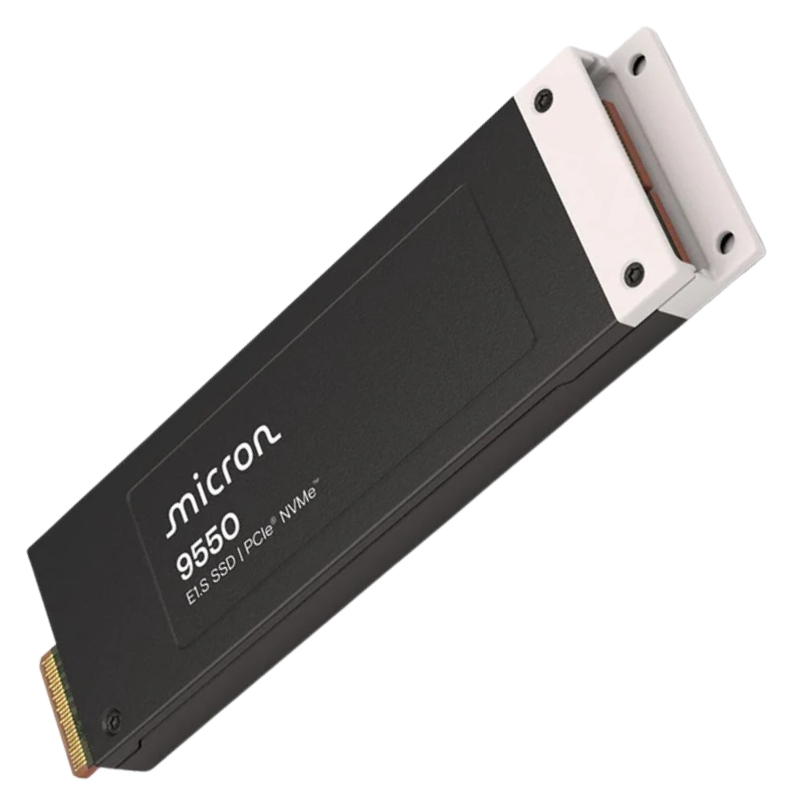
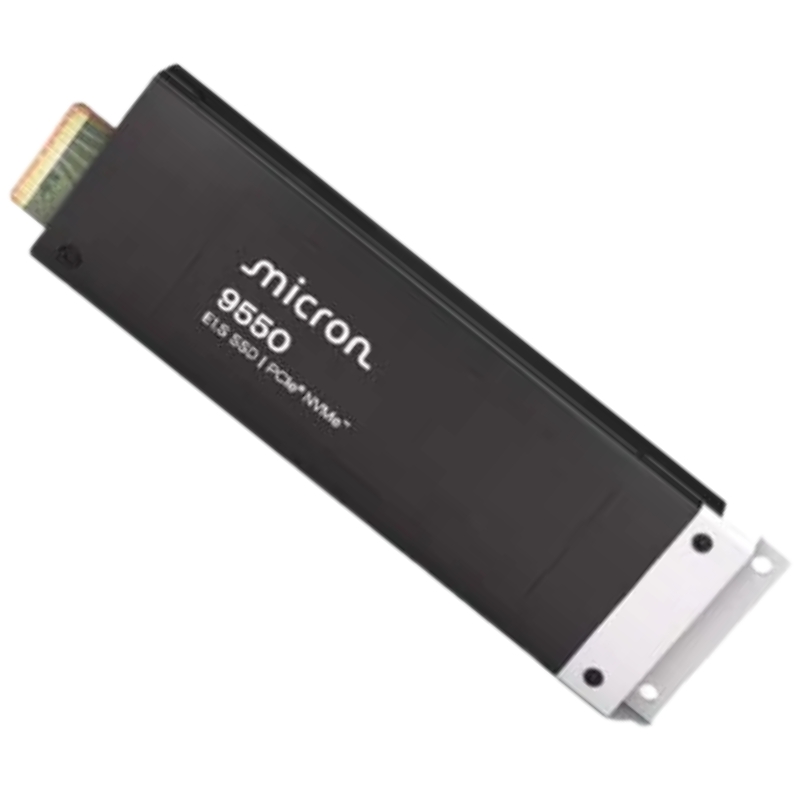
Micron MTFDLCE7T6THA-1BK1DABYY 9550 Pro 7.68TB PCI-E 5.0 NVMe E1.S 15mm 3d TLC NAND Enterprise SSD. New Sealed in Box (NIB) with 3 Years Replacement Warranty. Call
The Micron 9550 Pro brings next‑generation PCI-E Gen5 performance to dense, front‑accessible E1.S 15 mm bays, delivering high throughput, swift latency characteristics, and dependable uptime for modern data center and enterprise platforms.
The Micron MTFDLCE7T6THA-1BK1DABYY—commonly referenced as the Micron 9550 Pro 7.68TB NVMe E1.S (15mm)—sits within the modern family of enterprise-class solid state drives designed for scale-out data centers, cloud platforms, and high-performance edge deployments. This category covers devices that combine the compact E1.S form factor with NVMe over PCIe connectivity and 3D TLC NAND to balance performance, density, and power efficiency. The 7.68TB capacity point is widely adopted for mainstream and performance tiers, providing a sweet spot between cost-per-GB and operational throughput for read-intensive, mixed-use, and many transactional workloads. Enterprise buyers choose this category to modernize infrastructure, consolidate storage footprints, and achieve consistent QoS across fleets.
Within the enterprise storage hierarchy, an E1.S NVMe drive like the MTFDLCE7T6THA-1BK1DABYY targets server-local storage pools, NVMe-oF frontends, and hyperconverged platforms where latency and IOPS consistency are crucial. Compared with legacy 2.5-inch SATA or SAS SSDs, E1.S brings improved airflow alignment, higher slot density per 1U, and a connector strategy that scales with next-generation server backplanes. As organizations migrate database partitions, analytics staging areas, content delivery caches, and virtualized compute images to NVMe, this category helps unlock parallelism across multiple lanes while simplifying cabling and serviceability.
E1.S (EDSFF Short) is engineered for front-serviceable storage within dense 1U or 2U servers. The 15mm z-height SKU emphasizes thermal headroom and consistent cooling paths, critical for sustained performance under mixed workloads. When paired with well-designed chassis and fans, this form factor provides thermal predictability superior to M.2 while avoiding the bulk of 2.5-inch bays. Administrators can hot-swap drives, align them with standard carriers, and maintain consistent airflow across the entire fleet.
An enterprise NVMe E1.S SSD like the 9550 Pro 7.68TB leverages several technology pillars that define the category’s value proposition: 3D TLC NAND, advanced controllers optimized for data center duty cycles, robust firmware with power-loss protection, and security features appropriate for multi-tenant and regulated environments.
3D TLC NAND provides a strong balance between endurance, performance, and cost efficiency. Enterprise-tuned TLC typically uses reserved overprovisioning, refined write algorithms, and heat management strategies to minimize write amplification and maintain stable latency under pressure. Firmware scheduling, background garbage collection, and wear leveling are tuned to sustain consistent performance rather than peak-at-boot benchmarks. This consistency is a hallmark of the category and a key reason operators standardize on enterprise TLC for mixed read/write application tiers.
Endurance ratings within this category vary by SKU and capacity. While individual drive specifications should be consulted for exact DWPD (Drive Writes Per Day), 7.68TB enterprise TLC often targets mixed-use profiles where sustained writes are expected but not extreme. Many real-world use cases, such as virtualization, microservices state, CI/CD artifact storage, and OLTP read-heavy datasets, fall squarely into this balanced endurance envelope. Fleet planners should align their writes-per-day modeling to the specific application pattern, retention policies, and rebuild procedures to select the optimal endurance tier.
The category is built around NVMe, a protocol created specifically for non-volatile memory. NVMe aligns command sets, queues, and interrupts to modern CPU architectures, enabling high parallelism. In practice, this means lower latency and higher IOPS per watt compared with legacy block protocols. Coupled with E1.S slots attached to server PCIe root complexes, the drives can deliver linear scaling as more devices are added—especially when applications are architected for sharding or distributed IO across multiple namespaces.
Enterprise operators care not just about average latency, but also the 99th and 99.9th percentile numbers—particularly during internal background tasks like garbage collection. Drives in this category are tuned for predictable tail behavior and steady-state performance. Careful queue depth configuration, IO scheduler choices, and NUMA-aware placement can further help keep tail latency within SLA bounds during peak business hours or maintenance windows.
Enterprise SSDs prioritize end-to-end data integrity. Category features typically include power-loss protection (PLP) to commit in-flight data, internal ECC, parity across NAND die, and robust SMART telemetry for proactive maintenance. The firmware lifecycle supports secure firmware updates, rollback protections, and compliance with data sanitization procedures. These attributes are crucial in regulated industries and multi-tenant clouds where data correctness and recoverability are mandatory.
At the 7.68TB capacity point, buyers get a blend of density and per-device throughput that is especially attractive in 1U and 2U servers. The following scenarios are emblematic of how this category is deployed.
Hypervisors and container platforms thrive on fast, local NVMe storage. Placing VM disks and container layers on E1.S drives helps reduce boot storms, accelerate snapshot operations, and improve job scheduling efficiency. The result is higher consolidation ratios without sacrificing user experience. In hybrid clusters, these SSDs also serve as cache or primary storage tiers for software-defined stacks, keeping hot data close to compute.
Relational and NoSQL systems profit from low-latency writes and consistent reads. Placing WAL/redo logs and primary tablespaces on NVMe E1.S reduces commit times and improves lock contention behavior, particularly in mixed workloads. The 7.68TB capacity point allows large datasets, indices, and materialized views to remain on a single host without excessive sharding, while still leaving headroom for snapshots and maintenance tasks.
Real-time analytics pipelines and AI feature stores demand predictable write throughput and rapid lookups. E1.S NVMe drives supply low-latency access for feature materialization, sessionization, and join-heavy transformations. In streaming stacks, the drives back persistent logs and local state stores, supporting fast catch-up after restarts. The 7.68TB category size is ample for partitioned topics and time-sliced datasets while enabling per-node horizontal scaling.
E1.S belongs to the Enterprise & Datacenter SSD Form Factor (EDSFF) family. The 15mm thickness variant is popular for balancing thermals and density. It integrates a standard connector keyed for hot-swap bays and a board layout that accommodates multiple NAND packages and thermal interfaces, resulting in sustained performance even under high ambient temperatures typical of dense racks.
Compared with M.2, E1.S offers a rigid casing and heat spreading path designed for front-loading trays. This helps maintain a predictable temperature gradient from controller to NAND, preventing throttling and extending component longevity. The 15mm z-height gives manufacturers the latitude to include robust heat sinks and PLP capacitors without compromising reliability.
The Micron 9550 Pro 7.68TB E1.S 15mm category is designed for modern servers that expose front-access NVMe bays. Integration success depends on matching server vendor backplanes, firmware baselines, and driver stacks.
Enterprise Linux distributions and modern Windows Server versions provide native NVMe support, namespace management tools, and monitoring hooks. Container and virtualization platforms inherit these capabilities and often add policy layers for orchestration. Ensure the kernel version and NVMe tools meet vendor recommendations for production stability.
Choose filesystems aligned with your workload characteristics—journaling, snapshot support, and integrity checks. For software-defined storage, validate block size interoperability and compression/deduplication performance on NVMe to avoid CPU bottlenecks.
Understanding the tradeoffs between E1.S, U.2/U.3, and M.2 helps with long-term planning and SKU standardization.
U.2/U.3 drives remain common and offer broad ecosystem support, but they consume more front-panel space per drive. E1.S wins in per-RU density and often better-directed airflow. For environments that prioritize maximum slot count per chassis and rapid serviceability, E1.S is compelling. Where mixed SAS/SATA/NVMe compatibility is needed, U.3 may still be practical.
M.2 is excellent for boot and lightweight edge use but lacks the hot-swap and thermal advantages of E1.S in dense servers. For mission-critical workloads with high duty cycles, E1.S offers superior lifecycle characteristics and management ergonomics.
The 7.68TB capacity point is widely adopted because it enables consolidation without pushing endurance into niche territory. It’s large enough to reduce sprawl of logical volumes, yet moderate enough to maintain healthy rebuild times and predictable wear.
Large single-drive capacities reduce device count and simplify cabling, but they also increase the blast radius of a failure. At 7.68TB, teams find a workable middle path: adequate per-host capacity for most mixed-use applications, manageable rebuild windows, and simpler spare logistics.
Reserve capacity for on-host snapshots to accelerate rollback and maintenance. Coordinate with backup windows to avoid IO contention. For data protection, replicate to disaggregated pools or object storage so that crucial datasets remain available even during host maintenance.


 Contact Us
 Information
 Catalog
 Solid State Drives (SSD)
 Network Switches
 Hard Disk Drives
 HBA & Controllers
 PC & Servers
 PC & Server Memory
 CPU & Processors
 Network Routers
 Power Supplies
 Tape Drives & Libraries
 Network Devices
 Computer & Network Cables