(7% discount is applied at checkout)
Cart is empty
Your go-to destination for cutting-edge server products
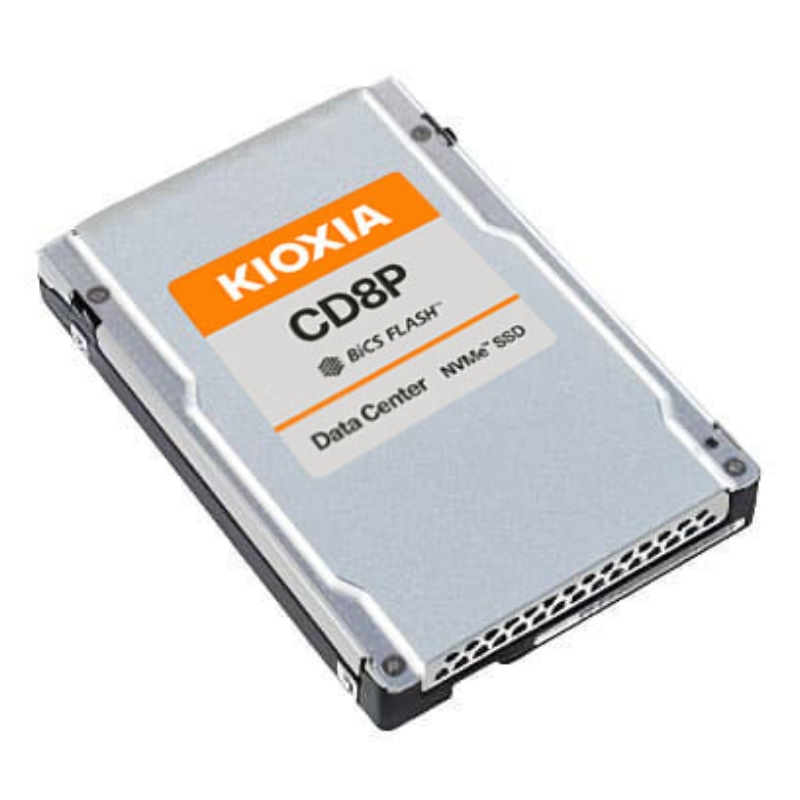


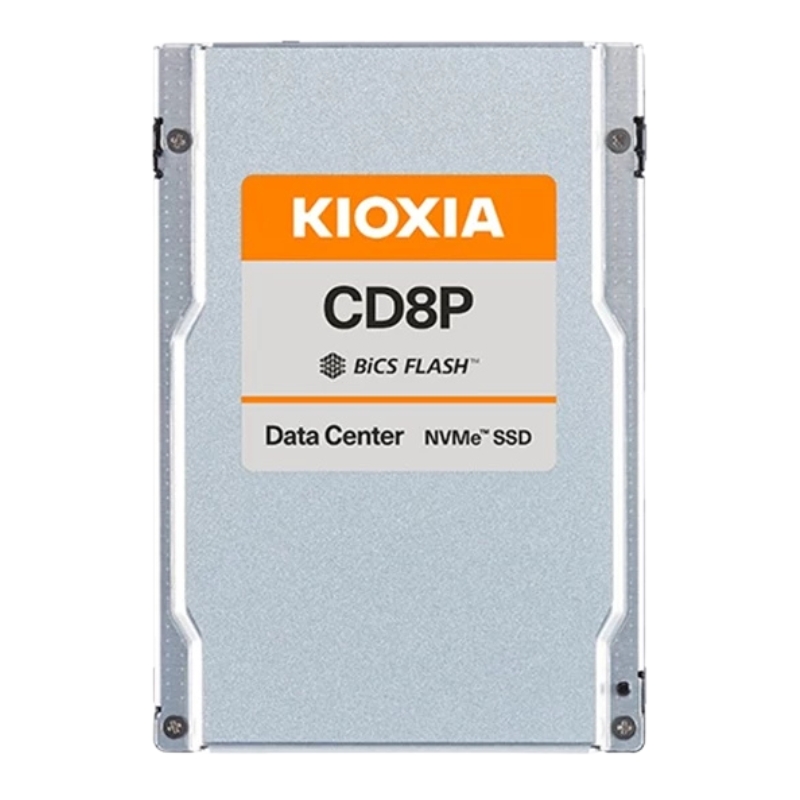
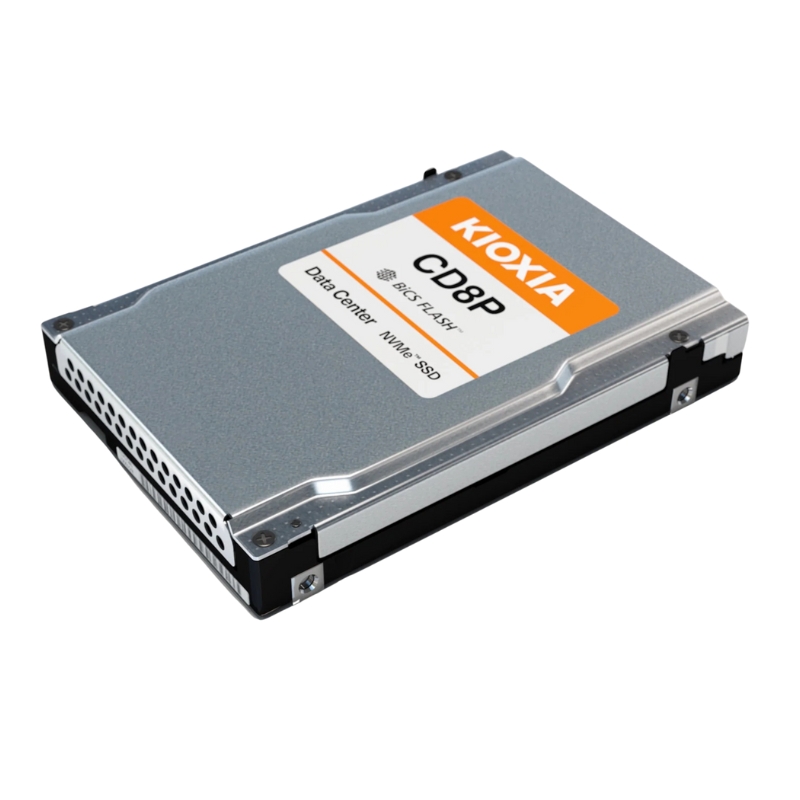
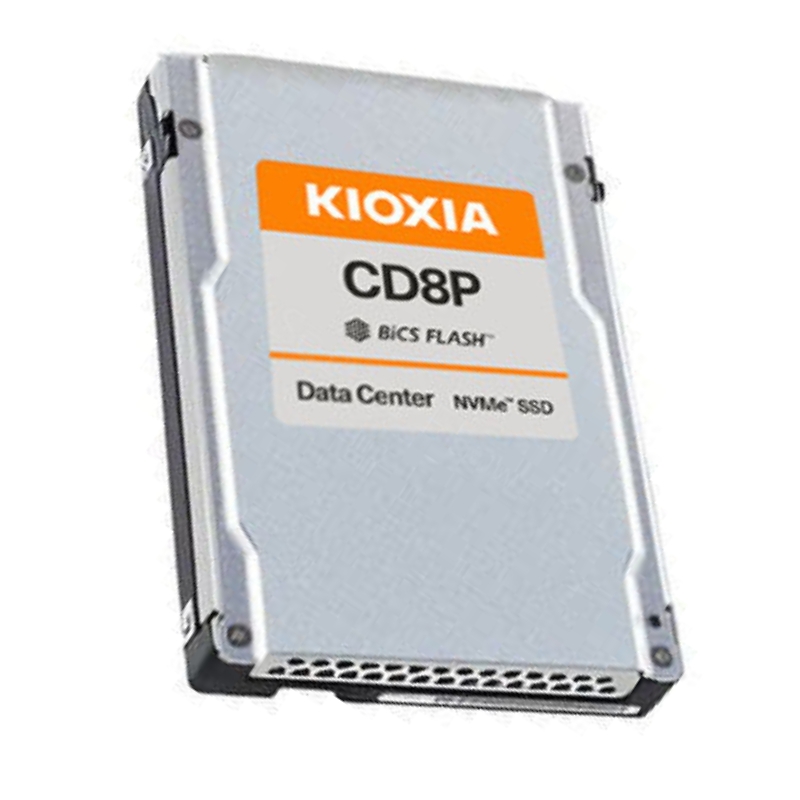
Kioxia KCD8DPUG1T60 CD8P-V Series 1.6TB PCI-E Gen5 NVMe SSD. New Sealed in Box (NIB) with 3 years Warranty
The KCD8DPUG1T60 leverages PCIe 5.0 ×4 with native NVMe support, delivering a major leap in bandwidth compared with PCIe 4.0 drives. Its 2.5-inch form factor makes it straightforward to deploy in modern servers, storage arrays and high-performance workstations that accept NVMe U.2 / 2.5" NVMe carriers (verify chassis/backplane compatibility before purchase).
Built on KIOXIA’s 3D TLC flash, this drive balances cost and endurance. The unit’s Mixed Use endurance profile and a rated 3 DWPD (drive writes per day) suit workloads that require frequent writes but don’t demand data center-class, ultra-high endurance (e.g., certain virtualization hosts, database caches, and mixed read/write storage tiers).
With sequential reads reaching up to 12,000 MB/s and sequential writes up to 3,500 MB/s, this SSD is optimized for read-heavy and mixed workloads. Exceptional 4K random IOPS (1.6M read / 300k write) enable low-latency response for I/O-intensive applications such as OLTP databases, analytics indexing, and virtual desktop infrastructure (VDI).
Typical active power draw is around 18 W, with idle ~5 W. When planning large deployments, include this in rack power calculations and verify that your cooling can handle elevated sustained throughput scenarios.
The Kioxia KCD8DPUG1T60 from the CD8P-V Series is a data-center class, 2.5" NVMe SSD engineered around the next-generation PCIe® Gen5 (32 GT/s x4) platform to deliver a marked uplift in sustained throughput, ultra-low latencies, and dramatically higher random I/O performance compared to previous generation drives. Designed as a mixed-use drive, the 1.6TB capacity balances density, endurance and predictable performance for scale-out cloud services, virtualization layers, and OLTP workloads where predictable IOPS and strong sequential bandwidth matter. :contentReference[oaicite:0]{index=0}
The KCD8DPUG1T60 uses PCIe® 5.0 ×4 with the NVMe protocol in a 2.5" U.2 style package (15 mm height options exist across the family), enabling straightforward integration into existing server trays and chassis that support U.2 NVMe drives — while supplying a bridge to Gen5 bandwidth without rearchitecting racks. This form factor remains ideal for dense server deployments where hot-swap, thermal management, and standard drive rails are required. :contentReference[oaicite:2]{index=2}
Rated sequential read performance reaches up to approximately 12,000 MB/s, while sequential writes are rated up to around 3,500 MB/s — substantial gains versus typical PCIe Gen4 mixed-use drives and a practical enabler for fast large dataset transfers, backup/restore windows and high-velocity log ingestion. These sustained rates shorten large file processing time and reduce the likelihood of host-side bottlenecks in data-intensive workloads. :contentReference[oaicite:3]{index=3}
For small block operations, the CD8P-V series targets very high random I/O: sustained 4K random read IOPS up to the 1.6 million range and random write IOPS up to ~300k (4K), depending on workload and queue depth. Those random IOPS figures translate into substantial reductions in request I/O wait times for multi-tenant VMs, database caches, and real-time analytics. :contentReference[oaicite:4]{index=4}
The drive is positioned in the Mixed-Use endurance class and commonly specified with ~3 Drive-Writes-Per-Day (DWPD) over a typical warranty period, giving a balance between cost per TB and write endurance for persistent storage tiers. Enterprise features such as power loss protection, advanced error correction and standard NVMe health telemetry are implemented across the CD8P-V lineup to support predictable operation in 24/7 data center environments. :contentReference[oaicite:5]{index=5}
Deploy the KCD8DPUG1T60 for workloads that demand steady, high random I/O performance together with large sequential throughput: virtual machine boot and runtime volumes, container storage for microservices, online transaction processing (OLTP), caching layers, and big-data ingestion nodes. Its mixed-use endurance and Gen5 performance profile also make it a strong candidate for tiering in hyperconverged infrastructures where predictable latency is essential. :contentReference[oaicite:6]{index=6}
Choose the CD8P-V 1.6TB when you need a single-drive solution that substantially increases per-drive throughput without sacrificing enterprise endurance. If your environment is IOPS-bound and limited by PCIe Gen4 headroom, this Gen5 option can remove the storage bottleneck while fitting into 2.5" trays. Conversely, if your workload is read-heavy with minimal write amplification and you prioritize maximum cost-efficiency per TB, a read-optimized (lower endurance) model could be preferable — but you’ll give up the mixed-use protection that the CD8P-V brings. :contentReference[oaicite:7]{index=7}
Kioxia pairs advanced 3D TLC BiCS FLASH NAND with a Gen5-capable controller and firmware stack tuned for mixed workloads. The BiCS FLASH architecture balances density and write endurance, while firmware optimizations manage wear leveling, background media management and latency-sensitive I/O prioritization. Together, these components deliver the sustained throughput and IOPS consistency required in modern distributed storage systems. :contentReference[oaicite:8]{index=8}
Enterprise firmware typically schedules background garbage collection and metadata consolidation to occur with minimal interference to foreground I/O; the CD8P-V firmware emphasizes consistent QoS so that tail latency remains predictable. Administrators should monitor drive telemetry (SMART/NVMe logs) to understand how background activities interact with peak traffic patterns and adjust host queue depths or service windows accordingly. :contentReference[oaicite:9]{index=9}
To exploit the KCD8DPUG1T60’s full potential, tune the host NVMe driver and application stack for higher concurrency and parallelism: use multiple submission queues, allow sufficient queue depth for multi-threaded workloads, and architect services to issue parallel I/O when possible. This removes bottlenecks that occur when a single thread or shallow queue depth cap limits the SSD’s available IOPS and bandwidth. :contentReference[oaicite:10]{index=10}
Gen5 SSDs can draw more active power during sustained high bandwidth operations; make sure server trays and chassis airflow meet the manufacturer’s thermal profile recommendations. Deploy appropriate drive heat spreaders or active cooling if your servers run heavy, continuous sequential operations; thermal throttling can reduce sustained throughput if temperatures exceed recommended thresholds. Monitoring power draw and temperature is a key operational practice for maintaining consistent performance. :contentReference[oaicite:11]{index=11}
Keep firmware current to leverage performance and stability improvements; Kioxia issues firmware and product briefs that outline compatibility notes and recommended updates. Drive firmware can contain critical enhancements for error-handling, telemetry and performance tuning, so integrate firmware maintenance into your routine storage lifecycle procedures. :contentReference[oaicite:12]{index=12}
The 1.6TB capacity point is often chosen where a balance between per-drive cost and usable space is required. For virtualized hosts, a 1.6TB drive can host multiple VM boot volumes with useful headroom for snapshots and logs; in database use, it serves as an accelerated hot tier for indexes or WAL segments. When planning capacity, remember usable capacity after overprovisioning and metadata overhead will be slightly less than the nominal 1.6TB — plan for application-level provisioning accordingly. :contentReference[oaicite:13]{index=13}
When scaling storage across many nodes, evaluate both $/GB and $/IOPS: the CD8P-V’s Gen5 performance means fewer drives may be required to meet IOPS targets, even if the $/TB is higher than lower-performing alternatives. This tradeoff can reduce overall rack footprint and simplify rebuild windows and thermal management. Do the math for your I/O target (IOPS and bandwidth) rather than selecting purely on capacity. :contentReference[oaicite:14]{index=14}
The CD8P-V family supports self-encrypting drive (SED) options on certain SKUs and models, enabling hardware-based encryption and easier compliance with data-at-rest requirements. Where regulatory compliance or strong tenant isolation is needed, select SED variants and integrate key management with your chosen KMS or host platform. :contentReference[oaicite:15]{index=15}
Standard NVMe telemetry (SMART attributes, health logs, namespace management) is available to integrate the KCD8DPUG1T60 into existing monitoring frameworks. Proactive monitoring of media wear, uncorrectable error counts and thermal events allows preemptive maintenance and helps avoid unexpected failures. Use vendor tools and host management platforms to aggregate drive health and lifecycle metrics across large fleets. :contentReference[oaicite:16]{index=16}
Compared to Kioxia’s prior CD8-V Gen4 family, the CD8P-V offers roughly 60–80% uplift in sequential read performance and a large increase in random IOPS headroom thanks to the Gen5 link. For workloads where sequential throughput and concurrent I/O performance are the dominant constraints, the Gen5 CD8P-V can materially reduce application latency and improve host utilization. When migration is considered, attention must be paid to host platform Gen5 readiness to ensure the interface can actually deliver the advertised gains. :contentReference[oaicite:17]{index=17}
If your deployment prioritizes extreme density (higher TB per U with shorter heights) or has server backplanes optimized for E1.S, consider E1.S Gen5 parts from Kioxia’s broader portfolio. The 2.5" U.2 form factor still wins in hot-swap and broad compatibility scenarios; choose form factor based on your physical chassis and maintenance practices. :contentReference[oaicite:18]{index=18}
Kioxia and many reseller partners typically offer enterprise warranties (often 5 years for data center SKUs) but check the exact SKU and reseller terms. Warranty terms, endurance ratings and whether the drive ships SED-enabled or bare can vary by part number and region; always confirm SKU-level details at procurement time. :contentReference[oaicite:19]{index=19}
Gen5 enterprise SSDs initially carry a price premium relative to mature Gen4 parts; however, when estimating total cost of ownership for I/O-heavy clusters, fewer drives or simpler server configurations can offset the higher per-drive cost. Expect regional supply and SKU variants (SED vs non-SED, service options) to influence delivered pricing — include lead times and compatibility checks in your procurement workflows. :contentReference[oaicite:20]{index=20}
Many applications underutilize modern NVMe SSDs by issuing I/O serially; refactor critical paths to use asynchronous I/O or multiple worker threads to unleash the drive’s parallelism. Measure tail latencies (p99/p999) and not just average latency; Gen5 drives excel at reducing tail latency when the host parallelism is adequate. :contentReference[oaicite:21]{index=21}
Align NVMe queue usage and CPU affinity so host interrupts and completion handling do not bounce between cores inefficiently. A tuned host scheduler and NUMA-aware allocation can further reduce latency for latency-sensitive services running atop these drives. :contentReference[oaicite:22]{index=22}
Implement nightly or weekly sweeps that collect SMART/NVMe telemetry across all drives to detect early signs of media wear, rising ECC rates, or thermal stress. Correlate these metrics with application metrics so you can forecast rebuild windows and budget spare capacity proactively. :contentReference[oaicite:23]{index=23}


 Contact Us
 Information
 Catalog
 Solid State Drives (SSD)
 Network Switches
 Hard Disk Drives
 HBA & Controllers
 PC & Servers
 PC & Server Memory
 CPU & Processors
 Network Routers
 Power Supplies
 Tape Drives & Libraries
 Network Devices
 Computer & Network Cables