(7% discount is applied at checkout)
Cart is empty
Your go-to destination for cutting-edge server products
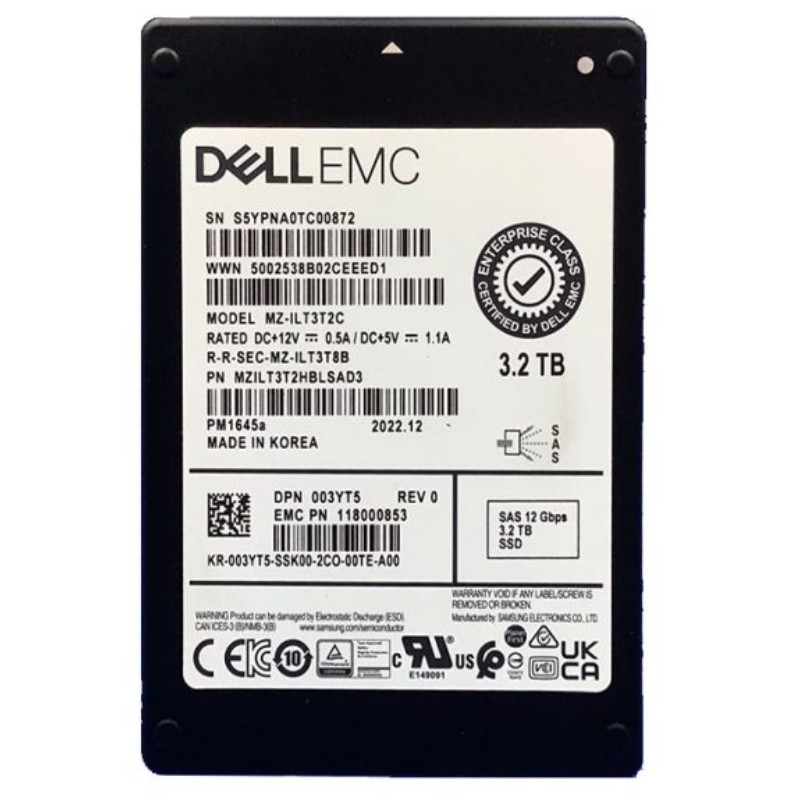


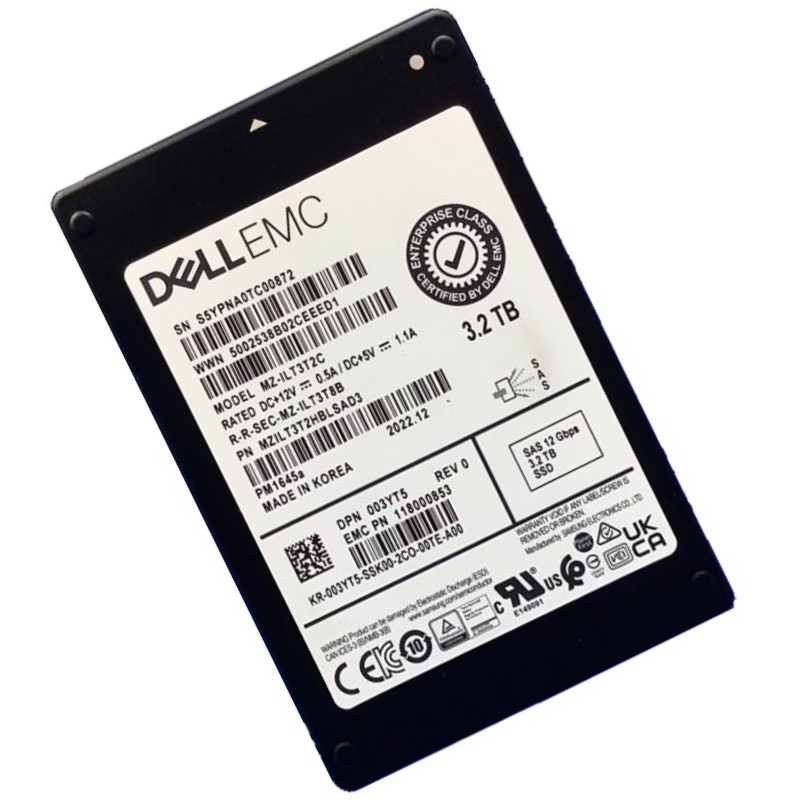
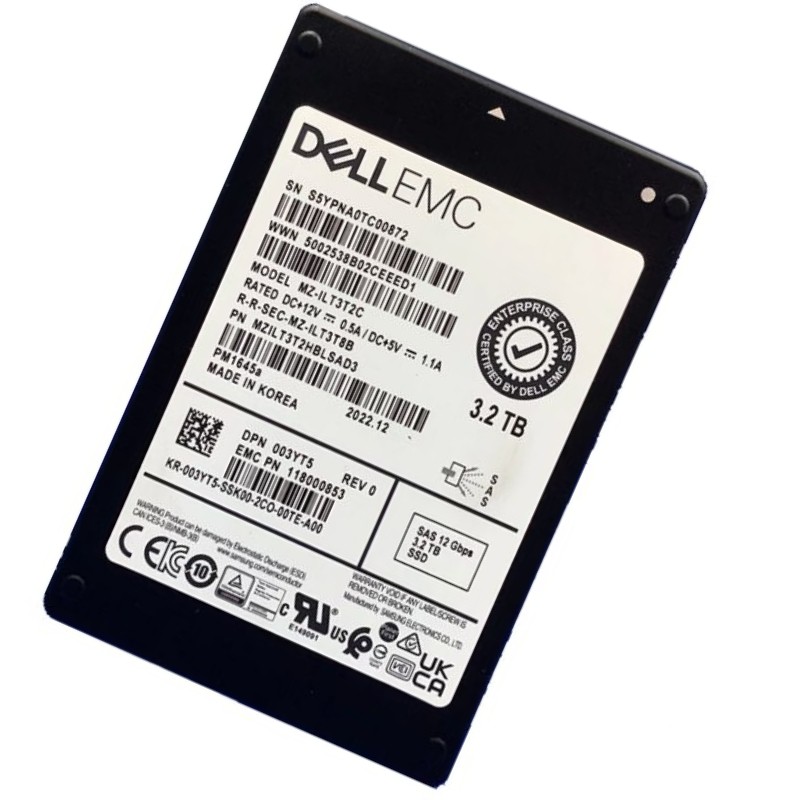
EMC 118000853 3.2TB PM1645A SAS 12GBPS 2.5inch Mix Use Hot Swap Enterprise SSD. New Sealed in Box (NIB) with 3 Years Replacement Warranty - Dell Version
The EMC 118000853 3.2TB PM1645A SAS 12GBPS 2.5-inch Mix Use Hot Swap Enterprise Solid State Drive represents a high-performance, reliable storage solution designed specifically for mission-critical enterprise environments. This series is well-regarded for blending exceptional speed with long-term durability, ideal for mixed workload applications where both read and write operations occur intensively. Engineered with a robust SAS 12Gbps interface and a compact 2.5-inch form factor, the PM1645A provides data centers, cloud service providers, and enterprises with the necessary speed, endurance, and hot-swap capability to maintain business continuity and deliver consistently low latency.
The EMC-branded PM1645A model 118000853 builds upon Samsung’s advanced NAND flash technologies, bringing trusted storage performance combined with industry-leading firmware enhancements that optimize data integrity, power management, and drive longevity. Its 3.2TB capacity offers ample storage for demanding applications, balancing high throughput with scalable capacity to address ever-growing data needs.
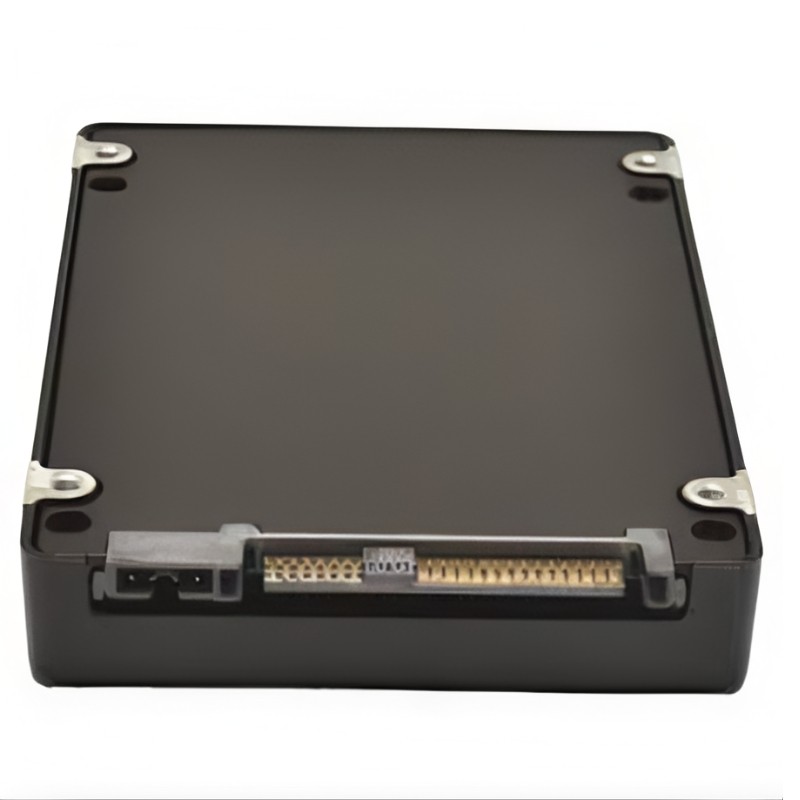
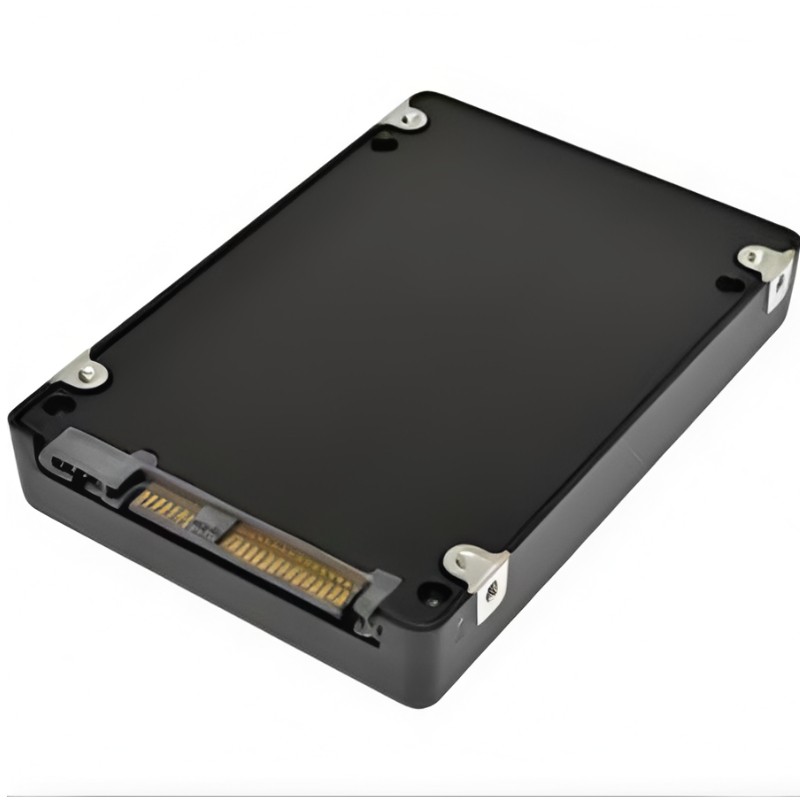
At the core of the EMC 118000853 PM1645A drive lies enterprise-class 3D TLC NAND flash, delivering a storage capacity of 3.2 terabytes within a compact 2.5-inch U.2 hot-swap drive chassis. The SAS 12Gbps interface enables double the bandwidth of previous-generation 6Gbps SAS drives, allowing for remarkable sequential read and write speeds as well as enhanced input/output operations per second (IOPS).
The drive is optimized for mixed-use workloads, combining endurance and performance with an endurance rating often rated around 1 to 3 Drive Writes Per Day (DWPD), depending on the specific configuration and firmware version. This endurance makes the PM1645A a cost-effective yet durable choice for applications where both heavy reads and writes occur regularly. The drive achieves up to approximately 160,000 random read IOPS and 40,000 random write IOPS, positioning it competitively within the enterprise SSD market.
Sequential throughput peaks at approximately 2,000 MB/s for reads and 1,000 MB/s for writes, ensuring rapid data transfers during bulk operations such as virtual machine migrations, backups, and large-scale analytics. These figures are not only a reflection of raw hardware but also the result of fine-tuned firmware algorithms designed to maintain consistency under sustained workloads.
The EMC 118000853 PM1645A drive includes a comprehensive suite of endurance and reliability features tailored for 24/7 enterprise data center operation. These features include advanced wear-leveling algorithms that evenly distribute writes across the NAND flash memory, minimizing premature wear and extending the drive's usable life.
Power-loss protection circuits, implemented with onboard capacitors, guarantee that data in transit is securely written to the NAND memory in the event of an unexpected power failure, reducing the risk of data corruption. Additionally, the drive supports end-to-end data path protection, employing CRC checks to ensure data integrity from host interface to NAND memory and back.
Over-provisioning reserves a portion of the NAND flash to enhance performance consistency and accelerate garbage collection processes, further maintaining steady throughput and minimizing write amplification. The drive also boasts a Mean Time Between Failures (MTBF) rating exceeding 2 million hours, reflecting its suitability for mission-critical deployments where drive failure rates must be minimal.
The PM1645A’s classification as a “Mix Use” SSD positions it uniquely within the enterprise storage landscape, bridging the gap between read-intensive and write-intensive workloads. This balanced endurance profile makes it highly versatile for applications that involve a varied mix of transactions, including both large sequential transfers and random small-block writes.
Typical applications benefiting from this drive include virtual desktop infrastructures (VDI), database servers, OLTP systems, and high-frequency analytics. Its endurance rating ensures that it can withstand the repetitive write cycles commonly generated by these workloads without sacrificing performance over time, making it a reliable foundation for mixed workload environments where both capacity and performance are crucial.
The 2.5-inch U.2 form factor coupled with hot-swap capability is a key design feature of the EMC 118000853 PM1645A SSD, providing operational flexibility and minimizing downtime. Hot-swapping enables IT administrators to replace or upgrade drives without powering down systems, which is vital in high-availability environments such as financial services, healthcare, and telecommunications.
In addition to ease of maintenance, the compact 2.5-inch form factor allows for increased storage density within server racks and storage arrays. Compared to traditional 3.5-inch drives, these smaller SSDs reduce physical space requirements and heat generation, which contributes to energy efficiency and lower cooling costs.
Moreover, the U.2 interface standard ensures compatibility with a wide array of server and storage platforms, particularly within Dell EMC PowerEdge servers and Unity storage systems, providing seamless integration with existing infrastructure investments.
In virtualization environments, including cloud data centers and VDI deployments, the EMC 118000853 PM1645A SSD shines due to its consistent performance and endurance under random mixed workloads. Virtual machines generate diverse IO patterns with frequent metadata updates and varying block sizes, demanding a drive capable of low latency and high IOPS.
This drive supports multiple simultaneous virtual machine boot-ups, live migrations, and application workloads without performance degradation, enabling IT organizations to deliver reliable service-level agreements (SLAs) to end users. Its SAS 12Gbps interface ensures that the storage bus does not become a bottleneck, maintaining optimal VM density per server.
Cloud service providers leverage the PM1645A for its ability to balance cost and endurance, making it a solid choice for scalable infrastructure where thousands of tenants share storage resources and demand predictable, high-performance SSDs.
Databases, especially transactional systems such as OLTP and NoSQL databases, require storage solutions capable of handling intensive mixed reads and writes with minimal latency. The PM1645A’s mix-use rating allows it to accommodate high-frequency commits, query processing, and logging activities effectively.
Enterprises running large-scale SAP, Oracle, or Microsoft SQL Server deployments will find this SSD model suitable for primary data storage, transaction logs, and index files. The drive's power-loss protection further secures transaction integrity during unexpected power events, minimizing the risk of data loss or corruption.
Additionally, the sustained random write performance supports fast indexing and data refreshes, key for business intelligence and analytics platforms that rely on fresh data streams for accurate reporting.
High-Performance Computing (HPC) and Big Data Analytics
High-Performance Computing clusters and big data analytics platforms demand SSDs capable of high throughput and durability to support workload bursts and large data set processing. The EMC PM1645A drive’s high sequential transfer rates and consistent random IO performance help accelerate data ingest, checkpointing, and iterative computation.
For machine learning pipelines, simulation environments, and scientific research workloads that require repeated read-write cycles and large temporary storage, this enterprise SSD provides the balance of speed and endurance essential for timely job completion.
Its hot-swap feature also enables quick maintenance or node replacement without cluster downtime, improving operational efficiency in large distributed environments.
The EMC 118000853 3.2TB PM1645A is designed for compatibility with leading Dell EMC storage arrays such as Unity XT, PowerMax, and VMAX All Flash systems. Integration with these platforms allows customers to leverage advanced storage management features, including thin provisioning, snapshots, replication, and data tiering.
The drive’s SAS 12Gbps interface ensures consistent performance within dense SSD pools while enabling seamless integration into existing SAS-based SAN or DAS configurations. Multi-pathing and redundant paths supported by SAS topology improve availability and load balancing within storage fabrics.
By deploying PM1645A drives across storage tiers, enterprises can optimize cost and performance, using these mix-use drives for active datasets while tiering colder data to SATA or HDD-based arrays.
Firmware embedded in the EMC 118000853 PM1645A offers advanced capabilities that enhance both performance and reliability. This includes features such as dynamic thermal throttling to maintain optimum operating temperature, which protects NAND flash longevity without sacrificing throughput under heavy loads.
Enterprise-grade SMART monitoring delivers detailed telemetry data on drive health, including temperature, wear-level statistics, error counts, and spare capacity. These metrics integrate with Dell EMC’s centralized management tools such as OpenManage and Unisphere, allowing IT teams to monitor storage health proactively and plan maintenance before failures occur.
Firmware updates are regularly issued to address security vulnerabilities, improve compatibility, and refine performance characteristics. These updates can be applied in the field with minimal disruption, ensuring the drives remain secure and optimized throughout their lifecycle.
One of the significant benefits of the EMC 118000853 PM1645A SSD series is its power efficiency relative to traditional HDDs and older-generation SSDs. The use of advanced 3D NAND and optimized controller architecture reduces power consumption during both idle and active states.
Lower power usage translates directly to decreased cooling requirements in dense data center racks, helping organizations reduce operational expenses and environmental impact. Thermal sensors within the drive facilitate real-time monitoring and dynamic response, preventing thermal throttling and maintaining consistent performance in high-density server environments.
The hot-swap feature simplifies serviceability in live environments, allowing drives to be replaced without disrupting running applications or powering down servers. This design reduces Mean Time to Repair (MTTR) and enhances overall system availability.
EMC provides comprehensive support options for the PM1645A, including warranty coverage, firmware support, and replacement services through Dell ProSupport. Support offerings often include next-business-day onsite service and advanced hardware replacement, minimizing operational risks associated with hardware failures.
Asset tracking via unique drive serial numbers and model identifiers facilitates effective hardware lifecycle management, compliance audits, and warranty claim processing.
When compared to SATA-based SSDs or PCIe NVMe drives, the EMC 118000853 PM1645A occupies a distinct niche. While PCIe NVMe drives may offer higher raw bandwidth and lower latency, the PM1645A’s SAS interface ensures broader compatibility with existing enterprise storage architectures, especially in data centers heavily invested in SAS infrastructures.
Relative to SATA SSDs, this drive offers significantly improved throughput, better endurance, and advanced reliability features, making it more suitable for demanding enterprise workloads. Its hot-swap capability and 2.5-inch form factor provide additional operational benefits that set it apart from bulkier or less serviceable alternatives.
Investing in the EMC 118000853 PM1645A delivers a strong return on investment (ROI) by reducing downtime, improving application responsiveness, and lowering operational expenses through power savings and reduced cooling needs. The drive’s endurance profile means fewer replacements over time, lowering maintenance and procurement costs.
Its balance of performance and price makes it an economical choice for organizations seeking to modernize storage without incurring the higher expense of write-intensive SSDs or full NVMe deployments. By enhancing virtualized workloads, databases, and analytics operations, enterprises can also accelerate time-to-value from critical business applications.
The EMC 118000853 PM1645A SSD series complies with a range of environmental and safety standards, including RoHS (Restriction of Hazardous Substances), CE marking, and FCC certification. These certifications ensure the drives meet strict guidelines for hazardous materials, electromagnetic interference, and operational safety.
Additionally, the drives undergo rigorous testing for shock, vibration, and temperature extremes per MIL-STD-810G and JESD22 standards, guaranteeing operational reliability even under physically challenging conditions typical of data center environments.
Adopting EMC 118000853 PM1645A drives supports future-proofing efforts by allowing enterprises to maintain compatibility with existing SAS infrastructures while taking advantage of 12Gbps speed improvements and enhanced endurance. As workloads grow more complex and data volumes increase exponentially, the drive’s scalable capacity and performance ensure it remains a valuable component in storage strategies for years to come.
Furthermore, its firmware upgradeability and support for emerging data security protocols mean the PM1645A can adapt to evolving enterprise IT requirements, protecting investments in infrastructure and simplifying technology refresh cycles.
The EMC 118000853 3.2TB PM1645A SAS 12GBPS 2.5inch Mix Use Hot Swap Enterprise SSD provides an ideal blend of capacity, speed, and endurance for mixed-use enterprise applications. Its hot-swap 2.5-inch form factor ensures operational flexibility, while its SAS 12Gbps interface delivers robust performance and compatibility.
Designed for virtualization, databases, analytics, and HPC workloads, it offers advanced reliability features such as power-loss protection, wear-leveling, and end-to-end data path protection. Integration with Dell EMC storage platforms enhances management capabilities and supports enterprise-class serviceability and support.
This drive is a cost-effective and future-ready solution that delivers high availability, low latency, and scalable performance essential for modern data centers.


 Contact Us
 Information
 Catalog
 Solid State Drives (SSD)
 Network Switches
 Hard Disk Drives
 HBA & Controllers
 PC & Servers
 PC & Server Memory
 CPU & Processors
 Network Routers
 Power Supplies
 Tape Drives & Libraries
 Network Devices
 Computer & Network Cables